

 English
 Spanish
 French
 German
 Italian
 Chinese (Simplified)
 Japanese
 Korean
 Arabic
 Portuguese
 Send Inquiry
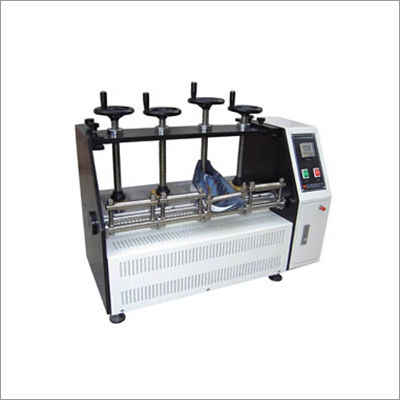
Outsole Belt Flexing Test Equipment
Price 2800 USD ($)/ Unit
MOQ : 1 Unit
Outsole Belt Flexing Test Equipment Specification
- Mounting Type
- Floor standing
- Measuring Range
- 050,000 flex cycles
- Application
- Flexing resistance test of shoe outsoles and belts
- Resolution
- 1 cycle
- Operating Voltage
- 220V AC
- Equipment Type
- Outsole Belt Flexing Test Equipment
- Temperature
- Room Temperature (10C - 35C)
- Automation Grade
- Semi-automatic
- Response Time
- Immediate (real-time count update)
- Number of Specimens
- 1 to 3 specimens
- Display Type
- Digital LCD display
- Interface Type
- Touch keys, digital interface
- Specimen Size
- Length up to 150 mm, width up to 80 mm
- Accuracy
- 1 cycle
- Humidity
- Standard Lab Conditions (45-75% RH)
- Power Supply
- 220V, 50Hz AC
- Frequency
- 50 Hz
- Max Height
- Approx. 105 cm
- Port Size
- Standardcustomizable on request
- Features
- Cycle counter, automatic stop, easy specimen loading
- Test Range
- Up to 50,000 cycles
- Usage
- Footwear quality control, laboratory equipment
- Capacity
- Designed for continuous laboratory use
- Machine Weight
- Approx. 120 kg
- Test Speed
- 125 5 cycles/min
- Test Width
- Up to 80 mm
- Test Stroke
- 32 1 mm
- Control Mode
- Digital control panel
- Compliance
- Conforms to IS, SATRA, and ASTM methods
- Sample Holder
- Easy adjustable fixtures for various sizes
- Frame Material
- Heavy-duty mild steel, powder coated
- Accessories Included
- Set of specimen clamps, calibration guide, manual
- Drive Motor Power
- 0.5 HP
- Belt Material
- Rubber composite
- Noise Level
- 65 dB(A)
- Safety Function
- Automatic cut-off on shield opening
Outsole Belt Flexing Test Equipment Trade Information
- Minimum Order Quantity
- 1 Unit
- FOB Port
- shenzhen
- Payment Terms
- Cash on Delivery (COD), Letter of Credit (L/C), Western Union, Paypal, Letter of Credit at Sight (Sight L/C), Delivery Point (DP), Cash Against Delivery (CAD), Telegraphic Transfer (T/T), Days after Acceptance (DA), Cash in Advance (CID), Cheque, Cash Advance (CA)
- Supply Ability
- 20 Units Per Month
- Delivery Time
- 15 Week
- Packaging Details
- Each set protected with resin fiber and PP film, then put into Strong wooden case with operation manual and video inside.
- Main Export Market(s)
- Australia, North America, Eastern Europe, Middle East, Western Europe, Africa, Central America, South America, Asia
- Main Domestic Market
- All India
- Certifications
- CE, SGS, ISO9001
Outsole Belt Flexing Test Equipment About
Shoes Outsole Flexing Test Equipment
Product description:
Shoes Outsole Flexing Test Equipment is to test the use life after the sole flexed. The sole may break or craze after long-time roller bending. When using this shoes testing equipemnt, impale several holes at the place where has max bending rate, then fix the two ends of the sole, with end fixed and the other movable. During test, make the circular shaft rise repeatedly, after bended enough times, check its stretch stage through magnifying glass
Design standard:ASTM-D1052, ISO5423/4643
Other Details :
| Minimum | 1 SET |
| Delivery | 15 days after order. |
| Country | China |
| Brand Name | HD |
| Package | Each set protected with resin fiber and PP film, then put into Strong wooden case with operation manual and video inside. |
| Payment | L/C, D/P, T/T |
| Price | FOB, CIF |
Advanced Flexing Test Reliability
This equipment delivers precise and repeatable outsole flexing resistance tests, crucial for evaluating shoe durability and performance. The digital control panel with LCD display provides real-time cycle monitoring, ensuring accurate testing for every batch. High-quality components and compliance with international standards guarantee reliable and consistent results.
User-Centric Design for Laboratory Efficiency
Ease of use is elevated by adjustable fixtures that accommodate various sample sizes, quick specimen loading, and an ergonomic floor-standing build. Semi-automated features like the cycle counter and automatic stop minimize operator fatigue, supporting continuous, high-throughput laboratory workflows.
Comprehensive Safety and Compliance
Safety is prioritized with an automatic cut-off when the shield is opened, reducing injury risks. The equipment conforms to IS, SATRA, and ASTM test methods, backed by included accessories like calibration guides and specimen clamps, ensuring ready installation and valid, audit-compliant test results for all users.
FAQs of Outsole Belt Flexing Test Equipment:
Q: How does the Outsole Belt Flexing Test Equipment assess flexing resistance in footwear materials?
A: The machine subjects outsoles or belts to repetitive flexing cycles at a controlled speed and stroke, simulating real-world bending stresses. It automatically counts cycles up to 50,000, displaying the real-time total on a digital LCD screen to accurately determine the materials resistance to cracking and degradation.Q: What are the main benefits of using this equipment in a quality control laboratory?
A: Benefits include precise, standardized testing that meets international compliance (IS, SATRA, ASTM), a high capacity for continuous operation, immediate digital feedback for efficient data collection, and reduced operator workload due to semi-automatic functions and safety features.Q: When should the machines automatic cut-off safety feature activate?
A: The automatic cut-off safety mechanism engages whenever the equipments protective shield is opened, instantly stopping operation to prevent accidental injury and maintain secure testing standards.Q: Where is this equipment typically installed, and what are the installation requirements?
A: It is designed for installation in footwear quality control laboratories or similar environments. The machine is floor-standing and operates on a standard 220V, 50Hz AC supply. Standard lab conditions (room temperature 1035C, humidity 4575% RH) are recommended for optimal performance.Q: What is the process for loading and testing different specimen sizes?
A: Specimens up to 150 mm in length and 80 mm in width are secured with adjustable fixtures. The machines easy-loading mechanism, combined with included specimen clamps, allows rapid setup for 1 to 3 specimens per test. The digital interface configures and initiates the test cycles.Q: How does the digital LCD interface enhance the usage experience?
A: The digital LCD interface provides real-time updates on flex cycle counts with immediate response, displays machine settings, and simplifies operation via touch keys, ensuring clear, user-friendly control during every test session.Q: What accessories are included with the equipment, and how do they support users?
A: Each unit comes with a calibration guide, a set of specimen clamps, and a comprehensive manual. These accessories facilitate accurate test setup, ensure compliance with standards, and guide users through proper calibration and operation procedures.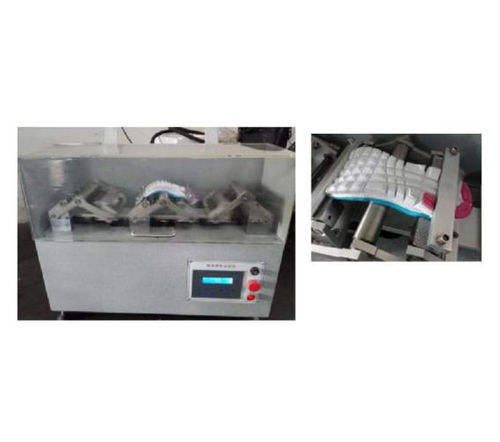
Tell us about your requirement

Price:
Quantity
Select Unit
- 50
- 100
- 200
- 250
- 500
- 1000+
Additional detail
Mobile number
Email

More Products in Shoes Test Equipment Category
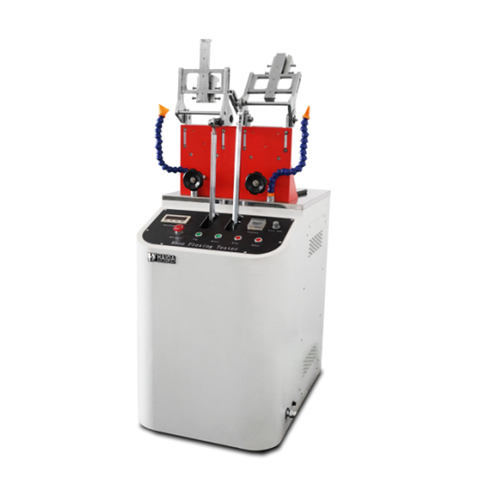
GB Standard Shoe Flexing tester
Price 4000 USD ($) / Unit
Minimum Order Quantity : 1 Unit
Automation Grade : Semiautomatic
Temperature : Room temperature (23 2C)
Application : Bending/Flex testing of finished shoes as per GB/T 20991, ISO 5402, etc.
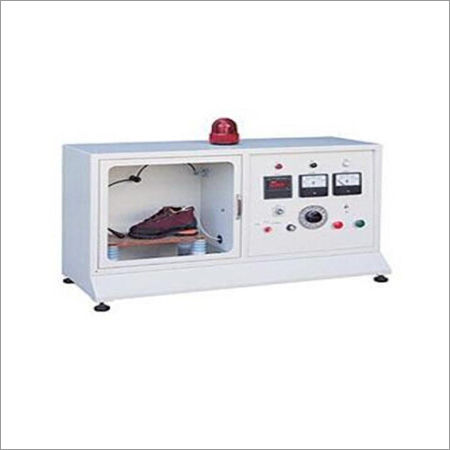
Shoes Withstand Voltage Test Equipment
Price Range 2500.00 - 3000.00 INR
Minimum Order Quantity : 1 set Unit
Automation Grade : SemiAutomatic
Temperature : 10C 40C
Application : Testing electrical withstand voltage capability of safety shoes and boots
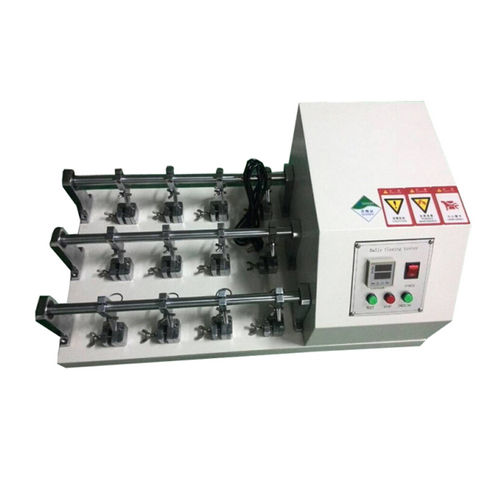
Leather Scratch Resistance Tester
Price 3000 USD ($) / Set
Minimum Order Quantity : 1 Set
Automation Grade : SemiAutomatic
Temperature : Room Temperature (15C~35C)
Application : Leather and synthetic material scratch resistance testing
Finished Shoes Bending Test Equipment
Price Range 1000.00 - 5000.00 INR
Minimum Order Quantity : 1 Set
Automation Grade : Semiautomatic
Temperature : 10C 40C
Application : Flexing endurance of finished shoes

Contact Details
- FACTORY ADD: No.13 Daxin Street, Daluosha Industrial Zone, Daojiao Town,Dongguan - 523710, Guangdong, China
- Phone :86-1591-7693151
- haidads@qc-test.cn
 Send Inquiry
Email us : haidads@qc-test.cn
- Ms Lisa (Manager)
- Mobile : +8613662707979, +8613829267288, +8615016776323, +8618373745787, +8618236912012, +8613602361535, +8613925747786

|


 |
HAIDA INTERNATIONAL EQUIPMENT CO., LTD.
All Rights Reserved.(Terms of Use) Developed and Managed by Infocom Network Private Limited. |
