

 English
 Spanish
 French
 German
 Italian
 Chinese (Simplified)
 Japanese
 Korean
 Arabic
 Portuguese
 Send Inquiry
Leather Scratch Resistance Tester
Price 3000 USD ($)/ Set
MOQ : 1 Set
Leather Scratch Resistance Tester Specification
- Number of Specimens
- 1-2 pieces
- Display Type
- Digital/LCD
- Features
- Durable, easy operation, high accuracy
- Accuracy
- ±1% of reading
- Response Time
- <1 Sec
- Mounting Type
- Tabletop
- Humidity
- 40%~70% RH
- Temperature
- Room Temperature (15°C~35°C)
- Hardness
- 50~70 HRC (scratching needle)
- Max Height
- 250 mm
- Gas Pressure
- 0.5~0.7 MPa (if pneumatic type)
- Interface Type
- RS232/USB (optional)
- Operating Voltage
- 220 V AC
- Specimen Size
- 100 x 50 mm
- Test Range
- Adjustable
- Power Supply
- AC 220V, 50 Hz
- Resolution
- 0.1 g
- Application
- Leather and synthetic material scratch resistance testing
- Automation Grade
- Semi-Automatic
- Frequency
- 60 Hz
- Port Size
- Standard (customizable)
- Measuring Range
- 0~500 g (Force adjustable)
- Usage
- Lab use/Quality control
- Capacity
- 1 set
- Machine Weight
- About 30 kg
- Test Speed
- 60 cycles/min
- Test Width
- 50 mm
- Test Stroke
- 60 mm
- Control Mode
- Digital display, touch control
- Maintenance
- Low maintenance
- Shipping Weight
- 35 kg (approx)
- Needle Type
- Replaceable tungsten carbide
- Fixture Material
- Stainless steel
- Sample Holder
- Adjustable clamping
- Packing Type
- Wooden case
- Finish
- Powder coated/Polished
- Memory Function
- Test data storage
- Dimensions
- 520 x 340 x 400 mm (LxWxH)
- Standard Compliances
- ISO 1518, ASTM D5178
- Alarm System
- Audible/visual for cycle completion
- Equipment Type
- Leather Scratch Resistance Tester
- Cleaning
- Easy to clean design
Leather Scratch Resistance Tester Trade Information
- Minimum Order Quantity
- 1 Set
- FOB Port
- SHENZHEN
- Supply Ability
- 20 Sets Per Month
- Delivery Time
- 15 Days
- Sample Policy
- Contact us for information regarding our sample policy
- Packaging Details
- Each set protected with resin fiber and PP film, then put into Strong wooden case with operation manual and video inside.
- Certifications
- CE,ISO
Leather Scratch Resistance Tester About
Leather scratch resistance tester
Test Principle:
The Leather scratch resistance tester according to test standards : test method id one side face of the sample as the inner surface and the other side face as the outside surface and bend this surface back and forth, write down the times that the sample have broken; or set the breakage time, then take it out and observe the degree it broken.
Clamping the specimen in fixture, after flexing back and forth in 22.5, observe the surface with a magnifying glass, record the damage degree to judge the resistance strength of flexing..
Standard Features:
| Fixture option | 12 Groups |
| Specimens | 70x45mm |
| Bending Angle | 22.50.5 |
| Bending speed | 1005cpm |
| Counter | LED,0999,999,Automatic shutdown |
| Machine Size | (LxWxH)785x460x320mm |
| Power | 1,AC220V/50HZ |
| Weight | 80kg |
Precision Testing with Standard Compliance
Complying with ISO 1518 and ASTM D5178, this leather scratch resistance tester guarantees accurate results across diverse leather and synthetic materials. Its digital display and touchscreen control allow for straightforward test parameter adjustment, ensuring reliable quality assessment every time. With force adjustability from 0 to 500 g and rapid response time, users can execute detailed analyses for both research and industry applications.
Durability and User-Centric Design
Built from stainless steel and finished in powder-coat or polish, the equipment is both robust and visually appealing. The adjustable clamping system supports versatile specimen sizes, while maintenance remains low and cleaning effortless due to thoughtful engineering. The testers noise and visual alarm system ensures operators are promptly informed of cycle completion, streamlining the laboratory workflow.
Efficient Data Management and Operation
The integrated digital memory enables secure storage of test data for future reference or analysis. Optional RS232/USB interfaces facilitate easy data export, enhancing documentation and traceability. With a cycle speed of 60 cycles per minute and semi-automatic operation, laboratories can manage frequent tests quickly and effectively, improving quality control procedures.
FAQs of Leather Scratch Resistance Tester:
Q: How does the Leather Scratch Resistance Tester work to assess leather durability?
A: The tester uses a replaceable tungsten carbide needle to apply adjustable force (0~500g) to a specimen. Sample holders secure leather or synthetic materials, and a digital touch interface controls scratch cycles, width, and stroke. After each test, the device stores test data and alerts users upon cycle completion via audible and visual signals.Q: What are the benefits of using a tester compliant with ISO 1518 and ASTM D5178 standards?
A: Compliance ensures that test results are reliable, repeatable, and accepted internationally for leather and synthetic materials. This is essential for product development, quality control, and meeting customer or regulatory requirements in various industrial sectors.Q: When should I use this tester in the product development process?
A: The tester is best used during material selection, product prototyping, and before mass production. Regular use in quality control guarantees that finished goods meet required scratch resistance standards and customer expectations.Q: Where is the ideal environment to install and operate the Leather Scratch Resistance Tester?
A: Operate the tester in a temperature-controlled lab or quality control area, within room temperature (15C~35C), humidity (40%~70% RH), and ensure you have access to AC 220V power. Stable surfaces are recommended, given the tabletop mounting and machine weight of about 30 kg.Q: What is the process for preparing and testing specimens with the device?
A: Specimens should be sized to 100 x 50 mm and securely clamped using the adjustable sample holder. Set the test parameters using the digital controls, select the desired scratch force and cycle speed, then start the test. The machine completes cycles automatically, with results easily stored or exported.Q: How easy is it to clean and maintain this scratch resistance tester?
A: The testers design allows for straightforward cleaning, with accessible surfaces and components. Maintenance is low due to the use of durable stainless steel materials and a robust construction, minimizing downtime and user intervention.Q: What advantages does the Leather Scratch Resistance Tester offer for lab use and quality control tasks?
A: This instrument offers high accuracy (1% of reading), quick operation, reliable data management, and flexible specimen testing. Its semi-automatic functionality and easy-to-use interface make it ideal for routine lab assessments and continuous quality assurance.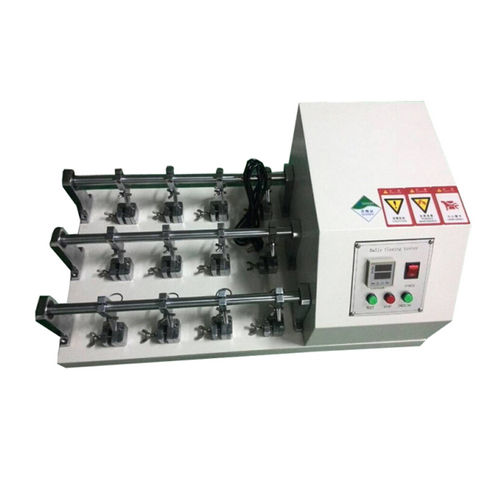
Tell us about your requirement

Price:
Quantity
Select Unit
- 50
- 100
- 200
- 250
- 500
- 1000+
Additional detail
Mobile number
Email

More Products in Shoes Test Equipment Category
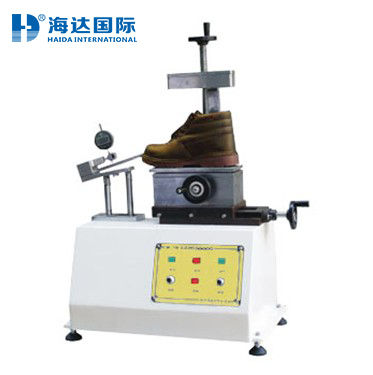
Shoe peeling strength testing machine
Price 2000 USD ($) / Unit
Minimum Order Quantity : 1 Unit
Application : Testing the peeling strength of shoe soles and upper material bond
Power Supply : AC 220V, 50Hz
Equipment Type : Peeling Strength Testing Machine
Operating Voltage : AC 220V
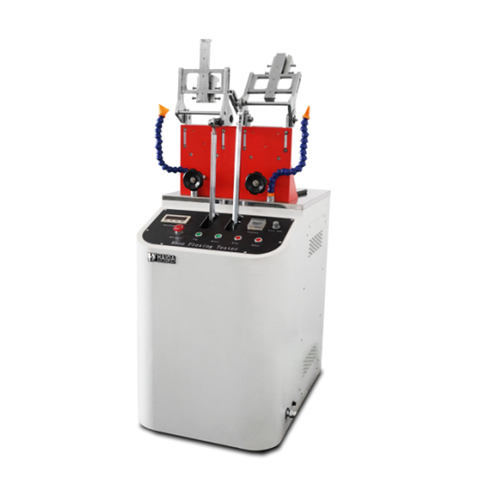
GB Standard Shoe Flexing tester
Price 4000 USD ($) / Unit
Minimum Order Quantity : 1 Unit
Application : Bending/Flex testing of finished shoes as per GB/T 20991, ISO 5402, etc.
Power Supply : AC 220V, 50/60 Hz
Equipment Type : Shoe Flexing Tester
Operating Voltage : 220V AC
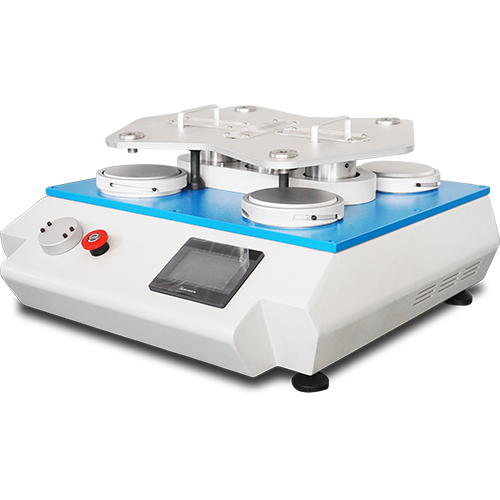
Martindale abrasion pilling tester
Price 2800 USD ($) / Unit
Minimum Order Quantity : 1 Unit
Application : Determining fabric abrasion and pilling resistance
Power Supply : AC 220V, 50Hz
Equipment Type : Martindale Abrasion Pilling Tester
Operating Voltage : 220V
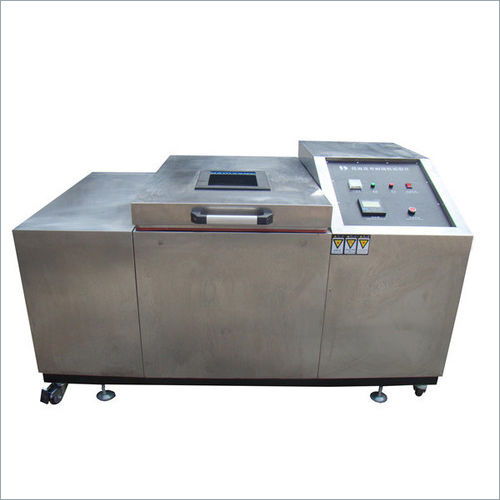
Horizontal Type Low Temperature Flexing Tester
Price 5000 USD ($) / Unit
Minimum Order Quantity : 1 Unit
Application : Industrial
Power Supply : Electric

Contact Details
- FACTORY ADD: No.13 Daxin Street, Daluosha Industrial Zone, Daojiao Town,Dongguan - 523710, Guangdong, China
- Phone :86-1591-7693151
- haidads@qc-test.cn
 Send Inquiry
Email us : haidads@qc-test.cn
- Ms Lisa (Manager)
- Mobile : +8613662707979, +8613829267288, +8615016776323, +8618373745787, +8618236912012, +8613602361535, +8613925747786

|


 |
HAIDA INTERNATIONAL EQUIPMENT CO., LTD.
All Rights Reserved.(Terms of Use) Developed and Managed by Infocom Network Private Limited. |
