

 English
 Spanish
 French
 German
 Italian
 Chinese (Simplified)
 Japanese
 Korean
 Arabic
 Portuguese
 Send Inquiry
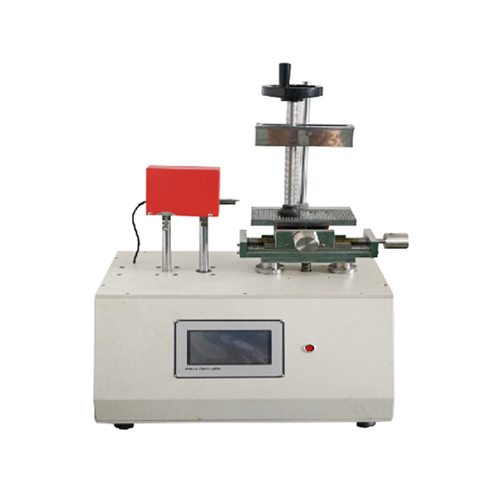
GB Standard Shoe Flexing tester
Price 4000 USD ($)/ Unit
MOQ : 1 Unit
GB Standard Shoe Flexing tester Specification
- Port Size
- Standard Sample Port
- Measuring Range
- 0 - 999,999 flex cycles
- Specimen Size
- Length: 150-200 mm
- Frequency
- 60 cpm
- Automation Grade
- Semi-automatic
- Temperature
- Room temperature (23 ± 2°C)
- Response Time
- Instantaneous
- Test Range
- 0 - 999,999 cycles
- Max Height
- Approx. 350 mm (sample)
- Resolution
- 1 cycle
- Application
- Bending/Flex testing of finished shoes as per GB/T 20991, ISO 5402, etc.
- Display Type
- LCD Digital Display
- Number of Specimens
- 6 pairs (12 pieces)
- Equipment Type
- Shoe Flexing Tester
- Mounting Type
- Bench-top
- Features
- Auto-stop, LCD Counter, Parallel Flexing Mechanism
- Accuracy
- ±1 cycle
- Hardness
- Applicable to standard finished shoe hardness
- Operating Voltage
- 220V AC
- Humidity
- 40%-70% RH
- Power Supply
- AC 220V, 50/60 Hz
- Interface Type
- Touch Keypad
- Usage
- Shoe Testing Laboratory
- Capacity
- Standard shoe types
- Machine Weight
- Approx. 85 kg
- Test Speed
- 60 ± 6 cpm (cycles per minute)
- Test Width
- 60 mm
- Test Stroke
- 30 ± 1 mm
- Control Mode
- Digital Control Panel
- Flexing Angle
- Standard per method (approx. 22.5)
- Protective Cover
- Transparent Acrylic Safety Enclosure
- Service Support
- On-site installation & training available
- Counter Reset
- Manual & Automatic Reset Options
- Movable Base
- Rubber Feet for Anti-Skid Operation
- Sample Fixing Method
- Adjustable Sample Clamps
- Noise Level
- Low ( 65 dB)
- Material of Construction
- Heavy-duty powder-coated steel
- Drive Method
- Synchronous Belt & Gear Motor
- Standards Compliance
- GB/T 20991, ISO 20344, ISO 5402
GB Standard Shoe Flexing tester Trade Information
- Minimum Order Quantity
- 1 Unit
- FOB Port
- SHENZHEN
- Payment Terms
- Cash on Delivery (COD), Letter of Credit (L/C), Letter of Credit at Sight (Sight L/C), Western Union, Paypal, Delivery Point (DP), Cash Against Delivery (CAD), Telegraphic Transfer (T/T), Days after Acceptance (DA), Cash in Advance (CID), Cheque, Cash Advance (CA)
- Supply Ability
- 15 Units Per Week
- Delivery Time
- 5 Days
- Packaging Details
- Each set protected with resin fiber and PP film, then put into Strong wooden case with operation manual and video inside.
- Main Export Market(s)
- Australia, Eastern Europe, South America, Western Europe, Central America, Middle East, Asia, North America, Africa
- Certifications
- CE,ISO
GB Standard Shoe Flexing tester About
GB Standard Shoe Flexing testerIntroduction
GB Standard Shoe Flexing tester is used to test the flexing function of shoe & shoe sole at room temperature, the theory is fix the shoe or shoe sole at machine and test under a certain angle & frequency to measure the length of crack or glue failure, as well view the change of upper shoes.
Standard
GB/T 3903.1
Standard Features
Grips | 2 sets |
Bending angle | 50 1(45& 50 adjustable) |
Test speed | (0~23010)r/min (adjustable) |
Counter | LCD, 0~999,999 times (adjustable) |
Motor | Inverter motor 2KW |
Weight | Approx. 178kg |
Power | 1 phase, AV 220V, 8A, 50/60HZ |
Size (W*D*H) | 53*69*140cm |
Advanced Construction and Safety
Built for durability, the tester uses powder-coated steel and features a transparent acrylic safety cover for operator protection. Additionally, its robust anti-skid rubber feet ensure stable, vibration-free operation during testing cycles.
Precision Digital Control and Measurement
The device includes an LCD digital display and touch keypad for exact cycle counting, manual or automatic counter reset, and real-time data monitoring. Its digital panel guarantees effortless test parameter adjustments and swift response times.
Compliance and Versatility
Compliant with GB/T 20991, ISO 20344, and ISO 5402 standards, this tester is suitable for a wide range of standard shoe types and hardnesses. Accepting specimen lengths of 150200 mm, its fully bench-top mounted for laboratory convenience.
FAQs of GB Standard Shoe Flexing tester:
Q: How does the GB Standard Shoe Flexing Tester operate?
A: The tester uses a synchronous belt and gear motor to bend shoe specimens at a controlled flexing angle (approx. 22.5), following preset test speeds (60 6 cpm) and stroke (30 1 mm). Samples are securely fixed using adjustable clamps, and tests can be initiated and monitored via the digital control panel.Q: What shoe types and specimen sizes can be tested with this machine?
A: This flexing tester accommodates standard finished shoes up to 350 mm high and specimens between 150200 mm in length, supporting six pairs (12 pieces) per test. Its suitable for various shoe types as specified in GB/T 20991 and ISO 5402.Q: Where is the GB Standard Shoe Flexing Tester typically used?
A: The machine is intended for shoe testing laboratories and quality control environments. Its widely used by manufacturers, exporters, and suppliers ensuring footwear complies with GB and ISO flex standards before reaching the market.Q: What is the process for conducting a flex test on this equipment?
A: Operators fix shoe samples using adjustable clamps, set test parameters on the digital panel, and start the machine. The test runs for a predetermined number of cycles or until failure, with real-time cycle count on the LCD display. The machine offers both manual and automatic counter reset options.Q: What are the benefits of using this shoe flexing tester?
A: Benefits include high test precision (1 cycle accuracy), instant display of results, compliance with key international standards, reduced operator risk via safety enclosures, and efficient operation for up to 12 specimens simultaneously.Q: When should this tester be calibrated or serviced?
A: Calibration and routine maintenance should be scheduled as per the laboratorys quality management protocols or after a significant number of test cycles. On-site installation and training services are available for optimal setup and use.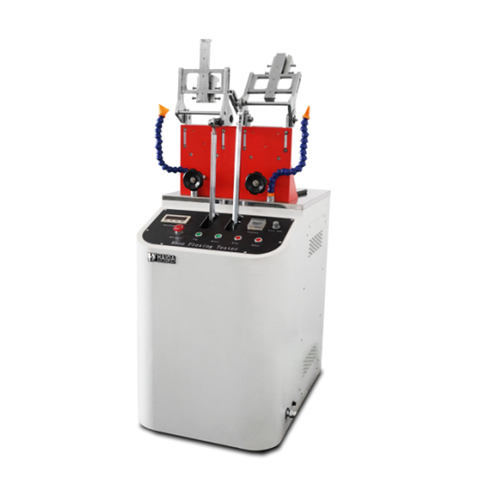
Tell us about your requirement

Price:
Quantity
Select Unit
- 50
- 100
- 200
- 250
- 500
- 1000+
Additional detail
Mobile number
Email

More Products in Shoes Test Equipment Category
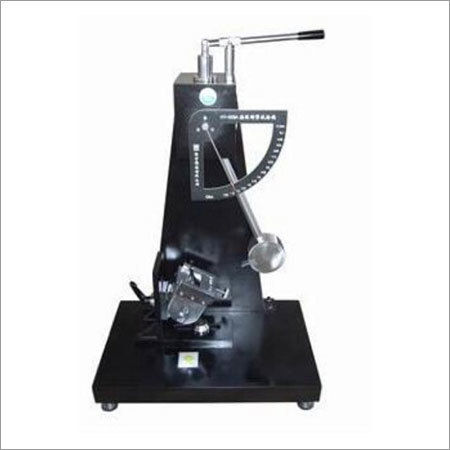
Shoe Heel Impact Test Machine
Price 3000 USD ($) / Unit
Minimum Order Quantity : 1 Unit
Test Stroke : 50 mm
Accuracy : 1 cycle
Control Mode : Digital control, touch panel
Interface Type : RS232
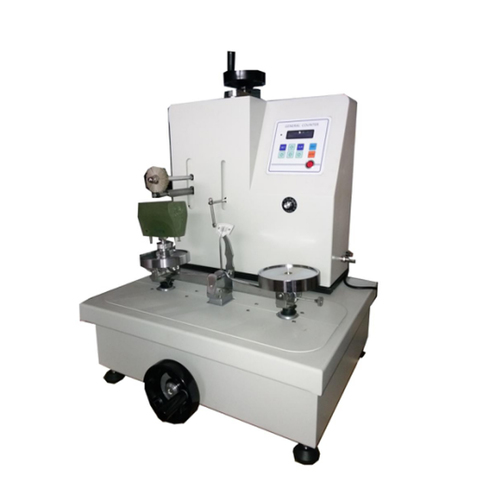
Shoe Abrasion Resistance Tester
Price 4000 USD ($) / Unit
Minimum Order Quantity : 1 Unit
Test Stroke : 76 mm
Accuracy : 1 cycle
Control Mode : Digital Controller
Interface Type : User interface buttons
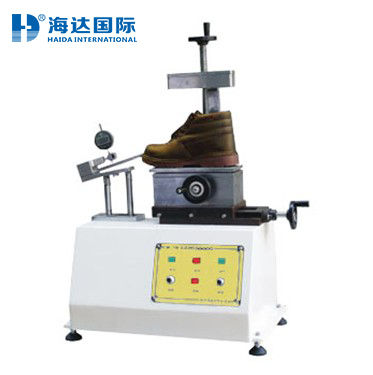
Shoe peeling strength testing machine
Price 2000 USD ($) / Unit
Minimum Order Quantity : 1 Unit
Test Stroke : 100 mm
Accuracy : 1%
Control Mode : Digital control
Interface Type : RS232
Shoe Peeling Strength Tester
Price 2100 USD ($) / Unit
Minimum Order Quantity : 1 Unit
Test Stroke : 100 mm
Accuracy : 1% F.S.
Control Mode : Manual & Digital Control
Interface Type : RS232 Data Output

Contact Details
- FACTORY ADD: No.13 Daxin Street, Daluosha Industrial Zone, Daojiao Town,Dongguan - 523710, Guangdong, China
- Phone :86-1591-7693151
- haidads@qc-test.cn
 Send Inquiry
Email us : haidads@qc-test.cn
- Ms Lisa (Manager)
- Mobile : +8613662707979, +8613829267288, +8615016776323, +8618373745787, +8618236912012, +8613602361535, +8613925747786

|


 |
HAIDA INTERNATIONAL EQUIPMENT CO., LTD.
All Rights Reserved.(Terms of Use) Developed and Managed by Infocom Network Private Limited. |
