

 English
 Spanish
 French
 German
 Italian
 Chinese (Simplified)
 Japanese
 Korean
 Arabic
 Portuguese
 Send Inquiry
Precise Walk in Environmental Test Chamber
MOQ : 1 Set
Precise Walk in Environmental Test Chamber Specification
- Application
- Reliability testing for electronics, automotive components, aerospace, material aging, and high-volume industrial samples
- Humidity
- 20% RH to 98% RH (3% RH)
- Mounting Type
- Floor-standing, modular panel structure
- Features
- Safety overload protection, observation window, illumination, programmable cycles, data logging, alarm system
- Specimen Size
- Max 800 mm x 800 mm x 1000 mm (custom shelving may alter available size) Millimeter (mm)
- Accuracy
- 0.5C (temperature), 3% RH (humidity) °C
- Display Type
- 7 or larger color touch panel display
- Hardness
- Not applicable (N/A)
- Operating Voltage
- AC 380V, 50/60Hz Volt (V)
- Resolution
- 0.1C / 0.1% RH
- Automation Grade
- Fully Automatic
- Power Supply
- AC 380V, 50/60Hz, 3 Phase
- Equipment Type
- Walk-in Environmental Test Chamber
- Max Height
- Up to 2600 mm (custom on request)
- Frequency
- 50/60Hz Hertz (HZ)
- Measuring Range
- Temperature: -70C to +150C; Humidity: 20% RH to 98% RH Celsius (oC)
- Port Size
- Standard cable port: 100 mm diameter (customizable)
- Test Range
- Temperature and humidity programmable range within above limits
- Interface Type
- USB, RS232/RS485, Ethernet LAN, remote control support
- Number of Specimens
- Custom-configurable, typically up to 50 depending on specimen size
- Temperature
- -70C to +150C (user selectable range) Celsius (oC)
- Usage
- Environmental stress screening, long-duration aging, reliability evaluation
- Machine Weight
- Customizable (typically ranges from 800 kg to 3000 kg depending on chamber size) Kilograms (kg)
- Test Speed
- Programmable, typically 0.5C/min to 5C/min (temperature change rate)
- Test Width
- 1200 mm to 3500 mm (custom available) Millimeter (mm)
- Test Stroke
- Full internal chamber space, adjustable shelving
- Control Mode
- PLC & Touch Screen Control with PID regulation
- Noise Level
- 70 dB(A) at 1 meter
- Door Type
- Single or double-leaf swing door with airtight silicone gasket
- Refrigeration System
- Hermetic/semi-hermetic compressor with eco-friendly refrigerant (R404A / R23)
- External Material
- Cold rolled steel with powder coated finish or stainless steel
- Internal Material
- SUS 304 stainless steel, corrosion resistant, easy to clean
- Observation Window
- Multi-layer heated anti-fog safety glass window
- Ambient Operating Conditions
- +5C to +35C, <85% RH non-condensing
- Wheel Type
- Heavy-duty swivel casters with leveling feet
- Safety Features
- Overheating protection, compressor overload, leakage breaker, overcurrent surge, phase sequence protection
- Lighting
- LED internal illumination
- Compliance
- Meets IEC, MIL, ASTM, and GB/T testing standards
- Heating System
- Stainless steel finned heater, fast and uniform heating
- Data Storage
- Built-in data logger, export via USB
Precise Walk in Environmental Test Chamber Trade Information
- Minimum Order Quantity
- 1 Set
- FOB Port
- SHENZHEN
- Supply Ability
- 1 Set Per Month
- Delivery Time
- 30 Days
- Sample Policy
- Contact us for information regarding our sample policy
- Packaging Details
- Each set protected with resin fiber and PP film, then put into Strong wooden case with operation manual and video inside.
- Certifications
- CE,ISO...
Precise Walk in Environmental Test Chamber About
walk in environmental test chamber Product Description: walk-in environmental test chamber ,as a climatic test chamber that may be configured to almost any large components . this walk in chamber can do Temperature/Humidity Cycling,Constant Temperature/Humidity,Extreme Temp / Humidity Testing, Fast Ramp Rate,Storage Testing,Altitude Testing,Vibration Integration,Solar Simulation etc . Usage: walk-in environmental test chamber main for the industry of large parts, semi-finished and finished products of the temperature and humidity testing, such as computer terminals, auto parts. Room temperature and humidity is mainly composed of a control panel, distribution plate, base plate, wet blower, heater, humidifier, refrigerator and. The main technical parameters: Professional Walk-in Temperature Humidity Testing Room Model HD-E705 System Balanced Temperature & Humidity Control System Temp. range -70C ~100C or 150C Humid. range 30% ~ 98%R.H. Temp. & Humid. accuracy 0.5C; 2%R.H Temp. & Humid. regularity 2C; 3% RH Resolution 0.01C, 2%, P.I.D control Heating up -55C ~ +85C within 50 min Heating down +85C~ -55Cwithin 60min Interior dimension(LWH) 100100120cm optional Exterior dimension(LWH) 165150175cm optional Interior material Stainless steel plate(SUS304) Exterior material Stainless steel plate(SUS304) Insulation Rigid foam Refrigeration system Air cooled, Hermetic compressor, single stage refrigeration system. Display LCD Safety devices No fuse breaker refrigerator over load relay, Refrigeration High pressure Switch, Over Temp, Protector, Protection relay, Protection fuse, Water Lever protector, Overheat protector, Alarm Accessories Viewing window, Shelves (freely adjustable 2 pcs.), Cable port(50mm)Chamber lamp. Power 3#, AC380V 50Hz
Advanced Testing Capabilities
This chamber delivers precise testing environments for temperature and humidity, supporting programmable cycles and rapid transitions. Ideal for environmental stress screening and long-duration aging tests, it maintains uniform conditions and allows thorough evaluation of specimen reliability, even at extreme ranges. Adjustable shelving and large capacity accommodate diversified sample sizes for industrial-scale research.
Safety and User-Friendly Operation
Designed with user protection in mind, the chamber incorporates multiple safety systems, including overheating and compressor overload protection, leakage breakers, and phase sequence monitoring. The airtight silicone gasket and anti-fog safety glass enable safe observation without compromising test conditions. Its PLC-controlled touch screen and automated operation streamline workflows, ensuring easy setup and consistent results.
Efficient Data Management and Accessibility
Built-in data logging functions allow for seamless monitoring and export of test records via USB, with additional connectivity options such as RS232/RS485 and Ethernet LAN. Users can analyze data locally or remotely, facilitating process documentation and reporting. The systems modular design with heavy-duty swivel casters ensures ease of installation and relocation for dynamic lab environments.
FAQs of walk in environmental test chamber:
Q: How is specimen testing conducted in the walk-in environmental test chamber?
A: Specimen testing involves placing samples onto adjustable shelves inside the chamber, configuring the required temperature and humidity settings using the touch screen control, and running programmable test cycles. The chamber ensures uniform environmental conditions, allowing accurate reliability and stress screening across diverse materials and component types.Q: What industries commonly use this environmental test chamber and for what applications?
A: Industries ranging from electronics and automotive to aerospace and materials science utilize this chamber for reliability testing, long-duration aging assessments, and environmental stress screening. It is adept at evaluating large batches of products and ensuring compliance with stringent standards such as IEC, MIL, ASTM, and GB/T.Q: When should maintenance be performed on the test chamber, and what does it involve?
A: Regular maintenance should be scheduled based on usage intensitytypically every six months. This includes inspecting the internal SUS 304 stainless steel surfaces for cleanability and corrosion, checking the refrigeration system and heating elements, verifying safety functions, reviewing door seals, and ensuring data logger performance. Following manufacturer guidelines helps maintain optimal chamber operation.Q: Where can the walk-in environmental test chamber be installed, and what are the ambient operating requirements?
A: The chamber is suitable for lab, production floor, or research facility installation thanks to its heavy-duty casters and modular structure. It requires ambient conditions between +5C and +35C with relative humidity below 85% (non-condensing), stable AC 380V 3-phase power, and adequate space to accommodate its customizable size.Q: What process is followed for exporting test data from the chamber?
A: Test data is collected by the built-in logger and can be exported via USB port. Users can also utilize RS232/RS485 or Ethernet LAN interfaces for remote data access and integration with lab management systems. The process is straightforward, supporting documentation and analysis for quality assurance and research purposes.Q: How does the chamber ensure specimen safety and protect users during operation?
A: Multiple safety featuresincluding overheating protection, compressor overload safeguards, leakage breaker, and phase sequence monitoringare integrated. The airtight silicone gasket, heated anti-fog window, and LED illumination allow secure, clear specimen observation, while alarms alert users to any abnormal conditions. These measures safeguard both specimens and operators during testing.Q: What are the notable benefits of using a walk-in environmental test chamber for reliability testing?
A: Key benefits include large-scale customizable capacity, precise environmental control (temperature/humidity), rapid recovery times post-door opening, automated operation, comprehensive safety measures, and efficient data logging/export. These qualities collectively deliver reliable, reproducible results, supporting research, product development, and quality assurance in demanding industrial and technological sectors.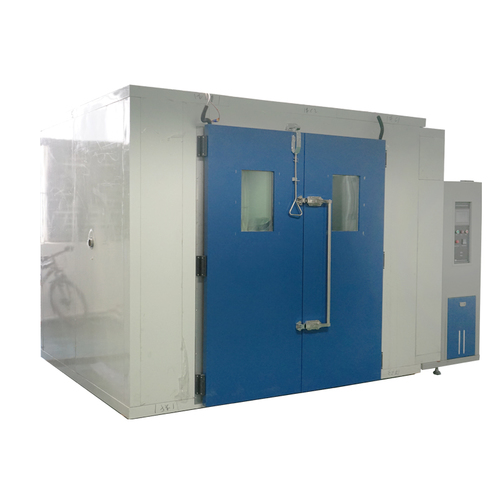
Tell us about your requirement

Price:
Quantity
Select Unit
- 50
- 100
- 200
- 250
- 500
- 1000+
Additional detail
Mobile number
Email

More Products in Environmental Test Chamber Category
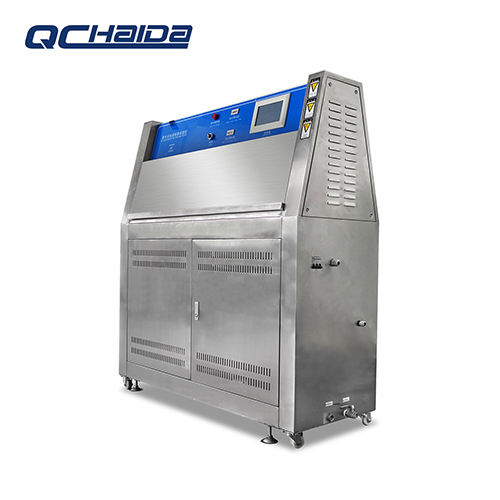
UV Weathering Test Machine
Price Range 4000.00 - 6000.00 USD ($) / Set
Minimum Order Quantity : 1 Set
Temperature : RT+10C to 70C
Power Supply : AC 220V 50Hz
Humidity : 40% 98% RH
Test Stroke : 400 mm
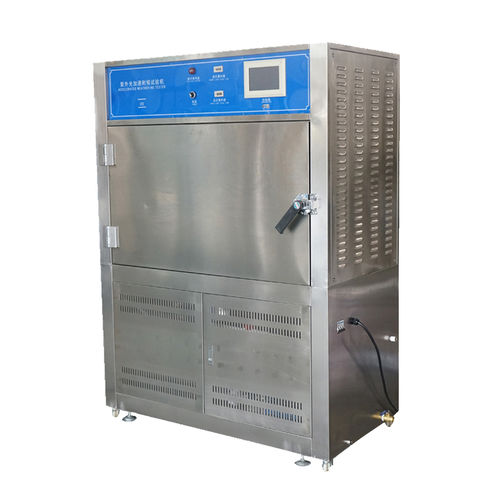
Uv Accelerated Weathering Test Machine
Price Range 3000.00 - 6000.00 USD ($)
Minimum Order Quantity : 1 Set
Temperature : Ambient, programmable up to 70C
Power Supply : AC 220 V, 50/60 Hz
Humidity : 40% 98% RH adjustable
Test Stroke : Variable, up to 500 mm
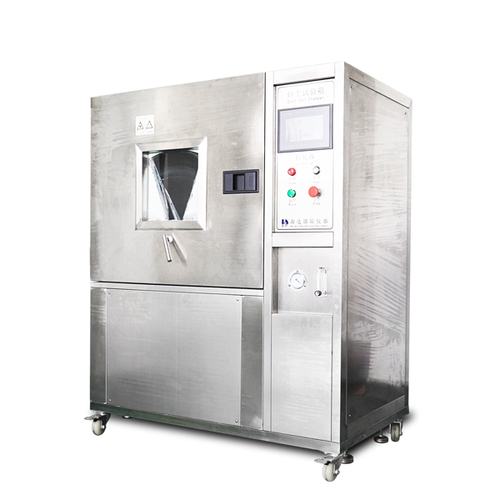
Sand Dust Test Chamber
Price Range 3000.00 - 6000.00 USD ($)
Minimum Order Quantity : 1 Set
Temperature : Room temperature to 65C
Power Supply : 220V/50Hz
Humidity : <30% RH (adjustable)
Test Stroke : 300 mm
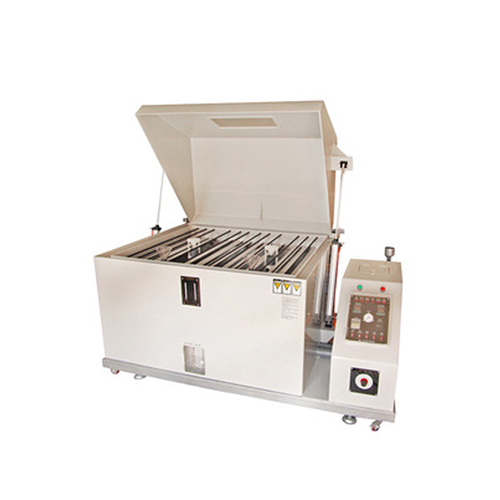
salt chamber
Price Range 3000.00 - 6000.00 USD ($)
Minimum Order Quantity : 1 Set
Temperature : 35C 1C (per ASTM B117)
Power Supply : 220V AC, 50/60 Hz
Humidity : 95% RH or above
Test Stroke : Standard full chamber, up to 1000 mm

Contact Details
- FACTORY ADD: No.13 Daxin Street, Daluosha Industrial Zone, Daojiao Town,Dongguan - 523710, Guangdong, China
- Phone :86-1591-7693151
- haidads@qc-test.cn
 Send Inquiry
Email us : haidads@qc-test.cn
- Ms Lisa (Manager)
- Mobile : +8613662707979, +8613829267288, +8615016776323, +8618373745787, +8618236912012, +8613602361535, +8613925747786

|


 |
HAIDA INTERNATIONAL EQUIPMENT CO., LTD.
All Rights Reserved.(Terms of Use) Developed and Managed by Infocom Network Private Limited. |
