

 English
 Spanish
 French
 German
 Italian
 Chinese (Simplified)
 Japanese
 Korean
 Arabic
 Portuguese
 Send Inquiry
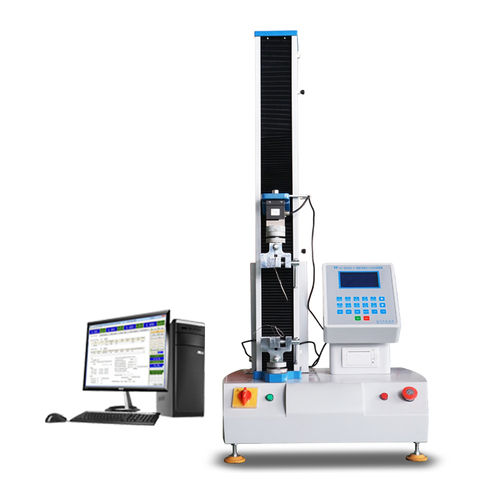
Tensile Strength Tester For Copper Wire
Price 800 USD ($)/ Unit
MOQ : 1 Unit
Tensile Strength Tester For Copper Wire Specification
- Screw Size
- M16
- Color
- Blue & Silver
- Load Capacity
- 500 kg
- Operating Temperature
- 5°C to 45°C
- Power
- AC Supply
- Features
- Digital display, motorized operation, peak hold facility
- Machine Speed
- Variable motor driven
- Product Type
- Tensile Strength Tester For Copper Wire
- Resolution
- 0.1 N
- Frequency
- 50 Hz
- Voltage
- 220 V AC
- Phase
- Single Phase
- Sensor
- Load Cell Type
- Accuracy
- ±1% of full scale
- Application
- Copper Wire Tensile Strength Testing
- Stroke Length
- 600 mm
- Power Consumption
- 500 W
- Weight
- Approx. 150 kg
- Capacity
- Up to 500 kg
- Dimension (L*W*H)
- 900 mm x 600 mm x 1400 mm
- Speed Range
- 10 mm/min to 500 mm/min
- Control System
- Digital, Microprocessor Based
- Power Source
- Electric
- Automatic Grade
- Semi-Automatic
- Material
- Mild Steel
- Gripping Range
- 0.2 mm to 3 mm diameter wire
- Operating Humidity
- 10% to 90% RH
- Display type
- Digital LCD Display
- Jaw Type
- Self-tightening V jaws
- Crosshead Travel
- 600 mm maximum
- Software Compatibility
- PC Connectivity with analysis software
- Data Output
- USB/RS232 interface
- Compliance Standards
- IS 1608, ASTM E8
- Testing Modes
- Tensile, Elongation
- Safety Features
- Overload protection, Emergency Stop Switch
- Test Speed Accuracy
- 0.5%
Tensile Strength Tester For Copper Wire Trade Information
- Minimum Order Quantity
- 1 Unit
- FOB Port
- SHENZHEN
- Payment Terms
- Cash on Delivery (COD), Letter of Credit (L/C), Western Union, Paypal, Letter of Credit at Sight (Sight L/C), Delivery Point (DP), Cash Against Delivery (CAD), Telegraphic Transfer (T/T), Days after Acceptance (DA), Cash in Advance (CID), Cheque, Cash Advance (CA)
- Supply Ability
- 15 Units Per Week
- Delivery Time
- 5 Week
- Packaging Details
- Each set protected with resin fiber and PP film, then put into Strong wooden case with operation manual and video inside. CE,ISO
- Certifications
- CE,ISO
Tensile Strength Tester For Copper Wire About
tensile structure tester for PVC insulated copper wire
Product Description
Application
copper wire testing equipment used to test tension, compression, shearing force, adhesion, peeling force, tear strength,ect
of specimen, semi product and finished product in the field of rubber, plastic, metal, nylon,fabric,paper, aviation, packing, architecture, petrochemistry, electric appliance, automobile,...etc. which are the basic facilities for input quality control (I.Q.C), Quality Control (Q.C.), Physical Inspection,
Mechanics Research and Material Development.
Features
1. Adopting windows platform, and all the parameter settings can be processed in the dialog box, and it operates easily.
2. Using a single-screen operation; do not need to switch the screen;
3. With three languages in Simplified Chinese, Traditional Chinese and English, the software interface can be switched easily;
4. The pattern of Test reports can be selfdesignated; test data can be displayed directly in the main screen;
Main Technical Parameter:
Items | Specification |
Capacity | 5, 10, 20, 25, 50, 100, 200kg |
Unit Switchover | G, KG, N, LB |
Display Device | Microcomputer |
Resolution | 1/100,000 |
Accuracy | 0.5% |
Max. Stroke | 1000mm (including fixture) |
Test Speed | 20-300mm/min (adjustable ) |
Motor | AC Motor |
Screw | High Precise Ball Screw |
Elongation Accuracy | 0.001mm |
Power | AC220V, 50HZ |
Weight | Approx.45kg |
Acc |
Advanced Digital Display and Safety
The tester features a user-friendly digital LCD screen, which clearly displays tensile and elongation results. For user protection and equipment longevity, it is equipped with overload protection and an emergency stop switch. Data can be seamlessly transferred through USB or RS232 for further analysis, ensuring both safety and efficient workflow throughout the testing process.
Wide Testing Capability with Precision
Designed with self-tightening V jaws, the tester accommodates copper wires with diameters from 0.2 mm to 3 mm. The motorized, variable-speed system allows accurate control of testing speeds from 10 mm/min to 500 mm/min, ensuring precise and repeatable results. Built to international standards (IS 1608, ASTM E8), the tester guarantees consistency and reliability in laboratory or industrial environments.
FAQs of Tensile Strength Tester For Copper Wire:
Q: How does the Tensile Strength Tester for Copper Wire ensure testing safety?
A: The machine includes overload protection to prevent damage under excessive loads and features an emergency stop switch for immediate halting of the operation, providing robust safety for both operators and equipment.Q: What is the process for conducting a tensile strength test using this machine?
A: First, the copper wire sample (ranging from 0.2 mm to 3 mm diameter) is secured in the self-tightening V jaws. The digital system allows for precise adjustment of test speed, after which the test is started. Data is recorded and displayed in real-time and can be exported for analysis.Q: When is it beneficial to use the peak hold facility during testing?
A: The peak hold facility is particularly useful when you need to capture and record the maximum force applied during a tensile test, enabling accurate assessment of wire strength without manual intervention during peak load recording.Q: Where can the test data be exported and analyzed?
A: The tester supports USB and RS232 interfaces for data output. Results can be seamlessly transferred to a PC and analyzed using compatible software, allowing for detailed performance assessment and easy archiving.Q: What are the benefits of compliance with IS 1608 and ASTM E8 standards?
A: Compliance with these standards ensures that the test results are internationally recognized and meet stringent quality and accuracy requirements, which is crucial in quality control and certification processes.Q: How does the machine maintain accuracy during different testing speeds?
A: Equipped with a variable motor and a microprocessor-based control system, the tester maintains a test speed accuracy of 0.5% and a force measurement accuracy of 1% of full-scale, ensuring reliable performance across its entire operational range.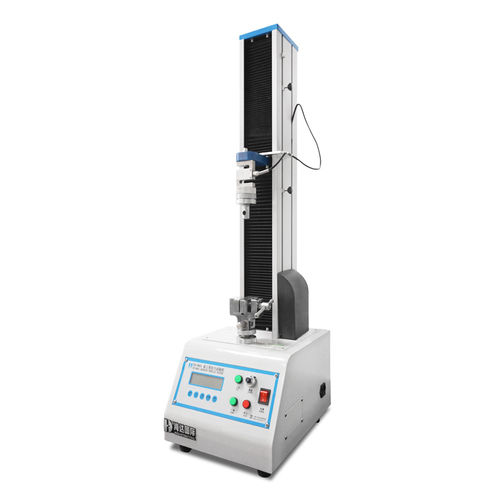
Tell us about your requirement

Price:
Quantity
Select Unit
- 50
- 100
- 200
- 250
- 500
- 1000+
Additional detail
Mobile number
Email

More Products in Tensile Testing Equipment Category
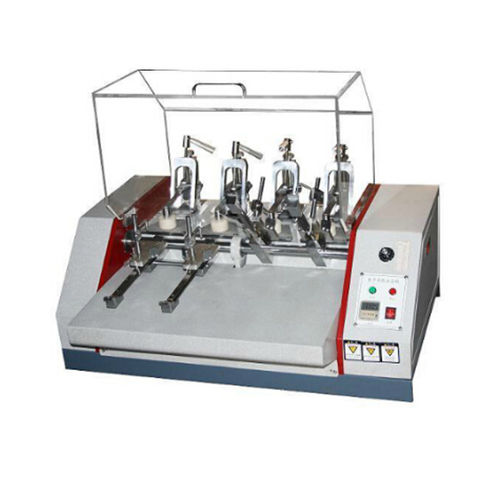
Finished Shoe Flexing Tester
Price 2800 USD ($) / Unit
Minimum Order Quantity : 1 Unit
Screw Size : M8 (fixture screws)
Color : BlueGrey
Power : AC 220V, 50Hz
Product Type : Finished Shoe Flexing Tester
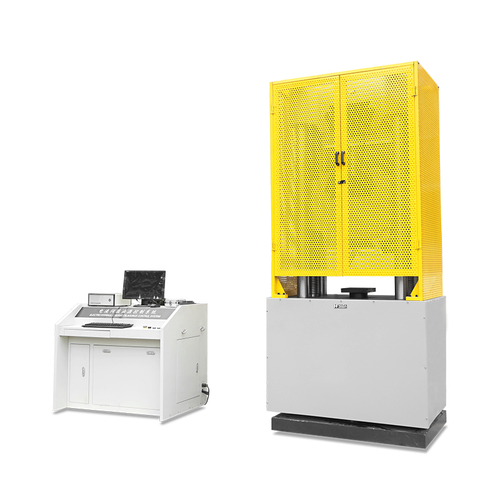
30t Universal Tensile Testing Machine
Price 3800 USD ($) / Unit
Minimum Order Quantity : 1 Unit
Screw Size : 36 mm
Color : Blue & Grey
Power : 220 V AC, 50 Hz
Product Type : Universal Tensile Testing Machine
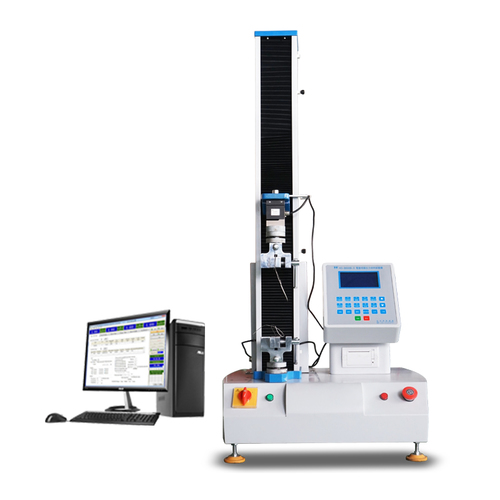
200KG Capacilty Universal Tensile Testing Machine
Price 2200 USD ($) / Unit
Minimum Order Quantity : 1 Unit
Screw Size : M12 Lead Screw
Color : Blue/Grey
Power : 220V AC, 50Hz
Product Type : Universal Tensile Testing Machine
PC & PLC Display Fiber Tensile Strength Testing
Price 1499 USD ($) / Unit
Minimum Order Quantity : 1 Unit
Screw Size : Ball Screw 20 mm
Color : White & Blue
Power : 220V, 50Hz
Product Type : Fiber Tensile Strength Testing Machine

Contact Details
- FACTORY ADD: No.13 Daxin Street, Daluosha Industrial Zone, Daojiao Town,Dongguan - 523710, Guangdong, China
- Phone :86-1591-7693151
- haidads@qc-test.cn
 Send Inquiry
Email us : haidads@qc-test.cn
- Ms Lisa (Manager)
- Mobile : +8613662707979, +8613829267288, +8615016776323, +8618373745787, +8618236912012, +8613602361535, +8613925747786

|


 |
HAIDA INTERNATIONAL EQUIPMENT CO., LTD.
All Rights Reserved.(Terms of Use) Developed and Managed by Infocom Network Private Limited. |
