

 English
 Spanish
 French
 German
 Italian
 Chinese (Simplified)
 Japanese
 Korean
 Arabic
 Portuguese
 Send Inquiry
Finished Shoe Flexing Tester
Price 2800 USD ($)/ Unit
MOQ : 1 Unit
Finished Shoe Flexing Tester Specification
- Capacity
- 2 pairs
- Color
- Blue-Grey
- Resolution
- 1 cycle
- Accuracy
- ±1% of reading
- Dimension (L*W*H)
- 900 x 460 x 400 mm
- Load Capacity
- 2 Pairs of Finished Shoes
- Operating Temperature
- 10°C to 35°C
- Frequency
- 50 Hz
- Phase
- Single Phase
- Stroke Length
- 25 ± 1 mm
- Sensor
- Micro Switch Limit Sensor
- Application
- To determine the flexing durability of complete shoes
- Voltage
- 220V AC
- Power Source
- Electric
- Weight
- Approx. 110 kg
- Screw Size
- M8 (fixture screws)
- Speed Range
- 60-300 cycles/min
- Power
- AC 220V, 50Hz
- Power Consumption
- 500 W
- Product Type
- Finished Shoe Flexing Tester
- Control System
- Digital control with pre-set Counter
- Machine Speed
- 120 cycles/min (as standard)
- Features
- Digital Counter, Robust Construction, Easy Sample Mounting
- Automatic Grade
- Semi Automatic
- Material
- Mild Steel with Powder Coating
- Footform Material
- Stainless steel
- Test Sample Type
- Finished shoes (various materials)
- Noise Level
- <65 dB
- Environmental Conditions
- Humidity 30-80% RH
- Installation Support
- Provided as per request
- Cycle Counter
- 5-digit digital
- Display Type
- Digital LED display
- Drive Mechanism
- Crank and lever system
- Maximum Shoe Size
- Up to UK size 13
- Packaging Type
- Export-worthy wooden box
- Lubrication Type
- Self-lubricated bearings
- Cycle Pre-set Range
- 1-99,999 cycles
- Clamping Mechanism
- Quick-release lever with rubber padding
- Standards Compliance
- Conforms to SATRA TM92, ISO 20344
- Safety Features
- Protective cover with interlock system
Finished Shoe Flexing Tester Trade Information
- Minimum Order Quantity
- 1 Unit
- FOB Port
- SHENZHEN
- Payment Terms
- Cash on Delivery (COD), Letter of Credit (L/C), Letter of Credit at Sight (Sight L/C), Paypal, Western Union, Delivery Point (DP), Cash Against Delivery (CAD), Telegraphic Transfer (T/T), Days after Acceptance (DA), Cash in Advance (CID), Cheque, Cash Advance (CA)
- Supply Ability
- 15 Units Per Week
- Delivery Time
- 5 Days
- Sample Policy
- Contact us for information regarding our sample policy
- Packaging Details
- Each set protected with resin fiber and PP film, then put into Strong wooden case with operation manual and video inside.
- Main Export Market(s)
- Australia, North America, Eastern Europe, Middle East, Western Europe, Africa, Central America, South America, Asia
- Certifications
- Each set protected with resin fiber and PP film, then put into Strong wooden case with operation manual and video inside.
Finished Shoe Flexing Tester About
Finished Shoe Flexing Tester
Introduction
This Finished Shoe Flexing Testeris designed for measuring the resistance of shoes of all kinds to flex. It determines the fatigue durability and service life of shoes by simulating the walking state of a person. This shoe flexing tester features simple operation, reasonable design, rigidity and durability, low noise and easy maintenance.
Standard Features:
|
Capacity |
4 stations(4 specimen can be tested simultaneously) |
|
Bending angle |
0 90Adjustable |
|
Speed |
50150cpm |
|
Specimen length |
150400mm |
|
Specimen width |
150mm ( max ) |
|
Counter |
LCD display,0999,999 |
|
Dimension(LxWxH) |
97x77x70cm3 |
|
Electromotor |
DC 1/2HP |
|
Weight |
180kg |
Efficient Flexing Durability Testing
This machine streamlines the process of testing the flexing durability of finished shoes, accommodating up to two pairs in a single run. Its powerful drive mechanism, quick-release clamping, and digital counter enable rigorous and repeatable testing procedures that conform to international standards. The integrated LED display ensures test monitoring is clear, while the robust construction guarantees longevity and resilience even under continuous operation.
Advanced Safety and User-Friendly Design
Operator safety is prioritized through a protective cover with interlock, reducing accident risks during testing. The quick-release lever with rubber padding simplifies and speeds up sample mounting, enhancing ergonomics. The intuitive digital control system and high-resolution counter facilitate precise test set-up and operation, while self-lubricated bearings minimize maintenance requirements for users.
FAQs of Finished Shoe Flexing Tester:
Q: How is the Finished Shoe Flexing Tester installed and set up for operation?
A: Installation support is available upon request. The machine should be placed on a stable, level surface in an environment with temperatures between 10C and 35C and humidity between 30% and 80% RH. Power supply should be provided at 220V AC, 50Hz single phase. Once unpacked from its export-worthy wooden box, follow the user manual to assemble as needed, connect power, and perform initial checks before mounting shoe samples.Q: What types and sizes of shoes can be tested with this machine?
A: The tester accommodates finished shoes of various materials, up to UK size 13. It is suitable for testing a broad range of finished footwear, including but not limited to leather, synthetic, sports, and safety shoes, making it highly versatile for quality control in manufacturing and testing environments.Q: When should the flexing durability test be performed on shoes?
A: This test is typically conducted during the final quality assurance stage of shoe manufacturing or batch evaluation, ensuring that finished shoes meet durability standards before distribution. It can also be utilized during development or comparative assessments of new materials and designs.Q: Where is this tester most beneficially used?
A: The Finished Shoe Flexing Tester is ideal for use in shoe manufacturing QA/QC labs, testing institutes, research and development centers, and institutions needing conformity assessments according to SATRA TM92 or ISO 20344. Its export-worthy packaging and robust build also make it suitable for global distribution and use.Q: What is the testing process for evaluating shoe flex durability?
A: To test, mount the finished shoe sample securely using the quick-release lever and rubber padding footforms. Select the desired number of flex cycles on the digital controller (up to 99,999 cycles), ensure the protective cover is in place, and initiate the test. The machine operates at preset or adjustable speeds (60300 cycles/min), flexing shoes through a specified stroke length, simulating repeated real-life use.Q: How does the digital cycle counter and control system enhance testing accuracy?
A: The digital control system allows users to pre-set the exact number of desired flex cycles, displayed clearly on the LED screen. This, combined with a resolution of 1 cycle and accuracy of 1% of reading, guarantees precise reproducibility and traceability of test results, which is crucial for maintaining consistent product quality and meeting compliance requirements.Q: What are the main benefits of using this flexing tester for manufacturers and testing labs?
A: Key benefits include improved test precision, compliance with international standards, time-efficient sample handling due to the quick-release mechanism, enhanced safety via the interlock cover, and reduced maintenance from self-lubricating bearings. The tester helps ensure footwear durability, supporting reputation and reliability in both domestic and international markets.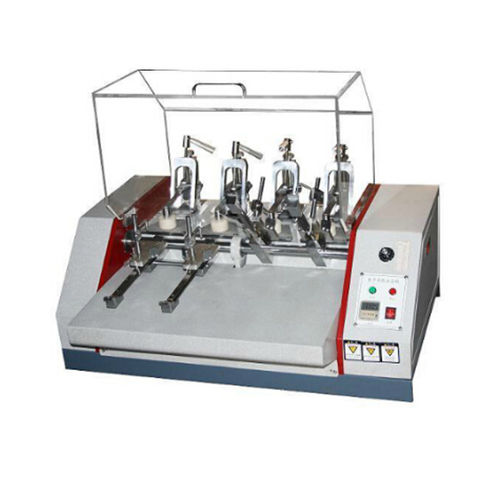
Tell us about your requirement

Price:
Quantity
Select Unit
- 50
- 100
- 200
- 250
- 500
- 1000+
Additional detail
Mobile number
Email

More Products in Tensile Testing Equipment Category
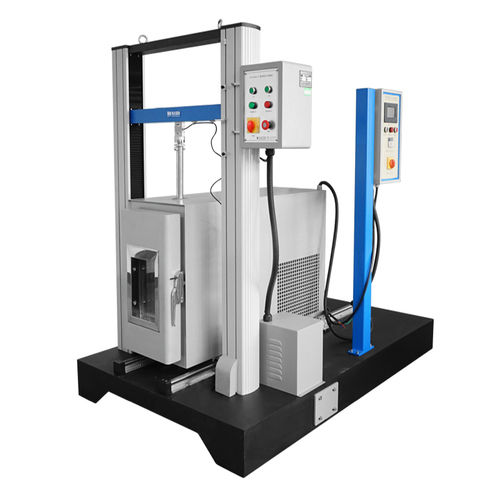
High Quality Servo Motor Tensile and Push Test Dev
Price 4800 USD ($) / Unit
Minimum Order Quantity : 1 Unit
Power : 1 kW
Screw Size : M18 x 2.5 mm
Product Type : Servo Motor Tensile & Push Test Device
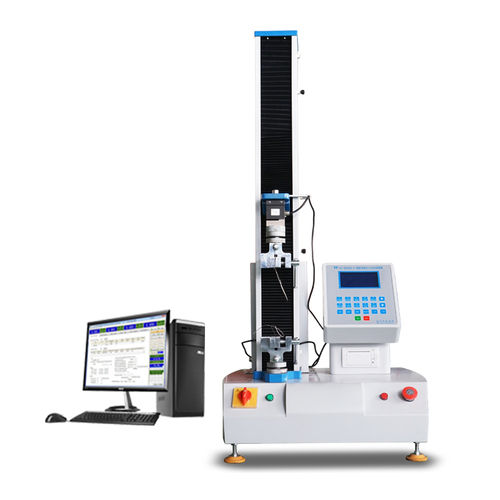
Safety Belt Tensile Strength Tester
Price Range 3000.00 - 4000.00 USD ($)
Minimum Order Quantity : 1 set Set
Power : AC 220 V, 50 Hz
Screw Size : M20 high tensile
Product Type : Safety Belt Tensile Strength Tester
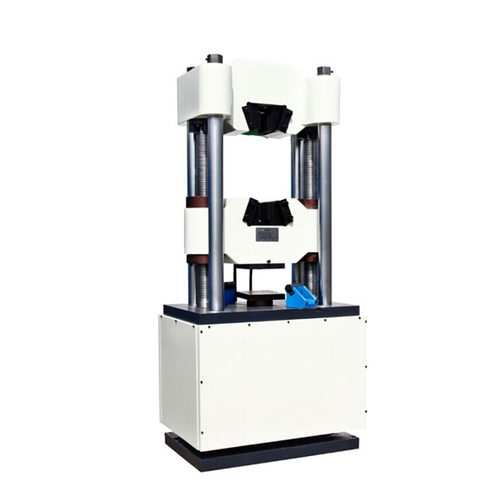
Universal Hydraulic Compression Testing Machine
Price 10500 USD ($) / Unit
Minimum Order Quantity : 1 Unit
Power : 3 HP Electric Motor
Screw Size : 50 mm (diameter)
Product Type : Universal Hydraulic Compression Testing Machine
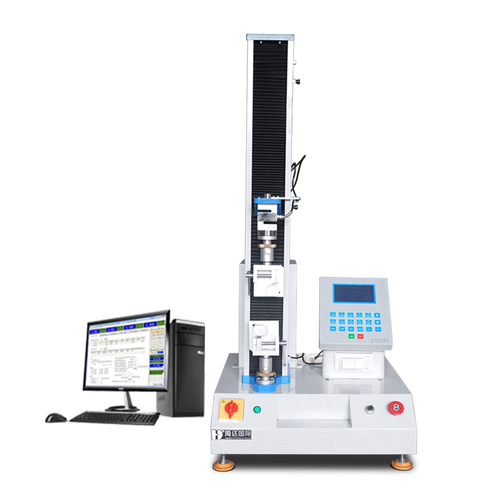
Fabric Tensile Testing Machines
Price 1899 USD ($) / Set
Minimum Order Quantity : 1 Set
Power : AC 220V 10%, 50 Hz
Screw Size : Lead screw, 16 mm
Product Type : Fabric Tensile Testing Machine

Contact Details
- FACTORY ADD: No.13 Daxin Street, Daluosha Industrial Zone, Daojiao Town,Dongguan - 523710, Guangdong, China
- Phone :86-1591-7693151
- haidads@qc-test.cn
 Send Inquiry
Email us : haidads@qc-test.cn
- Ms Lisa (Manager)
- Mobile : +8613662707979, +8613829267288, +8615016776323, +8618373745787, +8618236912012, +8613602361535, +8613925747786

|


 |
HAIDA INTERNATIONAL EQUIPMENT CO., LTD.
All Rights Reserved.(Terms of Use) Developed and Managed by Infocom Network Private Limited. |
