

 English
 Spanish
 French
 German
 Italian
 Chinese (Simplified)
 Japanese
 Korean
 Arabic
 Portuguese
 Send Inquiry
Sponge Compression Hardness Tester
Price 4000 USD ($)/ Set
MOQ : 1 Set
Sponge Compression Hardness Tester Specification
- Response Time
- 2 seconds
- Application
- Measuring compressive hardness of foam, sponge and similar materials
- Resolution
- 0.01 N
- Temperature
- 10C ~ 35C
- Measuring Range
- 0~1000 N
- Hardness
- As per test selected
- Display Type
- LCD Digital Display
- Port Size
- G1/4
- Test Range
- 0~1000 N
- Frequency
- 50/60 Hz
- Interface Type
- RS232
- Power Supply
- AC 220V, 50/60Hz
- Equipment Type
- Sponge Compression Hardness Tester
- Automation Grade
- Semi-Automatic
- Accuracy
- 1% F.S.
- Humidity
- 85% RH
- Specimen Size
- 380 x 380 mm (or customized)
- Max Height
- 100 mm
- Mounting Type
- Bench-top
- Operating Voltage
- 220V
- Number of Specimens
- 1
- Features
- Automatic compression, peak value holding, precise measurement
- Gas Pressure
- 0.4~0.8 MPa
- Usage
- Physical testing of polyurethane/sponges
- Capacity
- 500 N, 1000 N (optional)
- Machine Weight
- Approx. 45 kg
- Test Speed
- 100 mm/min
- Test Width
- 400 mm (or customized)
- Test Stroke
- 0~100 mm
- Control Mode
- Microcomputer Control
- Power Consumption
- Approximately 180 W
- Data Output
- USB data export
- Main Material
- Powder coated steel structure
- Compression Plate Diameter
- 200 mm
- Language Support
- English/Chinese
- Stroke Adjustment
- Manual and Automatic
- Return Speed
- 120 mm/min
- Safety Protection
- Overload protection and emergency stop
Sponge Compression Hardness Tester Trade Information
- Minimum Order Quantity
- 1 Set
- FOB Port
- Shenzhen
- Supply Ability
- 10 Sets Per Month
- Delivery Time
- 1 Week
- Packaging Details
- Each set protected with resin fiber and PP film, then put into Strong wooden case with operation manual and video inside.
- Certifications
- CE,ISO
Sponge Compression Hardness Tester About
The usage:
This sponge compression hardness tester machine can carry out the detection of metal,non-metal and other materials such as tensile,compression,bending,fatigue and other items. It can be compiled according to customer requirements according to customer requirements according to ASTM,ISO and other standards.
STANDARD FEATURES
| Item | Description |
| Max. Force | 2000 kg (20KN) |
| Load cell | Germany brand load cell for high accuracy |
| Control system | PC with windows 7 system |
| Motor | Panasonic servo motor w/ DC variable speed drive system, high-precision mechanical ball screw rod |
| Force reading | kgf, Ibf, N, KN, T etc |
| Stoke | 1100mm including fixture |
| Load cell Resolution | 1/250,000 |
| Load Precision | within 0.5% |
| Test speed | 0.01~500mm/min (adjustable) |
| Software | TM 2101 |
| Curves display | Load- elongation, Elongation-time, Time-elongation, Stress-strain |
| Data display | Max. force, speed, sample information, strength(Kpa, Mpa, N/mm, N/mm2) etc |
| Safety features | E-Stop Over-load protection Upper and lower limit switches Load sensor with automatic retreat |
Accurate Compression Hardness Measurement
Engineered for foam and sponge physical tests, this instrument delivers precise measurement, automatic compression, and real-time value holding. With a test range up to 1000 N and 1% F.S. accuracy, you can confidently assess the compressive properties of polyurethane and similar materials as per international standards.
Advanced Safety and Control Features
This tester integrates robust overload protection and an emergency stop, ensuring user safety during operation. Microcomputer control enhances reliability, while additional language support in English and Chinese suits diverse laboratory and industrial environments.
Efficient Data Export and Interface Options
Quickly export testing results via USB for streamlined data management and reporting. The device is equipped with an RS232 interface, allowing for versatile connectivity with laboratory systems and facility networks.
FAQs of Sponge Compression Hardness Tester:
Q: How does the Sponge Compression Hardness Tester operate to measure material hardness?
A: The tester compresses foam or sponge specimens using a 200 mm diameter plate, applying a controlled force up to 1000 N. Stroke adjustment can be set manually or automatically, and test results are displayed on an LCD digital readout for accurate hardness values.Q: What types of materials can be tested using this equipment?
A: It is suitable for evaluating the compressive hardness of polyurethane foams, sponges, and similar soft materials within a specimen size of 380 x 380 mm or customized dimensions.Q: When is it necessary to use overload protection and emergency features?
A: Safety protection is essential when testing high-compression materials or operating the equipment at maximum capacity, helping to prevent mechanical damage and safeguard users during unexpected load conditions.Q: Where can the data from hardness tests be exported or stored?
A: Test data is easily exported via the integrated USB port, allowing users to archive, analyze, or share results for quality control, research, or production monitoring.Q: What is the process for adjusting stroke and controlling the test parameters?
A: Stroke can be adjusted both manually and automatically. The microcomputer control system allows fine tuning of speed and test width, with parameters set through a user-friendly interface supporting both English and Chinese languages.Q: How does using this tester benefit manufacturers and quality control labs?
A: Manufacturers, exporters, and labs gain access to consistent, accurate compressive hardness data, aiding in material development, quality assurance, and compliance with industrial standards. Automated features streamline the assessment process for improved productivity.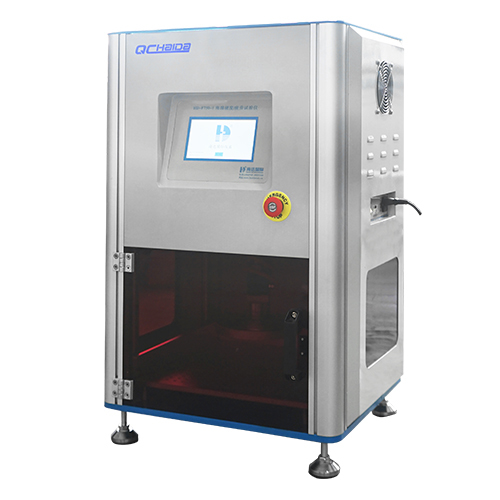
Tell us about your requirement

Price:
Quantity
Select Unit
- 50
- 100
- 200
- 250
- 500
- 1000+
Additional detail
Mobile number
Email

More Products in Furniture Test Equipment Category
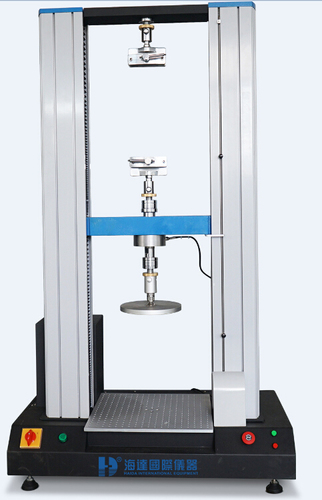
Foam Strength Testing Equipment
Price 2999 USD ($) / Unit
Minimum Order Quantity : 1 Unit
Power Supply : 220V / 50Hz AC
Application : Testing the compression and strength of foam materials
Features : Microprocessor based control, Overload protection, Data export capability
Mounting Type : Floor standing
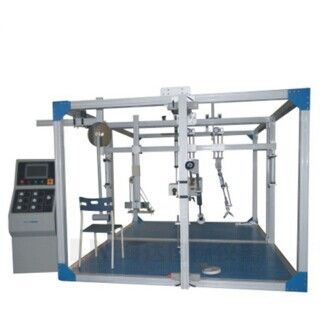
Chair Comprehensive Test Instrument
Price 1 USD ($)
Minimum Order Quantity : 1 Set
Power Supply : AC 220V 50/60 Hz
Application : Static and fatigue tests for chair frames, backs, seats and armrests
Features : Multifunction testing (static, cyclic, durability), realtime data analysis, modular design
Mounting Type : Floorstanding
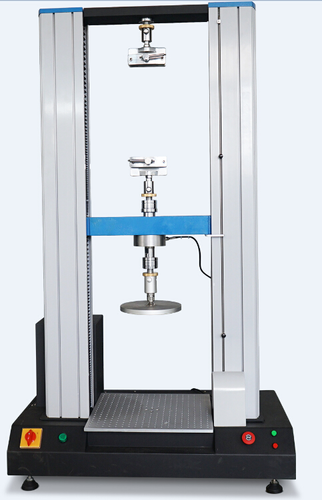
Sponge Pressure Stuffing Test Machine
Price 4000 USD ($) / Unit
Minimum Order Quantity : 1 Unit
Power Supply : AC 220V, 50Hz
Application : Sponge, foam, mattress, cushion compressive strength and deformation testing
Features : Automatic data recording, Overload protection, Emergency stop
Mounting Type : Floor standing
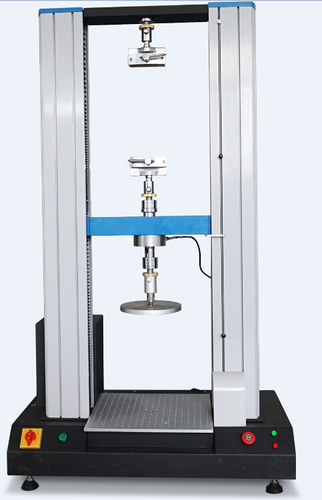
Foam pressure test equipment
Price 4000 USD ($) / Set
Minimum Order Quantity : 1 Set
Power Supply : AC 220V, 50Hz
Application : Compression testing of foam materials under pressure
Features : Programmable control, LCD display, Emergency stop, Data output
Mounting Type : Floor standing

Contact Details
- FACTORY ADD: No.13 Daxin Street, Daluosha Industrial Zone, Daojiao Town,Dongguan - 523710, Guangdong, China
- Phone :86-1591-7693151
- haidads@qc-test.cn
 Send Inquiry
Email us : haidads@qc-test.cn
- Ms Lisa (Manager)
- Mobile : +8613662707979, +8613829267288, +8615016776323, +8618373745787, +8618236912012, +8613602361535, +8613925747786

|


 |
HAIDA INTERNATIONAL EQUIPMENT CO., LTD.
All Rights Reserved.(Terms of Use) Developed and Managed by Infocom Network Private Limited. |
