

 English
 Spanish
 French
 German
 Italian
 Chinese (Simplified)
 Japanese
 Korean
 Arabic
 Portuguese
 Send Inquiry
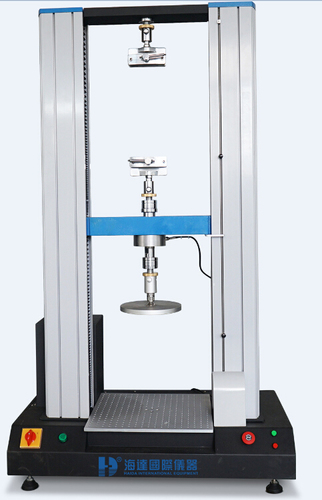
Foam pressure test equipment
Price 4000 USD ($)/ Set
MOQ : 1 Set
Foam pressure test equipment Specification
- Test Range
- 0 1000 N
- Automation Grade
- Semi-automatic
- Measuring Range
- 0 1000 N
- Equipment Type
- Foam Pressure Test Equipment
- Specimen Size
- 300 mm 300 mm 50 mm
- Humidity
- 85% RH
- Operating Voltage
- 220V
- Application
- Compression testing of foam materials under pressure
- Port Size
- Standard 1/4 inch
- Number of Specimens
- 1 specimen at a time
- Frequency
- 50/60 Hz
- Mounting Type
- Floor standing
- Resolution
- 0.1 N
- Temperature
- 10C 35C
- Power Supply
- AC 220V, 50Hz
- Hardness
- Supports foam hardness testing (optional accessory)
- Display Type
- Digital Display
- Max Height
- 800 mm
- Gas Pressure
- 0.1 0.8 MPa
- Features
- Programmable control, LCD display, Emergency stop, Data output
- Interface Type
- RS232 Serial Interface
- Accuracy
- 1% F.S.
- Response Time
- 1 second
- Usage
- Determination of foam pressure resistance
- Capacity
- 1000 N
- Machine Weight
- Approximately 45 kg
- Test Speed
- Adjustable from 10 mm/min to 500 mm/min
- Test Width
- 300 mm
- Test Stroke
- 0 200 mm
- Control Mode
- Digital Microprocessor Control
- Force Sensor Type
- High precision load cell
- Protection
- Overload and short-circuit
- Frame Material
- Powder coated steel
- Calibration
- Provided with calibration certificate
- Working Environment
- Laboratory/Industrial
- Software Compatibility
- Windows compatible analysis software
- Displacement Measurement
- Digital linear encoder
- Testing Standard Compliance
- ISO 2439 / ASTM D3574
- Accessories Included
- Sample holders, Power cord, User manual
Foam pressure test equipment Trade Information
- Minimum Order Quantity
- 1 Set
- FOB Port
- Shenzhen
- Supply Ability
- 10 Sets Per Month
- Delivery Time
- 1 Week
- Packaging Details
- Each set protected with resin fiber and PP film, then put into Strong wooden case with operation manual and video inside.
- Certifications
- CE,ISO
Foam pressure test equipment About
The usage:
Put specimen under pressure plate, the plate compress the specimen with a specify speed until the national standard require concavity, the load cell feedback the pressure to computer, it processing and display, then measure the indentation hardness of sponge, foam and other materials.
STANDARD FEATURES
| Item | Description |
| Max. Force | 2000 kg (20KN) |
| Load cell | Germany brand load cell for high accuracy |
| Control system | PC with windows 7 system |
| Motor | Panasonic servo motor w/ DC variable speed drive system, high-precision mechanical ball screw rod |
| Force reading | kgf, Ibf, N, KN, T etc |
| Stoke | 1100mm including fixture |
| Load cell Resolution | 1/250,000 |
| Load Precision | within 0.5% |
| Test speed | 0.01~500mm/min (adjustable) |
| Software | TM 2101 |
| Curves display | Load- elongation, Elongation-time, Time-elongation, Stress-strain |
| Data display | Max. force, speed, sample information, strength(Kpa, Mpa, N/mm, N/mm2) etc |
| Safety features | E-Stop Over-load protection Upper and lower limit switches Load sensor with automatic retreat |
Advanced Testing Capability
Engineered for durability and accuracy, this equipment features a digital linear encoder and high-precision load cell, enabling dependable compression tests on various foam materials. The programmable microprocessor allows users to optimize test parameters for diverse laboratory and industrial applications, ensuring reproducible and consistent outcomes.
Intuitive Software and Control
With Windows-compatible software and an RS232 interface, data acquisition and analysis are streamlined. Users benefit from a digital LCD display, adjustable test speeds, and programmable automation, enhancing workflow efficiency. The included emergency stop feature adds an extra layer of security during operation.
Comprehensive Safety and Calibration
For stable and secure operation, the equipment is equipped with overload and short-circuit protection, alongside a calibration certificate. Accessories such as sample holders, power cord, and a user manual are provided to ensure an immediate and smooth startup in various environments.
FAQs of Foam pressure test equipment:
Q: How does the foam pressure test equipment ensure precise measurement during compression testing?
A: The equipment utilizes a high-precision load cell and a digital linear encoder for force and displacement measurements, respectively. This combination, along with digital microprocessor control, guarantees accuracy within 1% of the full scale and a 0.1 N resolution, suitable for rigorous laboratory and industrial testing requirements.Q: What process should I follow to operate the foam pressure test equipment safely?
A: Before beginning the test, ensure the equipment is powered through an AC 220V supply and all accessories, such as sample holders, are securely installed. Set the desired test speed (10500 mm/min) and load parameters via the control panel. Utilize the emergency stop for immediate halting if necessary. Overload and short-circuit protections are built in for added operational safety.Q: When is it necessary to calibrate the equipment, and is a calibration certificate included?
A: Calibration is essential for maintaining measurement accuracy, especially before repeated or critical testing series. The equipment is provided with a calibration certificate, ensuring it meets required standards out of the box. Regular calibration intervals are recommended as per laboratory protocols or after significant use.Q: Where should the foam pressure test equipment be installed for optimal performance?
A: This equipment is best suited for laboratory or industrial settings that maintain controlled temperature (10C35C) and relative humidity ( 85% RH). Its floor-standing design and robust frame support stable operations. Ensure adequate space for the 300 mm test width and a nearby AC 220V power source.Q: What types of foam materials and specimen sizes are compatible with this machine?
A: The equipment accommodates one specimen at a time, with dimensions up to 300 mm x 300 mm x 50 mm. It is ideal for testing a wide range of foam densities by measuring their pressure resistance or hardness (with optional accessories), in compliance with ISO 2439 and ASTM D3574 methods.Q: How does the software enhance the testing and reporting process?
A: The supplied Windows-compatible analysis software allows for easy data acquisition, programmable test sequence setup, and detailed result analysis. Users can export test data via the RS232 serial interface, streamlining documentation and reporting of results for quality control or research purposes.Q: What are the main benefits of using this foam pressure test equipment in industrial and laboratory settings?
A: Key benefits include high test accuracy, adjustable speed and test parameters, robust build quality, advanced safety features, and straightforward integration with data analysis tools. These features allow manufacturers, quality inspectors, and researchers to perform reliable and efficient compression tests on foam products.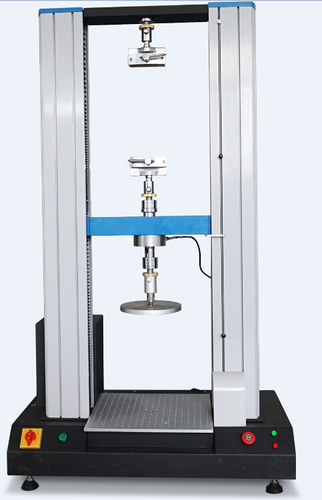
Tell us about your requirement

Price:
Quantity
Select Unit
- 50
- 100
- 200
- 250
- 500
- 1000+
Additional detail
Mobile number
Email

More Products in Furniture Test Equipment Category
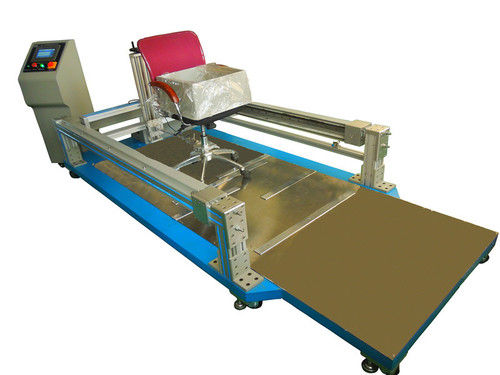
Variable Frequency Motor Office Chair Caster Fatigue Test Machine
Price 6300 USD ($) / Unit
Minimum Order Quantity : 1 Unit
Mounting Type : Floor standing
Machine Weight : 100 kg
Resolution : 1 cycle
Power Supply : AC 220V, 50 Hz
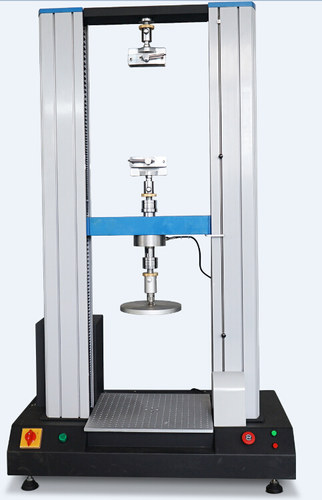
Foam universal testing machine
Price 4000 USD ($) / Unit
Minimum Order Quantity : 1 Unit
Mounting Type : Floor Standing
Machine Weight : Approx. 120 kg
Resolution : 0.01 N
Power Supply : 220 V AC, 50 Hz
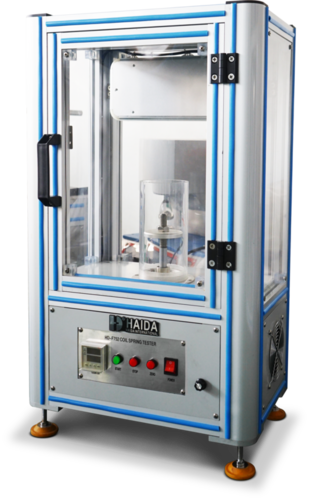
Spring Coiling Fatigue Test Machine
Price 5500 USD ($) / Unit
Minimum Order Quantity : 1 Unit
Mounting Type : Table top
Machine Weight : Approx. 85 kg
Resolution : 0.1 mm
Power Supply : AC 220V, 50Hz
Foam Strength Testing Equipment
Price 2999 USD ($) / Unit
Minimum Order Quantity : 1 Unit
Mounting Type : Floor standing
Machine Weight : 65 kg
Resolution : 0.1 N
Power Supply : 220V / 50Hz AC

Contact Details
- FACTORY ADD: No.13 Daxin Street, Daluosha Industrial Zone, Daojiao Town,Dongguan - 523710, Guangdong, China
- Phone :86-1591-7693151
- haidads@qc-test.cn
 Send Inquiry
Email us : haidads@qc-test.cn
- Ms Lisa (Manager)
- Mobile : +8613662707979, +8613829267288, +8615016776323, +8618373745787, +8618236912012, +8613602361535, +8613925747786

|


 |
HAIDA INTERNATIONAL EQUIPMENT CO., LTD.
All Rights Reserved.(Terms of Use) Developed and Managed by Infocom Network Private Limited. |
