

 English
 Spanish
 French
 German
 Italian
 Chinese (Simplified)
 Japanese
 Korean
 Arabic
 Portuguese
 Send Inquiry
HDT Vicat tester
Price 3500 USD ($)/ Unit
MOQ : 1 Unit
HDT Vicat tester Specification
- Application
- Determination of HDT/Vicat softening temperature of plastics and polymers
- Humidity
- 85% RH (non-condensing)
- Number of Specimens
- 3 (simultaneously)
- Temperature
- Ambient to 300C
- Frequency
- 50/60 Hz
- Features
- Multi-sample measurement, auto lifting, programmable operation
- Port Size
- Standard port, 12 mm
- Measuring Range
- 0-300C
- Automation Grade
- Semi-automatic
- Operating Voltage
- 220V 10%
- Resolution
- 0.01C
- Equipment Type
- HDT/Vicat Softening Point Tester
- Response Time
- Instantaneous, digital display
- Display Type
- Digital LCD
- Max Height
- 30 mm
- Test Range
- Ambient to 300C
- Power Supply
- 220V AC 10%, 50Hz/60Hz
- Mounting Type
- Bench-top
- Interface Type
- USB/RS232 (optional)
- Accuracy
- 0.1C
- Specimen Size
- 125 mm x 13 mm x (3-6.5) mm
- Usage
- Laboratory polymer testing
- Capacity
- 50N, 100N (interchangeable weights)
- Machine Weight
- Approx. 65 kg
- Test Speed
- 50 mm/h or 120 mm/h (selectable)
- Test Width
- Standard: 10 mm
- Test Stroke
- 0-30 mm
- Control Mode
- Digital PID Control
- Software
- Optional PC data analysis software
- Ambient Temperature
- 15-35C
- Rate of Heating
- 120C/h 10% or 50C/h 10% (adjustable)
- Sample Holder Material
- Corrosion-resistant stainless steel
- Heating Medium
- Glycerin or silicone oil
- Cooling Method
- Natural or forced cooling
- Data Output
- USB / printer interface available
- Temperature Control Precision
- 0.1C
- Displacement Measurement
- Digital dial gauge
- Safety Device
- Overheat and overcurrent protection
HDT Vicat tester Trade Information
- Minimum Order Quantity
- 1 Unit
- FOB Port
- Shenzhen
- Supply Ability
- 30 Units Per Month
- Delivery Time
- 15 Days
- Packaging Details
- Each set protected with resin fiber and PP film, then put into Strong wooden case with operation manual and video inside.
- Certifications
- CE,ISO
HDT Vicat tester About
THE USAGE:
It is used to determine heating deflection and vicat softening temperature of non-metallic materials such as the plastic,hard rubber,nylon,electrical insulating material,long fiber reinforced composite materials,high strength thermosetting laminated,etc.
Standards: ISO 2507,ISO 75,ISO 306,ASTM D1525,ASTM D648
PARAMETERS:
- Temperature rang:room temperature~300
- Max temperature error:0.5
- Heating rate:50/h,120/h
- Deformation measuring range:-5mm~10mm
- Max deformation error:0.05mm
- Digital dial gauge:resolution ratio 0.001mm
- Medium:Methyl silicone oil or transformer oil(provide for oneself)
- Cooling method:150 natural cooling,150 water or natural cooling
- Temperature measuring point:1
- Sample holder3
- R pressure head radius:30.2mm
- Pressure needle cross-sectional area:1mm20.015mm
- Load and pallet weight:66g
- Sample supporting distance:64mm,100mm
- Heating power:6kw
Advanced Temperature Control for Reliable Results
Utilizing digital PID control and highly stable heating mediums such as glycerin or silicone oil, this tester ensures temperature precision of 0.1C across the entire measurement range, up to 300C. Its adjustable heating rates, alongside forced or natural cooling, support diverse polymer testing protocols in laboratory settings.
Multi-Sample Capacity and Accurate Measurement
Users can test up to three specimens simultaneously with standard holders made from corrosion-resistant stainless steel. The digital dial gauge provides accurate displacement measurements with instantaneous digital display, enhancing throughput and repeatability.
Data Management and Analysis Capability
The instrument offers USB and RS232 interfaces for effortless data transfer, complemented by optional PC software for advanced analysis. Results can also be printed directly, enabling seamless integration into laboratory documentation workflows.
FAQs of HDT Vicat tester:
Q: How does the HDT/Vicat Softening Point Tester ensure accurate temperature control during tests?
A: The device employs digital PID control, heating mediums such as glycerin or silicone oil, and maintains temperature precision within 0.1C. This setup ensures consistent thermal conditions across the test duration, crucial for reliable determination of HDT and Vicat softening temperatures.Q: What types of specimens and sample sizes can be tested with this equipment?
A: The tester accommodates up to three specimens at once, each measuring 125 mm x 13 mm with a thickness ranging from 3 to 6.5 mm. Sample holders are constructed from corrosion-resistant stainless steel, supporting repeatability and durability.Q: When is it advisable to use forced or natural cooling during polymer tests?
A: Forced cooling may be preferred when rapid temperature reduction is necessary, increasing throughput or aligning with specific test protocols. Natural cooling is suitable for standard procedures, helping avoid abrupt thermal gradients and ensuring data integrity.Q: Where is this HDT/Vicat Softening Point Tester typically used?
A: This equipment is primarily used in laboratory environments for polymer and plastics testing. It supports manufacturers, distributors, exporters, and traders, reflecting its versatility in research, quality control, and production settings.Q: What is the process for determining HDT or Vicat softening temperatures?
A: Specimens are mounted in corrosion-resistant holders and subjected to controlled heating at set rates (adjustable to 120C/h or 50C/h). The system measures specimen displacement via digital dial gauge, while digital LCD displays record temperature progression, allowing precise determination of HDT and Vicat points.Q: How can test data be utilized and exported for analysis and reporting?
A: Test results can be output via USB or RS232 interfaces. Users may employ optional PC data analysis software for further evaluation and documentation, or send results directly to a printer for immediate reporting and archiving.Q: What are the operational and safety benefits of using this tester?
A: The tester features auto lifting, programmable operation, multifunctional safety devices like overheat and overcurrent protection, and multi-sample measurement capability, improving laboratory safety, productivity, and accurate reporting.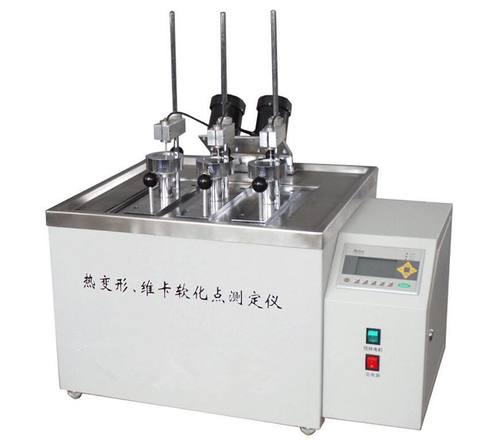
Tell us about your requirement

Price:
Quantity
Select Unit
- 50
- 100
- 200
- 250
- 500
- 1000+
Additional detail
Mobile number
Email

More Products in Optical Test Equipment Category
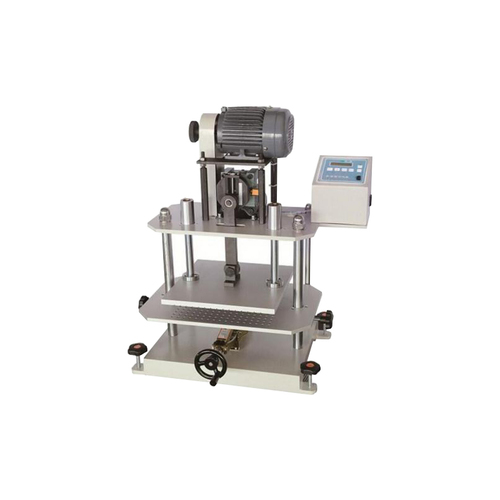
Rubber repeated compression test machine
Price 1400 USD ($) / Unit
Minimum Order Quantity : 1 Unit
Accuracy : 1%
Specimen Size : Diameter: 29 mm; Height: 12.5 mm
Test Speed : 0.1 500 mm/min
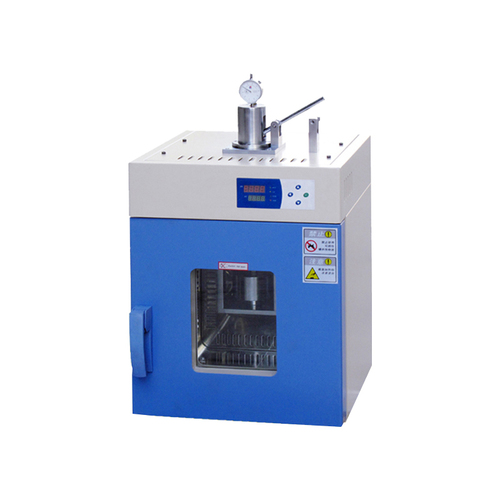
Rubber weiss plasticity test machine
Price 5000 USD ($) / Unit
Minimum Order Quantity : 1 Unit
Accuracy : 0.1 unit
Specimen Size : 10 mm diameter, 10 mm height
Test Speed : 100 times/min
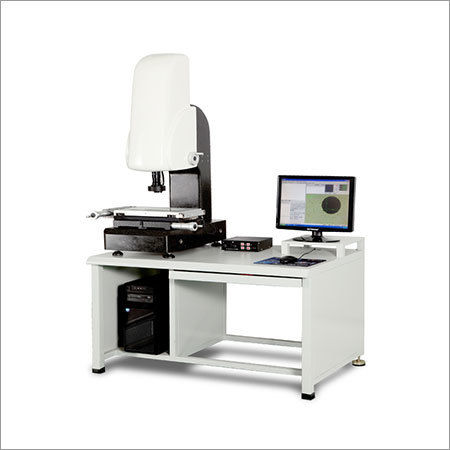
High Precision Image Measuring Machine
Price Range 1500.00 - 6500.00 USD ($)
Minimum Order Quantity : 1 Set
Accuracy : 2 m
Specimen Size : 0.550 mm
Test Speed : 0.001100 mm/s
Digital Impact Tester
Price 1300 USD ($) / Unit
Minimum Order Quantity : 1 Unit
Accuracy : 1% of reading
Specimen Size : Up to 100 x 150 mm
Test Speed : Adjustable, up to 3.2 m/s

Contact Details
- FACTORY ADD: No.13 Daxin Street, Daluosha Industrial Zone, Daojiao Town,Dongguan - 523710, Guangdong, China
- Phone :86-1591-7693151
- haidads@qc-test.cn
 Send Inquiry
Email us : haidads@qc-test.cn
- Ms Lisa (Manager)
- Mobile : +8613662707979, +8613829267288, +8615016776323, +8618373745787, +8618236912012, +8613602361535, +8613925747786

|


 |
HAIDA INTERNATIONAL EQUIPMENT CO., LTD.
All Rights Reserved.(Terms of Use) Developed and Managed by Infocom Network Private Limited. |
