

 English
 Spanish
 French
 German
 Italian
 Chinese (Simplified)
 Japanese
 Korean
 Arabic
 Portuguese
 Send Inquiry
Digital Impact Tester
Price 1300 USD ($)/ Unit
MOQ : 1 Unit
Digital Impact Tester Specification
- Application
- Impact resistance testing of various materials
- Port Size
- 1/4 BSP
- Number of Specimens
- Single per test
- Accuracy
- 1% of reading
- Power Supply
- 220V AC, 50Hz
- Measuring Range
- 150 Joules
- Temperature
- 10~40C operating
- Automation Grade
- Fully Automatic
- Interface Type
- RS232 output (optional)
- Operating Voltage
- 220 V
- Humidity
- 10~90% RH
- Max Height
- 450 mm (pendulum height)
- Response Time
- <1 second
- Resolution
- 0.01 J
- Gas Pressure
- 0.5~0.8 MPa (if pneumatic)
- Test Range
- 1~50 J
- Display Type
- Digital LCD display
- Specimen Size
- Up to 100 x 150 mm
- Mounting Type
- Bench-top
- Frequency
- 50 Hz
- Equipment Type
- Digital Impact Tester
- Features
- Automatic data recording, programmable test cycles
- Usage
- Lab/Industrial materials testing
- Capacity
- 5J, 10J, 25J selection
- Machine Weight
- Approx. 85 kg
- Test Speed
- Adjustable, up to 3.2 m/s
- Test Width
- 150 mm
- Test Stroke
- 300 mm max
- Control Mode
- Digital/Automatic with touch panel
- Safety Shield
- Provided for operator protection
- Display Language
- English
- Software Support
- Optional PC software for advanced analysis
- Error Indication
- On-screen with code
- Dimension (LxWxH)
- 800 x 400 x 600 mm
- Test Standard Compliance
- ASTM D256, ISO 179, IS 3766
- Sample Holder Type
- Universal adjustable clamp
- Pendulum Material
- High grade steel
- Calibration
- Supplied with factory calibration certificate
- Data Storage
- Internal memory for up to 500 results
Digital Impact Tester Trade Information
- Minimum Order Quantity
- 1 Unit
- FOB Port
- Shenzhen
- Supply Ability
- 30 Units Per Month
- Delivery Time
- 15 Days
- Packaging Details
- Each set protected with resin fiber and PP film, then put into Strong wooden case with operation manual and video inside.
- Certifications
- CE,ISO
Digital Impact Tester About
A digital impact tester is a de vice used to determine the impact resistance or strength of materials, components, or products. It's commonly used in industries such as manufacturing, construction, automotive, and aerospace to assess the ability of materials to withstand sudden force or impact.
The tester typically consists of a dropping mechanism that releases a weighted object from a specified height, which then impacts the test specimen. Sensors and digital instrumentation are integrated into the de vice to measure various parameters such as impact force, energy absorption, deformation, and fracture toughness.
These digital impact testers provide precise and reliable data, allowing manufacturers to evaluate the performance of their materials and products under real-world conditions. This information is crucial for ensuring product safety, durability, and compliance with industry standards and regulations.
THE USAGE:
This machine is used to do impact toughness test of non-metallic materials such as rigid plastic,reinforced nylon,fiberglass,ceramics,cast stone,electrical insulating material and metallic materials etc.
Parameter
- Impact speed:3.5m/s
- Impact energy:1J, 2.75J, 5.5J, 11J, 22J
- Pendulum angle:150
- Impact center distance:0.335m
- Pendulum moment of force:Pd 1=0.53590Nm
- Pd 2.72=1.47372Nm
- Pd 5.5=2.94744Nm
- Pd 11=5.8949Nm
- Pd 22=11.7898Nm
- Distance between blade and jaw top end:220.2mm
- Blade fillet radius:R=0.8mm0.2mm
Precise and Reliable Impact Testing
The Digital Impact Tester offers unparalleled accuracy (1% of reading) and high resolution (0.01 J) for testing materials impact resistance. Operators can easily set up and automate test sequences via the touch panel, ensuring repeatable and reliable results for every specimen. Factory calibration guarantees consistent performance, while error indications streamline troubleshooting.
Robust Build with Enhanced Safety
Engineered from high-grade steel, the tester withstands rigorous use in demanding environments. The integrated safety shield protects the user during tests, adding a layer of operational safety. Its universal adjustable clamp secures various specimen sizes (up to 100 x 150 mm), broadening its applicability across multiple materials and industries.
Advanced Data Handling & Analysis
Internal memory stores up to 500 results, which can be accessed on the digital LCD or exported through an optional RS232 interface. For advanced users, PC software support enables comprehensive data analysis, optimizing workflow efficiency in both laboratory and industrial settings.
FAQs of Digital Impact Tester:
Q: How does the Digital Impact Tester record and store test results?
A: The tester automatically records each test result in its internal memory, capable of storing up to 500 results. The data can be displayed on the digital LCD screen or optionally exported via RS232 output for further analysis using compatible PC software.Q: What materials can be tested with this instrument, and what specimen sizes are supported?
A: The Digital Impact Tester is designed for a variety of materials, including plastics, metals, and composites. It accommodates specimens up to 100 x 150 mm, thanks to its universal adjustable clamp, making it suitable for diverse testing requirements.Q: When is calibration required, and how is it ensured for this tester?
A: Each Digital Impact Tester is supplied with a factory calibration certificate upon delivery, verifying its compliance with measurement standards. Recalibration is recommended periodically, depending on usage, to maintain optimal accuracy. Users should consult their quality system regulations for specific intervals.Q: Where is the Digital Impact Tester ideally used?
A: This tester is ideal for laboratory and industrial environments requiring rigorous impact resistance testing. It is suitable for quality control, research & development, and production testing in manufacturing plants, research labs, and academic institutions.Q: What is the process for conducting an impact test using this device?
A: Begin by securing the sample in the universal clamp. Set test parameters using the touch panel, select the desired capacity (5J, 10J, or 25J), and initiate the test. The pendulum will automatically strike the sample, with the resulting energy value displayed instantly on the LCD.Q: How does the safety shield enhance operator protection during use?
A: The built-in safety shield acts as a barrier between the user and the pendulum mechanism, minimizing the risk of accidental contact or debris ejection during testing. This ensures a safer testing environment, especially when using higher energy settings.Q: What are the main benefits of using a fully automatic Digital Impact Tester?
A: Automation eliminates manual errors, reduces operator workload, and increases repeatability. Features such as programmable cycles, quick response time, and digital controls ensure accurate, efficient, and user-friendly testing for a wide range of materials.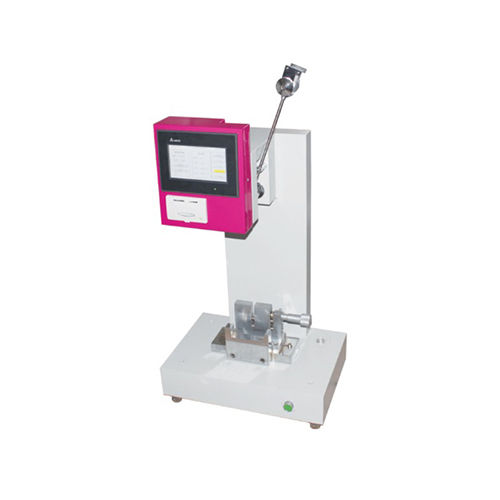
Tell us about your requirement

Price:
Quantity
Select Unit
- 50
- 100
- 200
- 250
- 500
- 1000+
Additional detail
Mobile number
Email

More Products in Optical Test Equipment Category
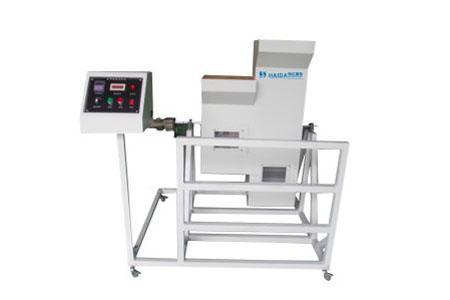
Double-roller drop test machine(HD-K913)
Price 3000 USD ($) / Unit
Minimum Order Quantity : 1 Unit
Features : Highprecision, doubleroller, programmable cycles, safety cover
Test Width : 500mm (roller width)
Mounting Type : Floorstanding
Test Stroke : variable, up to 1000mm roller length
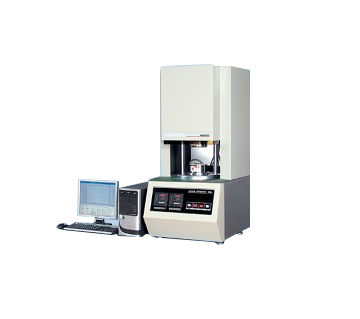
Rubber Rheometer With Rotor
Price 900 USD ($) / Unit
Minimum Order Quantity : 1 Unit
Features : Automatic Calibration, Realtime Curve, Data Storage
Test Width : 114 mm
Mounting Type : Benchtop
Test Stroke : 0.5 degrees
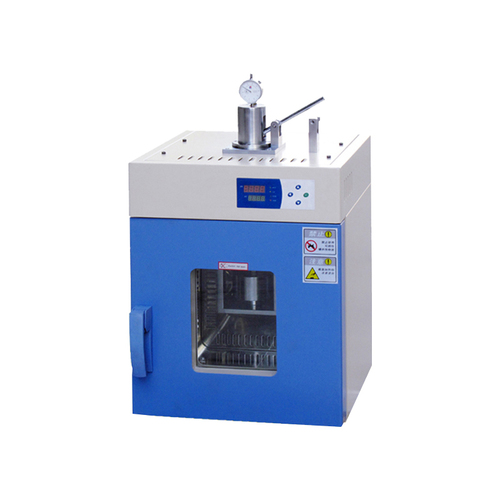
Rubber weiss plasticity test machine
Price 5000 USD ($) / Unit
Minimum Order Quantity : 1 Unit
Features : Automatic timing, auto measurement, manual control without preheating required
Test Width : 6 mm (0.01 mm)
Mounting Type : Benchtop
Test Stroke : 25 mm
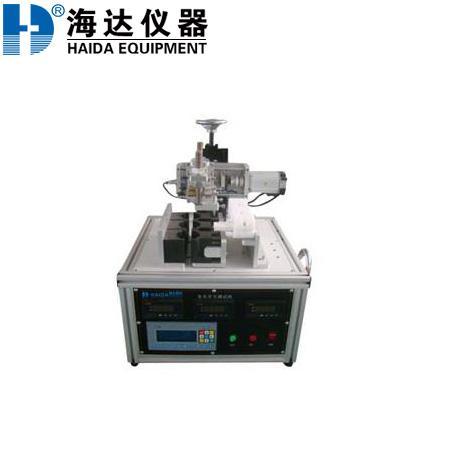
Hair straightener`s switch endurance test machine
Minimum Order Quantity : 1
Features : Adjustable speed, PLC control, Digital cycle counter, Double specimen testing
Test Width : 70 mm
Mounting Type : Benchtop
Test Stroke : 50 mm

Contact Details
- FACTORY ADD: No.13 Daxin Street, Daluosha Industrial Zone, Daojiao Town,Dongguan - 523710, Guangdong, China
- Phone :86-1591-7693151
- haidads@qc-test.cn
 Send Inquiry
Email us : haidads@qc-test.cn
- Ms Lisa (Manager)
- Mobile : +8613662707979, +8613829267288, +8615016776323, +8618373745787, +8618236912012, +8613602361535, +8613925747786

|


 |
HAIDA INTERNATIONAL EQUIPMENT CO., LTD.
All Rights Reserved.(Terms of Use) Developed and Managed by Infocom Network Private Limited. |
