

 English
 Spanish
 French
 German
 Italian
 Chinese (Simplified)
 Japanese
 Korean
 Arabic
 Portuguese
 Send Inquiry
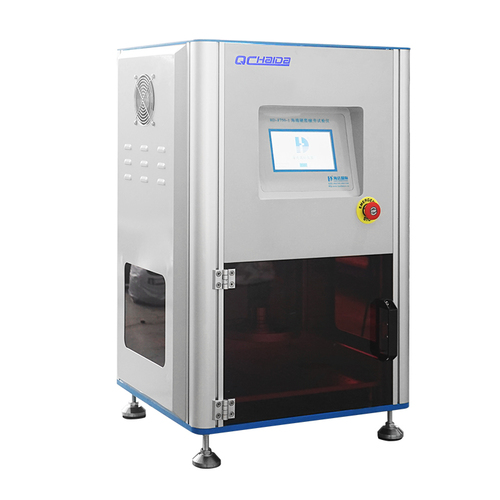
Foam pounding fatigue test equipment
Price 1500 USD ($)/ Set
MOQ : 1 Set
Foam pounding fatigue test equipment Specification
- Display Type
- Digital LCD
- Application
- Foam fatigue and deformation testing
- Response Time
- 1s
- Specimen Size
- 380 x 380 x 50~200 mm
- Equipment Type
- Foam Pounding Fatigue Tester
- Automation Grade
- Semi-Automatic
- Mounting Type
- Floor Standing
- Gas Pressure
- 0.6-0.8 MPa
- Test Range
- 0-100,000 cycles
- Humidity
- 20~90% RH
- Frequency
- 0.5-2 Hz
- Features
- Adjustable speed, automatic counting, user-friendly interface
- Power Supply
- 220V 10%, 50Hz
- Operating Voltage
- 220V
- Port Size
- 6 mm air tube
- Interface Type
- RS232
- Max Height
- 200 mm (specimen thickness)
- Temperature
- 10~40C
- Hardness
- Applicable 5-50 Kpa foam
- Resolution
- 0.1N
- Measuring Range
- 0~250N
- Accuracy
- 1%
- Number of Specimens
- 1
- Usage
- Fatigue Test of Foam
- Capacity
- Max load 250N
- Machine Weight
- Approx. 80 kg
- Test Speed
- 60-120 cycles/min (adjustable)
- Test Width
- 400 mm
- Test Stroke
- 20-120 mm (adjustable)
- Control Mode
- Microcomputer/PID Control
- Compliance
- Meets ISO 3385, ASTM D3574
- Data Output
- USB export
- Software
- Compatible PC software for data analysis
- Dimension (L x W x H)
- Approx. 900 x 700 x 1300 mm
- Test Plate Material
- Stainless steel
- Safety Feature
- Emergency stop switch
- Cycle Counter
- Preset with automatic stop
- Ambient Conditions
- Standard laboratory conditions
- Noise Level
- <70 dB
- Pressing Head Diameter
- 250 mm
- Material Construction
- Powder coated mild steel
Foam pounding fatigue test equipment Trade Information
- Minimum Order Quantity
- 1 Set
- FOB Port
- Shenzhen
- Supply Ability
- 10 Sets Per Month
- Delivery Time
- 1 Week
- Packaging Details
- Each set protected with resin fiber and PP film, then put into Strong wooden case with operation manual and video inside.
- Certifications
- CE,ISO
Foam pounding fatigue test equipment About
The usage:
This foam pounding fatigue test equipment is suitable for various kinds of foam/sponge to do compression and fatigue test,etc.
Standards:ISO 3385,ASTM D3574
Technical parameters:
- Control:computer control and display
- Induction way: Precision load
- Capacity:200kg
- Unit:Kg,N,LB
- Up plate: diameter 200mm,bottom fillet R1mm;Low plate:420420mm,holes diameter 6mm,space 20mm
- Max stroke:200mm
- Test speed: 10020mm/min
- Motor:AC Inverter motor
- Transmission:Precision screw
- Machine size:( LWH) about 12207501260mm
- Configuration: One computer and operate software
- Weight:about 200kg
Superior Testing Efficiency
Designed for foam fatigue and deformation analysis, the tester accommodates one specimen at a time and operates with adjustable speed and stroke parameters. The preset cycle counter allows for automated stopping after up to 100,000 cycles, ensuring consistent and efficient testing for manufacturers, suppliers, and researchers.
Robust Construction & Safety Features
Made from powder-coated mild steel and fitted with stainless steel test plates, this equipment emphasizes durability. Safety is guaranteed with an emergency stop switch, and a user-friendly interface simplifies operation. Its noise level remains under 70 dB, maintaining a conducive laboratory environment.
Comprehensive Data Management
Equipped with USB data export and compatible PC software, users can easily collect and analyze results. The digital LCD provides real-time feedback with high resolution and fast response times, supporting advanced research and quality control applications.
FAQs of Foam pounding fatigue test equipment:
Q: How is the foam pounding fatigue test equipment operated?
A: The equipment is semi-automatic and operated via a digital LCD interface with microcomputer/PID control, allowing users to set adjustable speed and stroke parameters. The cycle counter automatically stops the test when the preset number of cycles is reached, while users can manually intervene with the emergency stop switch.Q: What processes does the equipment follow during foam fatigue testing?
A: It subjects foam specimens to repeated pounding using a 250 mm diameter pressing head at adjustable cycles and test strokes. Data such as force, cycles count, and deformation are measured and displayed digitally, with all test criteria adhering to ISO 3385 and ASTM D3574 standards.Q: When should I use the foam pounding fatigue tester?
A: Utilize this equipment during product development, quality assurance, or routine testing of foam materials to evaluate their long-term fatigue resistance and deformation properties, especially prior to distribution or after material changes.Q: Where is this foam fatigue tester typically installed?
A: The tester is mounted on the floor and fits into standard laboratory settings, requiring ambient conditions of 2090% humidity and 1040C temperature. With dimensions of approximately 900 700 1300 mm and a weight of around 80 kg, it can be placed in research institutes, manufacturing plants, or testing facilities.Q: What is the benefit of the automatic cycle counter and USB data output?
A: The automatic cycle counter halts testing at the preselected number of cycles, ensuring repeatable, error-free results. The USB data export enables efficient transfer of measurements for further analysis, enhancing lab productivity and report accuracy.Q: How do I ensure accurate test results with this equipment?
A: Accuracy is maintained by precise PID control, real-time digital LCD display (resolution 0.1N), adjustable settings, and compliance with international standards. Regular calibration and adherence to laboratory conditions further support reliable outcomes.Q: What types of foam can be tested and what specimen sizes are supported?
A: The equipment accommodates foams with hardness ranging from 550 Kpa and specimen sizes of 380 380 50200 mm thickness, useful for various product lines including mattresses, cushions, and automotive foams.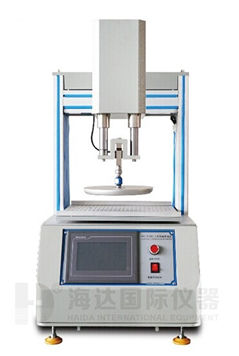
Tell us about your requirement

Price:
Quantity
Select Unit
- 50
- 100
- 200
- 250
- 500
- 1000+
Additional detail
Mobile number
Email

More Products in Furniture Test Equipment Category
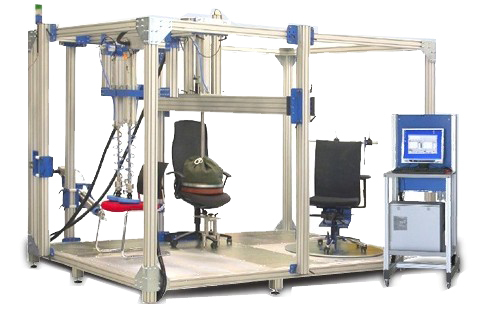
Chair Universal Test Machine(EN 4875)
Price 15000 USD ($) / Set
Minimum Order Quantity : 1 Set
Application : Testing strength, durability, and stability of chairs as per EN 4875
Usage : Laboratory and industrial chair testing
Power Supply : AC 220V, 50 Hz
Test Range : 02000 N
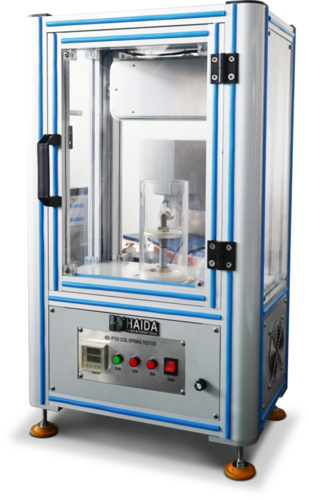
Spring Universal Tester
Price 5500 USD ($) / Unit
Minimum Order Quantity : 1 Unit
Application : Compression, tension, and fatigue tests of springs
Usage : Industrial/Testing Laboratory
Power Supply : AC 220V, 50/60Hz
Test Range : 0500 N
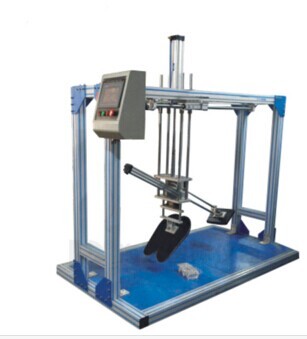
Chair Seat Arm and Back Testing Machine
Price 1 USD ($)
Minimum Order Quantity : 1 Set
Application : Testing seat, arm and back strength/durability for chairs
Usage : Chair furniture testing
Power Supply : AC 220V, 50Hz
Test Range : 0 200 kg
Sponge Foam Fatigue Tester
Price 1600 USD ($) / Set
Minimum Order Quantity : 1 Set
Application : Foam and sponge resilience & fatigue testing
Usage : Research and quality testing of foam materials
Power Supply : AC 220V 50/60Hz
Test Range : 0100,000 cycles

Contact Details
- FACTORY ADD: No.13 Daxin Street, Daluosha Industrial Zone, Daojiao Town,Dongguan - 523710, Guangdong, China
- Phone :86-1591-7693151
- haidads@qc-test.cn
 Send Inquiry
Email us : haidads@qc-test.cn
- Ms Lisa (Manager)
- Mobile : +8613662707979, +8613829267288, +8615016776323, +8618373745787, +8618236912012, +8613602361535, +8613925747786

|


 |
HAIDA INTERNATIONAL EQUIPMENT CO., LTD.
All Rights Reserved.(Terms of Use) Developed and Managed by Infocom Network Private Limited. |
