

 English
 Spanish
 French
 German
 Italian
 Chinese (Simplified)
 Japanese
 Korean
 Arabic
 Portuguese
 Send Inquiry
Chair Seat Arm and Back Testing Machine
MOQ : 1 Set
Chair Seat Arm and Back Testing Machine Specification
- Frequency
- 50 Hz
- Equipment Type
- Chair Seat Arm and Back Testing Machine
- Humidity
- 20% 90% RH
- Port Size
- 1/4 inch air inlet
- Application
- Testing seat, arm and back strength/durability for chairs
- Response Time
- 1 s
- Max Height
- 1600 mm
- Accuracy
- 1% F.S.
- Gas Pressure
- 0.6 MPa (air)
- Operating Voltage
- 220V
- Automation Grade
- Automatic
- Display Type
- Digital touchscreen
- Power Supply
- AC 220V, 50Hz
- Mounting Type
- Floor-standing
- Features
- Programmable cycles, real-time data, automatic stop
- Test Range
- 0 200 kg
- Specimen Size
- Standard chair size (customizable)
- Temperature
- 10C 40C
- Interface Type
- RS232/USB
- Measuring Range
- 0 200 kg
- Number of Specimens
- 1
- Resolution
- 0.01 kg
- Hardness
- Test pressure up to 200 kg
- Usage
- Chair furniture testing
- Capacity
- 200 kg
- Machine Weight
- Approx. 250 kg
- Test Speed
- 10 30 cycles/min (adjustable)
- Test Width
- 600 mm
- Test Stroke
- 0 300 mm
- Control Mode
- PLC control/automatic
- Loading Device
- Servo motor-driven loading platform
- Test Standards
- Conforms to BIFMA/ISO 7173/EN 1728
- Chair Position Adjustment
- Adjustable fixture for chair of various dimensions
- Cycle Counter
- Yes, programmable up to 999999 cycles
- Data Storage
- USB data export and internal memory
- Safety Features
- Emergency stop, overload protection
- Noise Level
- < 65 dB
- Air Source
- Clean, dry compressed air
- Cylinder Stroke
- 350 mm
Chair Seat Arm and Back Testing Machine Trade Information
- Minimum Order Quantity
- 1 Set
- FOB Port
- shenzhen
- Payment Terms
- Cash Against Delivery (CAD), Cash on Delivery (COD), Letter of Credit (L/C), Western Union, Paypal, Letter of Credit at Sight (Sight L/C), Delivery Point (DP), Telegraphic Transfer (T/T), Days after Acceptance (DA), Cash in Advance (CID), Cheque, Cash Advance (CA)
- Supply Ability
- 150 Sets Per Month
- Delivery Time
- 15 Days
- Packaging Details
- Each set protected with resin fiber and PP film, then put into Strong wooden case with operation manual and video inside.
- Main Export Market(s)
- Australia, Eastern Europe, Middle East, Western Europe, Africa, Central America, South America, Asia, North America
Chair Seat Arm and Back Testing Machine About
Chair Seat Arm and Back Testing Machine
1 . Introduction :
Sofa Seat Arm and Back Testing Machine is to simulate normal functional use to determine the strength of the sofa structure by applying to various parts with loads or forces . Using certain shape and load modules , with specific form , frequency , respectively , repeating load seat , back and armrest . Each point have force sensor to show the pressure .
2 . Sofa Seat Arm and Back Testing Machine Main technical parameters :
Senor accuracy : 0 . 3%
Control panel : programmable LCD touch screen controller
Maximum specimen size : ( LWH ) 220012001200mm
Seat load : 0~200kg ( adjustable )
Back load : 0~100kg ( adjustable )
Test cyclic : 0~999 , 999 ( adjustable )
Machine weight : 400kg
Power : 1 phase , AC220V , 50Hz
Air pressure : 7kg/cm2
Design criteria : EN4875
3 . Main Parameters :
The machine consists form several parts
- Tension mechanism , servo motor and the strap pulley architecture , the intensity of the rotation transformed into tension and supplemented force values turn sensor read correctly tension , the action of the closed-loop control of servo motor to achieve a number of pull . Static and cyclic testing . Rally and speed can be set free . Mainly used for 5 , 6 , 13 , 14 , 15 , and 16 test .
- In addition to this machine is also configured with two groups of electric actuator , respectively , for a group of the vertical apparatus and the horizontal apparatus 1 group , each group independently adjust the speed and thrust . Stroke is 500mm
- The vertical means of the servo motor can be used for the actuator , the vertical position adjustment , mainly used for the first 11 . 4 , 22 , 23 and 24 of the test ; the maximum pressure is 150 kg .
- Level device servo motor caused the brake position adjustment of the pieces up and down and left and right mobile and flexible to meet the demand for different test location , is mainly used for 10 , 12 . 3 and 12 . 4 testing . 50 kg maximum thrust , adjustable up and down the range from 500 mm to 1200 mm.
- the bottom plate of the test machine drilling multiple rows of screw holes for easy installation of different
4 . Attachments and fixed test conditions
- each electric actuator front-end with a quick connector for easy replacement of the load block and fixture
- control mode : PLC with LCD touch screen
- the maximum tension value:150kg
- the maximum thrust value(horizontal):50kg
- the maximum pressure value(Vertical)150kg
- Can be equipped with computers , recording force and displacement changes .
Procedures
If a chair has a pneumatic back tilt or pneumatic seat inclination adjustment mechanism, each is tested. The test uses a four-part cycle as follows: A. A 50-pound load is applied to the seat (seat inclination test) or back (back inclination test) normal to the plane of the seat, or, to the plane of the back. The load is applied to the seat or back at that location that will most easily cause the seat or back to tilt when the tilt activator is operated. B. The load is removed. C. The load is reapplied and the adjustment mechanism is activated while the chair is under load. D. The load is removedwhile the adjustment mechanism remains activateduntil the seat or back mechanism returns to its normal position. Once the normal position is reached, the adjustment mechanism is deactivated. The complete cycle is repeated at a rate of 5 cycles per minute. The test is continued until some part of the adjustment system malfunctions or the chair meets the required acceptance level.
Advanced Load Testing Technology
Utilizing a servo motor-driven loading platform and adjustable test fixtures, this machine offers precise force application and highly repeatable tests for a wide variety of chair types and dimensions. The low-noise operation (<65 dB) ensures a safer, more comfortable testing environment as well.
Automated and Efficient Operation
With PLC-controlled automation and speed adjustment from 10 to 30 cycles per minute, the machine ensures consistent and efficient testing. Features like programmable cycles, emergency stop, and overload protection provide robust safety and usability.
Comprehensive Data Management
The testing machine comes with a digital touchscreen display, USB export, and internal memory for storing results. Real-time data monitoring and RS232/USB interface integration simplify analysis, reporting, and documentation for quality control teams.
FAQs of Chair Seat Arm and Back Testing Machine:
Q: How does the chair testing machine operate and control its testing cycles?
A: The machine uses PLC control to automatically conduct strength and durability tests on chair seats, arms, and backs. Test cycles are programmable up to 999,999, and test speed can be set between 10 and 30 cycles per minute for flexible, efficient operation.Q: What types of chairs are compatible with this testing machine?
A: This equipment is equipped with an adjustable fixture, allowing it to accommodate different chair sizes and types, including standard and custom designs, making it suitable for manufacturers, testers, and exporters working with diverse seating products.Q: When is it beneficial to use USB data export in this testing machine?
A: USB data export is particularly useful when you need to store, analyze, or share test results externally. This feature facilitates detailed reporting, quality audits, and traceability for manufacturers, dealers, and third-party testing labs.Q: Where can this chair testing equipment be installed or used?
A: It is designed as a floor-standing machine that can be installed in furniture manufacturing units, laboratory environments, or quality assurance facilities. Its automation and programmability make it ideal for use in both high-volume production and R&D settings.Q: What safety features does the testing machine include?
A: The machine comes with built-in safety features such as an emergency stop button and overload protection. These systems are critical to ensuring operator safety and preventing damage to both equipment and specimens during testing.Q: How does the machine ensure accurate and reliable test results?
A: The device offers high measurement precision (1% F.S.) and a fast response time (1 second), supported by a digital touchscreen display and programmable controls. It conforms to recognized standards (BIFMA, ISO 7173, EN 1728), guaranteeing reliable and standardized test outcomes.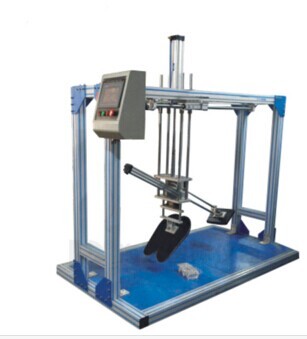
Tell us about your requirement

Price:
Quantity
Select Unit
- 50
- 100
- 200
- 250
- 500
- 1000+
Additional detail
Mobile number
Email

More Products in Furniture Test Equipment Category
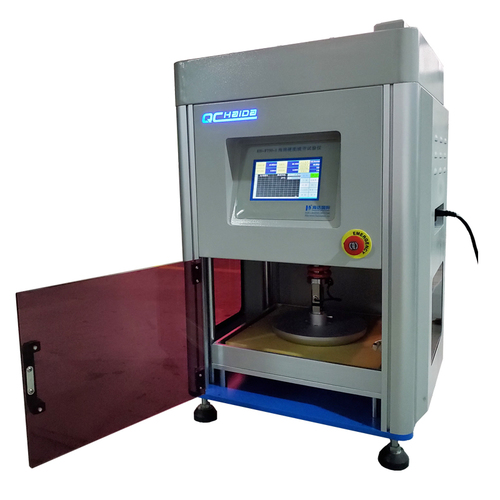
Automatic Computerized IFD Foam Compression Hardness Testing Machine
Price 1800 USD ($) / Unit
Minimum Order Quantity : 1 Unit
Application : Foam Indentation Force Deflection Hardness Testing
Power Supply : 220V AC, 50Hz
Usage : Foam Compression Hardness Testing
Features : Automatic measurement, graphical report, test data storage
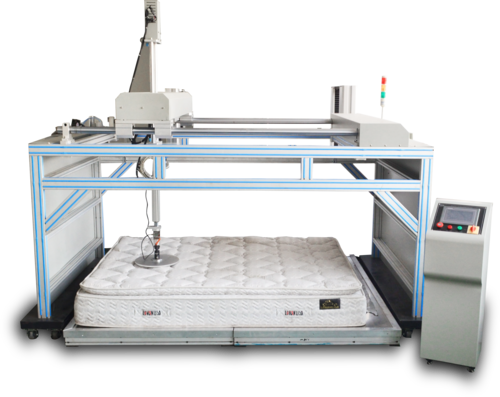
Mattress firttress tester
Price 6800 USD ($) / Unit
Minimum Order Quantity : 1 Unit
Application : Life and firmness testing for mattress, spring, foam
Power Supply : AC 220V, 50 Hz
Usage : Industrial/Commercial mattress testing
Features : Programmable cycles, automatic stop, safety protection, data storage
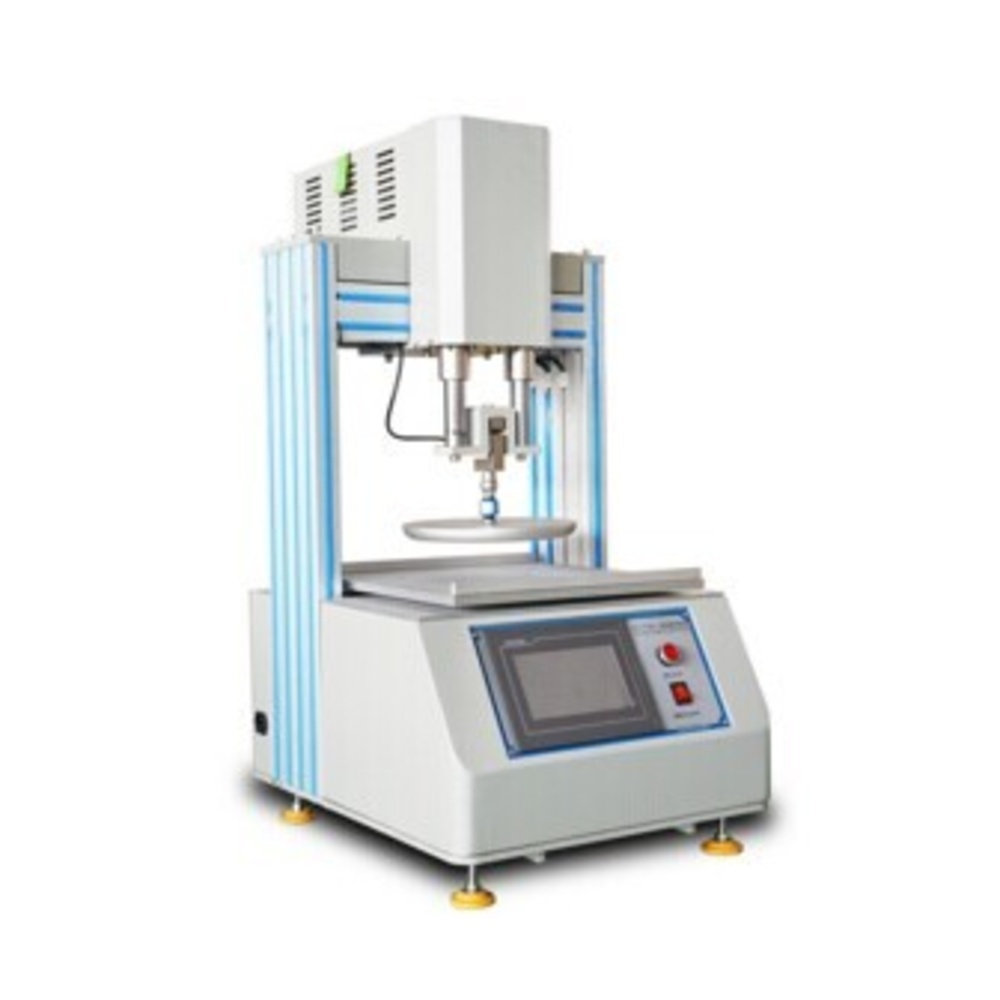
Sponge foam compression testing machine
Price 5500 INR / Set
Minimum Order Quantity : 1 Set
Application : Sponge and Foam Compression Strength Testing
Power Supply : 220V AC, 50Hz
Usage : Foam Quality Control, R&D Laboratory
Features : Programmable, User Friendly, Digital Control Panel
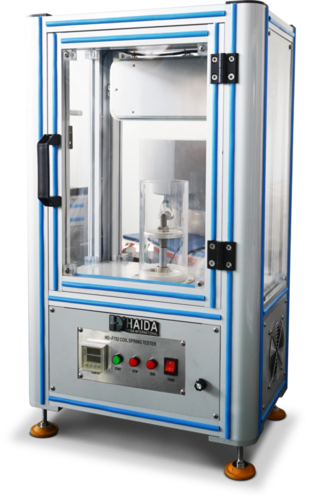
Spring Testing Machine
Price 5500 USD ($) / Unit
Minimum Order Quantity : 1 Unit
Application : Compression and Tensile Testing of Springs
Power Supply : 220V AC 50Hz
Usage : Spring Strength/Compression Testing
Features : Sturdy Construction, Easy Operation, Overload Protection

Contact Details
- FACTORY ADD: No.13 Daxin Street, Daluosha Industrial Zone, Daojiao Town,Dongguan - 523710, Guangdong, China
- Phone :86-1591-7693151
- haidads@qc-test.cn
 Send Inquiry
Email us : haidads@qc-test.cn
- Ms Lisa (Manager)
- Mobile : +8613662707979, +8613829267288, +8615016776323, +8618373745787, +8618236912012, +8613602361535, +8613925747786

|


 |
HAIDA INTERNATIONAL EQUIPMENT CO., LTD.
All Rights Reserved.(Terms of Use) Developed and Managed by Infocom Network Private Limited. |
