

 English
 Spanish
 French
 German
 Italian
 Chinese (Simplified)
 Japanese
 Korean
 Arabic
 Portuguese
 Send Inquiry
Foam Ball Rebound Tester
Price 699 INR/ Set
MOQ : 1 Set
Foam Ball Rebound Tester Specification
- Resolution
- 1 mm
- Mounting Type
- Bench top
- Response Time
- Immediate upon rebound
- Application
- Determine resilience and rebound behaviour of flexible cellular foam
- Specimen Size
- Diameter 100 mm, thickness 50 mm min.
- Number of Specimens
- 1 at a time
- Power Supply
- No Power Required
- Automation Grade
- Manual
- Temperature
- 10C - 35C
- Measuring Range
- 0 100%
- Humidity
- Relative 45% - 85%
- Equipment Type
- Foam Ball Rebound Tester
- Accuracy
- 1%
- Max Height
- 500 mm (drop height)
- Test Range
- 0 100%
- Display Type
- Scale with pointer
- Features
- Simple design, easy operation, portable
- Usage
- Foam and rubber specimen rebound testing
- Capacity
- Precise vertical drop of 16 g rebound ball
- Machine Weight
- Approx. 40 kg
- Test Speed
- Manual (Free Falling Ball)
- Test Width
- 100 mm
- Test Stroke
- Max 500 mm
- Control Mode
- Manual Operation
- Finish
- Powder coated body
- Measurement Method
- Mechanical pointer reading
- Drop Ball Material
- High-quality steel
- Safety Mechanism
- Ball holder with release lever
- Base Platform
- Polished metal
- Drop Ball Weight
- 16 grams
- Calibration
- Factory calibrated
Foam Ball Rebound Tester Trade Information
- Minimum Order Quantity
- 1 Set
- FOB Port
- Shenzhen
- Supply Ability
- 10 Sets Per Month
- Delivery Time
- 1 Week
- Packaging Details
- Each set protected with resin fiber and PP film, then put into Strong wooden case with operation manual and video inside.
- Certifications
- CE,ISO
Foam Ball Rebound Tester About
The usage:
It through specify diameter and mass ball fall on the foam specimen from certain height,calculate the percentage between maximum drop height and rebound height,indicate foam resilience by spring rate. It uses a microprocessor to control,LCD display.
THE MAIN PARAMETERS:
| Drop height | 5000.5%mm |
| Drop ball | Diameter: 160.05 mm, mass 16.8g 1.5 g |
| Accuracy | <1.5% |
| Display | LCD Touch Screen interface |
| Sensor | Optical fiber sensor |
| Test result | Rebound height, rebound rate and average rebound rate after 5 test times |
| Sample size (L x W x H) | 100 mm x100 mm x 50mm |
| Machine dimension (L x W x H) | 570sx300x570mm |
| USB interface | Output test results by USB |
| Accessories | One drop ball, one sample tray and one pick rod |
| APPLICATION STANDARDS | ASTM D 3574, ISO 8307 |
Engineered for Precision and Durability
Manufactured with a powder-coated body and polished metal base platform, the Foam Ball Rebound Tester offers reliable performance and longevity. The 16-gram high-quality steel ball ensures consistent and precise vertical drops, facilitating dependable test outcomes for both foam and rubber materials.
Effortless Manual Operation
Designed for simplicity, the tester requires no power source. Its manual release lever with ball holder ensures safety and replicability, making it ideal for labs, manufacturing, and quality control settings seeking easy and quick resilience testing.
Immediate and Accurate Measurements
Featuring a mechanical pointer readout, the tester provides results instantly upon specimen rebound. With an accuracy of 1% and resolution of 1 mm, users benefit from swift, reliable data for quality assurance and material evaluation.
FAQs of Foam Ball Rebound Tester:
Q: How do you operate the Foam Ball Rebound Tester during a test?
A: To use the tester, position the foam or rubber specimen (minimum thickness 50 mm, 100 mm diameter) on the platform. Release the ball using the safety lever. After the ball drops and rebounds, read the measurement instantly from the mechanical pointer scale.Q: What is the benefit of using a factory-calibrated rebound tester?
A: Factory calibration ensures that measurements are accurate and consistent, providing reliable results for material resilience testing without the need for frequent recalibration.Q: What materials can be tested with this equipment?
A: This tester is designed for flexible cellular foam and rubber specimens, making it suitable for manufacturers, laboratories, and quality control teams working with such materials.Q: Where is the Foam Ball Rebound Tester typically used?
A: It is commonly used in research labs, quality control departments, manufacturing units, and educational institutes for material performance analysis.Q: What is the testing process for determining rebound behaviour?
A: The process involves placing one specimen at a time on the test platform, releasing the calibrated steel ball from a set height up to 500 mm, and measuring rebound height with the mechanical pointer immediately upon rebound.Q: When is manual testing preferred for rebound analysis?
A: Manual testing is preferred when power supply is unavailable or unnecessary, and when a straightforward, reliable, and quick resilience evaluation is needed without complex automation.Q: What are the advantages of its portable design and bench top mounting?
A: Being portable and bench mounted, it allows flexibility in placement and operation, making it easy to move and use in different testing locations or workspace setups.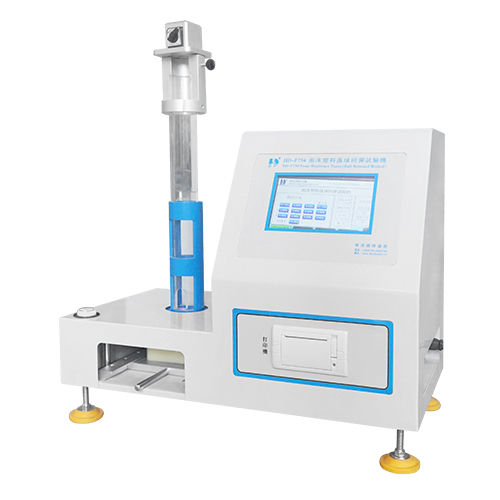
Tell us about your requirement

Price:
Quantity
Select Unit
- 50
- 100
- 200
- 250
- 500
- 1000+
Additional detail
Mobile number
Email

More Products in Furniture Test Equipment Category
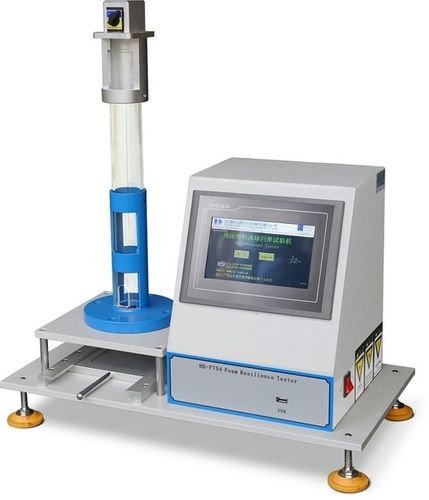
Servo Motor Foam Drop Ball Impact Tester
Price 1800 USD ($) / Unit
Minimum Order Quantity : 1 Unit
Equipment Type : Foam Impact Testing Machine
Accuracy : 1%
Test Stroke : 600 mm
Control Mode : Servo Motor Control + PLC
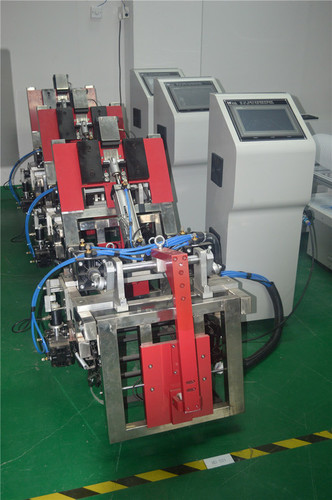
Sofa Iron Frame Fatigue Tester
Price 13000 USD ($) / Set
Minimum Order Quantity : 1 Set
Equipment Type : Frame Fatigue Tester
Accuracy : 1 mm
Test Stroke : 0~300 mm (adjustable)
Control Mode : Touch screen / PLC control
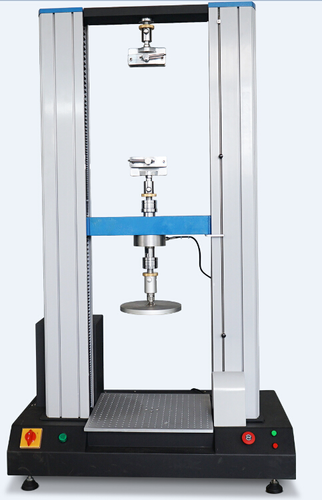
Memory foam fatigue tester
Price 1800 USD ($) / Set
Minimum Order Quantity : 1 Set
Equipment Type : Memory Foam Fatigue Tester
Accuracy : 1%
Test Stroke : 50 100 mm adjustable
Control Mode : Digital, programmable control
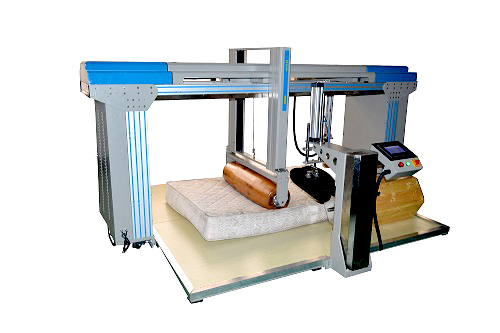
ASTM F1566-2009 Mattress Rollator Durability Tester/Compression Hardness tester
Price 5699 USD ($) / Unit
Minimum Order Quantity : 1 Unit
Equipment Type : Mattress Durability & Hardness Tester
Accuracy : 1 mm
Test Stroke : 100400 mm (adjustable)
Control Mode : Touchscreen PLC Control

Contact Details
- FACTORY ADD: No.13 Daxin Street, Daluosha Industrial Zone, Daojiao Town,Dongguan - 523710, Guangdong, China
- Phone :86-1591-7693151
- haidads@qc-test.cn
 Send Inquiry
Email us : haidads@qc-test.cn
- Ms Lisa (Manager)
- Mobile : +8613662707979, +8613829267288, +8615016776323, +8618373745787, +8618236912012, +8613602361535, +8613925747786

|


 |
HAIDA INTERNATIONAL EQUIPMENT CO., LTD.
All Rights Reserved.(Terms of Use) Developed and Managed by Infocom Network Private Limited. |
