

 English
 Spanish
 French
 German
 Italian
 Chinese (Simplified)
 Japanese
 Korean
 Arabic
 Portuguese
 Send Inquiry
Foam rebound tester
Price 1800 USD ($)/ Unit
MOQ : 1 Unit
Foam rebound tester Specification
- Temperature
- 5°C - 40°C
- Response Time
- <2 s
- Hardness
- Applicable for soft to medium foam
- Port Size
- 15 mm
- Measuring Range
- 0-80% resilience
- Max Height
- 120 mm
- Frequency
- 50 Hz
- Accuracy
- ±1% of reading
- Humidity
- 10% - 90% RH
- Operating Voltage
- 220V
- Application
- Foam resilience and elastic recovery measurement
- Specimen Size
- 100 x 100 x 50 mm
- Gas Pressure
- 0.6 MPa
- Features
- User-friendly control panel, durable construction, portable platform
- Resolution
- 0.1%
- Number of Specimens
- 1 - 3 specimens
- Power Supply
- 220V AC, 50 Hz
- Interface Type
- Analog/Digital Output
- Mounting Type
- Bench-top
- Equipment Type
- Foam Rebound Tester
- Automation Grade
- Semi-Automatic
- Display Type
- Digital LED
- Test Range
- 0% - 80% rebound
- Usage
- Foam hardness and resilience testing
- Capacity
- Single Specimen
- Machine Weight
- 45 kg
- Test Speed
- 150 mm/min
- Test Width
- 150 mm
- Test Stroke
- 100 mm
- Control Mode
- Manual/Automatic
- Ball Material
- Steel (as per standard)
- Included Accessories
- Steel Ball, Sample Holder, User Manual
- Base Plate Material
- Polished Stainless Steel
- Calibration
- Supplied with Calibration Certificate
- Sample Preparation
- Cylindrical foam specimen required
- Rebound Indicator
- Graduated Scale with Transparent Window
- Conforms to
- IS, ASTM D3574, ISO 8307 standards
- Finish
- Powder Coated Body
- Steel Ball Diameter
- 16 mm
- Observation Method
- Visual/Through Graduated Scale
- Drop Height
- 150 0.5 mm
Foam rebound tester Trade Information
- Minimum Order Quantity
- 1 Unit
- FOB Port
- Shenzhen
- Supply Ability
- 10 Units Per Month
- Delivery Time
- 1 Week
- Packaging Details
- Each set protected with resin fiber and PP film, then put into Strong wooden case with operation manual and video inside.
- Certifications
- CE,ISO
Foam rebound tester About
Foam Rebound Tester(HD-F754)
Main function:
The machine is in accordance with the GB/T6670-2008 design and manufacturing, with ASTM D3574 and ISO8307 American Standard testing standards. At the same time with the Japanese car seat test methods forurethane foam SES N3296. Suitable for performance ball rebound off thedetermination of soft polyurethane foam. This instrument is given by steel balldiameter and quality at a specified height free fall on the foam sample the maximum height of the ball, and the calculation of ball rebound height of fall the percentage of both the rebound rate, said resilience foam to rebound rate. This machine uses the microprocessor to control, liquid crystal Chinese display, and print the test data. The machine has the advantages of safety, reliability, high measuring accuracy.
FEATURES:
Main function:
The machine is in accordance with the GB/T6670-2008 design and manufacturing, with ASTM D3574 and ISO8307 American Standard testing standards. At the same time with the Japanese car seat test methods forurethane foam SES N3296. Suitable for performance ball rebound off thedetermination of soft polyurethane foam. This instrument is given by steel balldiameter and quality at a specified height free fall on the foam sample the maximum height of the ball, and the calculation of ball rebound height of fall the percentage of both the rebound rate, said resilience foam to rebound rate. This machine uses the microprocessor to control, liquid crystal Chinese display, and print the test data. The machine has the advantages of safety, reliability, high measuring accuracy.
FEATURES:
- Automatic calculation of average rebound rate
- Optical fiber sensors, a control box set (LCD touch screen control), can be connected with the USB interface.
- Ball drop distance: 460 0.5%mm (GB) 500 0.5%mm (American Standard)
- The ball diameter: 16 0.05 - mm
- Falling ball rebound rate accuracy: <0.5%
- Sample size is tested: 100 mm (long) x 100 mm (wide) x 50mm (high)
Reliable Resilience Measurement
The Foam Rebound Tester provides reliable determination of the elastic recovery and hardness of foams using a controlled drop test with a standard steel ball. Its graduated scale allows for clear visualization, and the digital LED display gives precise readings, making it indispensable for laboratories and production quality control.
Compliant with International Standards
Conforming to IS, ASTM D3574, and ISO 8307, this tester ensures that your foam products meet global quality benchmarks. Its robust construction and supplied calibration certificate guarantee repeatability and traceability for accurate testing and reporting.
User-Friendly and Efficient Operation
Designed for ease-of-use, the device features a user-friendly control panel, manual or automatic control modes, and a clear observation window. The platform accommodates specimens of 100 x 100 x 50 mm, providing flexibility while maintaining measurement accuracy and efficiency during testing.
FAQs of Foam rebound tester:
Q: How is the foam resilience measured using this Foam Rebound Tester?
A: The foam resilience is measured by dropping a 16 mm diameter steel ball from a height of 150 0.5 mm onto a cylindrical foam specimen. The rebound height is observed through the graduated scale and displayed on the digital LED screen, giving results within the 0-80% range with 1% accuracy.Q: What type of foam samples can be tested with this equipment?
A: This tester is suitable for soft to medium foam types, requiring cylindrical specimens sized at 100 x 100 x 50 mm. It can test between 1 to 3 specimens per session, providing flexibility for various foam applications.Q: When should calibration be performed on the Foam Rebound Tester?
A: Calibration is performed prior to delivery and a calibration certificate is included. Periodic calibration, as per your laboratorys quality management system, is recommended to maintain testing accuracy and reliability.Q: Where can the Foam Rebound Tester be used efficiently?
A: This bench-top, semi-automatic device is ideal for use in manufacturing plants, research labs, quality control departments, and foam product development facilities, ensuring convenient installation and operation in varied environments.Q: What is the process for setting up a test using the Foam Rebound Tester?
A: Prepare a cylindrical foam sample, secure it in the sample holder, and position the steel ball at the set drop height. Select manual or automatic mode via the control panel, then initiate the test. The rebound is measured visually and digitally, ensuring quick and accurate results.Q: How does using this tester benefit manufacturers and suppliers?
A: Manufacturers and suppliers benefit from consistent, accurate, and fast measurements of foam elasticity and recovery, supporting product development, compliance with international standards, and reliable performance assurance for foam products.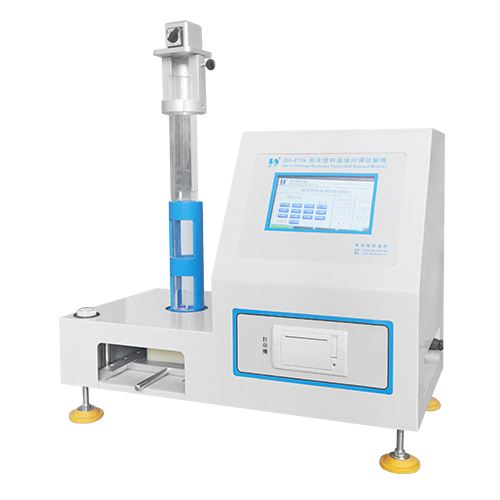
Tell us about your requirement

Price:
Quantity
Select Unit
- 50
- 100
- 200
- 250
- 500
- 1000+
Additional detail
Mobile number
Email

More Products in Furniture Test Equipment Category
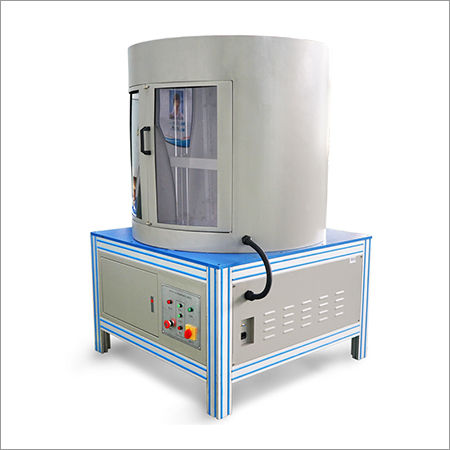
Chair Base Tester
Price 1600 USD ($) / Set
Minimum Order Quantity : 1 Set
Features : Automated cycles, adjustable speed, safety guards
Power Supply : AC 220V, 50Hz
Usage : Quality testing for chair manufacturers
Application : Testing strength and durability of chair bases
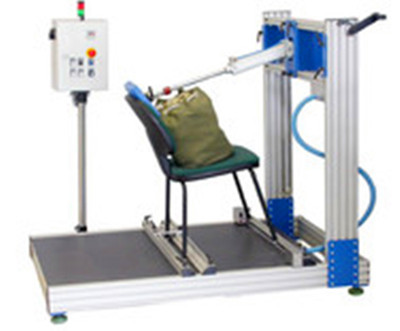
Electronic BIFMA Chair Backrest Durability Test Machine
Price 5800 USD ($) / Unit
Minimum Order Quantity : 1 Unit
Features : Programmable cycles, Emergency stop, Automatic reset
Power Supply : AC 220V, 50Hz
Usage : Industrial/Testing Lab
Application : BIFMA Chair Backrest Durability Testing
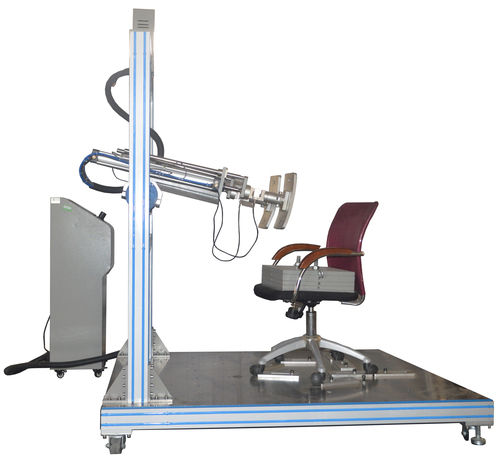
Chair Seating and Back Durability Tester
Price 5800 USD ($) / Unit
Minimum Order Quantity : 1 Unit
Features : Programmable cycles, adjustable test speed, safety interlock
Power Supply : 220V AC, 50 Hz
Usage : Chair fatigue and endurance testing
Application : Testing chair seating and back durability for quality control and research purposes
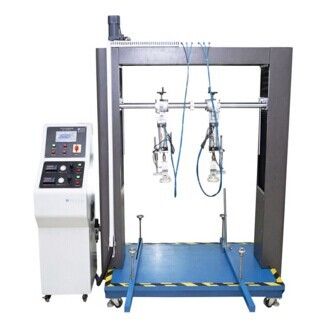
Chair Arm and Leg Tester
Price 1 USD ($)
Minimum Order Quantity : 1 Set
Features : Programmable cycles, automatic shutoff, safety shield
Power Supply : AC 220V, 50/60Hz
Usage : Commercial & Laboratory Furniture Testing
Application : Testing mechanical durability of chair arms and legs

Contact Details
- FACTORY ADD: No.13 Daxin Street, Daluosha Industrial Zone, Daojiao Town,Dongguan - 523710, Guangdong, China
- Phone :86-1591-7693151
- haidads@qc-test.cn
 Send Inquiry
Email us : haidads@qc-test.cn
- Ms Lisa (Manager)
- Mobile : +8613662707979, +8613829267288, +8615016776323, +8618373745787, +8618236912012, +8613602361535, +8613925747786

|


 |
HAIDA INTERNATIONAL EQUIPMENT CO., LTD.
All Rights Reserved.(Terms of Use) Developed and Managed by Infocom Network Private Limited. |
