

 English
 Spanish
 French
 German
 Italian
 Chinese (Simplified)
 Japanese
 Korean
 Arabic
 Portuguese
 Send Inquiry
Caster Curability Tester
Price 9500 USD ($)/ Unit
MOQ : 1 Unit
Caster Curability Tester Specification
- Gas Pressure
- 0.5-0.7 MPa
- Display Type
- Digital LCD
- Number of Specimens
- 1
- Interface Type
- USB/RS232
- Automation Grade
- Semi-automatic
- Humidity
- 20%~85% RH
- Accuracy
- ±1% of reading
- Resolution
- 0.01 N
- Response Time
- < 1 s
- Hardness
- Applicable for soft and hard caster materials
- Measuring Range
- 0~200 N
- Power Supply
- AC 220V ±10%, 50Hz
- Features
- Automated test cycle, overload protection, and data storage
- Specimen Size
- Standard 50 x 100 mm (variable with fixture)
- Test Range
- 0~200 N
- Mounting Type
- Bench-top
- Operating Voltage
- 220V AC
- Temperature
- 10°C~40°C
- Application
- Testing the curability of caster wheels and similar materials
- Max Height
- 350 mm
- Frequency
- 50 Hz
- Port Size
- 1/4 NPT
- Equipment Type
- Caster Curability Tester
- Usage
- Industrial QC and research
- Capacity
- 200 N
- Machine Weight
- 45 kg
- Test Speed
- 50-300 mm/min (adjustable)
- Test Width
- Up to 100 mm
- Test Stroke
- 0-200 mm (adjustable)
- Control Mode
- Microprocessor based digital control
- Software Compatibility
- Supports PC data analysis software
- Noise Level
- 60 dB
- Fixture Material
- Stainless steel
- Safety Features
- Auto-stop on overload
- Drive System
- Stepper motor with ball screw
- Data Output
- Printable and exportable via USB
- Peak Value Hold
- Yes
- Memory Capacity
- Stores up to 100 test results
- Test Environment
- Laboratory and QC workshop suitable
Caster Curability Tester Trade Information
- Minimum Order Quantity
- 1 Unit
- FOB Port
- Shenzhen
- Supply Ability
- 10 Units Per Month
- Delivery Time
- 1 Week
- Packaging Details
- Each set protected with resin fiber and PP film, then put into Strong wooden case with operation manual and video inside.
- Certifications
- CE,ISO
Caster Curability Tester About
Caster Curability Tester
To evaluate the ability of the chair base and casters to withstand fatigue stresses and wear caused by moving the chair back and forth. Seat surface to place the weight (113kg), the holding fixture driven by motor and timing belt move to and fro, in order to assess the casters of wear life, stroke rate and the number of times can be set.
FEATURES:
- PLC with LCD displays.
- Base barriers block can be removed, for smoothing the surface accessibility block test.
- .Starting points for self-regulation.
- .Driving mode:variable frequency motor and timing belt.
The main technical parameters:
|
Driving Mode |
variable frequency motor and timing belt |
|
Stroke |
762mm (+ 50mm) |
|
rate |
8 12 times / min |
|
holder with the up and down adjustment range |
80mm 500mm |
|
control mode |
PLC and LCD display |
|
Voltage |
220V single-phase, 900W |
|
Design standard |
Bifma x 5.1 clause 17 |
Starting points for self-regulation.
- Accessories: weight of 23kg of load-bearing base divided into 9 equal portions per box, placed a 10-kilogram weight, overall weight equal to 113 kilograms.
- Base barriers block can be deleted, for smoothing the surface accessibility block test.
STANDARDS: Bifma x 5.1-2011
Precision Testing for Casters and Materials
The Caster Curability Tester offers advanced testing capabilities for a variety of caster wheels and soft or hard materials, making it an ideal solution for quality control and research. Its digital LCD display, automated test cycles, and peak value hold function assure dependable and precise results, supporting rigorous assessment standards in any laboratory or QC workshop setting.
User-Friendly Operation and Comprehensive Safety
Designed with a microprocessor-based digital control system, this tester provides adjustable speed and stroke, simple bench-top mounting, and auto-stop safety features in case of overload. Its silent operation (60 dB) ensures suitability for a range of environments, while robust stainless steel fixtures ensure durability and reliability.
Efficient Data Management and Connectivity
The device supports up to 100 stored test results, with seamless export options via USB and RS232 interfaces. Integration with PC data analysis software allows users to conduct in-depth analysis and efficiently manage testing documentation. Printable data output fosters streamlined workflow for industrial and research applications alike.
FAQs of Caster Curability Tester:
Q: How do I operate the Caster Curability Tester for a new test cycle?
A: Begin by mounting your specimen to the stainless steel fixture, adjusting the test speed (50-300 mm/min) and stroke (0-200 mm) as required via the digital control panel. Ensure proper settings are chosen for your material type, then start the automated test cycle. The peak value hold and overload auto-stop features will ensure accurate and safe operation throughout the test.Q: What materials and applications is the Caster Curability Tester suitable for?
A: This tester is engineered for a wide range of caster wheels and similar materials, accommodating both soft and hard specimens. Its adaptable fixture and 0200 N measuring range make it ideal for industrial quality control, research, and laboratory assessment of numerous caster types, as well as comparable material studies.Q: When should I use the peak value hold and data export features?
A: Utilize the peak value hold function during testing to automatically capture the maximum force measurement. Data export features, available via USB or RS232 interfaces, should be used when you require detailed reporting, need to transfer results to a PC for analysis, or want to compile documentation for quality control reviews.Q: Where can the Caster Curability Tester be installed and operated effectively?
A: This bench-top unit is designed for laboratory and QC workshop environments, thriving in conditions with 20%85% humidity and temperatures between 10C and 40C. Weighing 45 kg, its suitable for stable workstations in research and industrial settings.Q: What is the process for exporting and printing test data from the tester?
A: After testing, access the saved data (up to 100 results) directly from the unit. Connect your PC or printer via the USB or RS232 port. Using the supported software, export or print your test results for analysis or documentation purposes.Q: How does the curability tester ensure safety during operation?
A: The tester is equipped with an automatic stop feature that activates in the event of overload, protecting both the instrument and specimens. In addition, its sturdy stainless steel fixtures and controlled test environment parameters help reduce operational risks.Q: What are the primary benefits of using this curability tester?
A: Key benefits include high-precision measurements, automated workflows, efficient data management (storage and export), robust safety controls, and flexible specimen compatibility. These features collectively help improve testing accuracy, efficiency, and compliance in QC and research environments.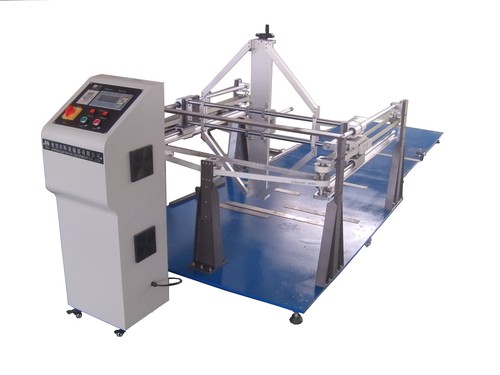
Tell us about your requirement

Price:
Quantity
Select Unit
- 50
- 100
- 200
- 250
- 500
- 1000+
Additional detail
Mobile number
Email

More Products in Furniture Test Equipment Category
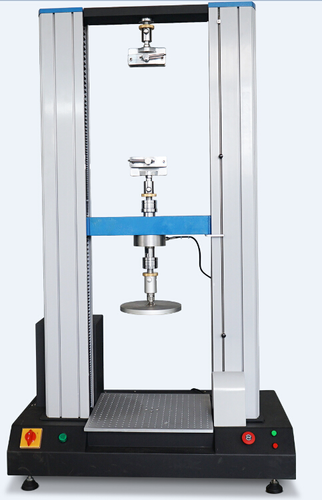
Memory foam fatigue tester
Price 1800 USD ($) / Set
Minimum Order Quantity : 1 Set
Application : Fatigue and deformation measurement for memory foam
Power Supply : AC 220V, 50Hz
Usage : Laboratory and quality control
Frequency : 90 Hz
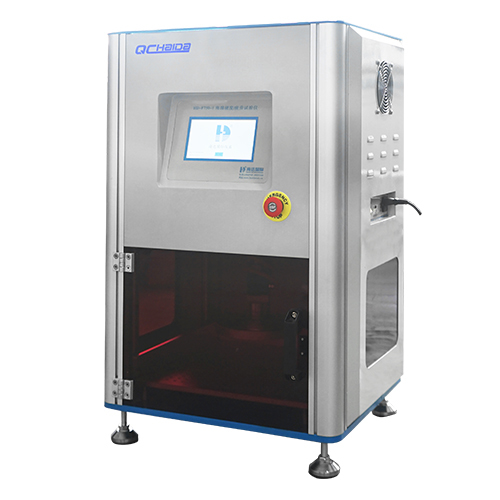
Sponge Compression Hardness Tester
Price 4000 USD ($) / Set
Minimum Order Quantity : 1 Set
Application : Measuring compressive hardness of foam, sponge and similar materials
Power Supply : AC 220V, 50/60Hz
Usage : Physical testing of polyurethane/sponges
Frequency : 50/60 Hz
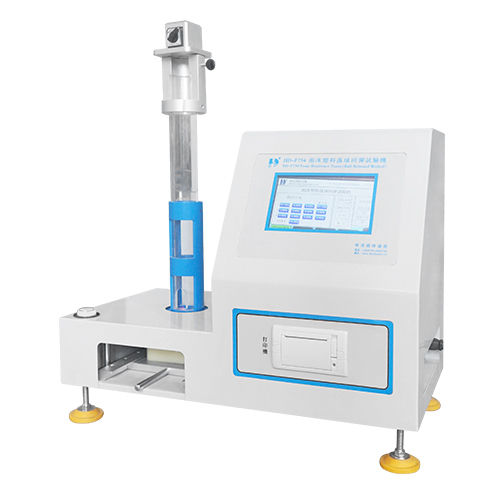
Foam Ball Rebound Test Machine
Price 699 USD ($) / Unit
Minimum Order Quantity : 1 Unit
Application : Testing rebound elasticity of flexible polyurethane foam
Power Supply : AC 220V, 50/60Hz
Usage : Lab & Quality Control Testing
Frequency : 50/60 Hz
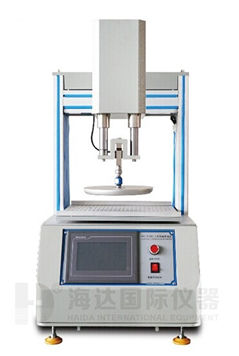
Memory Sponge Fatigue Test Machine
Price 1500 USD ($) / Set
Minimum Order Quantity : 1 Set
Application : Memory sponge/density foam fatigue test and repeated compression test
Power Supply : AC 220V / 50Hz
Usage : Memory sponge fatigue and compression testing
Frequency : 50Hz

Contact Details
- FACTORY ADD: No.13 Daxin Street, Daluosha Industrial Zone, Daojiao Town,Dongguan - 523710, Guangdong, China
- Phone :86-1591-7693151
- haidads@qc-test.cn
 Send Inquiry
Email us : haidads@qc-test.cn
- Ms Lisa (Manager)
- Mobile : +8613662707979, +8613829267288, +8615016776323, +8618373745787, +8618236912012, +8613602361535, +8613925747786

|


 |
HAIDA INTERNATIONAL EQUIPMENT CO., LTD.
All Rights Reserved.(Terms of Use) Developed and Managed by Infocom Network Private Limited. |
