

 English
 Spanish
 French
 German
 Italian
 Chinese (Simplified)
 Japanese
 Korean
 Arabic
 Portuguese
 Send Inquiry
Foam Ball Rebound Test Equipment
Price 699 USD ($)/ Unit
MOQ : 1 Unit
Foam Ball Rebound Test Equipment Specification
- Frequency
- 50 Hz
- Specimen Size
- 100 mm x 100 mm x 50 mm
- Display Type
- Digital LED display
- Measuring Range
- 0 100 mm
- Gas Pressure
- 0.6 0.8 MPa
- Operating Voltage
- 220 V
- Port Size
- 6 mm
- Interface Type
- RS232
- Number of Specimens
- Up to 3 at a time
- Application
- Foam resilience/rebound testing
- Features
- Automatic reading, easy calibration, anti-vibration base, data output
- Automation Grade
- Semi-automatic
- Test Range
- 0 100% rebound
- Temperature
- 10C 40C
- Humidity
- 85% RH
- Resolution
- 0.1 mm
- Response Time
- <1 second
- Power Supply
- 220V AC, 50Hz
- Equipment Type
- Ball Rebound Tester
- Mounting Type
- Tabletop
- Hardness
- Can test soft to hard foam
- Accuracy
- 1 mm
- Max Height
- 500 mm
- Usage
- Foam material testing
- Capacity
- 1 50 N
- Machine Weight
- Approx. 60 kg
- Test Speed
- Adjustable, up to 200 mm/min
- Test Width
- 150 mm
- Test Stroke
- 100 mm 500 mm
- Control Mode
- Digital/Manual
- Memory Storage
- Stores up to 200 results
- Included Accessories
- Test balls, power cable, user manual
- Safety Feature
- Emergency stop button
- Noise Level
- <60 dB(A)
- Compliance
- Conforms to ASTM D3574, ISO 8307
- Operating Environment
- Laboratory, controlled conditions
- Test Ball Material
- Steel
- Test Ball Diameter
- 16 mm
- Sensor Type
- Photoelectric sensor
- Construction
- Powder coated MS body
- Packaging Type
- Export-worthy wooden crate
- Calibration
- Auto/Manual calibration option
- Service Support
- On-site and remote technical support
- Data Export
- USB output supported
Foam Ball Rebound Test Equipment Trade Information
- Minimum Order Quantity
- 1 Unit
- FOB Port
- Shenzhen
- Supply Ability
- 10 Units Per Month
- Delivery Time
- 1 Week
- Packaging Details
- Each set protected with resin fiber and PP film, then put into Strong wooden case with operation manual and video inside.
- Certifications
- CE,ISO
Foam Ball Rebound Test Equipment About
The usage:
This machine design correspond with ASTM d3574 and ISO 8307,also Japan SES E3296 test standards. It is suitable for the determination of the rebound resilience of soft polyurethane foam.
THE MAIN PARAMETERS:
| Drop height | 500 0.5%mm |
| Drop ball | Diameter: 16 0.05 mm, mass 16.8g 1.5 g |
| Accuracy | <1.5% |
| Display | LCD Touch Screen interface |
| Sensor | Optical fiber sensor |
| Test result | Rebound height, rebound rate and average rebound rate after 5 test times |
| Sample size (L x W x H) | 100 mm x 100 mm x 50mm |
| Machine dimension (L x W x H) | 570 x 300 x 570mm |
| USB interface | Output test results by USB |
| Accessories | One drop ball, one sample tray and one pick rod |
| APPLICATION STANDARDS | ASTM D 3574, ISO 8307 |
Advanced Precision Testing
Get accurate and repeatable results for foam resilience testing using state-of-the-art photoelectric sensors and robust calibration options. Designed to handle a range of foam types, including soft and hard variants, this equipment ensures compliance with international standards for consistency and reliability.
Efficient Data Management
Store up to 200 test results in the internal memory and export your data via USB or the RS232 interface. Automatic reading features and digital LED display facilitate easy data analysis, helping laboratories and manufacturers streamline their quality control processes.
User-Centric Safety and Service
Operate confidently with built-in safety features like the emergency stop button and anti-vibration base. Benefit from comprehensive support, including remote and on-site technical assistance. Each equipment comes with essential accessories and detailed manuals for effortless installation and maintenance.
FAQs of Foam Ball Rebound Test Equipment:
Q: How does the Foam Ball Rebound Tester measure foam resilience?
A: The tester measures foam resilience by dropping a steel ball onto foam specimens and using photoelectric sensors to record the rebound height. The results are displayed digitally with high accuracy, enabling precise assessment of foam rebound characteristics.Q: What types of foam can be tested with this equipment?
A: This machine is suitable for testing both soft and hard foam specimens within the size range of 100 mm x 100 mm x 50 mm. It is designed to accommodate up to three specimens simultaneously, making it versatile for various foam types including those used in bedding, seating, and insulation.Q: Where is the Foam Ball Rebound Test Equipment typically used?
A: The equipment is primarily used in laboratories operating under controlled conditions. Industries such as foam manufacturing, research institutes, and quality assurance facilities utilize this tester for product development, compliance verification, and quality control.Q: What process is followed for calibration?
A: Users can choose either automatic or manual calibration depending on their operational preferences. The system guides the user through calibration sequences, ensuring consistent and reliable measurements across batches or test cycles.Q: How are test results recorded and exported?
A: Up to 200 test results can be stored in the equipments internal memory. Users may export data readily through USB output or the RS232 interface, allowing seamless integration with laboratory information management systems or external analysis software.Q: What are the main benefits of using this rebound tester?
A: Key benefits include precise measurement, compliance with ASTM and ISO standards, data management capabilities, fast response time (<1 second), and robust safety features. Its semi-automatic operation and user-friendly controls simplify testing, making it ideal for regular laboratory use.Q: What technical support is available for this equipment?
A: Customers receive comprehensive service options, including both on-site and remote technical support. Detailed user manuals, quick-access calibration, and support from dealers, distributors, and manufacturers in China ensure timely assistance and maintenance.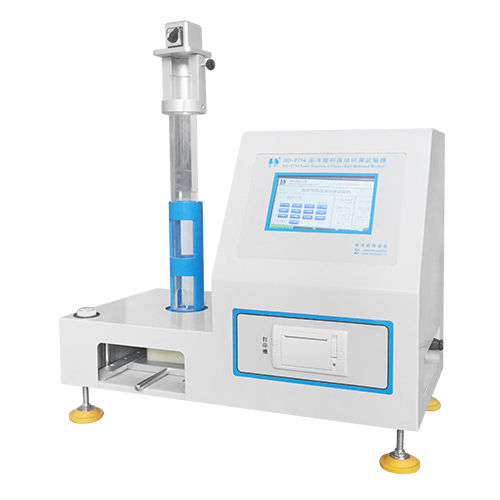
Tell us about your requirement

Price:
Quantity
Select Unit
- 50
- 100
- 200
- 250
- 500
- 1000+
Additional detail
Mobile number
Email

More Products in Furniture Test Equipment Category
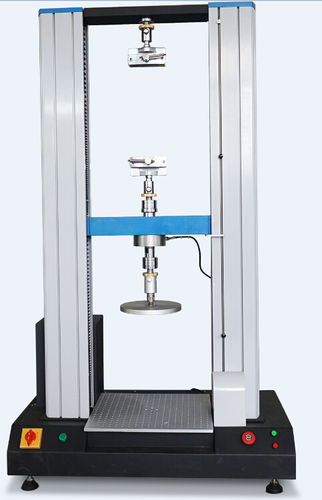
Foam compression strength tester
Price 4999 USD ($) / Unit
Minimum Order Quantity : 1 Unit
Application : Foam, sponge compression and strength testing
Usage : Laboratory/Test Room
Power Supply : AC 220V, 50Hz
Specimen Size : 380 x 380 mm
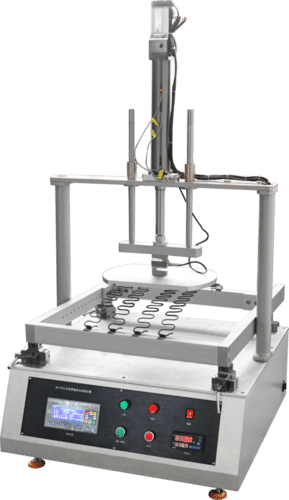
Spring Deformation Testing Machine
Price 6800 USD ($) / Unit
Minimum Order Quantity : 1 Unit
Application : Compression, tension, and deformation testing of springs
Usage : Laboratory and industrial testing
Power Supply : AC 220V, 50Hz
Specimen Size : Spring up to 100 mm length, 30 mm diameter
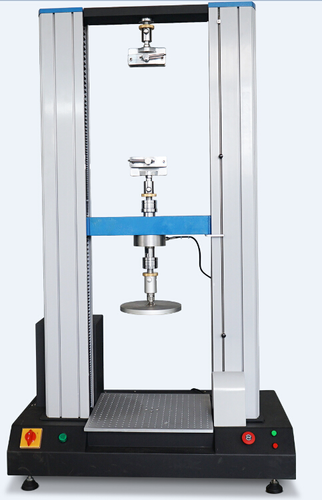
Memory foam fatigue tester
Price 1800 USD ($) / Set
Minimum Order Quantity : 1 Set
Application : Fatigue and deformation measurement for memory foam
Usage : Laboratory and quality control
Power Supply : AC 220V, 50Hz
Specimen Size : 380 x 380 mm
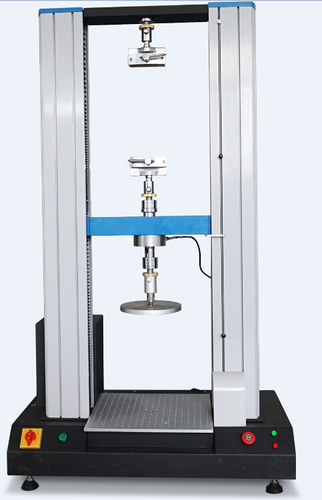
Foam pressure test equipment
Price 4000 USD ($) / Set
Minimum Order Quantity : 1 Set
Application : Compression testing of foam materials under pressure
Usage : Determination of foam pressure resistance
Power Supply : AC 220V, 50Hz
Specimen Size : 300 mm 300 mm 50 mm

Contact Details
- FACTORY ADD: No.13 Daxin Street, Daluosha Industrial Zone, Daojiao Town,Dongguan - 523710, Guangdong, China
- Phone :86-1591-7693151
- haidads@qc-test.cn
 Send Inquiry
Email us : haidads@qc-test.cn
- Ms Lisa (Manager)
- Mobile : +8613662707979, +8613829267288, +8615016776323, +8618373745787, +8618236912012, +8613602361535, +8613925747786

|


 |
HAIDA INTERNATIONAL EQUIPMENT CO., LTD.
All Rights Reserved.(Terms of Use) Developed and Managed by Infocom Network Private Limited. |
