

 English
 Spanish
 French
 German
 Italian
 Chinese (Simplified)
 Japanese
 Korean
 Arabic
 Portuguese
 Send Inquiry
Memory foam fatigue tester
Price 1800 USD ($)/ Set
MOQ : 1 Set
Memory foam fatigue tester Specification
- Resolution
- 1 cycle
- Frequency
- 90 Hz
- Test Range
- 0 - 100,000 cycles
- Number of Specimens
- 1
- Automation Grade
- Automatic
- Mounting Type
- Floor standing
- Humidity
- 20% - 80% RH
- Application
- Fatigue and deformation measurement for memory foam
- Features
- Programmable test cycles, automatic stop, emergency shutoff
- Power Supply
- AC 220V, 50Hz
- Specimen Size
- 380 x 380 mm
- Hardness
- Applicable for soft to medium foam
- Measuring Range
- 0 - 100,000 cycles
- Equipment Type
- Memory Foam Fatigue Tester
- Port Size
- 1/4 inch air inlet
- Operating Voltage
- 220V AC
- Accuracy
- ±1%
- Interface Type
- Touchscreen, USB
- Display Type
- Digital LCD
- Response Time
- <1 second
- Temperature
- 10°C - 40°C
- Max Height
- 1200 mm
- Gas Pressure
- 0.5 - 0.8 MPa
- Usage
- Laboratory and quality control
- Capacity
- 50 - 200 N
- Machine Weight
- 110 kg
- Test Speed
- 90 cycles/minute
- Test Width
- 400 mm
- Test Stroke
- 50 - 100 mm adjustable
- Control Mode
- Digital, programmable control
- Safety Mechanism
- Emergency stop, over-travel protection
- Test Method
- Vertical cyclic loading
- Noise Level
- <65 dB at max speed
- Compliance
- Conforms to ISO 2439 and ASTM D3574
- Included Accessories
- Specimen clamp, operation manual, power cable
- Frame Material
- Powder coated steel
- Power Consumption
- 600 W
- Cycle Counter
- Digital preset counter
Memory foam fatigue tester Trade Information
- Minimum Order Quantity
- 1 Set
- FOB Port
- Shenzhen
- Supply Ability
- 10 Sets Per Month
- Delivery Time
- 1 Week
- Packaging Details
- Each set protected with resin fiber and PP film, then put into Strong wooden case with operation manual and video inside.
- Certifications
- CE,ISO
Memory foam fatigue tester About
The usage:
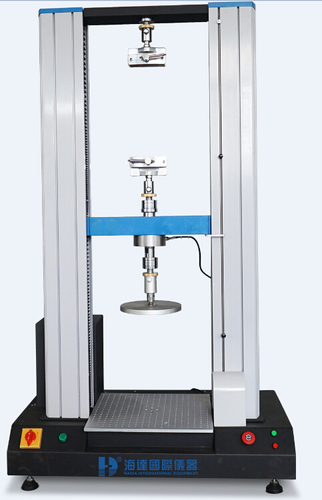
Memory foam fatigue tester is used to test foam fatigue by repeating indentation of a test piece by an indentor smaller in area than the test piece,the maximum load reched during esch cycle being kept within specified limits.
STANDARD FEATURES
| Item | Description |
| Max. Force | 2000 kg (20KN) |
| Load ce ll | Germany brand load ce ll for high accuracy |
| Control system | PC with windows 7 system |
| Motor | Panasonic servo motor w/ DC variable speed drive system, high-precision mechanical ball screw rod |
| Force reading | kgf, Ibf, N, KN, T etc |
| Stoke | 1100mm including fixture |
| Load ce ll Resolution | 1/250,000 |
| Load Precision | within 0.5% |
| Test speed | 0.01~500mm/min (adjustable) |
| Software | TM 2101 |
| Curves display | Load- elongation, Elongation-time, Time-elongation, Stress-strain |
| Data display | Max. force, speed, sample information, strength(Kpa, Mpa, N/mm, N/mm2) etc |
| Safety features | E-Stop Over-load protection Upper and lower limit switches Load sensor with automatic retreat |
Superior Fatigue Testing Performance
Engineered for consistent, high-precision fatigue and deformation testing, this machine offers a regulated test stroke range of 50 - 100 mm and a test width of 400 mm. Its digital programmable control ensures repeatability and reliable measurement, making it a staple for laboratory and quality control environments. The testers operational versatility is further underscored by its capability to handle up to 100,000 cycles with a response time of less than one second.
Safety & Compliance Assured
The Memory Foam Fatigue Tester integrates multiple safety mechanismsincluding emergency stop and over-travel protectionto ensure user security during operations. Conforming strictly to ISO 2439 and ASTM D3574 standards, it supports confident use in global laboratory and industrial settings. Noise levels are low, registering under 65 dB at maximum speed, enhancing work environments with quieter operations.
FAQs of Memory foam fatigue tester:
Q: How does the Memory Foam Fatigue Tester operate its test cycles?
A: This tester uses programmable digital controls to automate vertical cyclic loading, performing up to 100,000 cycles at a speed of 90 cycles per minute. Test parameters such as speed, stroke, and force are easily adjustable via the touchscreen interface.Q: What types of memory foam can be evaluated with this equipment?
A: The tester is suitable for soft to medium density memory foam specimens, which fit securely in its specimen clamp for fatigue and deformation analysis. The recommended specimen size is 380 x 380 mm.Q: When is the Memory Foam Fatigue Tester typically used in the product development process?
A: It is utilized during laboratory and quality control stages to assess the durability and fatigue resistance of memory foam before commercialization, ensuring compliance with international standards.Q: Where can this tester be installed and operated?
A: As a floor-standing unit, it is designed for laboratory, manufacturing, or quality control spaces, requiring an AC 220V, 50Hz power supply and an air inlet port with 0.5 0.8 MPa gas pressure.Q: What is the process for conducting a memory foam fatigue test?
A: First, the foam specimen is clamped securely. Test cycles, stroke, and capacity are programmed via the digital LCD display. The machine automatically loads the specimen vertically and records data until the preset cycle count or specified deformation is reached.Q: How does the safety system benefit users during operation?
A: The integrated emergency stop and over-travel protection limit the risk of hardware failure or user injury, ensuring safe and controlled testing even at high speeds or prolonged cycle runs.Q: What are the key benefits of using this equipment for memory foam fatigue testing?
A: Users gain highly accurate, repeatable results, straightforward operation with programmable controls, and compliance with international testing standards, all while minimizing noise and maximizing operator safety.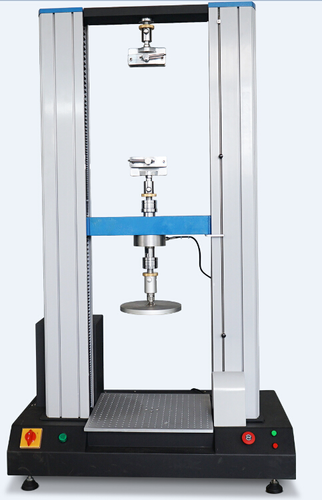
Tell us about your requirement

Price:
Quantity
Select Unit
- 50
- 100
- 200
- 250
- 500
- 1000+
Additional detail
Mobile number
Email

More Products in Furniture Test Equipment Category
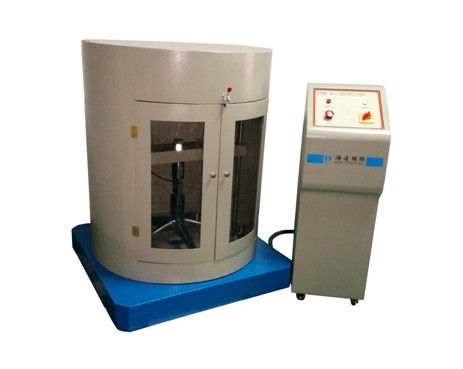
Automatic Chair Base Compression Testing Machine
Price 1600 USD ($) / Set
Minimum Order Quantity : 1 Set
Mounting Type : Floor mounted
Application : Furniture strength and durability testing
Usage : Chair base compression performance test
Features : Programmable test cycles, safety limit settings, realtime data acquisition
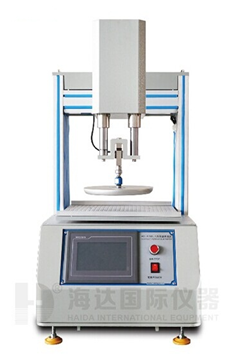
Foam pound apparatus
Price 1500 USD ($) / Unit
Minimum Order Quantity : 1 Unit
Mounting Type : Floormounted
Application : Physical property evaluation of foam for durability and resistance to pounding
Usage : Foam resilience and durability testing
Features : Programmable cycle, sturdy body, precision control, easy specimen fixture
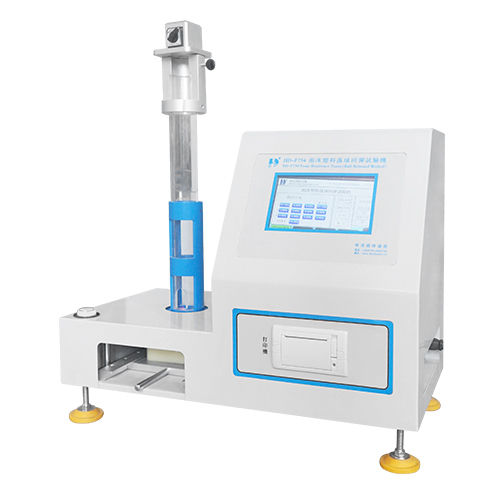
Foam Ball Rebound Test Machine
Price 699 USD ($) / Unit
Minimum Order Quantity : 1 Unit
Mounting Type : Benchtop
Application : Testing rebound elasticity of flexible polyurethane foam
Usage : Lab & Quality Control Testing
Features : Data storage, automatic calculation
Foam Pressure Stuffing Tester
Price 4000 USD ($) / Unit
Minimum Order Quantity : 1 Piece
Mounting Type : Floor Standing
Application : Foam hardness and resilience testing
Usage : Foam stuffing, pressure and resilience test
Features : Automatic pressure loading, touch screen operation, realtime data output

Contact Details
- FACTORY ADD: No.13 Daxin Street, Daluosha Industrial Zone, Daojiao Town,Dongguan - 523710, Guangdong, China
- Phone :86-1591-7693151
- haidads@qc-test.cn
 Send Inquiry
Email us : haidads@qc-test.cn
- Ms Lisa (Manager)
- Mobile : +8613662707979, +8613829267288, +8615016776323, +8618373745787, +8618236912012, +8613602361535, +8613925747786

|


 |
HAIDA INTERNATIONAL EQUIPMENT CO., LTD.
All Rights Reserved.(Terms of Use) Developed and Managed by Infocom Network Private Limited. |
