

 English
 Spanish
 French
 German
 Italian
 Chinese (Simplified)
 Japanese
 Korean
 Arabic
 Portuguese
 Send Inquiry
Foam compression strength tester
Price 4999 USD ($)/ Unit
MOQ : 1 Unit
Foam compression strength tester Specification
- Number of Specimens
- 1
- Gas Pressure
- 0.5~0.7 MPa
- Specimen Size
- 380 x 380 mm
- Mounting Type
- Floor Standing
- Application
- Foam, sponge compression and strength testing
- Hardness
- Suitable for soft and semi-rigid foam
- Resolution
- 0.01 N
- Measuring Range
- 0~2000 N
- Operating Voltage
- AC 220V
- Equipment Type
- Foam Compression Strength Tester
- Response Time
- <10 ms
- Test Range
- 0~2000 N
- Features
- Automatic, high precision, data export
- Humidity
- 20%~70% RH
- Accuracy
- 1%
- Temperature
- 10C~40C
- Max Height
- Up to 500 mm
- Display Type
- LCD Digital Display
- Automation Grade
- Automatic
- Power Supply
- AC 220V, 50Hz
- Interface Type
- USB, RS232
- Frequency
- 50 Hz
- Port Size
- Air inlet 8 mm
- Usage
- Laboratory/Test Room
- Capacity
- 2 KN
- Machine Weight
- 85 kg
- Test Speed
- 10~200 mm/min (Adjustable)
- Test Width
- 400 mm
- Test Stroke
- 0-300 mm
- Control Mode
- Microcomputer Controlled
- Data Output
- Digital & USB Export
- Dimensions (L x W x H)
- 850 mm x 500 mm x 1200 mm
- Protection System
- Overload and over-travel protection
- Software Support
- Customizable report generation
- Fixture Type
- Compression plate with anti-slip design
Foam compression strength tester Trade Information
- Minimum Order Quantity
- 1 Unit
- FOB Port
- Shenzhen
- Supply Ability
- 10 Units Per Month
- Delivery Time
- 1 Week
- Packaging Details
- Each set protected with resin fiber and PP film, then put into Strong wooden case with operation manual and video inside.
- Certifications
- CE,ISO
Foam compression strength tester About
The usage:
The foam compression strength tester machine can carry out the detection of metal,non-metal and other materials such as tensile,compression,bending,fatigue and other items. It can be compiled according to customer requirements according to customer requirements according to ASTM,ISO and other standards.
STANDARD FEATURES
| Item | Description |
| Max. Force | 2000 kg (20KN) |
| Load cell | Germany brand load cell for high accuracy |
| Control system | PC with windows 7 system |
| Motor | Panasonic servo motor w/ DC variable speed drive system, high-precision mechanical ball screw rod |
| Force reading | kgf, Ibf, N, KN, T etc |
| Stoke | 1100mm including fixture |
| Load cell Resolution | 1/250,000 |
| Load Precision | within 0.5% |
| Test speed | 0.01~500mm/min (adjustable) |
| Software | TM 2101 |
| Curves display | Load- elongation, Elongation-time, Time-elongation, Stress-strain |
| Data display | Max. force, speed, sample information, strength(Kpa, Mpa, N/mm, N/mm2) etc |
| Safety features | E-Stop Over-load protection Upper and lower limit switches Load sensor with automatic retreat |
Advanced Safety and Accuracy Features
To ensure secure and precise testing, the Foam Compression Strength Tester utilizes an anti-slip compression plate alongside overload and over-travel protection. Accurate measurements across a wide range (0~2000 N) are displayed instantly via the LCD digital display, supported by a rapid response time of less than 10 ms.
Versatile and Efficient Operation
The tester is designed for easy operation within laboratory environments, accommodating foam and sponge specimens. Automatic controls and adjustable test speed (10~200 mm/min) allow users to tailor the testing process to their requirements, maximizing throughput and repeatability.
Seamless Data Handling and Reporting
Featuring integrated software for customizable report generation, test data can be exported directly through digital interfaces such as USB and RS232. This facilitates efficient record-keeping and sharing, making the tester ideal for manufacturers, suppliers, distributors, and research institutions.
FAQs of Foam compression strength tester:
Q: How does the anti-slip compression plate improve testing accuracy?
A: The anti-slip design of the compression plate holds foam specimens securely in place, preventing any movement or slippage during compression. This ensures consistent force application and results in more accurate and repeatable measurements.Q: What data output options are provided by the tester?
A: Test data is displayed digitally on the LCD screen and can be exported via USB or RS232 interface. Users may generate detailed, customizable reports using the supported software, streamlining documentation and analysis processes.Q: When should the overload and over-travel protection systems be used?
A: These protection systems operate automatically, safeguarding the tester from mechanical or electrical overload during operation. They are crucial whenever testing specimens with unknown or higher-than-average strength to prevent equipment damage and operator risk.Q: Where is the Foam Compression Strength Tester typically installed and used?
A: This machine is designed for laboratory or test room use. Its floor-standing design and robust construction make it suitable for research facilities, manufacturing quality control labs, and material testing centers.Q: What is the testing process for foam specimens?
A: Place a foam or sponge specimen (up to 380 x 380 mm) onto the compression plate. Using the microcomputer controls, select the desired test speed and parameters. Initiate the test; the equipment measures compression strength, displays results, and allows easy data export and report generation.Q: How does the tester benefit manufacturers and suppliers?
A: Offering high precision, automatic operation, and digital reporting, the tester helps manufacturers and suppliers ensure product quality, optimize materials, and adhere to industry standards. The data export feature aids in sharing test results for compliance and customer assurance.Q: What types of foam can be tested using this equipment?
A: The Foam Compression Strength Tester is suitable for both soft and semi-rigid foam materials, accommodating specimens with maximum dimensions of 380 x 380 mm and up to 2 KN capacity, making it ideal for a wide array of application needs.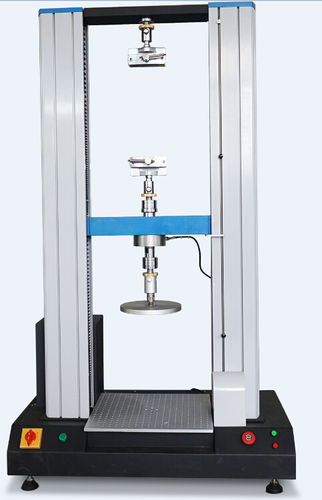
Tell us about your requirement

Price:
Quantity
Select Unit
- 50
- 100
- 200
- 250
- 500
- 1000+
Additional detail
Mobile number
Email

More Products in Furniture Test Equipment Category
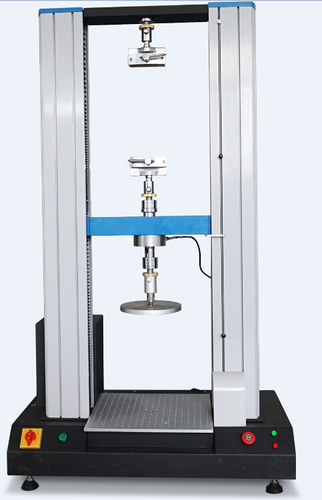
Foam pressure test equipment
Price 4000 USD ($) / Set
Minimum Order Quantity : 1 Set
Machine Weight : Approximately 45 kg
Features : Programmable control, LCD display, Emergency stop, Data output
Test Range : 0 1000 N
Response Time : 1 second
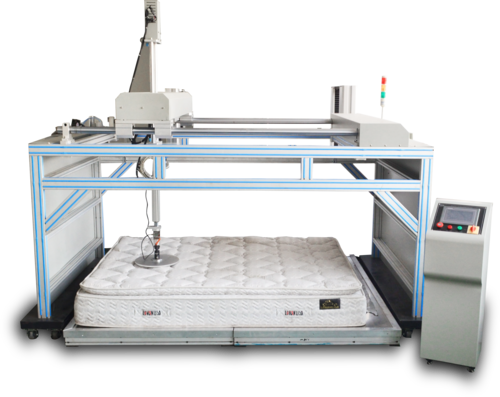
Mattress firttress tester
Price 6800 USD ($) / Unit
Minimum Order Quantity : 1 Unit
Machine Weight : 350 Kg
Features : Programmable cycles, automatic stop, safety protection, data storage
Test Range : 0~1000 N
Response Time : 0.5 s
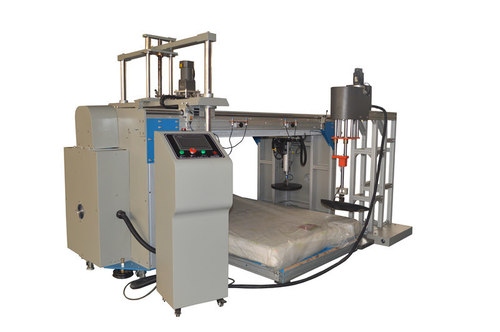
High Servo Measure System Mattress Rollator Durability Tester
Price 14200 USD ($) / Unit
Minimum Order Quantity : 1 Unit
Machine Weight : 480 kg
Features : High servo measurement, programmable test parameters, autostop, userfriendly HMI
Test Range : 5,000 100,000 cycles
Response Time : 5 ms
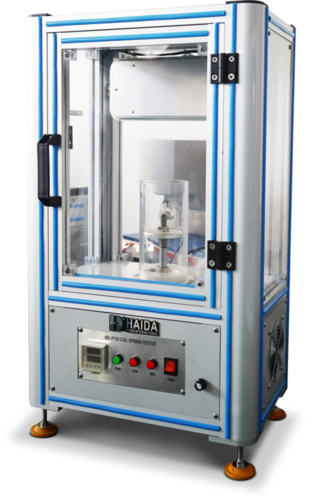
High Load Spiral Spring Testing Machine
Price 5500 USD ($) / Set
Minimum Order Quantity : 1 Set
Machine Weight : Approx. 200 kg
Features : Auto Data Recording, Overload Protection, Real Time Graph
Test Range : Up to 50 kN
Response Time : <2 ms

Contact Details
- FACTORY ADD: No.13 Daxin Street, Daluosha Industrial Zone, Daojiao Town,Dongguan - 523710, Guangdong, China
- Phone :86-1591-7693151
- haidads@qc-test.cn
 Send Inquiry
Email us : haidads@qc-test.cn
- Ms Lisa (Manager)
- Mobile : +8613662707979, +8613829267288, +8615016776323, +8618373745787, +8618236912012, +8613602361535, +8613925747786

|


 |
HAIDA INTERNATIONAL EQUIPMENT CO., LTD.
All Rights Reserved.(Terms of Use) Developed and Managed by Infocom Network Private Limited. |
