

 English
 Spanish
 French
 German
 Italian
 Chinese (Simplified)
 Japanese
 Korean
 Arabic
 Portuguese
 Send Inquiry
Fiberboard Flexing Tester
MOQ : 1 Set
Fiberboard Flexing Tester Specification
- Display Type
- Digital counter
- Specimen Size
- 70 mm 280 mm
- Port Size
- 8 mm Pneumatic Port
- Features
- Programmable cycle count, automatic stop
- Application
- For evaluating the flex resistance of fiberboard or corrugated materials
- Measuring Range
- up to 999,999 flex cycles
- Max Height
- 400 mm (instrument with stand)
- Interface Type
- Panel display
- Mounting Type
- Floor-standing
- Test Range
- 0 - 999,999 cycles
- Frequency
- 50 Hz
- Automation Grade
- Semi-automatic
- Equipment Type
- Fiberboard Flexing Tester
- Response Time
- Instantaneous
- Number of Specimens
- 2 (Standard)
- Accuracy
- 1 cycle
- Temperature
- 10C 40C Operating Range
- Operating Voltage
- 220V AC
- Resolution
- 1 cycle
- Gas Pressure
- 0.5~0.7 MPa
- Humidity
- 20% - 80% RH
- Power Supply
- AC 220V, 50 Hz
- Usage
- Flexural durability testing of packaging fiberboard
- Capacity
- Single or double specimen
- Machine Weight
- Approx. 90 kg
- Test Speed
- 60 cycles/min (adjustable)
- Test Width
- 70 mm
- Test Stroke
- 150 mm
- Control Mode
- Digital/Manual
- Clamping System
- Pneumatic clamps
- Noise Level
- Less than 65 dB
- External Finish
- Corrosion-resistant paint
- Flexing Angle
- 135 2
- Operation Mode
- Continuous / Intermittent
- Compliance Standards
- ISO 5628 / TAPPI T 832
- Safety Mechanism
- Over-travel and overload protection
- Material Body
- Powder-coated heavy gauge steel
- Dimensions (LWH)
- 650 450 980 mm
- Motor Power
- 120 W
Fiberboard Flexing Tester Trade Information
- Minimum Order Quantity
- 1 Set
- FOB Port
- SHENZHEN
- Supply Ability
- 20 Sets Sets Per Month
- Delivery Time
- 15 Days
- Sample Policy
- Contact us for information regarding our sample policy
- Packaging Details
- Each set protected with resin fiber and PP film, then put into Strong wooden case with operation manual and video inside.
- Certifications
- CE,ISO
Fiberboard Flexing Tester About
Fiber board Flexing TestApplication
This fiberboard flexing tester is used to test the fiberboards such as insole foreparts and stiffener that are flexed or deformed in wear to measure its quality. During test, the specimen is rotated through 180(90each side of vertical) back and forth under a certain load until it breaks.
Standard
- BS 5131,QB/T 1472
Standard Features
| Upper grip | 6 stations |
| Lower grip | 2kg, 6pcs |
| Speed | 60r/min10/min |
| Angle | 901 |
| Weight | Approx. 150kg |
| Power | 1 phase, AV 220V, 50/60HZ |
| Size (W*D*H) | 112x26x32cm |
Robust Construction and Safety
Constructed from heavy gauge, powder-coated steel and finished with corrosion-resistant paint, the Fiberboard Flexing Tester is built for longevity in demanding environments. Safety is paramount, with integrated over-travel and overload protection mechanisms safeguarding both operators and materials during continuous or intermittent operation.
Versatile Testing Performance
This tester supports both single and double specimen testing with a flexing angle of 135 2. Featuring programmable cycle counts, automatic stop, and rapid 60 cycles/min test speed (adjustable), it delivers flexibility and accuracy for a wide range of packaging material evaluations within a 0-999,999 cycle range.
Ease of Operation and Compliance
The digital panel interface provides effortless control, backed by both manual and automatic operational modes. Complying with internationally recognized standards (ISO 5628/TAPPI T 832), this tester offers precise and traceable data, making it ideal for manufacturers, exporters, and quality assurance teams.
FAQs of Fiberboard Flexing Tester:
Q: How is the Fiberboard Flexing Tester operated during a test?
A: Operation is straightforward via the digital control panel or manually, allowing users to set parameters such as cycle count, test speed, and flexing angle. Pneumatic clamps secure specimens, and programmable features automate the flexing process, ensuring consistent results across tests.Q: What materials and sample sizes can be tested with this equipment?
A: The device is optimized for testing fiberboard and corrugated materials. Standard specimen sizes are 70 mm 280 mm, with the capacity to evaluate up to two samples simultaneously, making it suitable for most packaging materials.Q: When should the flexural durability of fiberboard be tested?
A: Flexural testing is essential during product development, quality assurance, and routine inspections. It helps validate materials before large-scale production or shipment, ensuring they meet industry standards for durability and resilience.Q: Where can the Fiberboard Flexing Tester be installed and used?
A: This floor-standing unit is ideal for laboratories, manufacturing quality control rooms, and research facilities. Its robust construction and corrosion-resistant finish allow for reliable use in a variety of industrial environments.Q: What is the process for conducting a test on the Fiberboard Flexing Tester?
A: Sample specimens are clamped using the pneumatic system, then parameters such as flexing angle, speed, and cycle count are input via the panel. The instrument then initiates the programmed test, flexing specimens through a pre-set range and intervals, with real-time results displayed on the digital counter.Q: How does the tester ensure user safety during operation?
A: Safety is maintained with over-travel and overload protection to prevent accidents and equipment damage. Noise levels are kept below 65 dB, and the machine automatically halts when test criteria are fulfilled or if an anomaly is detected.Q: What are the benefits of using this tester for fiberboard material assessment?
A: It offers accurate, repeatable, and fast testing of flexural resistance, streamlining quality control for packaging manufacturers. The programmable and automated features reduce manual intervention, enhance productivity, and ensure compliance with international standards for packaging materials.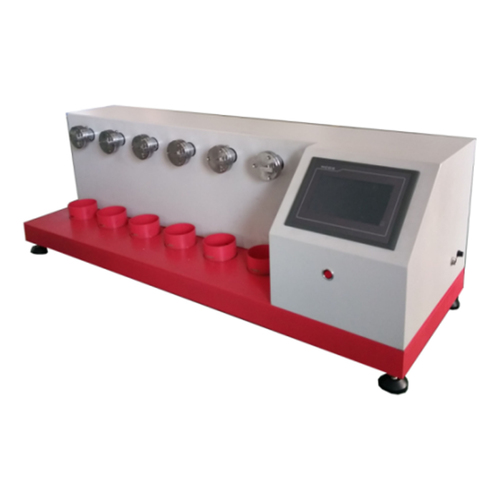
Tell us about your requirement

Price:
Quantity
Select Unit
- 50
- 100
- 200
- 250
- 500
- 1000+
Additional detail
Mobile number
Email

More Products in Shoes Test Equipment Category

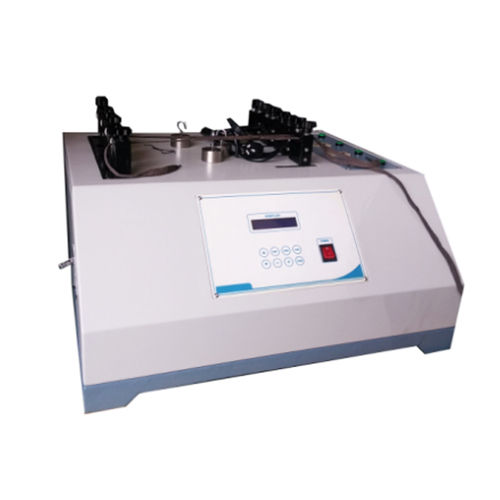
Shoe Steel Shank Fatigue-Resistance Tester
Price 2500 USD ($) / Unit
Minimum Order Quantity : 1 Unit
Application : To determine the fatigue resistance of shoe steel shanks
Power Supply : AC 220V, 50Hz
Test Width : 76 mm
Automation Grade : SemiAutomatic
Shoe Lace Abrasion Tester
Price 2800 USD ($) / Unit
Minimum Order Quantity : 1 Unit
Application : Testing abrasion resistance of shoe laces
Power Supply : AC 220V, 50Hz
Test Width : 20 mm
Automation Grade : Semiautomatic
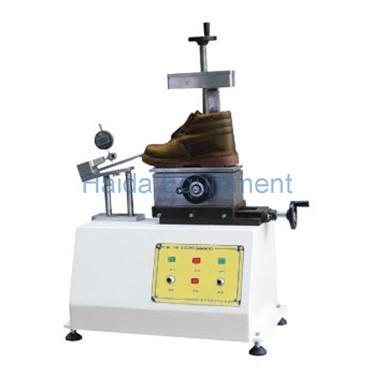
Shoes Peel Strength Test Equipment
Minimum Order Quantity : 1 set Set
Application : Shoe Sole & Upper Bonding Strength Testing
Power Supply : AC 220V, 50 Hz
Test Width : 10 mm
Automation Grade : Automatic
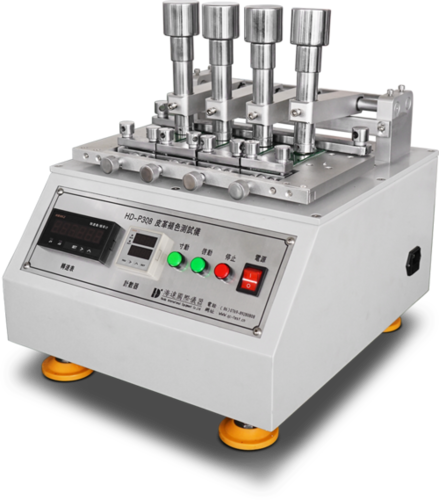
Leather fading tester
Price 3200 USD ($) / Set
Minimum Order Quantity : 1 Set
Application : Leather colour fastness test, surface fading evaluation
Power Supply : 220V AC, 50Hz
Test Width : 60 mm
Automation Grade : Semiautomatic

Contact Details
- FACTORY ADD: No.13 Daxin Street, Daluosha Industrial Zone, Daojiao Town,Dongguan - 523710, Guangdong, China
- Phone :86-1591-7693151
- haidads@qc-test.cn
 Send Inquiry
Email us : haidads@qc-test.cn
- Ms Lisa (Manager)
- Mobile : +8613662707979, +8613829267288, +8615016776323, +8618373745787, +8618236912012, +8613602361535, +8613925747786

|


 |
HAIDA INTERNATIONAL EQUIPMENT CO., LTD.
All Rights Reserved.(Terms of Use) Developed and Managed by Infocom Network Private Limited. |
