

 English
 Spanish
 French
 German
 Italian
 Chinese (Simplified)
 Japanese
 Korean
 Arabic
 Portuguese
 Send Inquiry
Shoes Peel Strength Test Equipment
MOQ : 1 set Set
Shoes Peel Strength Test Equipment Specification
- Interface Type
- RS232
- Power Supply
- AC 220V, 50 Hz
- Display Type
- Digital LCD Display
- Specimen Size
- Length 100 mm x Width 10 mm
- Frequency
- 50 Hz
- Features
- High Precision, Stable Performance, Easy Operation
- Response Time
- 1 ms
- Measuring Range
- 0 ~ 200 N
- Operating Voltage
- 220 V AC
- Number of Specimens
- Single or Multiple
- Test Range
- 0 ~ 200 N
- Gas Pressure
- 0.4 ~ 0.6 MPa
- Humidity
- 20 ~ 80% RH
- Temperature
- 10C ~ 40C
- Application
- Shoe Sole & Upper Bonding Strength Testing
- Hardness
- Standard Hardness
- Mounting Type
- Bench-top
- Max Height
- 500 mm
- Accuracy
- 1% of Reading
- Port Size
- Standard 8 mm
- Equipment Type
- Peel Strength Test Equipment
- Automation Grade
- Automatic
- Resolution
- 0.1 N
- Usage
- Laboratory testing of shoes bonding quality
- Capacity
- 200 N
- Machine Weight
- Approx. 80 kg
- Test Speed
- 100 mm/min
- Test Width
- 10 mm
- Test Stroke
- Maximum 150 mm
- Control Mode
- Digital Control
- Peeling Angle
- 90 and 180 available
- Material Compatibility
- Rubber, Leather, Synthetic, PU, and PVC
- Safety Protection
- Overload & Over-travel protection
- Calibration
- Manual & Auto Calibration
- Dimensions (LxWxH)
- 600 x 400 x 500 mm
- Data Output
- USB / Printer
- Motor Type
- Servo Motor Drive
- Compliance
- ISO, ASTM, DIN Standards
- Noise Level
- < 65 dB
- Force Unit
- Newton (N) / Kilogram (kg)
Shoes Peel Strength Test Equipment Trade Information
- Minimum Order Quantity
- 1 set Set
- FOB Port
- shenzhen
- Payment Terms
- Cash on Delivery (COD), Letter of Credit (L/C), Paypal, Western Union, Letter of Credit at Sight (Sight L/C), Delivery Point (DP), Cash Against Delivery (CAD), Telegraphic Transfer (T/T), Days after Acceptance (DA), Cash in Advance (CID), Cheque, Cash Advance (CA)
- Supply Ability
- 20 Sets per month Per Month
- Delivery Time
- 15 days after received the order Week
- Packaging Details
- Each set protected with resin fiber and PP film, then put into Strong wooden case with operation manual and video inside.
- Main Export Market(s)
- Australia, North America, Eastern Europe, Middle East, Western Europe, Africa, Central America, South America, Asia
- Certifications
- GB/T30903.3
Shoes Peel Strength Test Equipment About
Shoes peel strength test equipment
produce introduce:
Shoes peel strength test equipment is checking suitable for checking into peel strength between the shoe soles and uppers, the principle is fitted shoe shoes will become clamped in the machine to peel knife to peel the sole and upper junction, when measured peel is the force required to peel strength, peel strength and the edge according to the width of the peel strength is calculated.
According to the standard: GB/T30903.3
Specifications:
| Blade width | 20 0.2mm and 10 0.2 mm |
| Edge downlink speed | 20 2mm/min, rising and falling speed adjustable |
| Positioning rod and rod spacing | 50 ~ 70 mm adjustable |
| Indicator | 0.001 ~ 10 mm |
| Average Lifting range | 40 mm |
| About the size | 560 * 320 * 750 mm |
| Weight approx | 45 kg |
| Power | 1 AC 220V, 50HZ (by country or specified) |
High Precision Peeling Test for Footwear
Designed to meet ISO, ASTM, and DIN standards, this equipment delivers accurate peel strength measurements for shoe sole and upper assemblies. It is ideal for both single and multiple specimens, providing a reliable benchmark for quality control and research through stable performance in material testing.
Easy Operation and Digital Control System
With digital control and LCD display, users benefit from straightforward operation and instant data feedback. The servo motor drive ensures consistent test speeds, while features like automatic calibration and overload protection further enhance user convenience and safety during laboratory testing.
Material Versatility and Compliance
Suitable for rubber, leather, synthetic, PU, and PVC, the equipment adapts to a variety of footwear materials. Its adherence to global standards ensures compatibility in international markets and seamless integration into standardized laboratory procedures.
FAQs of Shoes Peel Strength Test Equipment:
Q: How does the Shoes Peel Strength Test Equipment evaluate shoe bonding quality?
A: This device measures the force required to separate the sole and upper of shoes at specified peeling angles (90 or 180). It quantifies bonding strength in Newtons or kilograms, helping manufacturers assess the durability and adherence of different materials in footwear construction.Q: What process is followed when conducting a peel strength test?
A: Tests involve placing prepared specimens (typically 100 mm x 10 mm) into the machine, setting the desired test speed and angle, and activating the servo motor drive. The equipment applies controlled force while recording data, concluding once the peel stroke or maximum force is reached.Q: When should the equipment be calibrated, and what options are available?
A: Calibration should be performed before initial use and periodically as required by laboratory protocols. Both manual and automatic calibration are available, ensuring accurate readings and consistent test results over time.Q: Where is this equipment typically used and by whom?
A: It is commonly used in footwear laboratories by manufacturers, dealers, exporters, and wholesalers in China and international markets, primarily for quality assurance, product development, and compliance testing.Q: What are the benefits of digital control and USB/printer data output?
A: Digital control enhances operational accuracy and repeatability, while USB or printer data outputs streamline reporting, documentation, and integration with other laboratory systems. This provides efficient workflow and secure archiving of test results.Q: How does the equipment ensure safety during operation?
A: The system is equipped with overload and over-travel protection mechanisms, minimizing risks of damage or operator injury, and operates at noise levels below 65 dB for a safe and comfortable workspace.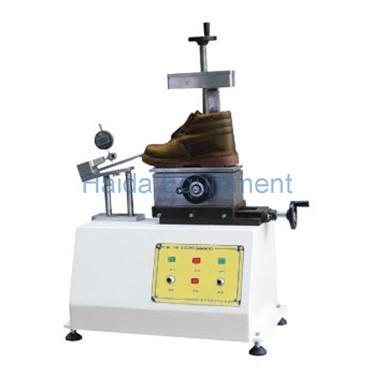
Tell us about your requirement

Price:
Quantity
Select Unit
- 50
- 100
- 200
- 250
- 500
- 1000+
Additional detail
Mobile number
Email

More Products in Shoes Test Equipment Category
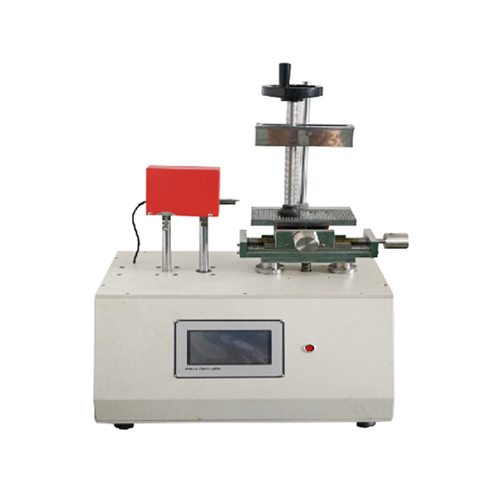
Shoe Peeling Strength Tester
Price 2100 USD ($) / Unit
Minimum Order Quantity : 1 Unit
Test Width : 30 mm
Test Speed : 100 mm/min (Adjustable)
Test Stroke : 100 mm
Operating Voltage : 220V
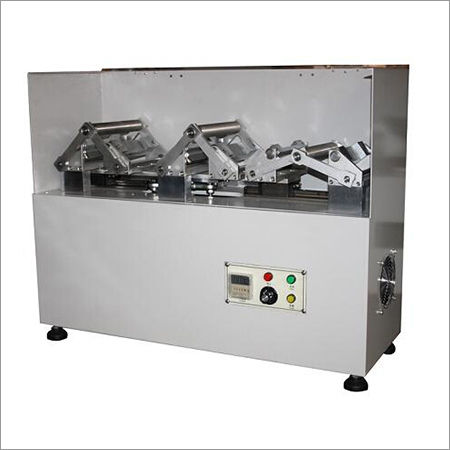
Shoes Outsole Flexing Test Equipment
Minimum Order Quantity : 1 set Set
Test Width : Up to 120 mm
Test Speed : 60~300 cycles/min (adjustable)
Test Stroke : 20~50 mm (adjustable)
Operating Voltage : 220V
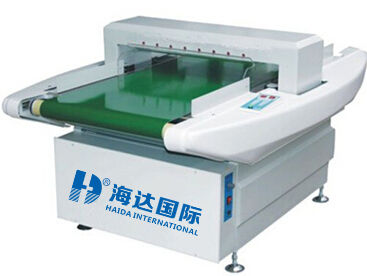
Needle Metal Detector
Price 799 USD ($) / Set
Minimum Order Quantity : 1 Set
Test Width : 600 mm
Test Speed : 30 m/min
Test Stroke : Customizable
Operating Voltage : 220V AC
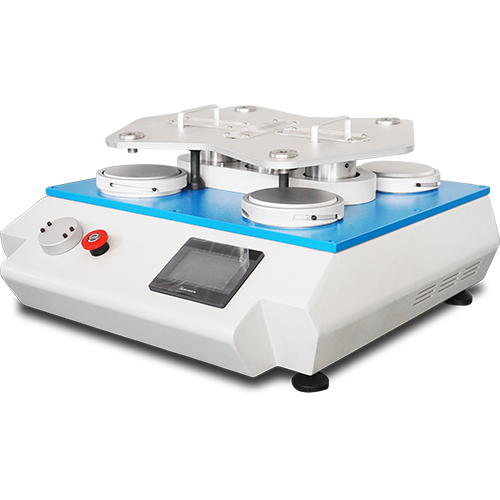
Martindale abrasion pilling tester
Price 2800 USD ($) / Unit
Minimum Order Quantity : 1 Unit
Test Width : 90 mm (specimen diameter)
Test Speed : 24 0.5 rpm
Test Stroke : 60.5 0.5 mm
Operating Voltage : 220V

Contact Details
- FACTORY ADD: No.13 Daxin Street, Daluosha Industrial Zone, Daojiao Town,Dongguan - 523710, Guangdong, China
- Phone :86-1591-7693151
- haidads@qc-test.cn
 Send Inquiry
Email us : haidads@qc-test.cn
- Ms Lisa (Manager)
- Mobile : +8613662707979, +8613829267288, +8615016776323, +8618373745787, +8618236912012, +8613602361535, +8613925747786

|


 |
HAIDA INTERNATIONAL EQUIPMENT CO., LTD.
All Rights Reserved.(Terms of Use) Developed and Managed by Infocom Network Private Limited. |
