

 English
 Spanish
 French
 German
 Italian
 Chinese (Simplified)
 Japanese
 Korean
 Arabic
 Portuguese
 Send Inquiry
Compression Set Appartus
Price 1500 USD ($)/ Unit
MOQ : 1 Unit
Compression Set Appartus Specification
- Speed Range
- Not applicable (operated manually)
- Color
- Blue/Chrome finish
- Capacity
- Suitable for standard rubber test specimens (commonly 29 mm dia. & 12.5 mm thickness as per ASTM D395)
- Dimension (L*W*H)
- 150 mm x 150 mm x 200 mm (approx.)
- Features
- Corrosion resistant, compact design, precise alignment
- Product Type
- Compression Set Apparatus
- Voltage
- Not required (manual device)
- Control Mode
- Manual screw control
- Stroke
- Not applicable (manual type)
- Accuracy
- High precision (with dial gauge reading in 0.01 mm)
- Usage & Applications
- Measurement of compression set in rubber and elastomer specimens
- Frame Type
- Rigid steel plate construction
- Power
- Manual
- Gauge
- High sensitivity dial gauge included
- Load Power
- Manual application (no motorized load)
- Display Type
- Analog (Dial gauge)
- Weight
- Approx. 3 - 5 kg
- Automation Grade
- Manual
- Calibration
- Supplied with calibration certificate
- Operating Temperature
- Ambient
- Operating Principle
- Measures permanent deformation after compression
- Application Industry
- Rubber industry, polymer labs, testing institutes
- Plate Diameter
- Approx. 60 mm
- Dial Gauge Range
- 0 to 10 mm, least count 0.01 mm
- Accessories
- Set of spacers and sample punches provided
- Surface Finish
- Polished, rust protected
- Specimen Holder
- Includes lower and upper plates with parallelism adjustment
- Test Standard
- Conforms to ASTM D395, IS 3400 (Part 10), and ISO 815
Compression Set Appartus Trade Information
- Minimum Order Quantity
- 1 Unit
- FOB Port
- SHENZHEN
- Payment Terms
- Cash on Delivery (COD), Paypal, Letter of Credit (L/C), Western Union, Letter of Credit at Sight (Sight L/C), Delivery Point (DP), Cash Against Delivery (CAD), Telegraphic Transfer (T/T), Days after Acceptance (DA), Cash in Advance (CID), Cheque, Cash Advance (CA)
- Supply Ability
- 15 Units Per Week
- Delivery Time
- 5 Days
- Packaging Details
- Each set protected with resin fiber and PP film, then put into Strong wooden case with operation manual and video inside. CE,ISO
- Certifications
- CE,ISO
Compression Set Appartus About
Standard Features
| Item | Specification |
| Specimen number | 3-27 |
| Specimen size Method 1 | Foam material diameter: 29mm, non- foamed material diameter: 14.5mm |
| Specimen size Method 2 | Foam material: 25.4*25.4mm, non- foamed material diameter: 12.7mm |
| Standard | ASTM D395 |
Applications
It is used to test resilience of rubber after specified time and pressure.
Accurate Measurement of Permanent Deformation
Designed for compliance with internationally recognized testing standards, this Compression Set Apparatus provides reliable and repeatable readings of compression set in rubber and elastomer materials. The polished, rust-protected plates ensure precise parallelism and sample integrity, while the high precision dial gauge delivers results down to 0.01 mm.
Engineered for Versatility and Durability
Constructed from high-quality, rigid steel with a distinct blue or chrome finish, the apparatus offers exceptional durability and corrosion resistance. Its manual operation requires no power, making it suitable for laboratory or quality control environments where mobility and low maintenance are important.
Comprehensive Testing Accessories Included
Each unit comes complete with a set of spacers and sample punches, accommodating standard specimen sizes required by ASTM D395. The apparatus is also supplied with a calibration certificate, supporting accurate and traceable measurement for routine and certification testing alike.
FAQs of Compression Set Appartus:
Q: How does the Compression Set Apparatus measure permanent deformation in rubber specimens?
A: The Compression Set Apparatus applies a controlled manual load to a rubber or elastomer specimen using parallel plates. After a specified period under compression, the device uses a high-sensitivity dial gauge to measure the residual thickness, indicating the permanent deformation remaining in the specimen after the fixed compression is removed.Q: What test standards does this apparatus conform to?
A: This device is designed to meet the requirements of ASTM D395, IS 3400 (Part 10), and ISO 815, ensuring compatibility with international protocols for measuring compression set in rubber and related materials.Q: When should I calibrate the Compression Set Apparatus?
A: The apparatus is supplied with a calibration certificate upon delivery. For continued accuracy, it is advisable to recalibrate according to your laboratorys schedule, prior to critical testing, or after any maintenance or adjustments.Q: Where is the Compression Set Apparatus commonly used?
A: It is widely utilized in rubber fabrication plants, polymer research labs, quality control departments, and specialist materials testing institutes. It is suitable for use by manufacturers, suppliers, exporters, and other stakeholders in the rubber and polymer industries.Q: What is the process for operating the Compression Set Apparatus?
A: Place the prepared sample between the polished plates using the spacers provided, then manually apply the load via the screw mechanism. After the prescribed compressive period, release the load and measure the final sample thickness using the analog dial gauge.Q: What are the key benefits of using this apparatus?
A: The device delivers high precision results, offers robust corrosion resistance, and has a compact, manual design for ease of use and minimal maintenance, making it a cost-effective tool for both routine testing and research applications.Q: How do I ensure accurate usage of the apparatus during tests?
A: Ensure the sample is of the correct standard size, the plates are properly aligned using the parallelism adjustment, and the dial gauge is zeroed before each test. Always follow the relevant test standard procedures for optimal accuracy.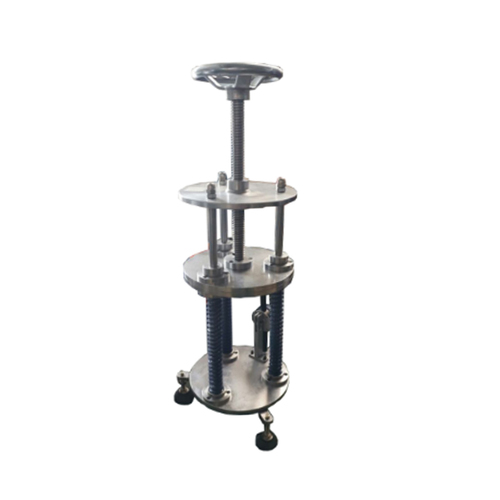
Tell us about your requirement

Price:
Quantity
Select Unit
- 50
- 100
- 200
- 250
- 500
- 1000+
Additional detail
Mobile number
Email

More Products in Rubber and Plastic Test Equipment Category
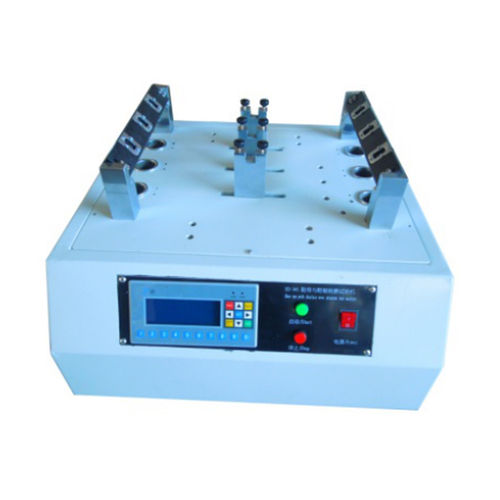
Shoe Lace And Eyelet Abrasion Tester
Price 3500 USD ($) / Unit
Minimum Order Quantity : 1 Unit
Color : Blue / White (as per manufacturer standard)
Dimension (L*W*H) : 650 x 400 x 400 mm
Product Type : Shoe Lace and Eyelet Abrasion Tester
Accuracy : 1%
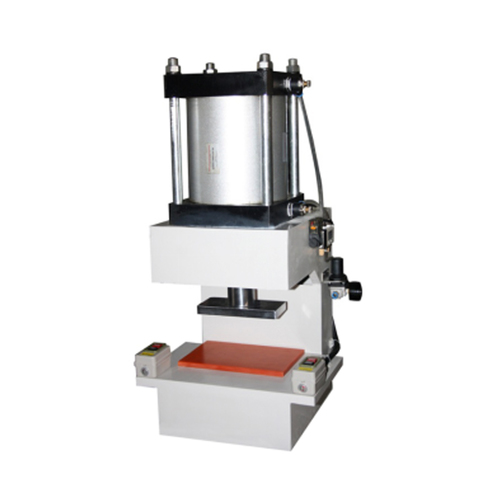
Pneumatic Sampling Machine
Price 2500 USD ($) / Unit
Minimum Order Quantity : 1 Unit
Color : Blue & Silver
Dimension (L*W*H) : 1200 x 500 x 1035 mm
Product Type : Pneumatic Sampling Machine
Accuracy : 0.5%
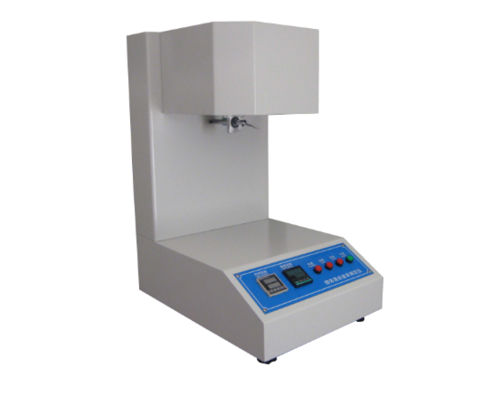
MFI Tester
Price 1200 USD ($) / Unit
Minimum Order Quantity : 1 Unit
Color : Blue / Grey
Dimension (L*W*H) : 560 mm x 350 mm x 680 mm
Product Type : MFI Tester
Accuracy : 0.1C
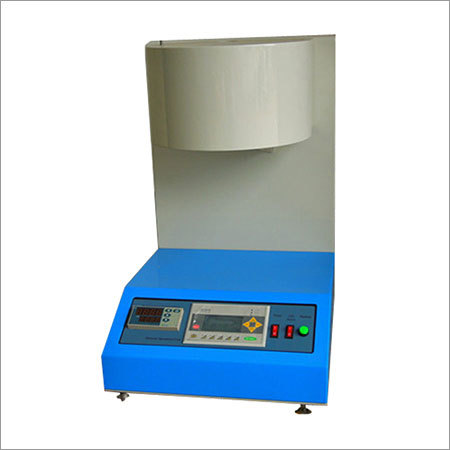
PP and PE Melt Flow Testing Machines
Minimum Order Quantity : 1 Set
Color : Blue & White
Dimension (L*W*H) : 520 x 320 x 650 mm
Product Type : PP & PE Melt Flow Testing Machines
Accuracy : 0.01g

Contact Details
- FACTORY ADD: No.13 Daxin Street, Daluosha Industrial Zone, Daojiao Town,Dongguan - 523710, Guangdong, China
- Phone :86-1591-7693151
- haidads@qc-test.cn
 Send Inquiry
Email us : haidads@qc-test.cn
- Ms Lisa (Manager)
- Mobile : +8613662707979, +8613829267288, +8615016776323, +8618373745787, +8618236912012, +8613602361535, +8613925747786

|


 |
HAIDA INTERNATIONAL EQUIPMENT CO., LTD.
All Rights Reserved.(Terms of Use) Developed and Managed by Infocom Network Private Limited. |
