

 English
 Spanish
 French
 German
 Italian
 Chinese (Simplified)
 Japanese
 Korean
 Arabic
 Portuguese
 Send Inquiry
MFI Tester
Price 1200 USD ($)/ Unit
MOQ : 1 Unit
MFI Tester Specification
- Speed Range
- Fixed stroke as per ASTM standard
- Dimension (L*W*H)
- 560 mm x 350 mm x 680 mm
- Frame Type
- Rigid steel body
- Usage & Applications
- Measurement of melt flow index of thermoplastics
- Power Supply
- AC Supply
- Phase
- Single Phase
- Stroke
- 30 mm
- Accuracy
- ±0.1°C
- Product Type
- MFI Tester
- Load Power
- 500 W
- Frequency
- 50 Hz
- Gauge
- Inbuilt digital gauge
- Control Mode
- Microprocessor Based
- Display Type
- Digital LED
- Capacity
- Single test barrel
- Power
- 230V AC
- Color
- Blue / Grey
- Voltage
- 220-240 V
- Features
- PID temperature controller; Soft touch keypad
- Weight
- Approx. 35 kg
- Automation Grade
- Semi-Automatic
- Plunger Material
- Hardened and ground steel
- Max Operating Temperature
- 400C
- Heating Time
- Approx. 6-8 min to set temperature
- Cooling System
- Natural / Optional fan-assisted
- Sample Cutter
- Included
- Heater Type
- High-efficiency cartridge heater
- Timer Function
- Digital programmable timer
- Operating Environment
- Lab use, Indoor
- Temperature Range
- Room temperature to 400C
- Test Method
- ASTM D1238 / ISO 1133
- Die Orifice Diameter
- 2.095 mm standard
- Barrel Material
- Stainless Steel
MFI Tester Trade Information
- Minimum Order Quantity
- 1 Unit
- FOB Port
- SHENZHEN
- Payment Terms
- Cash on Delivery (COD), Letter of Credit (L/C), Western Union, Paypal, Letter of Credit at Sight (Sight L/C), Delivery Point (DP), Cash Against Delivery (CAD), Cash Advance (CA), Telegraphic Transfer (T/T), Days after Acceptance (DA), Cash in Advance (CID), Cheque
- Supply Ability
- 15 Units Per Week
- Delivery Time
- 5 Week
- Packaging Details
- Each set protected with resin fiber and PP film, then put into Strong wooden case with operation manual and video inside. CE,ISO
- Main Export Market(s)
- Middle East, Africa, Central America, Eastern Europe, South America, Western Europe, Asia, North America, Australia
- Certifications
- CE,ISO
MFI Tester About
MFI Tester (Melt Flow Index Tester)
Standard Features
| Testing range | 0.1-800.00g/10min (MFR) |
| Temperature range | Room temperature~400C |
| Controlling Accuracy | 0.2C |
| Timing accuracy | 0.1s |
| Displacement accuracy | 0.01mm |
| Standard loads | 325g, 875g, 960g, 1200g, 1640g, 2500g, 4100, 5000g & 5000g |
| Combination load | 325g, 1200g, 2160g, 3800g, 5000g, 7160g, 10000g, 21600g |
| Material cutting method | Manual, timing and automatic cutting (optional) |
| Time setting | 0.1~999.9min |
| Cylinder | Diameter 9.55040.0076mm |
| Land of piston | Diameter 9.47420.0076mm, length: 6.350.13mm |
| Thin hole pattern | External diameter: 9.50.02mm; bore diameter 2.09550.0051mm; length 8.000.025mm |
Applications
Melt Flow Index Tester is used to determine melt-mass flow rate (MFR). It is applicable not only to the higher melting temperature, such as masterbatches, polycarbonate, nylon, fluoro plastics, poly oxide and other engineering plastics, and it also applies to plastic measurement of melt lower temperature, such as polyethylene, polystyrene, polypropylene, ABS resin, poly formaldehyde resin. At the same time, it is widely used in plastics raw materials products, the petrochemical industry and related universities, scientific research institutes, and commodity inspection departments. It is based on designed and manufactured according to latest national and international standards.
Efficient and Accurate Testing
Experience rapid heatingreaching set temperatures in just 6-8 minutesand stable operation with the MFI Testers high-efficiency cartridge heater. Its microprocessor-based controls and PID temperature management ensure outstanding accuracy (0.1C) for laboratory analysis. Digital displays and programmable timers simplify operation, making testing streamlined and repeatable.
Durable Construction for Longevity
Built with a stainless steel barrel and a hardened, ground steel plunger, the MFI Tester is crafted for long-lasting performance. The rigid steel frame lends structural strength, while the inbuilt digital gauge enables precise measurement. The included sample cutter and standard 2.095 mm die orifice meet international compliance requirements for melt flow testing.
Versatile Laboratory Applications
Ideal for dealers, distributors, manufacturers, and researchers, the MFI Tester is suitable for a variety of polymer testing scenarios. Its semi-automatic operation and fixed stroke design, as per ASTM standards, make it perfect for analyzing the melt flow of thermoplastics in research, quality control, and production environments.
FAQs of MFI Tester:
Q: How does the MFI Tester measure the melt flow index of thermoplastics?
A: The MFI Tester determines the melt flow index by measuring the amount of polymer extruded through a standard die orifice (2.095 mm) under specific temperature and load conditions, following ASTM D1238 or ISO 1133 methods. The digital LED display and inbuilt digital gauge provide precise, real-time measurement readings.Q: What is the process for setting up and using the MFI Tester?
A: To use the MFI Tester, simply power it using a 220-240 V AC supply, set the required temperature on the soft touch keypad, and wait for the unit to reach the desired temperature (about 6-8 minutes). Insert your sample in the barrel, operate the plunger, and collect extrudate using the included sample cutter. The programmable timer assists in maintaining uniform test conditions.Q: When should the testers cooling system be used?
A: The MFI Tester offers both a natural cooling system and an optional fan-assisted cooling. For standard lab use, natural cooling is often sufficient. However, fan-assisted cooling may be helpful for rapid temperature reduction between tests or to enhance safety during extended operation at high temperatures.Q: Where is the optimal environment to operate the MFI Tester?
A: The MFI Tester is intended for indoor laboratory use, ideally in controlled environments to maintain accuracy and safety. It operates best at ambient room temperature, free from excessive humidity or dust that might interfere with electronic components or melt flow measurements.Q: What materials is the device compatible with, and what benefit does it offer for plastics manufacturing?
A: This tester is compatible with a wide range of thermoplastics. By providing accurate melt flow index values, it enables manufacturers to assess material quality, batch consistency, and suitability for various processing techniques, thereby ensuring higher product quality and process efficiency.Q: How does the digital programmable timer function benefit operations?
A: The digital programmable timer allows you to precisely control test duration, improving repeatability and reducing human error. This ensures that each MFI test is performed under consistent conditions, critical for reliable comparative analysis.Q: What advantages does the microprocessor-based PID temperature controller offer?
A: The microprocessor-based PID controller delivers highly stable temperature regulation (accuracy: 0.1C), minimizing thermal fluctuations during testing. This leads to more reliable test outcomes and safeguards against overheating, protecting both the polymer samples and the tester itself.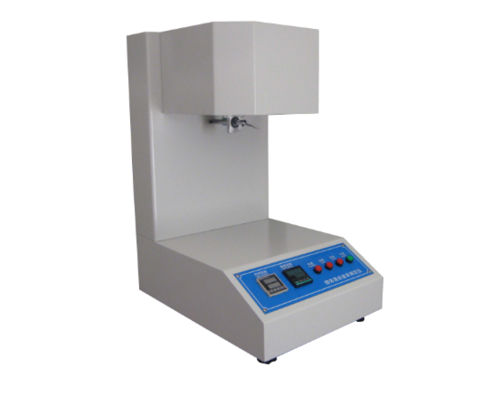
Tell us about your requirement

Price:
Quantity
Select Unit
- 50
- 100
- 200
- 250
- 500
- 1000+
Additional detail
Mobile number
Email

More Products in Rubber and Plastic Test Equipment Category
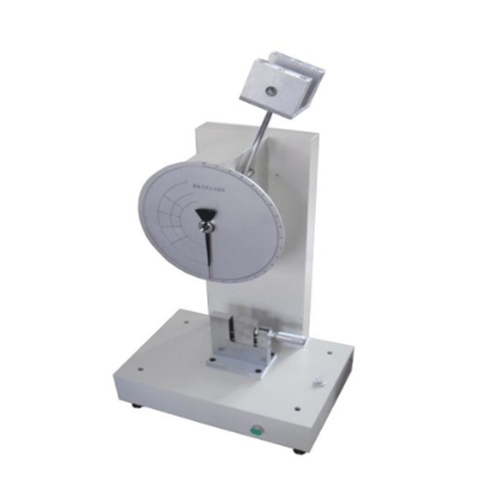
Izod Impact Tester
Price 1000 USD ($) / Piece
Minimum Order Quantity : 1 Piece
Dimension (L*W*H) : 550 mm x 300 mm x 850 mm
Accuracy : 1% of full scale
Stroke : 300 mm
Power : Manual (Optional Electric Models available)
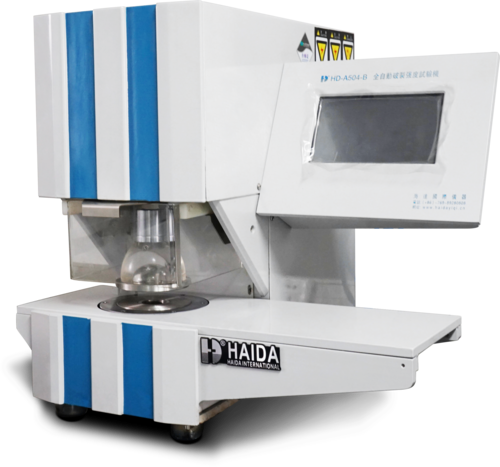
Automatic Brust Strength Tester Series
Price 2500 USD ($) / Unit
Minimum Order Quantity : 1 Unit
Dimension (L*W*H) : 570 x 430 x 800 mm
Accuracy : 1% F.S
Stroke : 070 mm
Power : 220 W
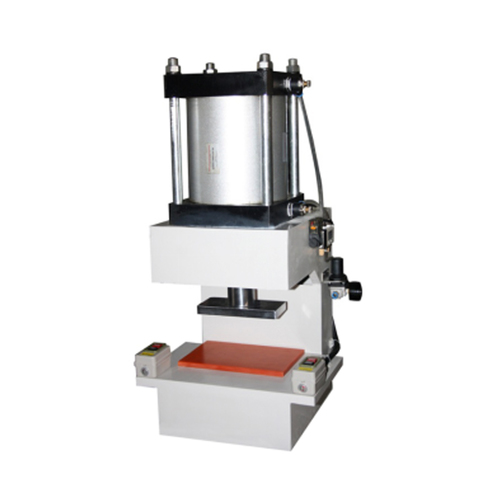
Pneumatic Sampling Machine
Price 2500 USD ($) / Unit
Minimum Order Quantity : 1 Unit
Dimension (L*W*H) : 1200 x 500 x 1035 mm
Accuracy : 0.5%
Stroke : 30150 mm
Power : 0.75 kW
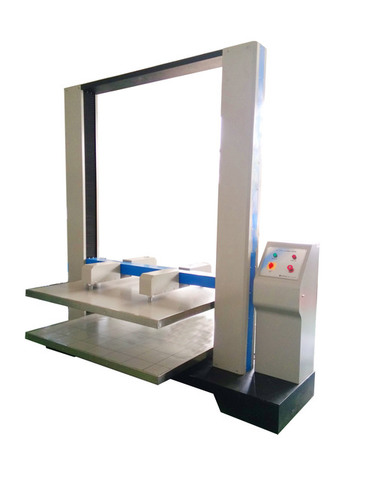
Computer servo carton compression tester
Price 1500 USD ($) / Unit
Minimum Order Quantity : 1 Unit
Dimension (L*W*H) : 1200 x 1200 x 1800 mm
Accuracy : 1% F.S.
Stroke : 0600 mm
Power : 2200 W

Contact Details
- FACTORY ADD: No.13 Daxin Street, Daluosha Industrial Zone, Daojiao Town,Dongguan - 523710, Guangdong, China
- Phone :86-1591-7693151
- haidads@qc-test.cn
 Send Inquiry
Email us : haidads@qc-test.cn
- Ms Lisa (Manager)
- Mobile : +8613662707979, +8613829267288, +8615016776323, +8618373745787, +8618236912012, +8613602361535, +8613925747786

|


 |
HAIDA INTERNATIONAL EQUIPMENT CO., LTD.
All Rights Reserved.(Terms of Use) Developed and Managed by Infocom Network Private Limited. |
