

 English
 Spanish
 French
 German
 Italian
 Chinese (Simplified)
 Japanese
 Korean
 Arabic
 Portuguese
 Send Inquiry
Chair Seating Cyclic Impact Test Equipment
Price 3500 USD ($)/ Unit
MOQ : 1 Unit
Chair Seating Cyclic Impact Test Equipment Specification
- Temperature
- 10C40C (Operating)
- Power Supply
- 220V / 50Hz
- Application
- Dynamic cyclic impact test for chair seating durability
- Measuring Range
- 0200 kg
- Max Height
- 1200 mm
- Frequency
- 50/60 Hz
- Gas Pressure
- 0.50.8 MPa
- Equipment Type
- Chair Seating Cyclic Impact Test Equipment
- Specimen Size
- Seat Height 300650 mm, Seat Width up to 550 mm
- Display Type
- Digital LCD
- Test Range
- 1,000100,000 cycles
- Mounting Type
- Floor Standing
- Number of Specimens
- 1 (per cycle)
- Operating Voltage
- 220V AC
- Hardness
- Test block hardness 7085 Shore A
- Humidity
- 20%90% RH
- Port Size
- 1/4 for pneumatic input
- Resolution
- 0.1 kg
- Response Time
- <0.5s
- Features
- Programmable cycles, Automatic stop, Safety enclosure
- Automation Grade
- Automatic
- Accuracy
- 1% of reading
- Interface Type
- RS232 / USB (Optional)
- Usage
- Furniture test laboratories, Chair manufacturers
- Capacity
- Up to 200 kg dynamic loading
- Machine Weight
- Approx. 85 kg
- Test Speed
- 5-30 cycles/min adjustable
- Test Width
- 500 mm
- Test Stroke
- 50-200 mm adjustable
- Control Mode
- Digital/PLC-based automated control
- Noise Level
- <70 dB(A) during operation
- Impact Head Type
- Solid cylindrical impactor, dia. 152 mm
- Power Consumption
- <300 W
- Specimen Holding Platform
- Adjustable clamps for multiple chair types
- Cycle Counter
- Digital preset counter, automatic stop on completion
- Standards Compliance
- Meets EN 1728, BIFMA X5.1, IS 5967
- Construction Material
- Heavy-duty powder-coated steel
- Safety Features
- Emergency stop, Full enclosure
Chair Seating Cyclic Impact Test Equipment Trade Information
- Minimum Order Quantity
- 1 Unit
- FOB Port
- SHENZHEN
- Payment Terms
- Cash Against Delivery (CAD), Cash on Delivery (COD), Letter of Credit (L/C), Letter of Credit at Sight (Sight L/C), Western Union, Paypal, Delivery Point (DP), Telegraphic Transfer (T/T), Days after Acceptance (DA), Cash in Advance (CID), Cheque, Cash Advance (CA)
- Supply Ability
- 15 Units Per Week
- Delivery Time
- 5 Days
- Packaging Details
- Each set protected with resin fiber and PP film, then put into Strong wooden case with operation manual and video inside. CE,ISO
- Main Export Market(s)
- Australia, North America, Eastern Europe, Middle East, South America, Africa, Western Europe, Central America, Asia
- Certifications
- CE,ISO
Chair Seating Cyclic Impact Test Equipment About
The parameters
Chair Seating Cyclic Impact Test Equipment
| Seat Height | 350~600 mm or specified |
| Test Weight (Bag Weight) | 100~125 Ib |
| Test Speed | 20 times/min or specified |
| Dimension (LWH) | 270 85 80 cm |
| Power | AC220V, 3A |
The usage
Chair Seating Cyclic Impact Test Equipment
It`s to evaluate the ability of the chair to withstand fatigue stress and wear that occur as the result of the user dropping into the chair.
Reliable Cyclic Impact Testing for Chair Seating
This equipment is purpose-built to deliver accurate, repeatable cyclic impact tests for chair seating, assessing product durability over thousands of cycles. Fit for seats of various shapes and sizes, it uses a programmable digital/PLC control for automated operation. The solid impactor, safety features, and heavy-duty construction ensure operator protection and reliable results for up to 200 kg dynamic loading. Its quiet operation and low power consumption make it ideal for diverse laboratory settings.
Automated Controls and Flexible Test Parameters
With advanced automation, users can set cycle counts, impact force, test speeds, and strokes. The digital LCD display allows real-time monitoring, while the system offers digital presets for automatic stop and programmable cycles. Adjustable clamps and platforms handle a range of chairs, maximizing testing flexibility. RS232/USB interfaces enable seamless data transfer and integration with existing lab systems.
FAQs of Chair Seating Cyclic Impact Test Equipment:
Q: How does the Chair Seating Cyclic Impact Test Equipment ensure safety during operation?
A: The machine is equipped with a full enclosure, an emergency stop function, and automated shutdown after preset cycles to ensure operator safety. The rugged, locked housing prevents accidental contact during testing.Q: What types and sizes of chairs can be tested with this equipment?
A: The platforms adjustable clamps accommodate a wide range of chair sizes and types, with seat heights from 300650 mm and widths up to 550 mm. This versatility makes it suitable for both office and commercial seating.Q: When is this equipment typically used in the product development lifecycle?
A: It is most commonly used during quality assurance and durability testing phases, either in R&D or prior to product release, to verify compliance with international durability standards for seating.Q: Where can this testing system be deployed?
A: This equipment is designed for installation in furniture test laboratories, chair manufacturing plants, or independent quality control centers. Its floor-standing design fits well into any professional testing space.Q: What is the process for conducting a cyclic impact test on a chair seat?
A: The chair is securely mounted on the adjustable platform. Programmable parameters such as cycle count, impact stroke, and force are set on the digital control. The impactor repeatedly strikes the seating surface at the specified cycle rate until completion, at which point the system stops automatically.Q: How does automated control benefit users?
A: Automated control simplifies operation by allowing preset cycle counts, digital monitoring, and automatic shutoff, improving consistency and reducing labor demands. Data can be collected easily via the digital display and interface options.Q: What are the primary usage benefits of this equipment for manufacturers and test labs?
A: Manufacturers and labs benefit from accurate, repeatable, and efficient testing that complies with global standards (EN 1728, BIFMA X5.1, IS 5967). The systems flexible configuration supports various chair designs, helping streamline product certification and development.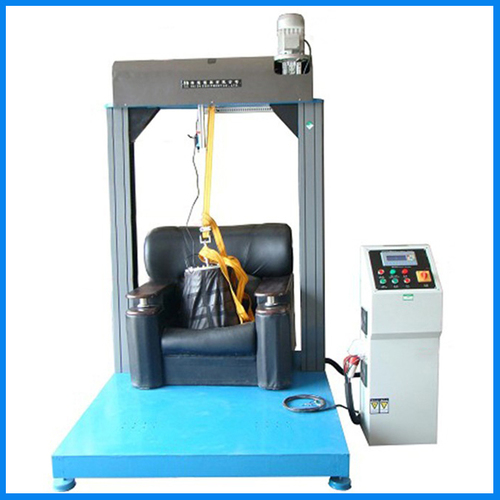
Tell us about your requirement

Price:
Quantity
Select Unit
- 50
- 100
- 200
- 250
- 500
- 1000+
Additional detail
Mobile number
Email

More Products in Furniture Test Equipment Category
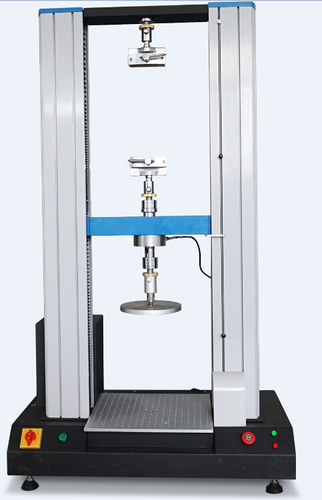
Foam pressure test equipment
Price 4000 USD ($) / Set
Minimum Order Quantity : 1 Set
Usage : Determination of foam pressure resistance
Application : Compression testing of foam materials under pressure
Power Supply : AC 220V, 50Hz
Interface Type : RS232 Serial Interface
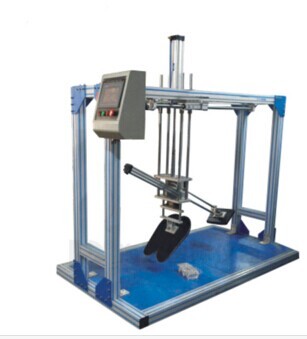
Chair Seat Arm and Back Testing Machine
Price 1 USD ($)
Minimum Order Quantity : 1 Set
Usage : Chair furniture testing
Application : Testing seat, arm and back strength/durability for chairs
Power Supply : AC 220V, 50Hz
Interface Type : RS232/USB
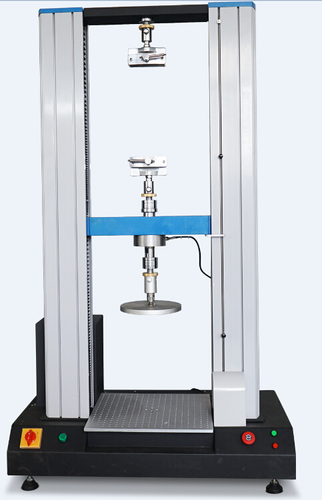
User-friendly Sponge Pressure Filling Testing Machine
Price 4000 USD ($) / Set
Minimum Order Quantity : 1 Set
Usage : Industrial/Laboratory
Application : Testing resilience & hardness of sponge, foam, filling materials
Power Supply : AC 220V, 50Hz
Interface Type : RS232/USB
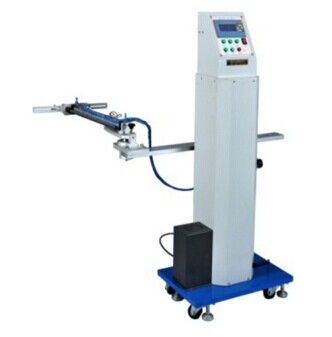
Table Lock Durability Test Instrument
Minimum Order Quantity : 1 Set
Usage : Testing table lock endurance and quality
Application : Durability and cycle life testing for table locks and furniture hardware
Power Supply : AC 220V 10%, 50/60Hz
Interface Type : RS232/USB

Contact Details
- FACTORY ADD: No.13 Daxin Street, Daluosha Industrial Zone, Daojiao Town,Dongguan - 523710, Guangdong, China
- Phone :86-1591-7693151
- haidads@qc-test.cn
 Send Inquiry
Email us : haidads@qc-test.cn
- Ms Lisa (Manager)
- Mobile : +8613662707979, +8613829267288, +8615016776323, +8618373745787, +8618236912012, +8613602361535, +8613925747786

|


 |
HAIDA INTERNATIONAL EQUIPMENT CO., LTD.
All Rights Reserved.(Terms of Use) Developed and Managed by Infocom Network Private Limited. |
