astm d892 foaming dynamic fatigue tester About
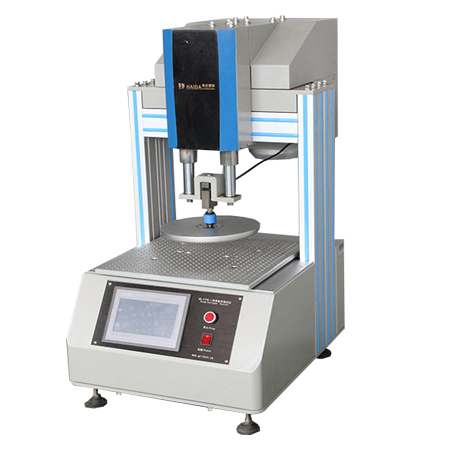
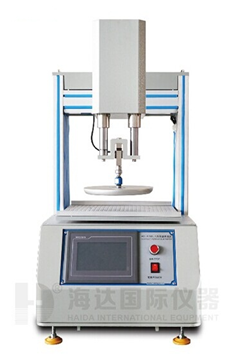
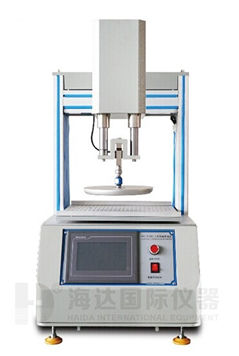
astm d892 foaming tester is mainly used for cellular polymeric materials reciprocating compression test, measuring residual deformation rate. It can understand the dynamic fatigue properties of the material. China's automobile industry to meet the standards QCT56-93 "car seat cushioning material performance test method." Japan's auto industry also meet criteria JASOB408-84 and other foreign standards.
standard ISO 3385
- Capacity: 100kg
- lower platen: Empty diameter 6mm, pitch 20mm5 head: diameter 250 mm 1 mm, the lower edge of the radius of 25 mm 1 mm, to provide 750 N 20 N pressure of 6
- test speed: (70 5) times / min (adjustable) 7
- sample size: parallelepiped, length and width: 380 mm 20 mm
- thickness: 50 mm 2 mm.8. six counters record the number of tests.
- design standards: ISO 3385
Comprehensive Dynamic Foam Testing SolutionEngineered to deliver precise dynamic fatigue and foam evaluation, this instrument adheres to ASTM D892 and ISO 6247 standards. Capable of processing up to three specimens concurrently, its robust construction and versatile features support reliable testing in challenging environments. Digital controls and programmable cycles enhance operation and repeatability.
Integrated Safety and User-Friendly FeaturesThis tester prioritizes operator safety and convenient use. With automatic draining, overload and overheating protection, as well as an emergency stop, it ensures smooth, hazard-free operation. The factory calibration and digital microprocessor controller allow quick setup and consistent, accurate readings with minimal training required.
Applications in Lubricant and Foam AnalysisWidely used across lubricant and polymer industries, the tester allows quantitative assessment of foam formation, dissipitation, and fatigue under dynamic conditions. Its data acquisition and programmable test cycles streamline research, process development, and quality assurance, providing dependable insights for manufacturers, suppliers, and researchers alike.
FAQs of astm d892 foaming dynamic fatigue tester:
Q: How does the ASTM D892 Foaming Dynamic Fatigue Tester measure foam characteristics?
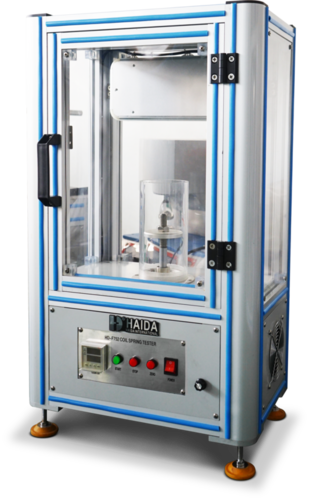
A: The tester dynamically agitates lubricant or foam specimens within a borosilicate glass cylinder and measures the resulting foam volume and collapse rate using precise digital sensors. Results are displayed in real-time on a digital LED screen, with data capture facilitated via RS232 or USB interfaces.
Q: What are the main benefits of using this foaming fatigue tester?
A: Key benefits include high measurement accuracy (0.5% of reading), rapid response time (<1 second), automatic control for programmable cycles, built-in safety features, and comprehensive data acquisition. This ensures dependable, repeatable results and helps laboratories streamline their testing workflow.
Q: When should I calibrate the instrument, and is recalibration required upon installation?
A: The instrument is factory calibrated and ready to use upon delivery. Routine calibration checks are recommended according to your facilitys quality management protocols or after extensive use to ensure continued accuracy. Instructions are provided in the included manual.
Q: Where is this instrument typically used, and who are the primary users?
A: This equipment is commonly found in industrial, research, and quality control laboratories focused on lubricants, foam products, or polymer materials. It is suitable for manufacturers, scientific researchers, suppliers, and technical service providers.
Q: What is the procedure for conducting a test with this apparatus?
A: Place the prepared specimen in the cylinder, select your test parameters using the digital controller, and initiate the cycle. The tester agitates the sample at 60 1 cycles/min, monitors foam production, and records results automatically. Data can be stored or exported via RS232/USB.
Q: How does the built-in safety system enhance operational safety?
A: The testers safety system includes overload and overheat protection alongside an emergency stop function. This design minimizes the risk of operator injury or equipment damage, providing secure operation even in demanding laboratory environments.
Q: What is the range of specimens and conditions the tester can accommodate?
A: The system supports 13 specimens at once, with a specimen size of 380 x 380 x 50 mm and a capacity of 20200 N. It operates at ambient temperatures up to 80C and under a humidity level 85% RH, allowing for flexible and robust testing scenarios.






 Send Inquiry

 Send Inquiry

