

 English
 Spanish
 French
 German
 Italian
 Chinese (Simplified)
 Japanese
 Korean
 Arabic
 Portuguese
 Send Inquiry
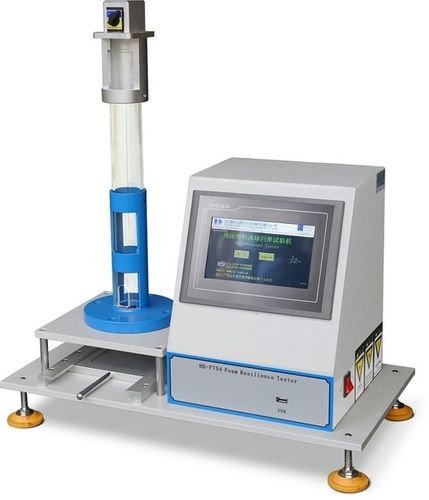
Foam pound apparatus
Price 1500 USD ($)/ Unit
MOQ : 1 Unit
Foam pound apparatus Specification
- Interface Type
- RS232/USB
- Measuring Range
- 0 - 1000 N
- Humidity
- 10% to 80% RH
- Equipment Type
- Foam Pound Testing Apparatus
- Test Range
- 0 - 1000 N
- Max Height
- 1200 mm
- Features
- Programmable cycle, sturdy body, precision control, easy specimen fixture
- Power Supply
- 230 V AC, 50 Hz, single phase
- Hardness
- Up to 80 Shore A
- Specimen Size
- 380 mm × 380 mm × 50 mm
- Gas Pressure
- 0.4 - 0.6 MPa
- Frequency
- 50 Hz
- Number of Specimens
- 1
- Application
- Physical property evaluation of foam for durability and resistance to pounding
- Mounting Type
- Floor-mounted
- Display Type
- Digital LED display
- Response Time
- <2 s
- Accuracy
- ±1% of full scale
- Port Size
- Ø10 mm
- Operating Voltage
- 220-240V AC
- Resolution
- 1 N
- Automation Grade
- Semi-Automatic
- Temperature
- 10°C to 40°C
- Usage
- Foam resilience and durability testing
- Capacity
- Up to 20 kg
- Machine Weight
- Approx. 60 kg
- Test Speed
- 60-120 strokes/min adjustable
- Test Width
- 300 mm
- Test Stroke
- 90-140 mm adjustable
- Control Mode
- Digital Control with timer
- Operation Mode
- Continuous / Intermittent
- Pounding Plate Material
- Stainless Steel
- Noise Level
- <70 dB
- Safety Features
- Emergency Stop, Overload Protection
- Finish
- Powder Coated
- Compression Depth
- Up to 100 mm
- Counter
- Programmable Digital Counter
- Pounding Plate Diameter
- 200 mm
Foam pound apparatus Trade Information
- Minimum Order Quantity
- 1 Unit
- FOB Port
- Shenzhen
- Supply Ability
- 10 Units Per Month
- Delivery Time
- 1 Week
- Packaging Details
- Each set protected with resin fiber and PP film, then put into Strong wooden case with operation manual and video inside.
- Certifications
- CE,ISO
Foam pound apparatus About
THE USAGE:
This test machine`s load sensor under the plane plate,the test force 750N,to compensate for the change in the hardness of the sponge so that the impact is constant within the set range.
STANDARD FEATURES
| Item | Description |
| Max. Force | 2000 kg (20KN) |
| Load cell | Germany brand load cell for high accuracy |
| Control system | PC with windows 7 system |
| Motor | Panasonic servo motor w/ DC variable speed drive system, high-precision mechanical ball screw rod |
| Force reading | kgf, Ibf, N, KN, T etc |
| Stoke | 1100mm including fixture |
| Load cell Resolution | 1/250,000 |
| Load Precision | within 0.5% |
| Test speed | 0.01~500mm/min (adjustable) |
| Software | TM 2101 |
| Curves display | Load- elongation, Elongation-time, Time-elongation, Stress-strain |
| Data display | Max. force, speed, sample information, strength(Kpa, Mpa, N/mm, N/mm2) etc |
| Safety features | E-Stop Over-load protection Upper and lower limit switches Load sensor with automatic retreat |
Optimized for Accurate Foam Durability Testing
With a programmable pounding cycle and adjustable settings, this apparatus allows users to recreate various stress scenarios to assess foam endurance accurately. The digital LED display presents real-time values with high accuracy (1% of full scale), while the sturdy body and easy specimen fixture ensure repeatable, reliable results across multiple tests.
User-Friendly Operations and Enhanced Safety
Engineered for intuitive control, the testing apparatus incorporates a digital timer and control panel, offering seamless adjustment of test parameters. Safety is prioritized through emergency stop and overload protection features, assuring peace of mind during continuous or intermittent testing cycles in environments ranging from 10C to 40C, with up to 80% relative humidity.
FAQs of Foam pound apparatus:
Q: How is the foam pound testing apparatus used for evaluating foam durability?
A: The apparatus simulates repeated mechanical pounding on foam specimens using a 200 mm stainless steel plate. By adjusting the test speed and stroke, users can program specific cycles and measure changes in foam resilience and structural integrity to assess long-term durability and resistance.Q: What test parameters can be controlled on this foam pound apparatus?
A: Key parameters such as compression depth (up to 100 mm), stroke length (90-140 mm), test speed (60-120 strokes per minute), and pound cycles (via a digital timer and programmable counter) are all adjustable, providing high flexibility for different foam testing requirements.Q: When should you use the programmable digital counter during testing?
A: The programmable digital counter is essential for setting precise test cycleshelpful when adhering to specific standards or protocols. Operators can predetermine the number of strokes, ensuring consistency and repeatability in every test session.Q: Where is this testing equipment typically used?
A: This machine is widely used in quality control laboratories, foam manufacturing facilities, and R&D departments of organizations sourcing or producing foam products. Its precision and versatility suit both production line checks and advanced product development.Q: What is the process of installing and operating the foam pound testing apparatus?
A: The apparatus is floor-mounted and connects to a standard 230V AC power supply. After securing the foam specimen (380 x 380 x 50 mm), users select operation parameters via the digital panel, set the programmable counter, and start the test. The machines safety features and digital interface simplify monitoring and adjustments.Q: How does the apparatus ensure operator safety during testing?
A: It incorporates an emergency stop and overload protection system to automatically halt testing in case of irregularities, safeguarding users from potential harm and equipment damage.Q: What are the benefits of using this foam pound testing machine?
A: Users gain reliable insights into foam longevity and mechanical performance under simulated stress. The digital control, ease of use, high measurement accuracy (1% of full scale), and robust safety features make it an indispensable tool for enhancing product quality and consistency.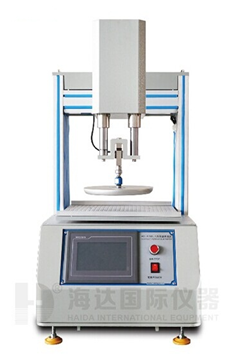
Tell us about your requirement

Price:
Quantity
Select Unit
- 50
- 100
- 200
- 250
- 500
- 1000+
Additional detail
Mobile number
Email

More Products in Furniture Test Equipment Category
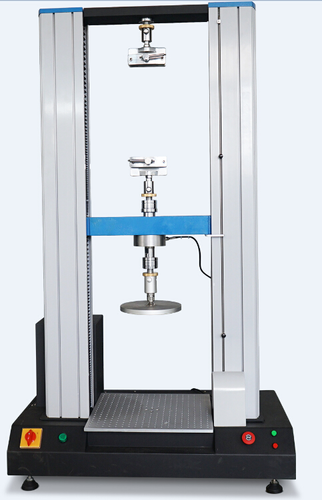
Sponge Pressure Stuffing Test Machine
Price 4000 USD ($) / Unit
Minimum Order Quantity : 1 Unit
Application : Sponge, foam, mattress, cushion compressive strength and deformation testing
Usage : Stuffing & compression test for sponges and flexible foam
Power Supply : AC 220V, 50Hz
Operating Voltage : 220V AC
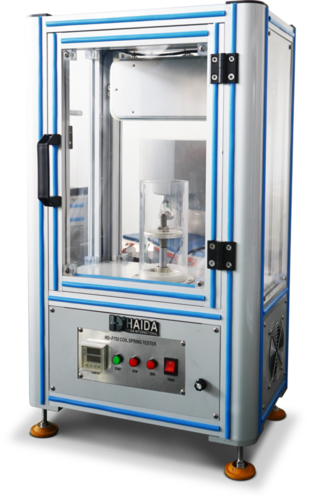
Spring Mattress Firmness Tester
Price 5500 USD ($) / Unit
Minimum Order Quantity : 1 Unit
Application : Mattress Firmness Testing
Usage : Mattress Firmness Consistency Evaluation
Power Supply : AC 220V 50Hz
Operating Voltage : 220V
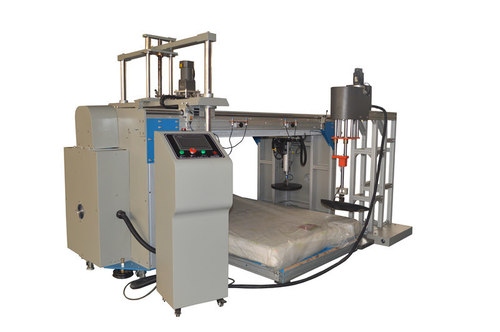
High Servo Measure System Mattress Rollator Durability Tester
Price 14200 USD ($) / Unit
Minimum Order Quantity : 1 Unit
Application : Rolling durability test of mattress
Usage : Mattress load and recyclic roll durability test
Power Supply : AC 220V, 50Hz
Operating Voltage : 220V AC
Servo Motor Foam Drop Ball Impact Tester
Price 1800 USD ($) / Unit
Minimum Order Quantity : 1 Unit
Application : Foam impact resistance & energy absorption test
Usage : Impact drop test on foam material
Power Supply : AC 220V, 50Hz
Operating Voltage : AC 220V

Contact Details
- FACTORY ADD: No.13 Daxin Street, Daluosha Industrial Zone, Daojiao Town,Dongguan - 523710, Guangdong, China
- Phone :86-1591-7693151
- haidads@qc-test.cn
 Send Inquiry
Email us : haidads@qc-test.cn
- Ms Lisa (Manager)
- Mobile : +8613662707979, +8613829267288, +8615016776323, +8618373745787, +8618236912012, +8613602361535, +8613925747786

|


 |
HAIDA INTERNATIONAL EQUIPMENT CO., LTD.
All Rights Reserved.(Terms of Use) Developed and Managed by Infocom Network Private Limited. |
