

 English
 Spanish
 French
 German
 Italian
 Chinese (Simplified)
 Japanese
 Korean
 Arabic
 Portuguese
 Send Inquiry
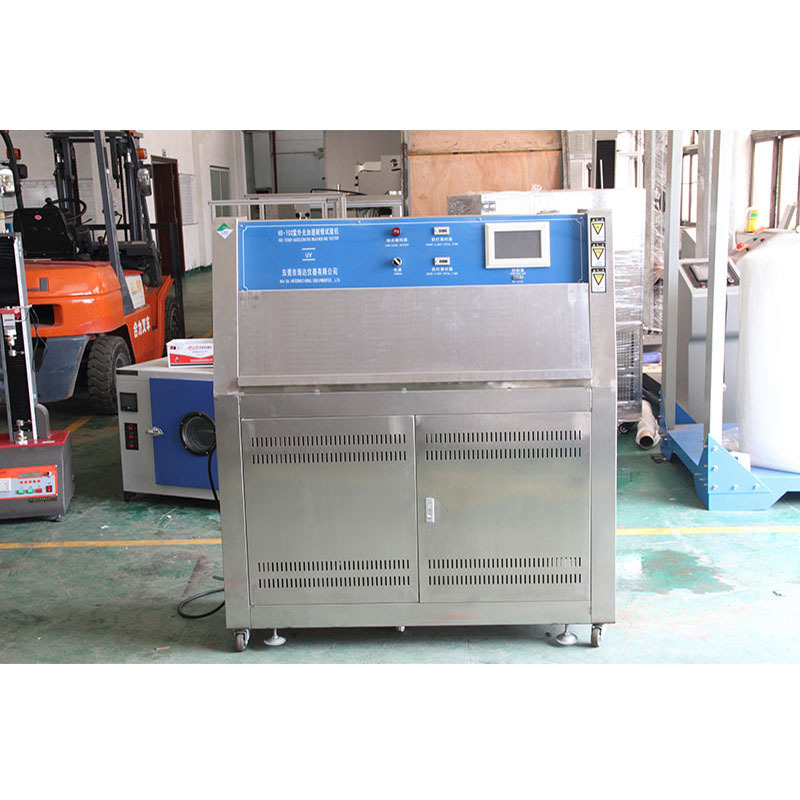
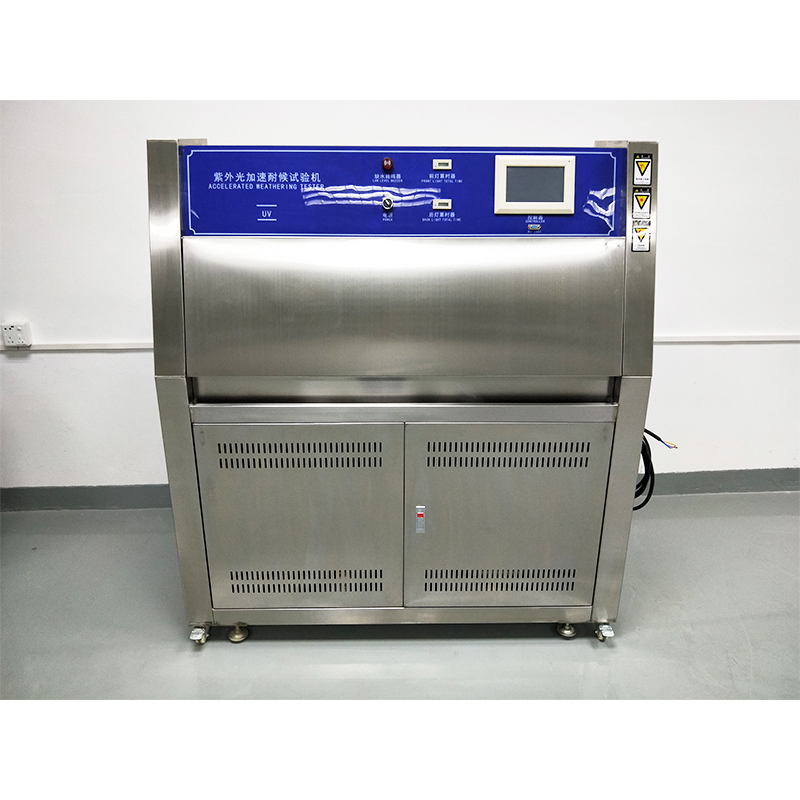
UV Aging Environmental Test Chamber
MOQ : 1 Set
UV Aging Environmental Test Chamber Specification
- Equipment Type
- UV Aging Environmental Test Chamber
- Response Time
- Immediate
- Resolution
- 0.1C (temperature), 0.1% RH (humidity)
- Test Range
- UV aging simulation
- Port Size
- Standard
- Gas Pressure
- Ambient
- Measuring Range
- UV wavelength 290400 nm
- Automation Grade
- Automatic
- Display Type
- Digital LCD touchscreen
- Accuracy
- 0.5C (temperature), 2% RH (humidity)
- Mounting Type
- Floor standing
- Features
- Irradiance control, adjustable test parameters, safety protection system, timer function
- Specimen Size
- 75x150 mm (standard)
- Power Supply
- AC 220V, 50Hz
- Frequency
- 50 Hz
- Hardness
- N/A (not applicable)
- Max Height
- 1600 mm
- Temperature
- RT+10C to 70C (control range)
- Application
- Simulating the damaging effects of long-term outdoor UV exposure on materials
- Humidity
- 40% RH to 98% RH adjustable
- Number of Specimens
- Up to 24 pieces
- Operating Voltage
- AC 220V
- Interface Type
- RS232/USB
- Usage
- Laboratory, Research Institutes, Material Quality Testing
- Capacity
- 351 liters
- Machine Weight
- 180 kg
- Test Speed
- Adjustable
- Test Width
- 450 mm
- Test Stroke
- 250 mm
- Control Mode
- Programmable touchscreen controller
- Inner Chamber Material
- Stainless Steel SUS304
- Door Type
- Double-layer tempered glass observation window
- Cooling Mode
- Forced air cooling
- Ambient Working Temperature
- 5C to 35C
- Cycle Settings
- Irradiation/condensation/spray cycling
- Controller Brand
- Imported programmable logic controller
- Noise Level
- 65 dB
- Safety Features
- Over-temperature protection, leakage protector, low water level protection
- UV Lamp Power
- 40W per lamp (8 lamps)
- UV Lamp Life
- 1600 hours
- Weight with Packaging
- 220 kg
- Spray System
- Automatic spray with precision control
- External Dimensions
- 1370 x 500 x 1460 mm
UV Aging Environmental Test Chamber Trade Information
- Minimum Order Quantity
- 1 Set
- Supply Ability
- 1 Set Per Month
- Delivery Time
- 30 Days
- Packaging Details
- Each set protected with resin fiber and PP film, then put into Strong wooden case with operation manual and video inside.
- Main Domestic Market
- All India
UV Aging Environmental Test Chamber About
Product description
Accelerated Weather UV aging test chamber simulates damaging effects of long term outdoor UV spectra of sunlight , heat, moisture on materials and coatings. It exposes specimen to varying conditions of weathering- ultraviolet radiation, moisture and heat to test the performance and improve the quality
Accelerated Weather Testing / UV Testing chamber is mainly used in paint and ink paint, resins, plastics, printing and packaging, aluminum, adhesives, car and motorcycle industry, cosmetics, metals, electronics, electroplating, medicine and other fields.
Technical parameters
| Specification |
|
| Chamber dimension(W*D*H) | 1300*500*1460mm |
| Chamber material | SUS 304 stainless steel |
| Temperature range | RTto 70 |
| Temperature fluctuation | 1.0 |
| Temperature uniformity | 3 |
| Humidity range: | 75%RH |
| Controller | Programmable controller, LCD touch screen |
| Control mode | Balance temperature humidity control (BTHC) |
| Test cycle setting | Exposure, condensation and water spray test cycle is programmable |
| Water spray cycle | Spray 18mins in every 120mins / spray 12mins in every 60mins |
| Water usage | 8L/day |
| Distance from sample to lamp | 55 2mm |
| Centre distance between lamps | 65 70mm |
| Irradiance range | 0.45 0.90W/m2 |
| UV lamps | Imported Atlas UV-A: 315-400nm (8pcs, 1600h lifetime) |
| Lamp power | 40W/Piece |
| Specimen Size | 75x290mm (24pcs) /75x150mm (48pcs), maximum thickness 5mm |
| Testing time | 0 999H, adjustable |
| Protection system | Overload short circuit protection Over temperature protection Water lacking protection Earth leakage protection Auto shut off protection |
The above parameter belongs to the standard machine section, Welcome to customize
- Standard configuration
- Chamber structure
- Control system
- Test specimen mounting
The standard test specimen holder accommodates 2 panels 75 x 150mm. The test panels are actual the side wall of the chamber. To properly seal the chamber, it is important to have every panel holder filled with specimens or blank panels and to have panel holders in place.
Design criteria
- ISO 4892-3,ASTM G154
- ASTM D4587: Standard Practice for Fluorescent UV-Condensation Exposures of Paint and Related Coatings
- ASTM D4799: Standard Practice for Accelerated Weathering Test Conditions and Procedures for Bituminous Materials (Fluorescent UV, Water Spray, and Condensation Method)
- ASTM D4329: Standard Practice for Fluorescent UV Exposure of Plastics
- AATCC TM186: Weather Resistance: UV Light and Moisture Exposure
- ASTM D5208: Standard Practice for Fluorescent Ultraviolet (UV) Exposure of Photodegradable Plastics
- IEC 61345: UV Test for Photovaltalic (PV) Modules
Comprehensive UV Exposure Simulation
This chamber enables the accurate replication of years worth of outdoor UV damage in a laboratory setting. By combining UV irradiation, condensation, and controlled spraying, users can closely analyze material durability and performance. Advanced programmable features allow for testing cycles tailored to diverse research and quality standards.
Reliable Safety and Control Systems
Equipped with an imported programmable logic controller, the test chamber maintains stringent safety protocols, including over-temperature, leakage, and water level protections. The digital LCD touchscreen ensures convenient parameter setup and real-time test monitoring, minimizing operational errors and ensuring user safety.
Versatile and Adjustable Performance
With a wide control range for temperature, humidity, and test speed, this chamber accommodates a variety of materials and research requirements. The forced air cooling and automatic spray system further enhance test accuracy. Standardized specimen sizing and intuitive parameter adjustment add flexibility to your testing processes.
FAQs of UV Aging Environmental Test Chamber:
Q: How does the UV Aging Environmental Test Chamber simulate outdoor UV exposure?
A: The chamber employs UV lamps emitting wavelengths between 290 and 400 nm, alongside controlled condensation and spray cycles. This combination closely replicates weathering effects such as color fading, surface cracks, and durability loss experienced by materials outdoors over extended periods.Q: What types of materials can be tested in this chamber?
A: Primarily designed for laboratory, research institute, and material quality testing, the chamber accommodates up to 24 specimens of 75x150 mm standard size. It is suitable for polymers, coatings, paints, plastics, and other materials requiring accelerated weathering evaluations.Q: When should I perform maintenance on the UV lamps and system?
A: Maintenance schedules depend on lamp usage. Each UV lamp has a lifespan of approximately 1,600 hours. Regular inspections for lamp efficiency, as well as routine checks on water levels and filters, are recommended to ensure continuous, reliable operation.Q: Where can this chamber be installed safely?
A: The chambers compact external dimensions and floor-standing design make it appropriate for laboratory or industrial research facilities. Place it in a location where ambient temperature remains between 5C and 35C, and ensure it is near an AC 220V, 50Hz power supply for safe operation.Q: What is the process for initiating and running a test?
A: Users set test parametersincluding temperature, humidity, test cycle, and irradiation timethrough the digital LCD touchscreen. Place specimens in the chamber, initiate the selected cycle, and monitor progress via the observation window or digital interface. The chamber will automatically execute programmed sequences and maintain set conditions.Q: How does the chamber ensure safety during use?
A: Multiple safety mechanisms are integrated, such as over-temperature protection, automatic leak detection, and low water level alerts. The unit also employs a double-layer tempered glass observation window and forced air cooling, collectively safeguarding operators and the integrity of test results.Q: What are the key benefits of using this UV aging chamber?
A: This equipment provides accelerated, reliable, and repeatable simulation of UV-induced aging, enabling rapid evaluation of material durability. Automated controls and versatile programmable settings streamline workflow, reduce human error, and support a wide array of research or industrial testing scenarios.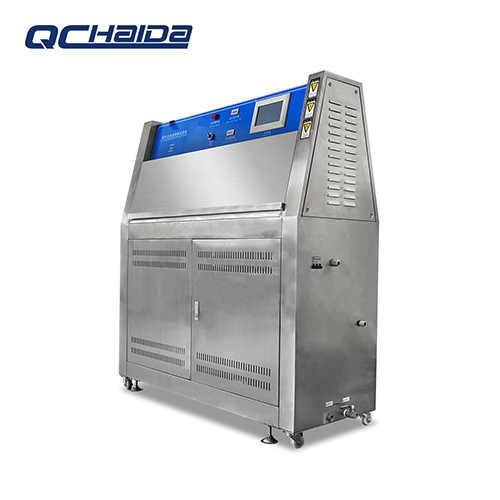
Tell us about your requirement

Price:
Quantity
Select Unit
- 50
- 100
- 200
- 250
- 500
- 1000+
Additional detail
Mobile number
Email

More Products in Environmental Test Chamber Category
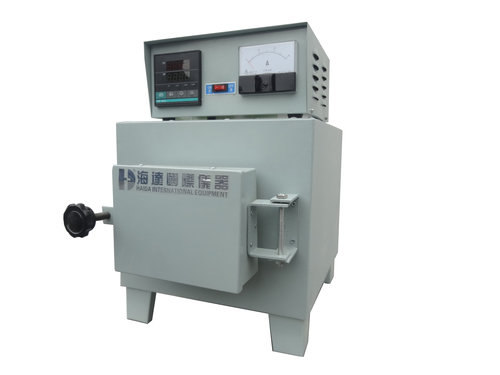
High Temperature Melt Furnace Chamber
Price Range 3000.00 - 6000.00 USD ($)
Minimum Order Quantity : 1 Set
Temperature : Ambient to 1700C
Humidity : 95% RH noncondensing
Usage : Laboratory & industrial repeatable melting tests
Power Supply : AC 220V, 50/60Hz
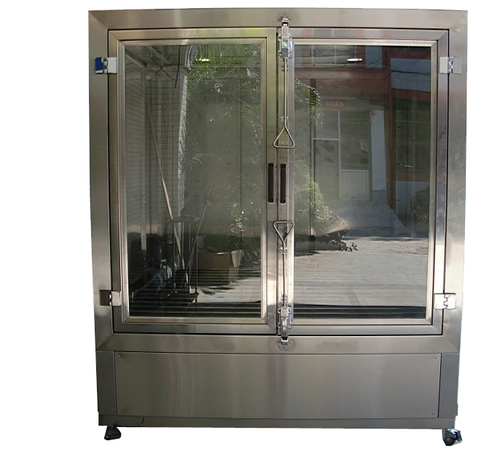
GB10485-89 Rain spray testing chamber
Price Range 3000.00 - 6000.00 USD ($)
Minimum Order Quantity : 1 Set
Temperature : Room temperature to 60C
Humidity : 20% ~ 98% RH
Usage : Rain spray test, waterproof testing, material protection evaluation
Power Supply : AC 220V, 50Hz
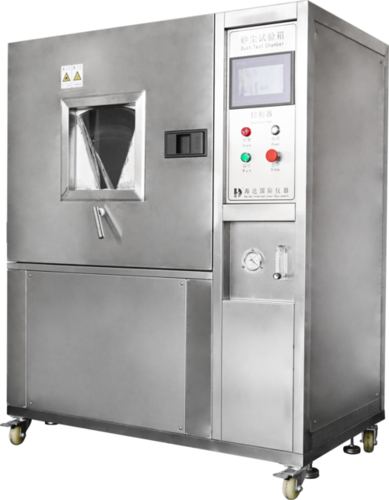
Dust test chamber
Price Range 3000.00 - 6000.00 USD ($)
Minimum Order Quantity : 1 Set
Temperature : Ambient to 50C adjustable
Humidity : 30% 90% RH adjustable
Usage : Laboratory, industrial testing
Power Supply : 220V AC, 50Hz
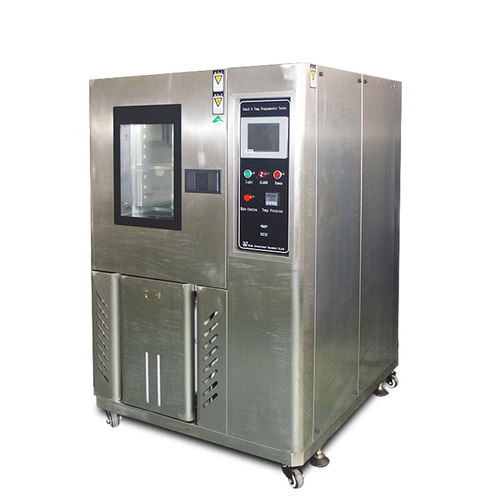
Laboratory Programmable Constant Stability Climatic Environmental Temperature Humidity Test Chamber
Price Range 6000.00 - 15000.00 USD ($)
Minimum Order Quantity : 1 Set
Temperature : 70~+150 Celsius (oC)
Humidity : 20~98%R.H. (Refer Image below)
Usage : humidity and temperature testing

Contact Details
- FACTORY ADD: No.13 Daxin Street, Daluosha Industrial Zone, Daojiao Town,Dongguan - 523710, Guangdong, China
- Phone :86-1591-7693151
- haidads@qc-test.cn
 Send Inquiry
Email us : haidads@qc-test.cn
- Ms Lisa (Manager)
- Mobile : +8613662707979, +8613829267288, +8615016776323, +8618373745787, +8618236912012, +8613602361535, +8613925747786

|


 |
HAIDA INTERNATIONAL EQUIPMENT CO., LTD.
All Rights Reserved.(Terms of Use) Developed and Managed by Infocom Network Private Limited. |
