

 English
 Spanish
 French
 German
 Italian
 Chinese (Simplified)
 Japanese
 Korean
 Arabic
 Portuguese
 Send Inquiry
Universal Hydraulic Compression Testing Machine
Price 10500 USD ($)/ Unit
MOQ : 1 Unit
Universal Hydraulic Compression Testing Machine Specification
- Stroke Length
- 100 mm (Piston travel)
- Power Source
- Electric
- Weight
- Approx. 1200 kg
- Machine Speed
- Variable, user adjustable
- Application
- Testing compressive strength of concrete, bricks, cement and other construction materials
- Control System
- Microprocessor based control panel
- Power
- 3 HP Electric Motor
- Operating Temperature
- +5°C to +45°C
- Dimension (L*W*H)
- 1200 mm x 850 mm x 1850 mm (standard model)
- Load Capacity
- 2000 kN (standard), optional models available up to 3000 kN
- Voltage
- 220V/380V AC
- Resolution
- 1 kN
- Screw Size
- 50 mm (diameter)
- Color
- Blue-Grey
- Phase
- Single/Three phase (as required)
- Product Type
- Universal Hydraulic Compression Testing Machine
- Accuracy
- ±1% of indicated load
- Frequency
- 50 Hz
- Features
- Automatic overload protection, digital display, hydraulic loading unit
- Speed Range
- 0.3 mm/min to 10 mm/min
- Capacity
- Up to 3000 kN
- Power Consumption
- 2.5 kW
- Sensor
- Precision Load Cell
- Automatic Grade
- Semi-Automatic
- Material
- Heavy-duty steel construction
- Ambient Humidity
- 80%
- Working Table Size
- 250 mm x 250 mm
- Test Standard Compliance
- ASTM C39, IS 516
- Piston Diameter
- 250 mm
- Frame Type
- Four pillar rigid frame
- Oil Tank Capacity
- 20 Liters
- Data Output
- USB/RS232 for data logging
- Pressure Gauge
- Hydraulic-Class 1.0 accuracy
- Operating Mode
- Manual and Auto selectable
- Hydraulic Oil Type
- ISO VG 46
- Safety Device
- Pressure relief valve and safety covers
- Noise Level
- 60 dB(A)
- Display Type
- Digital LCD with backlight
Universal Hydraulic Compression Testing Machine Trade Information
- Minimum Order Quantity
- 1 Unit
- FOB Port
- SHENZHEN
- Supply Ability
- 15 Units Per Week
- Delivery Time
- 5 Days
- Packaging Details
- Each set protected with resin fiber and PP film, then put into Strong wooden case with operation manual and video inside. CE,ISO
- Main Export Market(s)
- Australia, North America, Eastern Europe, Middle East, Africa, Central America, South America, Western Europe, Asia
- Certifications
- Each set protected with resin fiber and PP film, then put into Strong wooden case with operation manual and video inside. CE,ISO
Universal Hydraulic Compression Testing Machine About
universal hydraulic compression testing machineProduct Description
Structure introduction
universal hydraulic compression testing machine is mainly used to execute the tension, compression, bending, shearing etc. test for metal materials. Attached simple accessories and devices, it can be used to achieve many kinds of mechanical performances.
The oil cylinder is at the bottom of the load frame, tension space is at the upside of the load frame, compression and bending space is between lower cross head and working table. The lower cross head is driven by motor through decelerator, chain transmission device and screw pair, so realize the adjustment of testing space.
The universal hydraulic compression testing machine adopts oil pressure transducer to measure load, use computer control display load,
Main specifications hydraulic compression Test Machine
| Max. Test load: | 300KN |
| Load range: | 6KN-300KN |
| Relative error of indicate value of load : | 1% |
| Max. Ram stroke: | 250mm |
| Max. Tensile space: | 800mm(including piston stroke) |
| Max. Compression space: | 700mm(including piston stroke) |
| Display: | Computer control and display |
| Tensile grips for round specimen : | 6-26mm |
| Tensile grips for flat specimen: | 0-15mm |
| Distance for two columns: | 500mm |
| Upper and lower platen size: | 200x200mm |
| The span of bending: | 450mm |
| Width of bending roller: | 140mm |
| Dia. of bending roller: | 30mm |
| Clamping mode: | Hydraulically |
| Transducer: | load cell |
| Deformation measuring: | YYU10150 |
| Dimensions of load frame : | 990 x 600 x 2435mm |
| Dimension of controller : | 1140x700x930mm |
| All weight: | 2800kg |
Advanced Digital Display and Data Logging
The integrated digital LCD with backlight provides clear, precise readings during tests, even in low-light conditions. The USB and RS232 interfaces enable seamless data logging and transfer, simplifying record keeping and analysis. This ensures swift reporting and compliance with laboratory documentation standards.
Precision and Safety in Testing
With a hydraulic Class 1.0 accuracy pressure gauge and precision load cell, the machine guarantees results within 1% of the indicated load. The inclusion of pressure relief valves and safety covers maximizes operator protection during intensive testing. Automatic overload protection further mitigates risks and maintains machine integrity.
FAQs of Universal Hydraulic Compression Testing Machine:
Q: How does the Universal Hydraulic Compression Testing Machine improve material testing accuracy?
A: The machine uses a precision load cell and hydraulic Class 1.0 accuracy pressure gauge, ensuring results within 1% of the indicated load. Its microprocessor-based control panel and digital LCD display provide real-time feedback, making data collection both detailed and reliable.Q: What is the process for conducting a compression test with this machine?
A: Place the specimen on the 250 mm x 250 mm working table, select manual or automatic mode, and initiate the loading sequence. The hydraulic system applies controlled pressure, while the digital display shows the applied load. Data can be logged via USB or RS232 ports throughout the process.Q: When should the pressure relief valve be used during operation?
A: The pressure relief valve automatically engages in case of overload or excessive pressure, protecting both the operator and machine. Operators should ensure the valve is functional before each test to maintain safety standards.Q: Where can this machine be installed for optimal operation?
A: Install the machine in a laboratory or construction testing facility with ambient humidity below 80% and temperatures between +5C and +45C. It requires stable, level flooring and access to an electric power source (220V/380V AC, 50 Hz).Q: What materials can be tested using this hydraulic compression machine?
A: The machine is designed for testing the compressive strength of concrete, bricks, cement, and various construction materials. Optional models provide load capacities up to 3000 kN, accommodating a wide range of specimen sizes and types.Q: How does data output and logging work on this machine?
A: The microprocessor-based control panel supports real-time data output via USB or RS232 ports. This enables convenient data logging, transfer, and analysis, facilitating compliance with quality assurance and certification standards.Q: What benefits does the four-pillar rigid frame offer?
A: The four-pillar rigid frame enhances structural stability and load distribution, minimizing mechanical deformation during high-pressure tests. This ensures more consistent and repeatable results, which is vital for laboratory and industrial applications.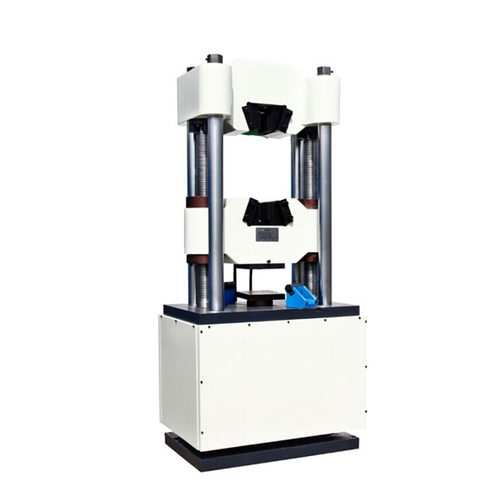
Tell us about your requirement

Price:
Quantity
Select Unit
- 50
- 100
- 200
- 250
- 500
- 1000+
Additional detail
Mobile number
Email

More Products in Tensile Testing Equipment Category
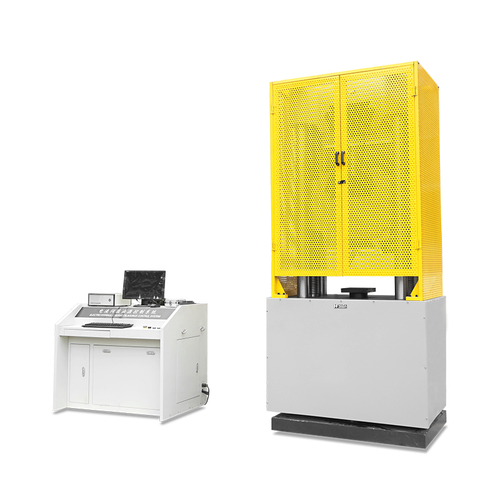
30t Universal Tensile Testing Machine
Price 3800 USD ($) / Unit
Minimum Order Quantity : 1 Unit
Application : Tensile, Compression, Bending and Shear tests on various materials
Power : 220 V AC, 50 Hz
Screw Size : 36 mm
Color : Blue & Grey
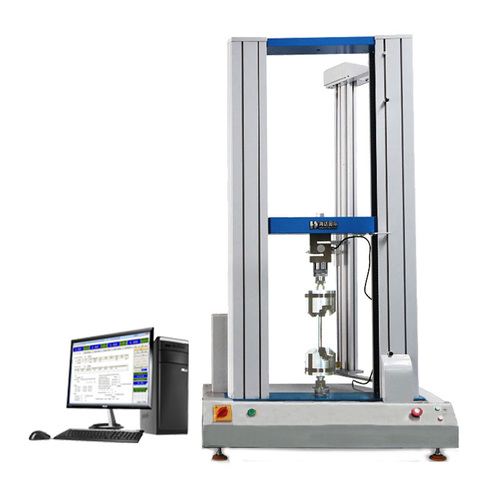
Electronic Tensile Strength Testing Machine
Price 3500 USD ($) / Unit
Minimum Order Quantity : 1 Unit
Application : Tensile, compression, flexural, shear testing of materials
Power : 220V AC
Screw Size : Ball screw, 25 mm diameter
Color : Blue & White
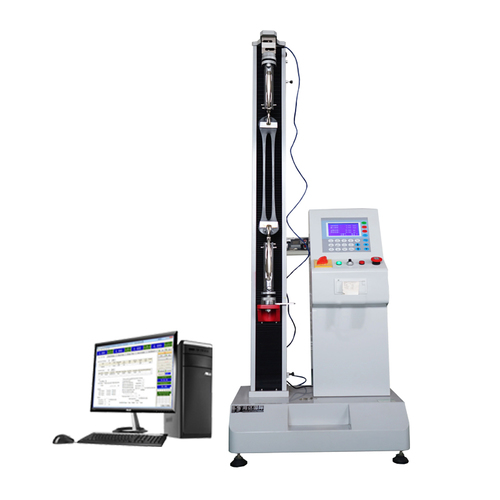
Used Electronic Cable Tensile Strength Tester
Price 599 USD ($) / Unit
Minimum Order Quantity : 1 Unit
Application : Tensile testing of cables and wires
Power : 220V AC, 50Hz
Screw Size : Lead screw, 25 mm
Color : Blue & Grey
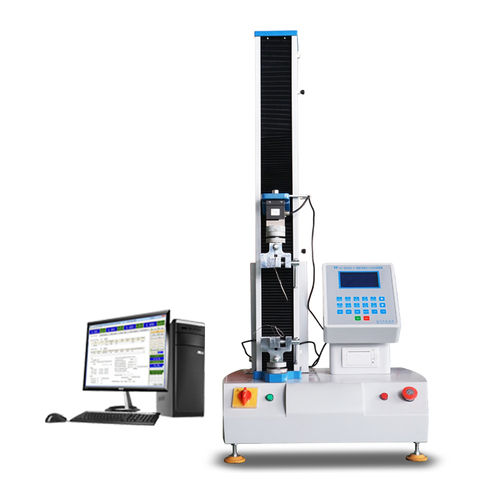
PC & PLC Display Fiber Tensile Strength Testing
Price 1499 USD ($) / Unit
Minimum Order Quantity : 1 Unit
Application : Tensile testing of optical fibers, yarns, and fabrics
Power : 220V, 50Hz
Screw Size : Ball Screw 20 mm
Color : White & Blue

Contact Details
- FACTORY ADD: No.13 Daxin Street, Daluosha Industrial Zone, Daojiao Town,Dongguan - 523710, Guangdong, China
- Phone :86-1591-7693151
- haidads@qc-test.cn
 Send Inquiry
Email us : haidads@qc-test.cn
- Ms Lisa (Manager)
- Mobile : +8613662707979, +8613829267288, +8615016776323, +8618373745787, +8618236912012, +8613602361535, +8613925747786

|


 |
HAIDA INTERNATIONAL EQUIPMENT CO., LTD.
All Rights Reserved.(Terms of Use) Developed and Managed by Infocom Network Private Limited. |
