

 English
 Spanish
 French
 German
 Italian
 Chinese (Simplified)
 Japanese
 Korean
 Arabic
 Portuguese
 Send Inquiry
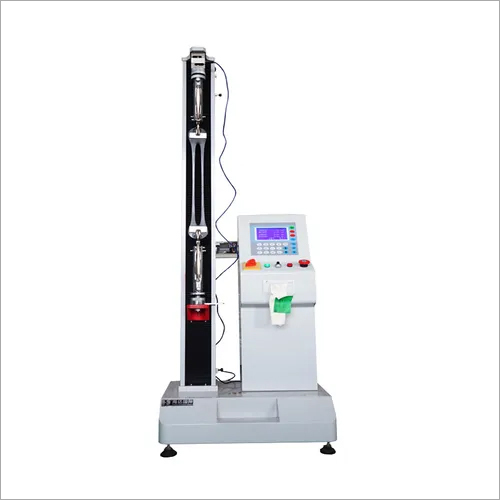
Electronic Tensile Strength Testing Machine
Price 3500 USD ($)/ Unit
MOQ : 1 Unit
Electronic Tensile Strength Testing Machine Specification
- Frequency
- 50 Hz
- Capacity
- Up to 20 kN
- Control System
- Microprocessor-based digital control
- Weight
- Approx. 320 kg
- Phase
- Single Phase
- Accuracy
- ±1% of indicated load
- Speed Range
- 10 to 500 mm/min (variable speed)
- Power
- 220V AC
- Operating Temperature
- 10°C to 40°C
- Product Type
- Electronic Tensile Strength Testing Machine
- Application
- Tensile, compression, flexural, shear testing of materials
- Machine Speed
- Selectable, programmable speed control
- Stroke Length
- 600 mm
- Power Consumption
- 1.2 kW
- Features
- Digital display, auto-stop on sample break, data storage, over-travel protection
- Sensor
- High-accuracy load cell
- Load Capacity
- 1 kN to 20 kN (customizable)
- Power Source
- Electric
- Resolution
- 0.01 mm (displacement), 0.01% FS (load)
- Color
- Blue & White
- Voltage
- 220V ±10%, 50Hz
- Dimension (L*W*H)
- approx. 720 x 600 x 1750 mm
- Screw Size
- Ball screw, 25 mm diameter
- Automatic Grade
- Automatic
- Material
- Mild Steel Construction
- Backup Facility
- Data backup via PC or USB
- Display Type
- Digital LCD display with PC connectivity
- Software Compatibility
- Compatible with Windows-based analysis software
- Maintenance Requirement
- Low, with calibration certificate provided
- Safety Features
- Emergency stop, overload protection, enclosure guards
- Gripping Attachment Type
- Interchangeable wedge/dumbbell grips
- Test Modes
- Tensile, compression, flexural, cyclic loading
- Environmental Protection
- Powder-coated rustproof body
- Crosshead Type
- Motorized, precision-controlled
- Data Output
- USB and RS232 interface
Electronic Tensile Strength Testing Machine Trade Information
- Minimum Order Quantity
- 1 Unit
- FOB Port
- SHENZHEN
- Supply Ability
- 15 Units Per Day
- Delivery Time
- 5 Days
- Packaging Details
- Each set protected with resin fiber and PP film, then put into Strong wooden case with operation manual and video inside.
- Main Export Market(s)
- Australia, North America, Eastern Europe, Middle East, Western Europe, Africa, Central America, South America, Asia
- Certifications
- CE,ISO
Electronic Tensile Strength Testing Machine About
Electronic utm universal plastic tensile strength test machine price
Product Description
Briefly Introduce
Electronic utm universal plastic tensile srength test machine price is used to test tension, compression, shearing force, adhesion, peeling force, tear strength,...etc. of specimen, semi-product and finished product in the field of rubber, plastic, metal, nylon, fabric, paper, aviation, packing, architecture, petrochemistry, electric appliance, automobile,...etc. , which are the basic facilities for input quality contorl (I.Q.C), Quality Control (Q.C.), Physical Inspection, Mechanics Research and Material Development.
main feature
Electronic utm universal plastic tensile srength test machine price
Imported photoelectric encoder displacement measurement, the controller uses the embedded single-chip microprocessor architecture, built-in powerful control software, set the measurement, control, computing, storage functions in one. With automatic calculation of stress, elongation (need to add with extensometers), tensile strength, elastic modulus, automatic statistics; automatically record the maximum point, breaking point, force or elongation values specified point; using computer test dynamic process and test curve display and data processing, after the end of the trial by the graphics processing module for data reanalysis amplification curve editing, and printing reports, product performance reached the international advance
Product Description
Briefly Introduce
Electronic utm universal plastic tensile srength test machine price is used to test tension, compression, shearing force, adhesion, peeling force, tear strength,...etc. of specimen, semi-product and finished product in the field of rubber, plastic, metal, nylon, fabric, paper, aviation, packing, architecture, petrochemistry, electric appliance, automobile,...etc. , which are the basic facilities for input quality contorl (I.Q.C), Quality Control (Q.C.), Physical Inspection, Mechanics Research and Material Development.
main feature
Electronic utm universal plastic tensile srength test machine price
Imported photoelectric encoder displacement measurement, the controller uses the embedded single-chip microprocessor architecture, built-in powerful control software, set the measurement, control, computing, storage functions in one. With automatic calculation of stress, elongation (need to add with extensometers), tensile strength, elastic modulus, automatic statistics; automatically record the maximum point, breaking point, force or elongation values specified point; using computer test dynamic process and test curve display and data processing, after the end of the trial by the graphics processing module for data reanalysis amplification curve editing, and printing reports, product performance reached the international advance
Versatile Testing Capabilities
This machine supports a broad range of test modes, including tensile, compression, flexural, and cyclic loading, making it suitable for analyzing various material properties and ensuring compliance with quality standards. Its interchangeable gripping system allows testing of multiple sample forms using wedge and dumbbell grips.
Precision and Control
Equipped with a motorized, precision-controlled crosshead, high-resolution sensors, and programmable speeds from 10 to 500 mm/min, the machine delivers accurate measurements (resolution: 0.01 mm displacement, 0.01% FS load) for consistent results. The microprocessor-based digital control system ensures user-friendly operation and repeatable performance.
Safety and Reliability
Multiple safety features safeguard operators and samples, with emergency stop, overload protection, enclosure guards, and over-travel protection. The robust, powder-coated mild steel body ensures longevity and corrosion resistance, supported by low maintenance requirements and a provided calibration certificate for performance assurance.
Convenient Data Management
The digital LCD display simplifies real-time result interpretation, while USB and RS232 interfaces enable seamless data export. Data backup facilities via PC or USB, along with Windows-based analysis software compatibility, streamline reporting and archiving, supporting efficient workflow integration.
FAQs of Electronic Tensile Strength Testing Machine:
Q: How does the interchangeable wedge and dumbbell grip system enhance testing flexibility?
A: The interchangeable grip system allows the machine to securely hold various sample shapes and sizes, making it adaptable for tensile, compression, flexural, and shear testing procedures. Users can quickly switch between grips to suit specific material types without compromising accuracy.Q: What safety features are included with the Electronic Tensile Strength Testing Machine?
A: The machine is equipped with emergency stop buttons, overload protection, enclosure guards, and over-travel protection. These features collectively safeguard both the operator and the specimen throughout the testing process, reducing the risk of damage or accidents.Q: When is data exported or backed up from this device and what formats are supported?
A: Data can be exported or backed up at any point via PC or USB interface, utilizing the machines Windows-based analysis software. Supported formats typically include common spreadsheet and text file types, facilitating convenient further analysis and record keeping.Q: Where is this testing machine commonly installed and can its dimensions accommodate laboratory spaces?
A: With dimensions of approximately 720 x 600 x 1750 mm and weighing about 320 kg, the machine is suitable for laboratory, manufacturing, educational, or quality control environments. Its powder-coated body allows installation even in demanding industrial settings.Q: What is the process for calibrating the machine and is a calibration certificate provided?
A: Calibration involves using standard test specimens and following manufacturer protocols to ensure measurement accuracy. Each machine is supplied with a calibration certificate confirming its verified performance at delivery, supporting traceability and quality assurance.Q: How is the speed controlled during testing and does the system support programmed test cycles?
A: The motorized crosshead allows selectable and programmable speed control, ranging from 10 to 500 mm/min. Operators can set specific test speeds and sequences using the digital control system, enabling customized cyclic loading tests as needed for research or development.Q: What are the benefits of using this machine for material testing?
A: Key benefits include high accuracy (1% of indicated load), robust safety protections, versatile test modes, fast and precise data management, low maintenance, and proven reliability. Its compatibility with digital analysis software further enhances efficiency in research, quality control, and compliance verification.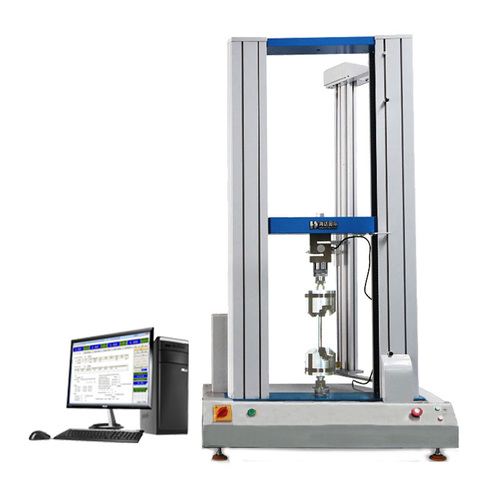
Tell us about your requirement

Price:
Quantity
Select Unit
- 50
- 100
- 200
- 250
- 500
- 1000+
Additional detail
Mobile number
Email

More Products in Tensile Testing Equipment Category
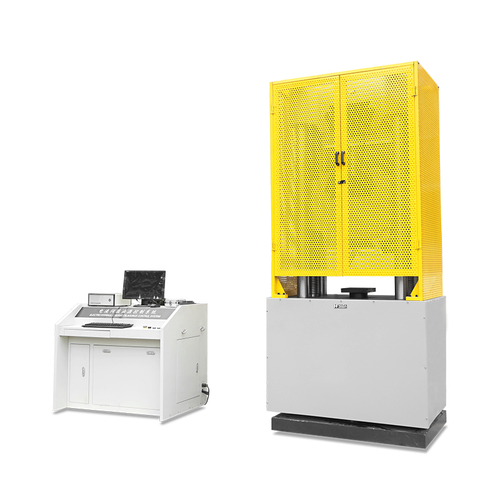
30t Universal Tensile Testing Machine
Price 3800 USD ($) / Unit
Minimum Order Quantity : 1 Unit
Power : 220 V AC, 50 Hz
Product Type : Universal Tensile Testing Machine
Color : Blue & Grey
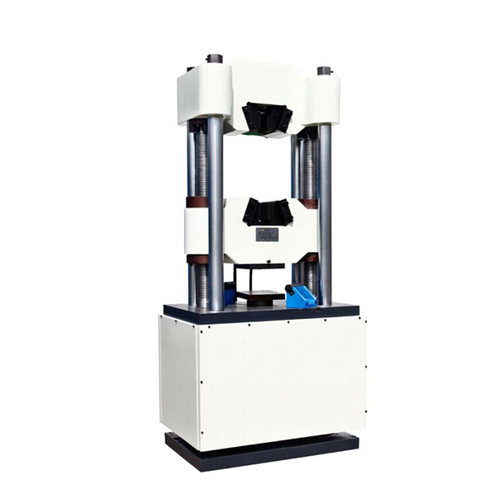
MTS Tensile Test Machine
Price 3500 USD ($) / Unit
Minimum Order Quantity : 1 Unit
Power : 3 kW
Product Type : Universal Tensile Test Machine
Color : Grey/Blue
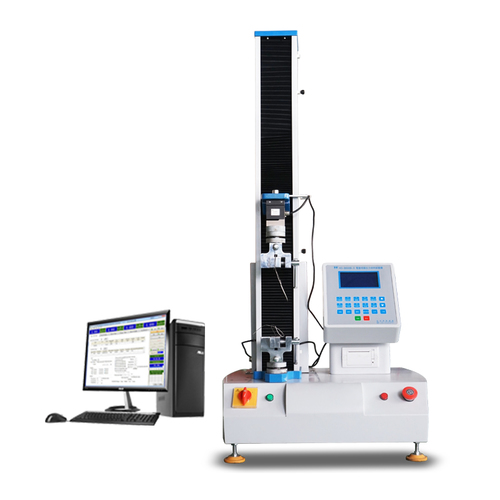
200KG Capacilty Universal Tensile Testing Machine
Price 2200 USD ($) / Unit
Minimum Order Quantity : 1 Unit
Power : 220V AC, 50Hz
Product Type : Universal Tensile Testing Machine
Color : Blue/Grey
Tape Universal Test Equipment
Price 599 USD ($) / Unit
Minimum Order Quantity : 1 Unit
Power : 220 V AC
Product Type : Tape Universal Test Equipment
Color : Grey

Contact Details
- FACTORY ADD: No.13 Daxin Street, Daluosha Industrial Zone, Daojiao Town,Dongguan - 523710, Guangdong, China
- Phone :86-1591-7693151
- haidads@qc-test.cn
 Send Inquiry
Email us : haidads@qc-test.cn
- Ms Lisa (Manager)
- Mobile : +8613662707979, +8613829267288, +8615016776323, +8618373745787, +8618236912012, +8613602361535, +8613925747786

|


 |
HAIDA INTERNATIONAL EQUIPMENT CO., LTD.
All Rights Reserved.(Terms of Use) Developed and Managed by Infocom Network Private Limited. |
