

 English
 Spanish
 French
 German
 Italian
 Chinese (Simplified)
 Japanese
 Korean
 Arabic
 Portuguese
 Send Inquiry
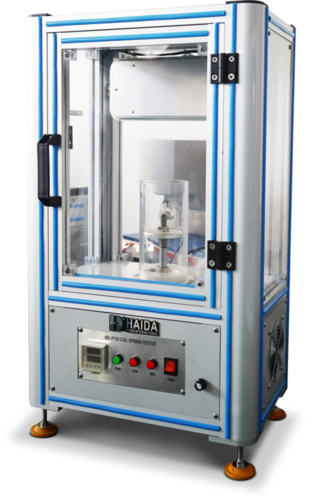
Tensile Spring Testing Machine
Price 5500 USD ($)/ Unit
MOQ : 1 Unit
Tensile Spring Testing Machine Specification
- Specimen Size
- Length: 50-300 mm
- Application
- Testing tensile strength and elongation of springs
- Number of Specimens
- 1
- Port Size
- Standard, 1/4 inch fitting
- Measuring Range
- 0.1 N to 2000 N
- Interface Type
- RS232/USB
- Gas Pressure
- No external gas required
- Response Time
- <2 sec
- Max Height
- Approx. 600 mm
- Features
- Auto stop upon sample break, overload protection, adjustable speed, microprocessor based
- Operating Voltage
- 220V AC
- Frequency
- 50 Hz
- Display Type
- Digital (LCD Display)
- Accuracy
- 1%
- Resolution
- 0.01 N
- Automation Grade
- Semi-automatic
- Temperature
- 5C - 40C
- Equipment Type
- Tensile Spring Testing Machine
- Mounting Type
- Table Top
- Test Range
- Up to 5000 N
- Power Supply
- AC 220V, 50Hz
- Humidity
- 85% RH
- Usage
- Spring tensile force testing
- Capacity
- 500 N / 1000 N / 2000 N (Optional)
- Machine Weight
- Approx. 75 kg
- Test Speed
- 50-500 mm/min (adjustable)
- Test Width
- Up to 220 mm
- Test Stroke
- 0-100 mm
- Control Mode
- Digital / Manual
- Software Support
- Compatible with analysis software
- Drive Type
- Gear motor drive
- Frame Material
- Mild steel, powder coated
- Data Output
- USB port for data transfer
- Operation
- Push button panel & digital control
- Compliance
- Meets IS, ASTM spring testing standards
- Safety Feature
- Emergency stop button
- Clamping System
- Self-centering jaws
- Protection Class
- IP 20
- Calibration
- Standard weights supplied
Tensile Spring Testing Machine Trade Information
- Minimum Order Quantity
- 1 Unit
- FOB Port
- Shenzhen
- Supply Ability
- 10 Units Per Month
- Delivery Time
- 1 Week
- Packaging Details
- Each set protected with resin fiber and PP film, then put into Strong wooden case with operation manual and video inside.
- Certifications
- CE,ISO
Tensile Spring Testing Machine About
The usage:
This machine is used to test tension,tear strength,peeling force,compression,shearing force,adhesion,three-point bending......etc,in the field of metal,rubber/plastic,nylon,leather,shoemaking,fabric,insulator,electric appliance,automobile......etc.
TECHNICAL PARAMETERS:
| Test position | One |
| Stroke | 50mm |
| Speed | 20-90 times per minute |
| Counter | 0-999,999 times |
| Weight Wood Package | 30kg |
| Machine Dimension | (LWH) 260220420mm |
| Power | AC220V10%, 50/60Hz, single phase |
Advanced Clamping and Test Control
The machine is equipped with self-centering jaws for secure and uniform specimen placement. Operators can easily initiate tests using the push button panel or switch to digital control for enhanced precision. Its gear motor drive delivers smooth and consistent force application throughout the test cycle.
Comprehensive Data Management
Results can be exported via USB or RS232 ports for external analysis or record keeping. Its software compatibility enables advanced data analysis and reporting, meeting the needs of quality control in manufacturing, R&D, and exporting environments.
Safety and Compliance Assured
Engineered with an emergency stop button, overload protection, and robust construction, this tester prioritizes operator safety. It meets leading international standardsIS and ASTMensuring reliable and repeatable test results for all users.
FAQs of Tensile Spring Testing Machine:
Q: How does the self-centering clamping system work on the Tensile Spring Testing Machine?
A: The machines self-centering jaws automatically adjust to hold specimens securely, providing uniform clamping for springs of varying lengths (50300 mm) and preventing slippage during testing.Q: What is the process for transferring test data from the machine to a computer?
A: Test results are exported via the built-in USB port or RS232 interface. Simply connect the machine to your computer and use compatible analysis software for efficient data transfer and interpretation.Q: When should calibration be performed on this testing machine?
A: Calibration should be done periodically following the provided standard weights or as recommended in your operation manual to maintain measurement accuracy of 1%. Routine checks ensure the reliability of results.Q: Where can this tensile spring tester be installed for optimal use?
A: Due to its compact table-top design, the machine is suitable for installation in laboratories, quality control departments, manufacturing plants, or research facilities, provided it is kept in environments within specified temperature and humidity ranges.Q: What safety features are integrated to protect users during operation?
A: The machine incorporates an emergency stop button, auto stop upon sample breakage, overload protection, and safety compliance with IP 20, ensuring operator safety during all stages of the test.Q: Can the test speed be adjusted for different spring specimens?
A: Yes, the machine accommodates adjustable test speeds from 50 to 500 mm/min, allowing operators to tailor testing conditions to meet specific specimen requirements or standardized protocols.Q: What are the benefits of using a digital control and LCD display for tensile spring testing?
A: Digital control enhances test precision and repeatability, while the clear LCD display provides immediate feedback on force, stroke, and test status. This improves accuracy, efficiency, and user experience throughout testing.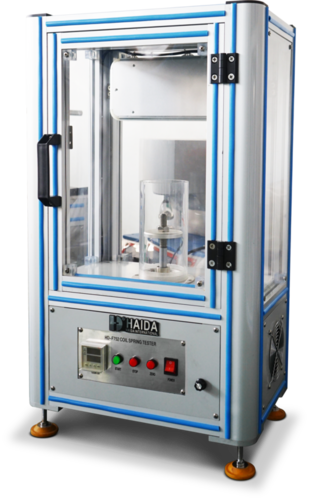
Tell us about your requirement

Price:
Quantity
Select Unit
- 50
- 100
- 200
- 250
- 500
- 1000+
Additional detail
Mobile number
Email

More Products in Furniture Test Equipment Category
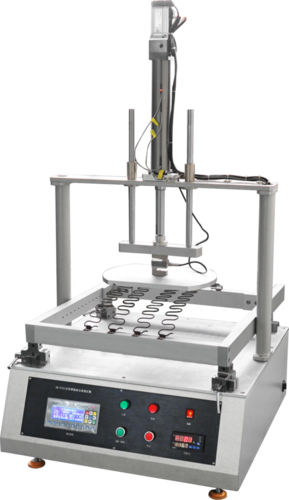
Mattress Spring Tester
Price 1400 USD ($) / Unit
Minimum Order Quantity : 1 Unit
Usage : For mattress manufacturing and lab testing
Mounting Type : Floor Standing
Power Supply : AC 220V 50Hz
Application : Mattress spring durability and fatigue testing
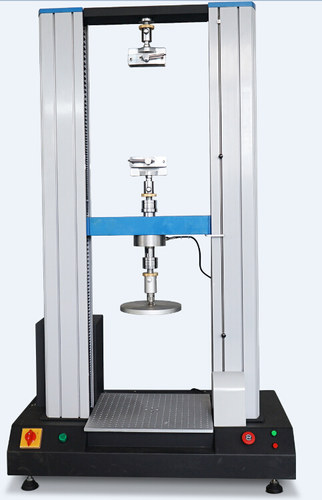
Foam universal testing machine
Price 4000 USD ($) / Unit
Minimum Order Quantity : 1 Unit
Usage : Quality Control / Laboratory Research
Mounting Type : Floor Standing
Power Supply : 220 V AC, 50 Hz
Application : Compression/tension testing of foam and sponge materials
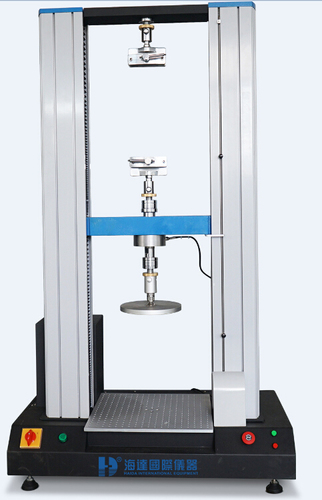
Foam Strength Testing Equipment
Price 2999 USD ($) / Unit
Minimum Order Quantity : 1 Unit
Usage : Cushion, mattress, foam products, research labs
Mounting Type : Floor standing
Power Supply : 220V / 50Hz AC
Application : Testing the compression and strength of foam materials
High Load Spiral Spring Testing Machine
Price 5500 USD ($) / Set
Minimum Order Quantity : 1 Set
Usage : Industrial Testing
Mounting Type : Floor Mounted
Power Supply : 220V AC, 50/60Hz
Application : Testing Compression and Extension of Spiral Springs

Contact Details
- FACTORY ADD: No.13 Daxin Street, Daluosha Industrial Zone, Daojiao Town,Dongguan - 523710, Guangdong, China
- Phone :86-1591-7693151
- haidads@qc-test.cn
 Send Inquiry
Email us : haidads@qc-test.cn
- Ms Lisa (Manager)
- Mobile : +8613662707979, +8613829267288, +8615016776323, +8618373745787, +8618236912012, +8613602361535, +8613925747786

|


 |
HAIDA INTERNATIONAL EQUIPMENT CO., LTD.
All Rights Reserved.(Terms of Use) Developed and Managed by Infocom Network Private Limited. |
