

 English
 Spanish
 French
 German
 Italian
 Chinese (Simplified)
 Japanese
 Korean
 Arabic
 Portuguese
 Send Inquiry
Shoe Peeling Strength Tester
Price 2100 USD ($)/ Unit
MOQ : 1 Unit
Shoe Peeling Strength Tester Specification
- Humidity
- <85% RH
- Accuracy
- 1% F.S.
- Gas Pressure
- 0.6 MPa 0.8 MPa
- Hardness
- Applicable to wide variety of shoe materials
- Power Supply
- AC 220V, 50Hz
- Specimen Size
- 180 mm 30 mm
- Response Time
- <2 seconds
- Frequency
- 50 Hz
- Equipment Type
- Bench-top Mechanical Tester
- Resolution
- 0.1 N
- Automation Grade
- Semi-automatic
- Mounting Type
- Table Top
- Max Height
- 450 mm
- Measuring Range
- 0 500 N
- Temperature
- 10C 40C
- Port Size
- 1/4 inch
- Interface Type
- RS232 Data Output
- Number of Specimens
- 2 (Simultaneous Testing)
- Features
- Compact Structure, High Precision, Adjustable Speed, Simple Operation
- Display Type
- Digital LCD Display
- Application
- Footwear Sole and Upper Peeling Strength Testing
- Operating Voltage
- 220V
- Test Range
- 0 500 N
- Usage
- Shoe and Footwear Lab Testing
- Capacity
- 500 N
- Machine Weight
- 80 kg
- Test Speed
- 100 mm/min (Adjustable)
- Test Width
- 30 mm
- Test Stroke
- 100 mm
- Control Mode
- Manual & Digital Control
- Noise Level
- <60 dB
- Clamp Force
- Self-tightening Grips
- Color
- Blue & White
- Sample Preparation
- Manual
- Protection Class
- IP20
- Peeling Angle
- 90/180 (Configurable)
- Safety Features
- Emergency Stop Switch, Overload Protection
- Software
- Optional PC Software for Data Analysis
- Data Storage
- Internal Memory for 1000 Tests
- Fixture Type
- Adjustable Peel Fixtures
- Frame Material
- Powder-coated Steel
Shoe Peeling Strength Tester Trade Information
- Minimum Order Quantity
- 1 Unit
- FOB Port
- SHENZHEN
- Payment Terms
- Cash on Delivery (COD), Cheque, Letter of Credit (L/C), Western Union, Paypal, Cash Against Delivery (CAD), Letter of Credit at Sight (Sight L/C), Delivery Point (DP), Telegraphic Transfer (T/T), Days after Acceptance (DA), Cash in Advance (CID), Cash Advance (CA)
- Supply Ability
- 15 Units Per Week
- Delivery Time
- 5 Days
- Packaging Details
- Each set protected with resin fiber and PP film, then put into Strong wooden case with operation manual and video inside.
- Main Export Market(s)
- Australia, North America, Eastern Europe, Middle East, Western Europe, Africa, Central America, South America, Asia
- Certifications
- CE,ISO
Shoe Peeling Strength Tester About
Shoe Peeling strength Tester
Introduction
Shoe Peeling strength Tester is used to test the peeing strength of shoe sole & upper shoe. The theory is fix the shoe at machine and peel the shoe sole & upper shoe by peeling knife to measure the peeing force, finally to calculate the peeling strength in accord to peeling force & width of knife blade.
Standard
GB/T 3903.3
Standard Features
Capacity | 100kg |
Precision | 1% |
Width of knife blade | 200.1mm, 100.05mm |
Speed of knife | 202mm |
Weight | Approx. 80kg |
Power | 1 phase, AV 220V, 50/60HZ |
Size (W*D*H) | 60*32*80cm |
Accessories | English operate manual, operate video and factory inspect report |
Advanced Peeling Strength Testing
Engineered for footwear laboratories, this tester excels in assessing adhesion quality in shoes. Its adjustable peel fixtures and selectable angles (90/180) accommodate diverse material requirements. With self-tightening grips and digital controls, users experience minimal error and optimal sample security during testing. The robust frame and compact design allow for reliable, continuous operation, making it suitable for various shoe material hardnesses.
Safety-Focused and User-Friendly Operation
Equipped with advanced safety features including emergency stop switch and overload protection, this tester prioritizes user well-being. The manual and digital controls simplify the testing workflow, while an intuitive LCD display keeps results visible. The noise level remains under 60 dB, creating a comfortable work environment. With IP20 protection, the unit is reliable for continuous bench-top use in controlled laboratory settings.
Data Management and Analysis Capabilities
Results are conveniently stored in the internal memory for up to 1000 tests, with RS232 port compatibility for exporting data. Optional PC software allows thorough analysis and record-keeping, aiding process optimization and quality assurance. Measurements are highly precise with 0.1 N resolution and fast response time under two seconds, ensuring that critical data is always at your fingertips for further evaluation or reporting.
FAQs of Shoe Peeling Strength Tester:
Q: How does the Shoe Peeling Strength Tester evaluate sole and upper bond strength in footwear?
A: The tester uses adjustable peel fixtures and self-tightening grips to securely hold shoe materials while applying a controlled peel force at configurable angles (90 or 180). It measures the force required to separate the sole from the upper, providing digital readouts for precise bond strength evaluation.Q: What types of shoe materials can be tested using this equipment?
A: This tester accommodates a wide range of shoe materials, from soft to hard. Its self-tightening grips and adjustable fixtures are designed to securely hold different specimen types, making it suitable for testing various footwear designs and materials in compliance with industry standards.Q: When should I use the emergency stop switch or rely on overload protection?
A: The emergency stop switch should be activated immediately in case of any operational risks or malfunctions to halt the machine safely. Overload protection automatically safeguards the device if the test force exceeds the capacity (500 N), preventing potential equipment damage or sample mishandling.Q: Where is this machine best used, and who benefits from its application?
A: This bench-top tester is ideal for laboratories involved in footwear quality control, research, and development. It serves manufacturers, traders, suppliers, and researchers seeking reliable data on sole-upper adhesion, ultimately helping improve product quality and durability.Q: What is the process for preparing and conducting a peel strength test?
A: Specimens of 180 mm x 30 mm are manually prepared and mounted onto the machine using the adjustable fixtures. After setting the desired test parameters, the operator initiates the test using manual or digital controls, with results displayed digitally and optionally stored or exported for further analysis.Q: How does the data storage and reporting function help streamline lab operations?
A: Internal memory can store up to 1000 test records, allowing easy retrieval of historical data. The RS232 interface and optional PC software enable convenient data export and advanced analysis, reducing paperwork and supporting robust quality documentation.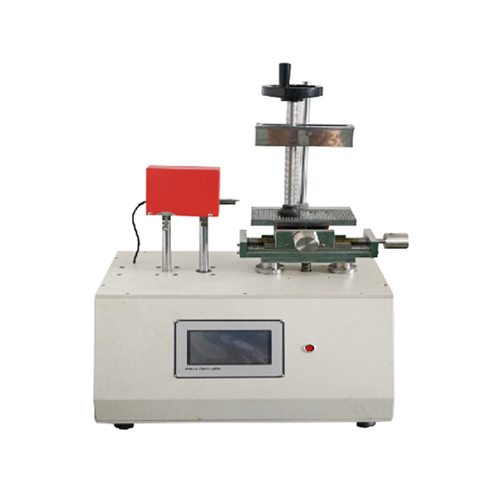
Tell us about your requirement

Price:
Quantity
Select Unit
- 50
- 100
- 200
- 250
- 500
- 1000+
Additional detail
Mobile number
Email

More Products in Shoes Test Equipment Category

Safety Footwear Compression Puncture Test Equipment
Price 2600 USD ($) / Set
Minimum Order Quantity : 1 Set
Power Supply : AC 220V, 50Hz
Application : Safety footwear toe and sole compression and puncture tests
Humidity : 40%85% RH
Gas Pressure : 0.50.7 MPa

Leather Waterproof dynamic testing machine
Price 3200 USD ($) / Set
Minimum Order Quantity : 1 Set
Power Supply : AC 220V, 50/60 Hz
Application : Waterproof evaluation of leather material
Humidity : 40%~70% RH
Gas Pressure : 0.4 0.7 MPa
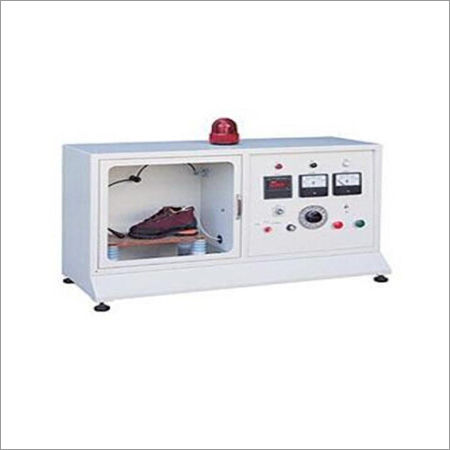
Shoes Withstand Voltage Test Equipment
Minimum Order Quantity : 1 set Unit
Power Supply : AC 220V, 50Hz
Application : Testing electrical withstand voltage capability of safety shoes and boots
Humidity : Less than 85% RH
Gas Pressure : 0.50.7 MPa
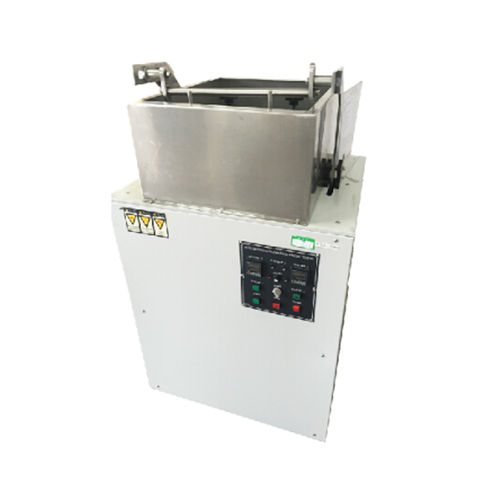
Shoe Bending Waterproof Test Machine
Minimum Order Quantity : 1 Square Centimeter
Power Supply : AC 220V, 50/60Hz
Application : Footwear bending waterproof resistance test
Humidity : 4080% RH
Gas Pressure : 0.50.7 MPa

Contact Details
- FACTORY ADD: No.13 Daxin Street, Daluosha Industrial Zone, Daojiao Town,Dongguan - 523710, Guangdong, China
- Phone :86-1591-7693151
- haidads@qc-test.cn
 Send Inquiry
Email us : haidads@qc-test.cn
- Ms Lisa (Manager)
- Mobile : +8613662707979, +8613829267288, +8615016776323, +8618373745787, +8618236912012, +8613602361535, +8613925747786

|


 |
HAIDA INTERNATIONAL EQUIPMENT CO., LTD.
All Rights Reserved.(Terms of Use) Developed and Managed by Infocom Network Private Limited. |
