

 English
 Spanish
 French
 German
 Italian
 Chinese (Simplified)
 Japanese
 Korean
 Arabic
 Portuguese
 Send Inquiry
Rockwell hardness test machine
MOQ : 1 Set
Rockwell hardness test machine Specification
- Number of Specimens
- Single at a time
- Operating Voltage
- 230V AC
- Specimen Size
- Maximum height 200 mm
- Power Supply
- 230V AC, 50 Hz
- Temperature
- 10C 40C
- Mounting Type
- Tabletop
- Interface Type
- N/A (manual device)
- Features
- Sturdy body, precise loading, easy operation, reliable readings
- Display Type
- Analog dial gauge
- Application
- Hardness testing of metals and alloys
- Response Time
- Instantaneous (manual read)
- Automation Grade
- Manual
- Humidity
- Up to 85% RH (non-condensing)
- Measuring Range
- 20-70 HRC (others available on A/B scales)
- Hardness
- 20-70 HRC
- Equipment Type
- Rockwell Hardness Testing Machine
- Accuracy
- Complies with IS:1586, 1 HRC
- Port Size
- N/A (Manual tabletop model)
- Frequency
- 50 Hz
- Max Height
- 200 mm (max specimen height)
- Resolution
- 0.1 HRC
- Test Range
- 20 - 70 HRC (Rockwell C scale)
- Usage
- Laboratory, Quality control
- Capacity
- Load: 60, 100, 150 kgf
- Machine Weight
- 85 kg
- Test Speed
- Constant, as per Rockwell standards
- Test Width
- 150 mm
- Test Stroke
- Up to 120 mm
- Control Mode
- Manual / Analog
- Body Material
- Cast Iron
- Preliminary Test Force
- 10 kgf
- Indenter Type
- Diamond cone and steel ball included
- Finish
- Powder coated paint
- Main Test Force
- 60, 100, 150 kgf selectable
- Operation
- Hand lever operated
- Safety
- Overload protection provided
- Depth of Throat
- 150 mm
Rockwell hardness test machine Trade Information
- Minimum Order Quantity
- 1 Set
- FOB Port
- shenzhen
- Payment Terms
- Delivery Point (DP), Cash Against Delivery (CAD), Cash on Delivery (COD), Cheque, Letter of Credit (L/C), Western Union, Paypal, Letter of Credit at Sight (Sight L/C), Telegraphic Transfer (T/T), Days after Acceptance (DA), Cash in Advance (CID), Cash Advance (CA)
- Supply Ability
- 30 Sets Per Month
- Delivery Time
- 15 Days
- Packaging Details
- Each set protected with resin fiber and PP film, then put into Strong wooden case with operation manual and video inside.
- Main Export Market(s)
- Australia, Eastern Europe, Middle East, Western Europe, Africa, Central America, South America, Asia, North America
Rockwell hardness test machine About
Detailed Product Description
Hardness Testing Machine
- prefessional designed
- high quality,reasonable price
- good after-sale service
- Rockwell hardness machine (mold hardness) is widely used for hardened steel, hard alloy and metalmaterial and unhardened steel (copper alloy, quenching and tempering, annealing of steel, aluminum alloy, chilled casting,forging parts, bearing steel and so on ) detection
Characteristics of Rockwell hardness tester:
Accurate, durable, reliable, simple and convenient testing;
Dial direct reading, HRA, HRC, HRB; and optional Rockwellindenter hardness measured other other scale;
Parameters
- Model Name & Specimen
- Rockwell hardness tester
- Specification Measuring Range 20-88HRA, 20-100HRB, 20-70HRC
- Strenghth 588.4N(60kgf), 980.7N(100kgf), 1471N(150kfg)
- Maximum Height 100mm
- Distance between pressure head and tester wall 105mm
- Outside Dimension 180270560 (mm)
- Weight 140kg (appro.)
- Accessaries large / small and v-shaped testing bench each 1 set; cone-shaped diamond pressure head 1 set; 1/16" steel ball pressure head 1 piece; standard Rockwell hardness sheet 3 pieces
Precision in Hardness Testing
Engineered to deliver accurate and repeatable hardness values, this Rockwell tester features selectable test forces and reliable analog readings. Its diamond cone and steel ball indenters cover a wide scope of applications, making it suitable for testing various metals and alloys.
Rugged and User-Friendly Construction
The cast iron body and powder-coated finish provide exceptional durability, while features such as overload protection and hand lever operation ensure safe and straightforward testing in busy labs or factories. With its manual analog system, users enjoy excellent control and quick results every time.
Versatile Laboratory Application
Designed to measure specimens up to 200 mm high, the machine supports testing within 20-70 HRC on the C scale, and can also accommodate A/B scales. Its compact tabletop design fits seamlessly within laboratory environments, making it a top choice for dealers, manufacturers, and quality control professionals.
FAQs of Rockwell hardness test machine:
Q: How does the Rockwell hardness test machine operate?
A: The machine is operated manually using a hand lever. You place the metal specimen on the anvil, select the desired test force (60, 100, or 150 kgf), and employ a diamond cone or steel ball indenter to make an imprint. The analog dial gauge then displays the hardness value instantly.Q: What types of materials can this Rockwell hardness machine test?
A: This equipment is designed for testing the hardness of various metals and alloys. The inclusion of both diamond cone and steel ball indenters broadens its applicability across a range of metallic materials typically found in laboratory and industrial environments.Q: When should I use the diamond cone versus the steel ball indenter?
A: The diamond cone indenter is suitable for hard metals such as steel, while the steel ball indenter is recommended for softer metals like aluminum or brass. Select the indenter type based on the material being tested and according to applicable Rockwell scale standards.Q: Where is this Rockwell hardness tester best utilized?
A: With a compact tabletop build and robust design, this testing machine is ideal for laboratories, quality control departments, and manufacturing facilities. Its manual operation and consistent accuracy make it suitable for environments prioritizing reliability and precision.Q: What is the process for conducting a Rockwell hardness test on this machine?
A: Begin by placing the specimen on the anvil and applying the preliminary 10 kgf force using the hand lever. Then, select and apply the desired main force (60, 100, or 150 kgf). The depth of penetration is measured automatically, and the analog dial provides the hardness value instantly.Q: What are the key benefits of using this Rockwell hardness testing machine?
A: Key benefits include precise and reliable readings, durable cast iron construction, simple hand lever operation, and built-in overload protection. Its adherence to IS:1586 with an accuracy of 1 HRC ensures trustworthy results for quality assurance purposes.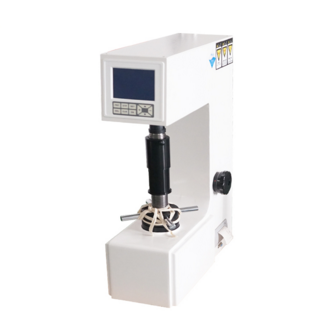
Tell us about your requirement

Price:
Quantity
Select Unit
- 50
- 100
- 200
- 250
- 500
- 1000+
Additional detail
Mobile number
Email

More Products in Baby Stroller / Bicycle / Toys Testing Machine Category
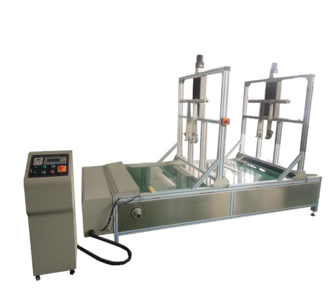
Uneven Road Stroller Test Equipment
Price 1 USD ($)
Minimum Order Quantity : 1 Set
Application : Simulated uneven road mechanical fatigue test for strollers
Features : Customizable waveform, adjustable speed, automated interruption
Power Supply : AC 220V, 50Hz
Mounting Type : Floor standing
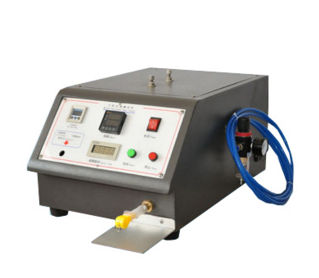
mouth blowntoy testing machine
Price 1 USD ($)
Minimum Order Quantity : 1 Set
Application : Toy breathability and safety compliance testing
Features : Overpressure safety, digital counter, auto test cycle
Power Supply : 220 V AC, 50 Hz
Mounting Type : Tabletop
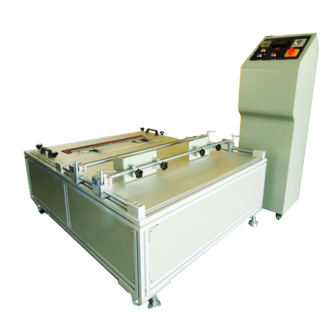
Baby Wheel Brake Abrasion Test Machines
Price 1 USD ($)
Minimum Order Quantity : 1 Set
Application : Wheel abrasion and brake performance testing for baby/kids strollers
Features : PLC programmable, overload protection, userfriendly operation, emergency stop
Power Supply : AC 220V, 50Hz
Mounting Type : Floor standing
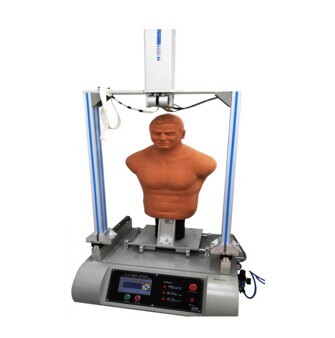
ASTM F2236 Baby Carrier Tester
Minimum Order Quantity : 1 Set
Application : Dynamic and static strength testing of baby carriers
Features : Programmable test cycles, emergency stop, integrated safety guard
Power Supply : 220V, 50/60Hz
Mounting Type : Floor Standing

Contact Details
- FACTORY ADD: No.13 Daxin Street, Daluosha Industrial Zone, Daojiao Town,Dongguan - 523710, Guangdong, China
- Phone :86-1591-7693151
- haidads@qc-test.cn
 Send Inquiry
Email us : haidads@qc-test.cn
- Ms Lisa (Manager)
- Mobile : +8613662707979, +8613829267288, +8615016776323, +8618373745787, +8618236912012, +8613602361535, +8613925747786

|


 |
HAIDA INTERNATIONAL EQUIPMENT CO., LTD.
All Rights Reserved.(Terms of Use) Developed and Managed by Infocom Network Private Limited. |
