

 English
 Spanish
 French
 German
 Italian
 Chinese (Simplified)
 Japanese
 Korean
 Arabic
 Portuguese
 Send Inquiry
Uneven Road Stroller Test Equipment
MOQ : 1 Set
Uneven Road Stroller Test Equipment Specification
- Hardness
- Standard composite road segment
- Response Time
- 1 sec
- Test Range
- Stroller durability / suspension performance
- Features
- Customizable waveform, adjustable speed, automated interruption
- Power Supply
- AC 220V, 50Hz
- Interface Type
- USB, RS232
- Max Height
- 1800 mm
- Automation Grade
- Fully Automatic
- Equipment Type
- Uneven Road Stroller Test Equipment
- Mounting Type
- Floor standing
- Frequency
- 1~5 Hz (adjustable)
- Measuring Range
- Varies per test protocol
- Number of Specimens
- 1 unit per test cycle
- Temperature
- 0C~40C
- Accuracy
- 1%
- Display Type
- Digital Touch Screen
- Specimen Size
- Standard stroller size up to 600mm wheelbase
- Port Size
- Standard
- Resolution
- 0.01 mm
- Gas Pressure
- 0.5~0.7 MPa
- Humidity
- 40%~85% RH
- Operating Voltage
- 220V AC
- Application
- Simulated uneven road mechanical fatigue test for strollers
- Usage
- Laboratory / QA Room
- Capacity
- Single specimen per test
- Machine Weight
- Approx. 600 kg
- Test Speed
- 0~5 km/h (adjustable)
- Test Width
- 700 mm
- Test Stroke
- Max 2000 mm
- Control Mode
- PLC Touch Screen Control
- Roller Material
- High strength steel with wear-resistant surface
- Ambient Light Tolerance
- Suitable for indoor use
- Calibration
- Manual and automatic calibration available
- Noise Level
- 70 dB
- Data Output
- Test reports exportable via USB
- Cycle Counter
- Programmable, up to 999,999 cycles
- Safety Feature
- Emergency stop, overload protection
- Road Surface Types
- Multiple: cobblestone, slope, pothole, wave
Uneven Road Stroller Test Equipment Trade Information
- Minimum Order Quantity
- 1 Set
- FOB Port
- shenzhen
- Payment Terms
- Cash on Delivery (COD), Paypal, Letter of Credit (L/C), Western Union, Letter of Credit at Sight (Sight L/C), Delivery Point (DP), Cash Against Delivery (CAD), Telegraphic Transfer (T/T), Days after Acceptance (DA), Cash in Advance (CID), Cheque, Cash Advance (CA)
- Supply Ability
- 30 Sets Per Month
- Delivery Time
- 15 Days
- Packaging Details
- Each set protected with resin fiber and PP film, then put into Strong wooden case with operation manual and video inside.
- Main Export Market(s)
- Australia, Eastern Europe, Western Europe, Middle East, Africa, Central America, South America, Asia, North America
Uneven Road Stroller Test Equipment About
Uneven Road Stroller Test Equipment
Usage:
Uneven Road Stroller Test Equipment can be used for toys and baby carrier manufacturer , this Road Stroller Test Equipment simulation stroller walk on road conditions adverse road , the wheels do reciprocating after impact , the wheel will deformation or damage , to help manufacturers improve product quality .
Standard:EN1888 , GB14748
Technical Parameters:
| Model: | HD-J210 | HD-J210-A | HD-J210-B | ||
| Conveyor speed: | 5km/h 0.5km/h | ||||
| Effective width: | Max.1000mm | Max. 800mm | Max.1000mm | ||
| Test count: | 0-999,999 | ||||
| Bearing load Max.: | Max. 75KG | Max. 75KG | Max. 75KG | ||
| Aluminums block high: | Base on the EN-1888 standard/ Customer specified) | ||||
| Emergency stop buttons: | 2 | 4 | 4 | ||
Standard accessory list:
| Model | TT-J210 | TT-J210-A | TT-J210-B |
| Obstacle | 1 set | 1 set | 2set |
| Motor | AC motor 220V/50Hz 1KW | AC motor 220V/50Hz 1.5KW | |
| Testing weights | 2 set (9kg & 15kg) | 2 set (9kg & 15kg) | 2 set (9kg & 15kg) |
| Conveyor | 1 pc | 1 pc | 1 pc |
Motor specification:
- Brand: OPG
- Model: CH-40
- Detail specification as attachment ( motor specification)
Simulate Real Road Conditions for Stroller Safety
This equipment recreates multiple challenging road surfacesincluding cobblestone, slopes, potholes, and wave patternsensuring comprehensive mechanical fatigue tests for stroller durability. Its programmable settings let you tailor test cycles to specific protocols, while automated safety and emergency features provide reliable operation during extended or demanding runs.
User-Friendly, High-Precision Testing
Featuring a digital touch screen and PLC controls, the system offers unmatched ease of use. Users can quickly set parameters, monitor proceedings in real-time, and export detailed reports through USB or RS232. Calibrationboth manual and automatedguarantees consistent accuracy and repeatability for each test cycle, making this essential for strict quality assurance environments.
FAQs of Uneven Road Stroller Test Equipment:
Q: How does the Uneven Road Stroller Test Equipment simulate varied road conditions?
A: The machine is equipped with mechanical modules to emulate multiple surfaces such as cobblestone, slope, pothole, and wave, allowing manufacturers to test stroller performance under diverse and challenging conditions, thus ensuring durability and safety.Q: What data output options are available for the test reports?
A: Test results are easily exportable via USB, and the system also supports data transfer through an RS232 interface. This enables seamless integration with laboratory information systems and facilitates efficient reporting for quality assessments.Q: When is it necessary to calibrate the system, and how is calibration performed?
A: Calibration can be done manually or automatically, depending on user preference or laboratory protocols. It is recommended to calibrate before test campaigns or after maintenance to ensure measurement precision and compliance with regulatory standards.Q: Where is this equipment best utilized?
A: This test equipment is designed for use in laboratory or QA room settings, where controlled ambient light, temperature (0C40C), and humidity (40%85% RH) enable optimal and consistent testing conditions.Q: What safety features does the equipment provide during operation?
A: To ensure operator and specimen safety, it includes an emergency stop mechanism and overload protection, immediately halting operation in the event of abnormal incidents during test cycles.Q: How does the programmable cycle counter benefit the testing process?
A: The programmable cycle counter, supporting up to 999,999 cycles, allows users to set specific fatigue test durations. This feature facilitates automated, repeatable assessments for comprehensive stroller durability testing.Q: What are the key advantages for manufacturers and suppliers using this test system?
A: Manufacturers and suppliers benefit from accurate, automated, and rapid testing capabilities, with customizable test parameters and detailed reporting. This streamlines product development, enhances quality assurance, and ensures compliance with international safety standards.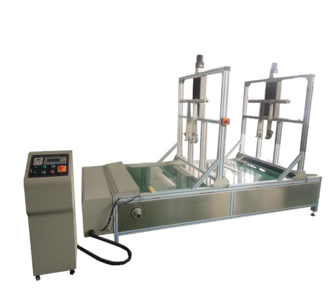
Tell us about your requirement

Price:
Quantity
Select Unit
- 50
- 100
- 200
- 250
- 500
- 1000+
Additional detail
Mobile number
Email

More Products in Baby Stroller / Bicycle / Toys Testing Machine Category
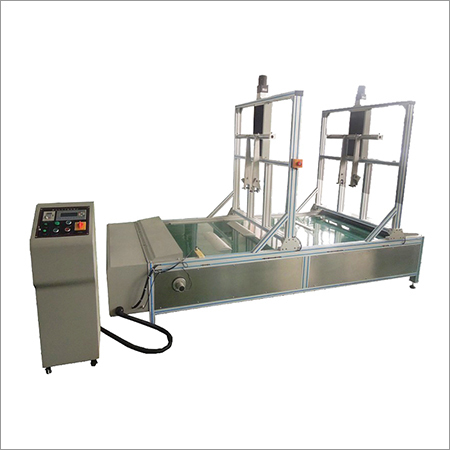
Uneven Road Stroller Test
Price 6800 USD ($) / Unit
Minimum Order Quantity : 1 Unit
Test Range : Customizable
Machine Weight : 220 kg
Features : Simulated uneven track, adjustable settings
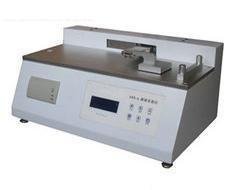
Coefficient of friction tester
Price 4000 USD ($) / Unit
Minimum Order Quantity : 1 Unit
Test Range : 0 1.000 COF
Machine Weight : Approx. 30 kg
Features : Microprocessor control, Digital display, Easy specimen clamping, Standard sled
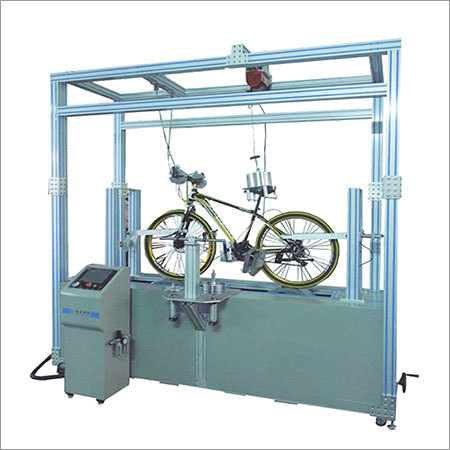
EN14764 Bike Dynamic Road Testing Machine
Price Range 20000.00 - 26000.00 INR
Minimum Order Quantity : 1 set Set
Test Range : 0600 kg
Machine Weight : 850 kg
Features : Programmable Test Cycles, Emergency Stop, RealTime Data Display
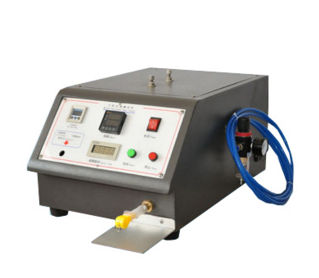
mouth blowntoy testing machine
Price 1 USD ($)
Minimum Order Quantity : 1 Set
Test Range : 0200 ml/min
Machine Weight : Approx. 28 kg
Features : Overpressure safety, digital counter, auto test cycle

Contact Details
- FACTORY ADD: No.13 Daxin Street, Daluosha Industrial Zone, Daojiao Town,Dongguan - 523710, Guangdong, China
- Phone :86-1591-7693151
- haidads@qc-test.cn
 Send Inquiry
Email us : haidads@qc-test.cn
- Ms Lisa (Manager)
- Mobile : +8613662707979, +8613829267288, +8615016776323, +8618373745787, +8618236912012, +8613602361535, +8613925747786

|


 |
HAIDA INTERNATIONAL EQUIPMENT CO., LTD.
All Rights Reserved.(Terms of Use) Developed and Managed by Infocom Network Private Limited. |
