

 English
 Spanish
 French
 German
 Italian
 Chinese (Simplified)
 Japanese
 Korean
 Arabic
 Portuguese
 Send Inquiry
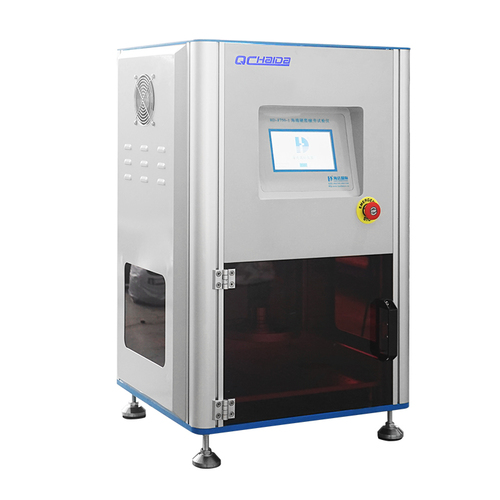
Matterss cornell tester
Price 12000 USD ($)/ Unit
MOQ : 1 Unit
Matterss cornell tester Specification
- Humidity
- 20%~90% RH
- Accuracy
- ±1mm
- Temperature
- 10°C~35°C
- Equipment Type
- Mattress Durability Tester
- Number of Specimens
- 1 specimen per test
- Resolution
- 0.1mm
- Response Time
- <1 second
- Max Height
- 200 mm mattress height
- Power Supply
- AC 220V, 50/60 Hz
- Gas Pressure
- 0.5~0.7 MPa
- Frequency
- 16 Hz
- Display Type
- Digital
- Application
- Mattress Spring Fatigue and Durability Testing
- Hardness
- Spring/Foam structure compatible
- Measuring Range
- 0-1000 mm
- Test Range
- Up to 1,000,000 cycles
- Operating Voltage
- 220V
- Interface Type
- Touch Screen/PLC Interface
- Automation Grade
- Automatic
- Specimen Size
- Minimum 1900 x 1200 mm
- Port Size
- Standard
- Features
- User Programmable Cycles, Emergency Stop
- Mounting Type
- Floor Mounted
- Usage
- Mattress mechanical performance and durability test
- Capacity
- Up to 200 mm mattress height
- Machine Weight
- Approximately 250 kg
- Test Speed
- 16 ± 2 cycles/min
- Test Width
- 1200 mm
- Test Stroke
- 300 mm
- Control Mode
- PLC Controlled
- Standards Compliance
- ASTM F1566, EN 1957
- Noise Level
- <65 dB
- Operation Duration Timer
- Built-in digital timer
- Emergency Safety System
- Equipped
- Color
- Blue/Gray
- Material Construction
- High strength steel frame, Stainless steel contact surfaces
- Compression Disc Diameter
- 320 mm
- Corner Tester Included
- Yes, with additional heads
- Memory Function
- Test cycle storage and recall
Matterss cornell tester Trade Information
- Minimum Order Quantity
- 1 Unit
- FOB Port
- Shenzhen
- Supply Ability
- 10 Units Per Month
- Delivery Time
- 1 Week
- Packaging Details
- Each set protected with resin fiber and PP film, then put into Strong wooden case with operation manual and video inside.
- Certifications
- CE,ISO
Matterss cornell tester About
Matterss cornell tester(HD-F766)
The usage
It apply to Innerspring ,Box spring mattresses and Foam mattress. The Cornell Type Tester is used to test the long term capacity of bedding to resist cyclic loading. The machine consists of a double hemispherical ram head on a manually adjustable shaft. A load cell is located on the ram head to measure the force being applied to the mattress. The shaft is connected to an adjustable eccentric which is rotated by an electric motor at up to 160 cycles per minute, variable.
Features:
- Professional design
- High quality with reasonable price
- One year warranty free.
Specification:Cornell Mattress Tester Factory
Design criteria: ASTM F 1566
Test objectives: Use specific block impact on the mattress over and over again, to assess their durability, and the fastness of mattress spring .
Imposed the pressure on mattress by a transducer, pressure range to 300KG 2. Adjust the pushrod stroke on mattress , maximum force = 1025N minimum force = 22N 3. Pusher travel speed adjustable, about 160 weeks times per minute 4. Suitable maximum specimen: 2.2M X 2.2M
- Display Accuracy: 0.001kgf
- Deformation precision: 0.001mm
- Impact height: 0-300mm adjustable
- Counter range: 0-99999 times
- Power: 380V ,2KW DC
Advanced Material Construction
Built with a high-strength steel frame and stainless steel contact surfaces, the Mattress Cornell Tester ensures long-term reliability and precise measurements. The inclusion of corner testers and additional heads increases its versatility, making it suitable for comprehensive mattress durability assessments.
Comprehensive Control and Safety Systems
Featuring PLC-controlled automation, a built-in digital operation timer, and an emergency safety system, this tester prioritizes both accuracy and operator safety. The user-friendly touch screen interface allows efficient test programming and cycle management for seamless laboratory workflows.
Global Standards Compliance
Meeting ASTM F1566 and EN 1957 requirements, the Mattress Cornell Tester produces results trusted in international markets. Its precision measuring range, test speed options, and memory function for storing up to 1,000,000 test cycles make it an industry-leading solution for manufacturers and quality control labs.
FAQs of Matterss cornell tester:
Q: How does the Mattress Cornell Tester evaluate the durability of mattresses?
A: The tester subjects mattresses to repetitive compression using a stainless steel disc and corner heads, simulating long-term usage. It tracks cycles digitally and stores results, providing accurate fatigue and durability assessments in accordance with recognized standards.Q: What materials and sizes can be tested on this machine?
A: Compatible with spring and foam structures, the tester accommodates specimens of minimum size 1900 x 1200 mm and up to 200 mm in height, making it suitable for most commercial mattress varieties.Q: When should manufacturers use the Mattress Cornell Tester in their production process?
A: Ideally, the tester should be employed during final quality assurance before product release to the market, or during R&D to validate new designs for durability and mechanical performance.Q: Where is this equipment typically installed and operated?
A: The Mattress Cornell Tester is designed for floor mounting in mattress manufacturing facilities, quality control laboratories, and certification centers that require automated, rigorous product evaluation.Q: What is the process for running a test on this machine?
A: Users set the desired cycle count and parameters via the digital touch screen PLC interface. The specimen is loaded and secured on the testing bed. Testing is started, and the system runs automatically, recording cycles and measurements with options to store and recall data for analysis.Q: How can users benefit from its automation and memory functions?
A: Automated testing reduces human error and operator workload, while the memory function allows easy tracking of previous test cycles, supporting ongoing quality improvements and compliance reporting.Q: What key usage features enhance operational safety and convenience?
A: Key features include an emergency stop button, built-in digital timer, low-noise operation below 65 dB, and PLC control. These contribute to efficient, safe, and convenient durability testing for all user levels.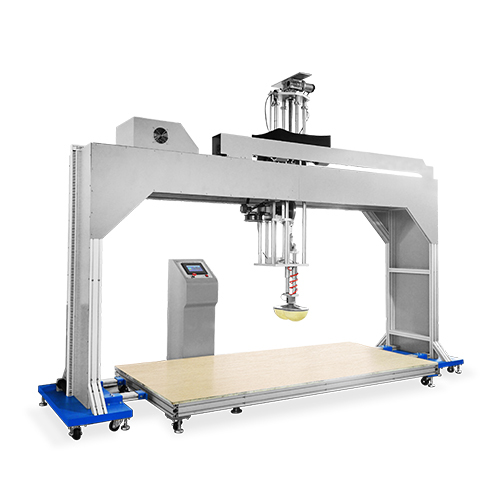
Tell us about your requirement

Price:
Quantity
Select Unit
- 50
- 100
- 200
- 250
- 500
- 1000+
Additional detail
Mobile number
Email

More Products in Furniture Test Equipment Category
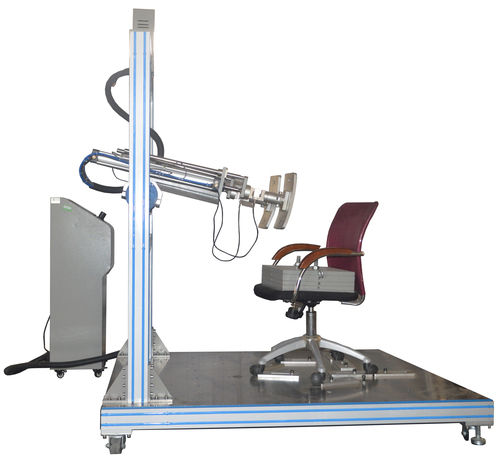
Chair Seating and Back Durability Tester
Price 5800 USD ($) / Unit
Minimum Order Quantity : 1 Unit
Automation Grade : Automatic
Operating Voltage : 220V AC
Test Range : 02000 N
Test Stroke : 50150 mm (adjustable)
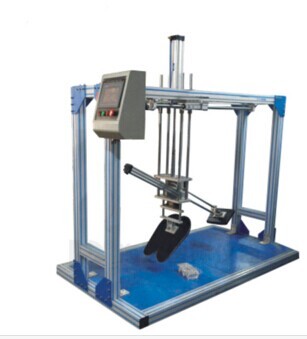
Chair Seat Arm and Back Testing Machine
Price 1 USD ($)
Minimum Order Quantity : 1 Set
Automation Grade : Automatic
Operating Voltage : 220V
Test Range : 0 200 kg
Test Stroke : 0 300 mm
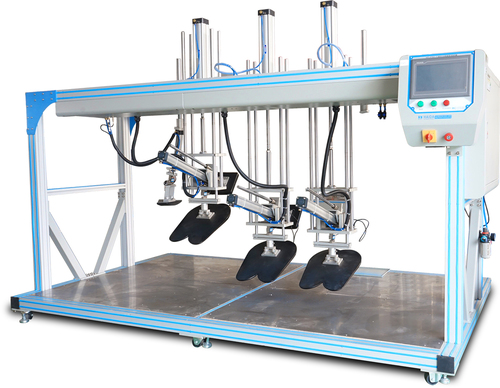
3 Sofa Durability Tester( EN 4875)
Price 13000 USD ($) / Unit
Minimum Order Quantity : 1 Unit
Automation Grade : Fully automatic
Operating Voltage : 220V AC
Test Range : Up to 100,000 cycles
Test Stroke : 50300 mm (adjustable)
Sponge Foam Fatigue Tester
Price 1600 USD ($) / Set
Minimum Order Quantity : 1 Set
Automation Grade : Automatic
Operating Voltage : 220V
Test Range : 0100,000 cycles
Test Stroke : 100 mm adjustable

Contact Details
- FACTORY ADD: No.13 Daxin Street, Daluosha Industrial Zone, Daojiao Town,Dongguan - 523710, Guangdong, China
- Phone :86-1591-7693151
- haidads@qc-test.cn
 Send Inquiry
Email us : haidads@qc-test.cn
- Ms Lisa (Manager)
- Mobile : +8613662707979, +8613829267288, +8615016776323, +8618373745787, +8618236912012, +8613602361535, +8613925747786

|


 |
HAIDA INTERNATIONAL EQUIPMENT CO., LTD.
All Rights Reserved.(Terms of Use) Developed and Managed by Infocom Network Private Limited. |
