

 English
 Spanish
 French
 German
 Italian
 Chinese (Simplified)
 Japanese
 Korean
 Arabic
 Portuguese
 Send Inquiry
Low Temperature Flexing Tester
Price 2800 USD ($)/ Set
MOQ : 1 Set
Low Temperature Flexing Tester Specification
- Max Height
- 600 mm
- Interface Type
- Keypad and digital panel
- Response Time
- Instantaneous
- Port Size
- 6 mm
- Display Type
- Digital Display
- Humidity
- 85% RH
- Temperature
- -40C to +20C
- Resolution
- 0.1C
- Power Supply
- AC 220V 50/60Hz
- Test Range
- -40C to +20C
- Features
- Temperature uniformity, programmable cycles, safety lock, compact design
- Accuracy
- 1C
- Automation Grade
- Semi-Automatic
- Number of Specimens
- 6 pcs
- Specimen Size
- 150 mm x 70 mm
- Operating Voltage
- 220V AC
- Frequency
- 50/60 Hz
- Application
- Flex testing for rubber, plastic, leather, shoe, and similar materials at low temperatures
- Gas Pressure
- 0.5 MPa
- Measuring Range
- Full test chamber temperature range
- Equipment Type
- Low Temperature Flexing Tester
- Mounting Type
- Floor Mounted
- Usage
- Material fatigue and flex testing
- Capacity
- Single or multiple specimens
- Machine Weight
- 80 kg
- Test Speed
- 100 cycles/min
- Test Width
- 70 mm
- Test Stroke
- 10~50 mm (adjustable)
- Control Mode
- Digital Control
- Chamber Dimensions
- 600 mm x 550 mm x 650 mm
- Insulation Type
- Polyurethane foam
- Noise Level
- <65 dB(A)
- Specimen Clamp Type
- Universal specimen fixtures
- Cooling Method
- Compressor refrigeration
- External Dimensions
- 1100 mm x 800 mm x 1400 mm
- Heating Rate
- Approx. 3C/min
- Ambient Temperature for Operation
- 10C to 35C
- Timer
- Programmable, up to 99999 cycles
Low Temperature Flexing Tester Trade Information
- Minimum Order Quantity
- 1 Set
- FOB Port
- SHENZHEN
- Supply Ability
- 20 Sets Per Month
- Delivery Time
- 15 Days
- Sample Policy
- Contact us for information regarding our sample policy
- Packaging Details
- Each set protected with resin fiber and PP film, then put into Strong wooden case with operation manual and video inside.
- Certifications
- CE,ISO
Low Temperature Flexing Tester About
Application:
Vertical type low temperature flexing tester is used to test if the materials such as leather, textile, rubber, shoes can endure the flexing at low temperature. Different fixtures can be installed in the inner box, and all the equipment are made of stainless steel.
Standard Features
| Temperature range | Normal temperature Rt-30C or -50C |
| Applicable shoe size | 18-45 yards |
| Inner box size (L W H) | 50 50 60cm |
| Inside and outside tank material | Stainless steel SUS# 04 |
| Temperature control accuracy | 0.5C |
| Distribution uniformity | 0.2C |
| Cooling speed | about 60 min |
| Heat insulating material | Hard foam and glass cotton |
| Refrigeration system | Hermetic compressor, French Tecumseh 2 HP 2480 |
| Refrigerant type | Environmental cooling catalyser |
| Temperature control mode | BTC balance temperature control system, P.I.D. control method |
| Counter | LED, 0-999,999 |
| Machine size (L W H) | 109 105 150cm |
| Weight | 400kg |
Advanced Cooling and Temperature Control
Utilizing compressor refrigeration and high-quality polyurethane foam insulation, the Low Temperature Flexing Tester maintains precise chamber conditions between -40C and +20C. Digital display and control mode guarantee uniform temperature distribution and real-time monitoring, delivering stable and repeatable results for every test cycle.
Versatile Flex Testing Applications
This tester offers universal compatibility, accepting various specimen sizes and materialsrubber, plastic, leather, and shoesmaking it indispensable for quality control, research, and material development. Adjustable test stroke, programmable cycles, and high-speed operation (up to 100 cycles/min) empower users to perform comprehensive flex evaluations efficiently.
User-Friendly Interface and Safety Features
Operating the device is straightforward with its keypad and digital panel. Programmable timers allow for up to 99,999 cycles, supporting detailed fatigue studies. Safety features like a secure lock and temperature uniformity help prevent accidents and ensure consistent data collection, enhancing both usability and laboratory safety.
FAQs of Low Temperature Flexing Tester:
Q: How does the Low Temperature Flexing Tester ensure accurate temperature control during tests?
A: The tester uses compressor refrigeration coupled with polyurethane foam insulation for precise and uniform temperature maintenance, monitored digitally with an accuracy of 1C and a resolution of 0.1C throughout the test chamber.Q: What types of materials can be evaluated with this flexing tester?
A: This equipment is suitable for flex testing a range of materials including rubber, plastics, leather, shoe components, and similar items, accommodating specimens sized 150 mm x 70 mm and up to six pieces simultaneously.Q: When should a low temperature flexing test be performed on materials?
A: Low temperature flexing tests are recommended during the quality control, development, or certification phases to assess the materials fatigue resistance and flexibility in cold environments, particularly in products designed for outdoor or specialized applications.Q: Where can this flexing tester be mounted and operated?
A: The device is designed for floor mounting in laboratories or production facilities, requiring an operating ambient temperature between 10C and 35C and consistent AC 220V 50/60Hz power supply for optimal performance.Q: What is the process for conducting a test cycle on this machine?
A: Users should mount specimens in the universal fixtures, set test parameters on the digital panel, and initiate the programmable cycle. The machine can operate at a speed of 100 cycles per minute, with test stroke adjustable from 10 to 50 mm and secure safety locking during operation.Q: How does using this tester benefit manufacturers and quality assurance teams?
A: The tester provides reliable, repeatable results for material fatigue experiments under controlled conditions, helping manufacturers ensure their products meet rigorous standards for durability and cold-weather performance.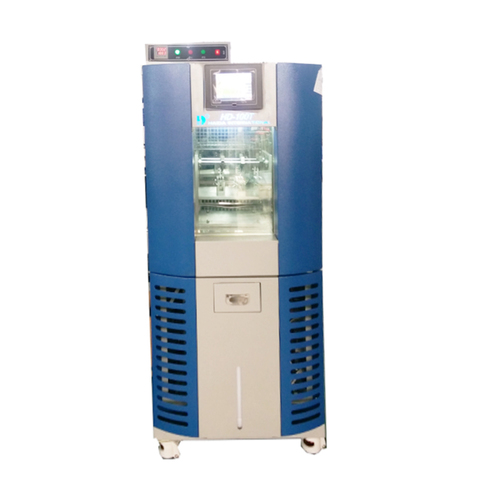
Tell us about your requirement

Price:
Quantity
Select Unit
- 50
- 100
- 200
- 250
- 500
- 1000+
Additional detail
Mobile number
Email

More Products in Shoes Test Equipment Category
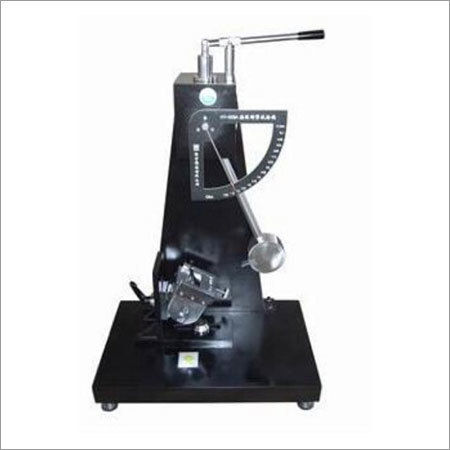
Shoe Heel Impact Test Machine
Price 3000 USD ($) / Unit
Minimum Order Quantity : 1 Unit
Gas Pressure : 0.5 MPa (Max)
Test Width : Up to 120 mm
Mounting Type : Floor standing
Equipment Type : Shoe Heel Impact Test Machine

Shoe Steel Shank Fatigue-Resistance Tester
Price 2500 USD ($) / Unit
Minimum Order Quantity : 1 Unit
Gas Pressure : 0.6 MPa
Test Width : 76 mm
Mounting Type : Benchtop
Equipment Type : Fatigue Resistance Tester
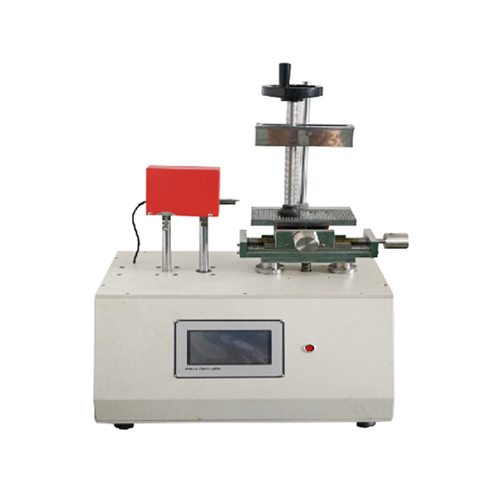
Shoe Peeling Strength Tester
Price 2100 USD ($) / Unit
Minimum Order Quantity : 1 Unit
Gas Pressure : 0.6 MPa 0.8 MPa
Test Width : 30 mm
Mounting Type : Table Top
Equipment Type : Benchtop Mechanical Tester
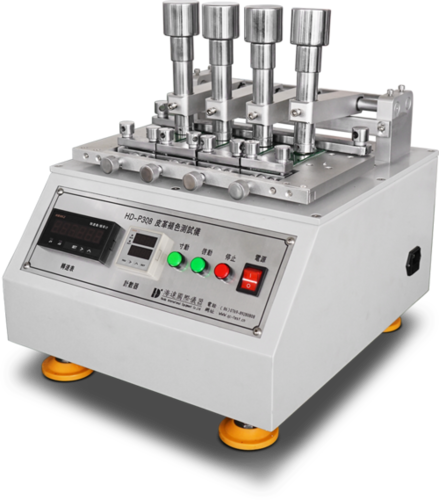
Leather fading tester
Price 3200 USD ($) / Set
Minimum Order Quantity : 1 Set
Gas Pressure : 0.51.0 MPa
Test Width : 60 mm
Mounting Type : Benchtop
Equipment Type : Leather Fading Tester

Contact Details
- FACTORY ADD: No.13 Daxin Street, Daluosha Industrial Zone, Daojiao Town,Dongguan - 523710, Guangdong, China
- Phone :86-1591-7693151
- haidads@qc-test.cn
 Send Inquiry
Email us : haidads@qc-test.cn
- Ms Lisa (Manager)
- Mobile : +8613662707979, +8613829267288, +8615016776323, +8618373745787, +8618236912012, +8613602361535, +8613925747786

|


 |
HAIDA INTERNATIONAL EQUIPMENT CO., LTD.
All Rights Reserved.(Terms of Use) Developed and Managed by Infocom Network Private Limited. |
