

 English
 Spanish
 French
 German
 Italian
 Chinese (Simplified)
 Japanese
 Korean
 Arabic
 Portuguese
 Send Inquiry
Fall dart impact testing machine
Price 2000 USD ($)/ Unit
MOQ : 1 Unit
Fall dart impact testing machine Specification
- Features
- Adjustable drop height, precise mass adjustment, robust construction
- Mounting Type
- Floor standing
- Accuracy
- 0.01 kg
- Response Time
- Instantaneous
- Operating Voltage
- 220V
- Application
- Plastic film and sheet impact strength testing
- Humidity
- 85% RH
- Number of Specimens
- 1 per test
- Equipment Type
- Impact Testing Machine
- Temperature
- 10C 35C
- Measuring Range
- 0.5 to 2.5 kg
- Automation Grade
- Semi-automatic
- Port Size
- Standard
- Max Height
- 2000 mm
- Display Type
- Digital
- Interface Type
- Push button
- Test Range
- 0.5 to 2.5 kg (dart weight)
- Specimen Size
- 150 mm x 150 mm (can vary)
- Frequency
- 50 Hz
- Power Supply
- 220V AC, 50 Hz
- Resolution
- 0.01 kg
- Usage
- Laboratory/Industrial
- Capacity
- 2.5 kg max
- Machine Weight
- Approx. 80 kg
- Test Speed
- Free fall (gravity based)
- Test Width
- Up to 300 mm
- Test Stroke
- Up to 2000 mm
- Control Mode
- Manual & Electric
- Installation Area
- Requires 1 sq.m.
- Operation Environment
- Laboratory, R&D and QC labs
- Compliance
- ASTM D1709, IS 2508 standards
- Sample Thickness Range
- Up to 2 mm
- Safety Features
- Protective shield and interlocks
- Drop Height Adjustment
- Continuously adjustable
- Data Output
- Manual record / optional USB
- Material of Construction
- Mild steel with anti-corrosive coating
- Dart Diameter
- 38 1 mm
- Clamping Mechanism
- Pneumatic or manual clamping
Fall dart impact testing machine Trade Information
- Minimum Order Quantity
- 1 Unit
- FOB Port
- Shenzhen
- Payment Terms
- Cash Against Delivery (CAD), Cash on Delivery (COD), Letter of Credit (L/C), Telegraphic Transfer (T/T), Western Union, Paypal, Letter of Credit at Sight (Sight L/C), Delivery Point (DP), Days after Acceptance (DA), Cash in Advance (CID), Cheque, Cash Advance (CA)
- Supply Ability
- 30 Units Per Month
- Delivery Time
- 15 Days
- Packaging Details
- Each set protected with resin fiber and PP film, then put into Strong wooden case with operation manual and video inside.
- Main Export Market(s)
- Australia, Central America, North America, South America, Eastern Europe, Western Europe, Middle East, Africa, Asia
- Certifications
- CE,ISO
Fall dart impact testing machine About
Fall dart impact testing machine HD-R603
THE USAGE:
This machine is used to do impact test for plastic film and slice with specified height to estimate impact mass and energy of 50% samples when they are broken by falling dart freely.
Parameter
| Test range | A:50~2000g;B:300~2000g |
| Test accuracy | 0.1g(0.1j) |
| Test method | A/B |
| Test conditions | 23 50%RH |
| Specimen size | 150mm*150mm |
| Power | AC 220V10% 50Hz |
| Dimension | A:500*450*1320mm(L*B*H) B:500*450*2160mm(L*B*H |
Versatile Testing Capabilities
This impact testing machine features adjustable dart weights from 0.5 to 2.5 kg and drop height up to 2000 mm, accommodating a broad spectrum of sample types and thicknesses (up to 2 mm). The robust design and compliance with global standards ensure dependable results for both routine and advanced research.
Ease of Operation and Safety
Equipped with both manual and electric control modes, the machine prioritizes user convenience and safety. The protective shield and interlocks guard the testing area, making it a reliable choice for laboratory and industrial environments alike. Digital display delivers rapid, precise results.
Application Scope and Installation
Purpose-built for testing the impact strength of plastic films and sheets, the machine is ideal for laboratories, quality control, and research centers. Requiring only one square meter for installation, it fits seamlessly into varied workspaces while its 80 kg weight ensures stability during testing.
FAQs of Fall dart impact testing machine:
Q: How is the drop height adjusted on this impact testing machine?
A: The drop height is continuously adjustable up to 2000 mm, allowing users to select the desired energy for precise impact testing, suitable for various thicknesses and materials.Q: What types of plastic samples can be tested with this equipment?
A: The machine accommodates single specimens of plastic films and sheets with thickness up to 2 mm and size of 150 mm x 150 mm (or as required), covering a wide range of industry applications.Q: When should I use manual versus pneumatic clamping?
A: Manual clamping is ideal for general laboratory use, while pneumatic clamping offers quicker, more consistent sample securinguseful for high throughput or repetitive industrial tests.Q: Where is this machine typically installed and used?
A: Commonly installed in laboratory, R&D, and quality control labs, the machine requires a 1 sq.m. area, operates from standard 220V AC, and functions in environments between 10C and 35C.Q: What steps are involved in conducting a test with this equipment?
A: To test, place the specimen in the clamp, adjust the dart mass and drop height, activate the protective shield, and trigger the release. Data can be recorded manually or via optional USB output.Q: How does this machine benefit my quality control process?
A: It delivers high-accuracy impact resistance data instantly, supporting product development, quality assurance, and compliance with ASTM D1709 and IS 2508 standards, thereby reducing defect risks.Q: What safety features are included?
A: The equipment features a robust protective shield and electronic interlocks, ensuring operator safety during the impact test procedure.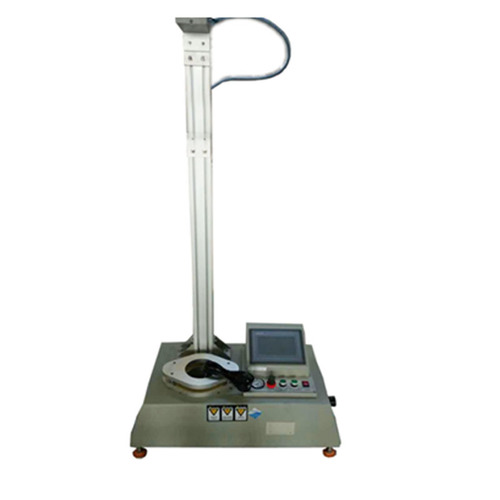
Tell us about your requirement

Price:
Quantity
Select Unit
- 50
- 100
- 200
- 250
- 500
- 1000+
Additional detail
Mobile number
Email

More Products in Adhesive Tape Test Equipment Category
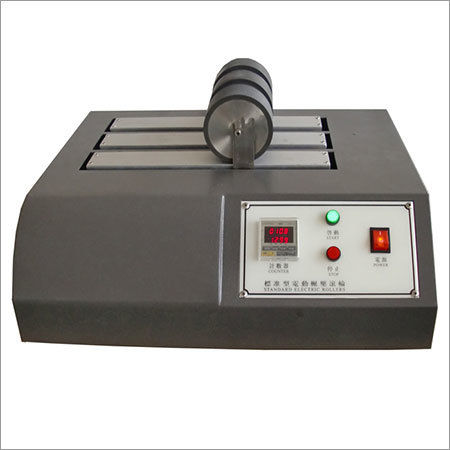
Electric Tape Adhesion Three Roller Testing Machine
Price 800 USD ($) / Set
Minimum Order Quantity : 1 Set
Mounting Type : Benchtop
Features : Automatic reset, uniform rolling, programmable speed, autostop
Application : Testing adhesion force of tapes, pressuresensitive adhesives, and related materials
Heat sealing tester
Price 800 USD ($) / Unit
Minimum Order Quantity : 1 Unit
Mounting Type : Benchtop
Features : Digital display, precise heating control, overtemperature and pressure protection, programmable settings
Application : Determination of heatsealing properties for plastic film, laminated film, coating materials, flexible packaging, and more

Electric Two Rolling Tape Adhesion Machine
Price Range 500.00 - 800.00
Minimum Order Quantity : 1 set Set
Mounting Type : Desktop
Features : Two rolling mechanism, automatic control, precision rollers
Application : Adhesive tape rolling test
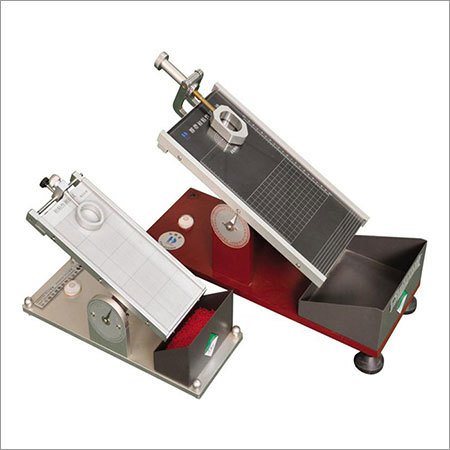
Initial Adhesion Ball Tape Testing Machine
Price 860 USD ($) / Unit
Minimum Order Quantity : 1 Unit
Mounting Type : Free Stand
Features : Accurate
Application : Testing & Measurement

Contact Details
- FACTORY ADD: No.13 Daxin Street, Daluosha Industrial Zone, Daojiao Town,Dongguan - 523710, Guangdong, China
- Phone :86-1591-7693151
- haidads@qc-test.cn
 Send Inquiry
Email us : haidads@qc-test.cn
- Ms Lisa (Manager)
- Mobile : +8613662707979, +8613829267288, +8615016776323, +8618373745787, +8618236912012, +8613602361535, +8613925747786

|


 |
HAIDA INTERNATIONAL EQUIPMENT CO., LTD.
All Rights Reserved.(Terms of Use) Developed and Managed by Infocom Network Private Limited. |
