

 English
 Spanish
 French
 German
 Italian
 Chinese (Simplified)
 Japanese
 Korean
 Arabic
 Portuguese
 Send Inquiry
User-friendly Melt Flow Index Tester
Price 1800 USD ($)/ Unit
MOQ : 1 Unit
User-friendly Melt Flow Index Tester Specification
- Resolution
- 0.01 g
- Operating Voltage
- 230 V Volt (V)
- Max Height
- 420 mm
- Features
- Corrosion-resistant chamber, Over-temperature protection, User-friendly interface
- Interface Type
- RS232/USB
- Specimen Size
- 2.095 mm x 8 mm Millimeter (mm)
- Response Time
- < 1 second Seconds
- Test Range
- 0.1 to 50 g/10min
- Accuracy
- 0.1C C
- Application
- Testing melt flow of thermoplastics
- Port Size
- Standard 2.5 mm
- Frequency
- 50 Hz Hertz (HZ)
- Automation Grade
- Automatic/Manual
- Gas Pressure
- 0.6 MPa mpa
- Display Type
- Digital LCD Display
- Temperature
- Room temperature to 400C Celsius (oC)
- Equipment Type
- Melt Flow Index Tester
- Power Supply
- 230 V AC, 50 Hz
- Humidity
- 45% - 85% RH
- Number of Specimens
- Single Specimen at a time
- Mounting Type
- Bench-top
- Usage
- Industrial laboratory/testing
- Machine Weight
- 25 kg Kilograms (kg)
- Test Speed
- 50 mm/min
- Test Width
- 6 mm Millimeter (mm)
- Test Stroke
- 30 mm
- Control Mode
- Digital/Manual
- Printer Connectivity
- Available
- Plunger Material
- Nickel Plated Steel
- Die Orifice Diameter
- 2.095 mm
- Memory Function
- Yes
- Safety Features
- Overheat and overcurrent protection
- Dimension
- 360 mm x 280 mm x 420 mm (L x W x H)
- Maximum Load
- 21.6 kg
- Chamber Material
- Stainless Steel
- Cutting Mechanism
- Automatic motorized cutter
- Heating Time
- Approx. 8 min to max temperature
- Power Consumption
- 300 W max
User-friendly Melt Flow Index Tester Trade Information
- Minimum Order Quantity
- 1 Unit
- FOB Port
- Shenzhen
- Supply Ability
- 30 Units Per Month
- Delivery Time
- 15 Days
- Packaging Details
- Each set protected with resin fiber and PP film, then put into Strong wooden case with operation manual and video inside.
- Certifications
- CE,ISO
User-friendly Melt Flow Index Tester About
THE USAGE:
This machine is used to determine melt-mass flow rate(MFR) of thermoplastic resin under melt state.
Parameter:
- Test method:MFR
- Temperature range:50-400
- Display:LCD
- Temperature control accuracy:0.5
- Load:full load
- Cropping way:automatic
- Cylinder:9.550mm0.025mm
- Plunger:9.4750.01mm
- Length:160mm
- Opening mould pattern:tungsten carbide;length:8.000mm0.025mm;bore:2.095mm0.005mm
- Power:0.5KW
- Remark:user can choose three kinds of MFI tester according to their requirements for test method MFI,MVR or both.
Advanced Testing Efficiency
This Melt Flow Index Tester streamlines the process of measuring melt flow properties with its motorized cutting mechanism and digital/manual control modes. Automated functions, combined with a fast heating time and responsive display, let operators conduct tests swiftly. The precise measurement range and adjustable parameters facilitate reliable data acquisition for materials research and quality analysis.
Designed for Industrial Reliability
Engineered for industrial laboratory environments, the tester features a corrosion-resistant stainless steel chamber and nickel-plated steel plunger, extending equipment lifespan. Overheat and overcurrent protections enhance safety during operation, while memory functions and printer connectivity support efficient workflow integration. Its compact form allows for convenient bench-top mounting and easy maintenance.
FAQs of Melt flow index tester:
Q: How does the Melt Flow Index Tester benefit plastic manufacturers?
A: Manufacturers use the tester to accurately measure the melt flow rate of thermoplastics, helping assess material viscosity, processability, and quality. This ensures reliable batch consistency and optimizes production parameters, reducing waste and improving product standards.Q: What is the typical process for conducting a test with this equipment?
A: A single specimen of thermoplastic is placed in the corrosion-resistant chamber. After reaching the desired temperature (up to 400C in approximately 8 minutes), the melt is extruded through a precision die orifice using the nickel-plated steel plunger at a controlled speed. The automatic motorized cutter and digital interface guide the measurement, while results are displayed and stored.Q: When is overheat and overcurrent protection activated during operation?
A: These safety features are triggered automatically if the tester detects temperatures or electrical currents exceeding preset limits, safeguarding internal components and preventing hazardous situations. This protection works continuously during operation and testing.Q: Where is the equipment typically used and installed?
A: The tester is predominantly used in industrial laboratories, manufacturing quality control centers, and research institutes. Its bench-top design allows for easy installation on laboratory worktables or dedicated testing areas within production facilities.Q: What usage guidelines optimize accuracy and repeatability?
A: For best results, use specimens of specified dimensions (2.095 mm diameter x 8 mm length), maintain room humidity between 45% and 85% RH, and operate with a steady power supply of 230 V AC at 50 Hz. Regular cleaning and prompt removal of residual material help maintain accuracy.Q: How does the memory and printer connectivity function enhance workflow?
A: Memory functions allow users to store previous test data, while printer connectivity (via RS232/USB) enables direct printing or digital export of test outcomes. This facilitates record keeping, result reporting, and further data analysis for process optimization.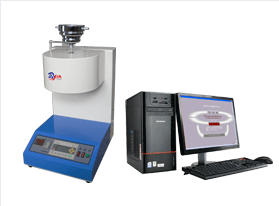
Tell us about your requirement

Price:
Quantity
Select Unit
- 50
- 100
- 200
- 250
- 500
- 1000+
Additional detail
Mobile number
Email

More Products in Optical Test Equipment Category
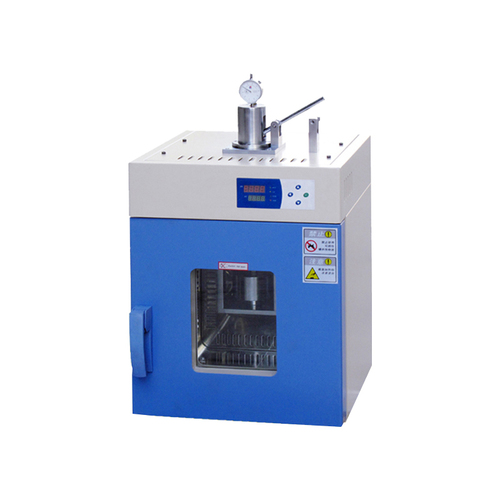
Rubber weiss plasticity test machine
Price 5000 USD ($) / Unit
Minimum Order Quantity : 1 Unit
Number of Specimens : 1 to 3 specimens per cycle
Humidity : 40%70% RH
Mounting Type : Benchtop
Power Supply : AC 220V 10%, 50 Hz
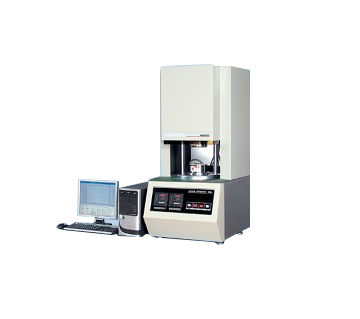
Rubber Rheometer With Rotor
Price 900 USD ($) / Unit
Minimum Order Quantity : 1 Unit
Number of Specimens : 1
Humidity : <85% RH
Mounting Type : Benchtop
Power Supply : 230V AC, 50 Hz
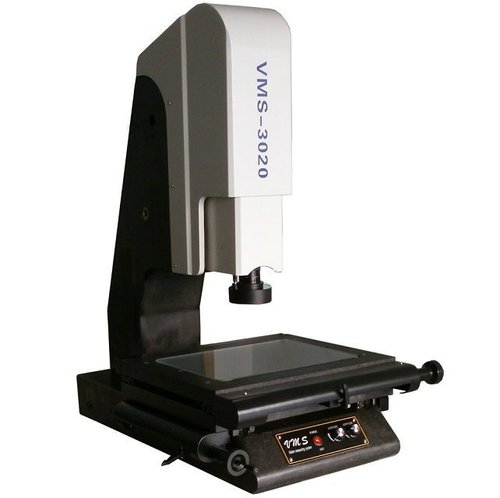
Two-dimensional image measuring instrument
Price 4000 USD ($) / Unit
Minimum Order Quantity : 1 Unit
Number of Specimens : 1
Humidity : 70% RH, noncondensing
Mounting Type : Bench top
Power Supply : AC 220V, 50/60Hz
Compression cold-resistant coefficient test machine
Minimum Order Quantity : 1 Unit
Number of Specimens : 14
Humidity : 2090% RH
Mounting Type : Benchtop
Power Supply : 220V AC, 50Hz

Contact Details
- FACTORY ADD: No.13 Daxin Street, Daluosha Industrial Zone, Daojiao Town,Dongguan - 523710, Guangdong, China
- Phone :86-1591-7693151
- haidads@qc-test.cn
 Send Inquiry
Email us : haidads@qc-test.cn
- Ms Lisa (Manager)
- Mobile : +8613662707979, +8613829267288, +8615016776323, +8618373745787, +8618236912012, +8613602361535, +8613925747786

|


 |
HAIDA INTERNATIONAL EQUIPMENT CO., LTD.
All Rights Reserved.(Terms of Use) Developed and Managed by Infocom Network Private Limited. |
