

 English
 Spanish
 French
 German
 Italian
 Chinese (Simplified)
 Japanese
 Korean
 Arabic
 Portuguese
 Send Inquiry
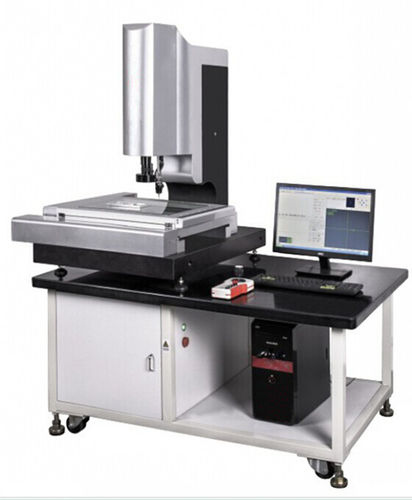
Two-dimensional image measuring instrument
Price 4000 USD ($)/ Unit
MOQ : 1 Unit
Two-dimensional image measuring instrument Specification
- Temperature
- 10C ~ 40C
- Interface Type
- USB, RS232
- Frequency
- 50/60 Hz
- Application
- Non-contact dimensional measurement, profile, and shape analysis
- Gas Pressure
- No gas required
- Response Time
- 2 s
- Test Range
- X: 200 mm; Y: 100 mm; Z: 150 mm
- Display Type
- High-definition color LCD screen
- Mounting Type
- Bench top
- Equipment Type
- Two-dimensional Image Measuring Instrument
- Specimen Size
- Max 200 mm 100 mm
- Number of Specimens
- 1
- Automation Grade
- Semi-automatic
- Operating Voltage
- AC 220V 10%
- Measuring Range
- X: 0200 mm, Y: 0100 mm
- Port Size
- USB 2.0
- Resolution
- 0.001 mm
- Humidity
- 70% RH, non-condensing
- Accuracy
- (2.5+L/100) m
- Max Height
- 150 mm
- Features
- Quick image processing, data storage, high accuracy, user-friendly interface
- Power Supply
- AC 220V, 50/60Hz
- Usage
- Dimensional measurement in labs and production
- Capacity
- Fabric, Electrical, Rubber, Plastic, Paper, Sheet Metal, PCB
- Machine Weight
- 65 kg
- Test Speed
- Max 50 mm/s
- Test Width
- 200 mm
- Test Stroke
- 200 mm
- Control Mode
- Manual / Automatic
- Objective Lens
- Zoom lens 0.7X-4.5X
- Data Output Format
- CSV, Excel, Image file export
- Data Storage
- Internal memory, USB flash support
- Illumination
- LED ring light with adjustable brightness
- Measurement Functions
- Distance, radius, diameter, angle, arc, parallelism, perpendicularity
- Calibration Method
- Automatic with certified reference scale
- Stage Movement
- Manual/Servo motor
- Image Processing
- Integrated measurement software with edge detection
- Magnification
- 18-115X (optical), up to 230X (digital)
- Protection
- Overload protection on Z axis
- Camera Resolution
- 2 MP (optional upgrade 5 MP)
- Support Languages
- Multi-language support (EN, CN, etc.)
- Software Compatibility
- Windows 7/10/11
- Working Distance
- 100 mm
Two-dimensional image measuring instrument Trade Information
- Minimum Order Quantity
- 1 Unit
- FOB Port
- Shenzhen
- Supply Ability
- 30 Units Per Month
- Delivery Time
- 15 Days
- Packaging Details
- Each set protected with resin fiber and PP film, then put into Strong wooden case with operation manual and video inside.
- Certifications
- CE,ISO
Two-dimensional image measuring instrument About
Thus machine is mainly used to measure the size of products and molds. The secondary metering instrument is mainly used to measure the two-dimensional plane detection of thin products and smaller products or other parts.
High-Precision Non-Contact Measurement
Harnessing advanced image processing and edge detection technology, this instrument offers accurate and repeatable dimensional analysis for materials such as fabric, plastic, rubber, and more. Automatic calibration and robust protection systems enhance reliability and ensure dependable results for both quality assurance and research applications.
Versatile and User-Friendly Operation
The device supports both manual and semi-automatic control, allowing operators to tailor its use for a broad range of tasks. Featuring multi-language support, intuitive measurement software, and data storage via internal memory or USB, it streamlines workflow for users across global industries.
Flexible Data Management and Export
Users can export measurement data directly in common formats such as CSV, Excel, and image files for seamless integration into quality control and reporting systems. With compatibility for Windows 7/10/11 and standard USB/RS232 interfaces, managing and sharing results is efficient and straightforward.
FAQs of Two-dimensional image measuring instrument:
Q: How does the two-dimensional image measuring instrument perform measurements?
A: The instrument captures high-resolution images of specimens using its built-in zoom lens and camera. Integrated software applies edge detection algorithms to accurately determine dimensions such as distance, angle, diameter, and other geometry, providing reliable, non-contact measurements.Q: What types of materials and specimens can be measured with this device?
A: This instrument can accommodate and accurately measure a wide variety of materials including fabric, electrical components, rubber, plastic, paper, sheet metal, and PCB up to a specimen size of 200 mm 100 mm.Q: When should automatic calibration be used, and how is it performed?
A: Automatic calibration should be conducted prior to measurement or whenever precision is required. The system utilizes a certified reference scale to calibrate axes and ensure consistent accuracy, streamlining setup and reducing the potential for user error.Q: Where can measurement results be stored or exported from this instrument?
A: Measurement data can be saved internally on the instrument or exported to a USB flash drive. With file support for CSV, Excel, and image formats, users can readily transfer results to computers or quality management systems for further analysis.Q: What is the process of adjusting illumination or magnification during measurement?
A: The instrument features an LED ring light with adjustable brightness that can be fine-tuned via the control panel. Magnification is easily set using the zoom lens, offering optical ranges from 18X to 115X and up to 230X digitally, allowing for optimal viewing of specimens.Q: How does the instrument benefit quality control and production processes?
A: With its high measurement accuracy (2.5+L/100 m), quick response time (2 s), and user-friendly interface, the device enables fast, repeatable dimensional analysis. This facilitates improved process monitoring, defect detection, and product verification in laboratory and production environments.Q: What are the usage and environmental requirements for operating this equipment?
A: The device is designed for bench-top use in labs or production floors. It operates optimally in environments with temperatures between 10C and 40C and humidity 70% RH, and is powered by AC 220V (10%), 50/60Hz, with no gas required for operation.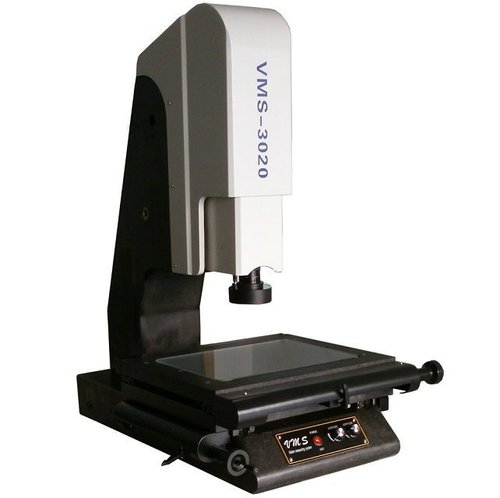
Tell us about your requirement

Price:
Quantity
Select Unit
- 50
- 100
- 200
- 250
- 500
- 1000+
Additional detail
Mobile number
Email

More Products in Optical Test Equipment Category
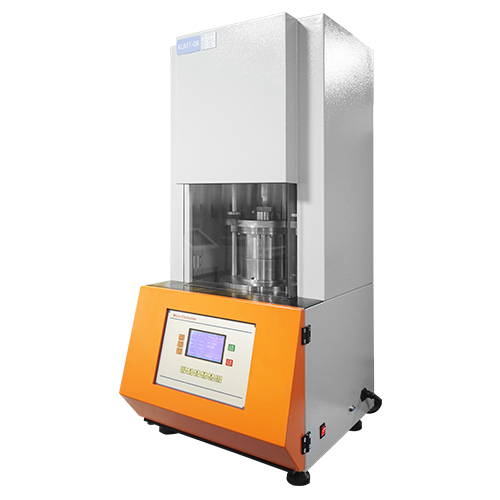
Rubber without rotor rheometer
Price 899 USD ($) / Unit
Minimum Order Quantity : 1 Unit
Number of Specimens : 1 per cycle
Machine Weight : Approx. 100 kg
Measuring Range : 0200 dNm
Operating Voltage : 220240V AC
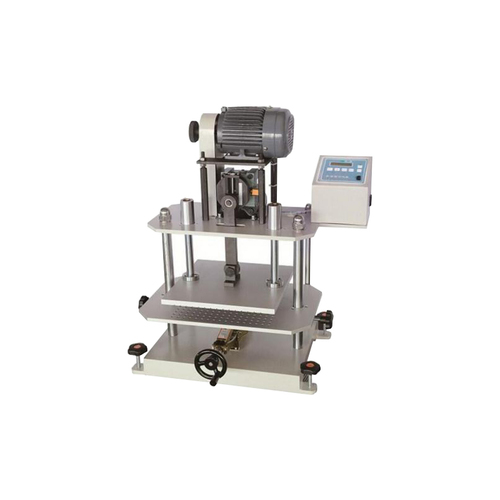
Rubber repeated compression test machine
Price 1400 USD ($) / Unit
Minimum Order Quantity : 1 Unit
Number of Specimens : 1 6
Machine Weight : Approx. 120 kg
Measuring Range : 1 50 kN
Operating Voltage : 220 V
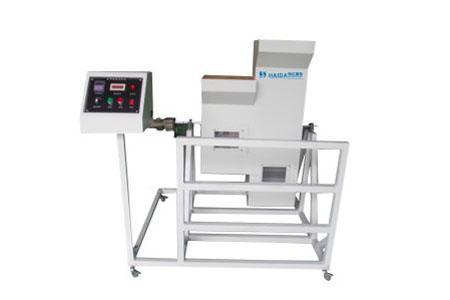
Double-roller drop test machine(HD-K913)
Price 3000 USD ($) / Unit
Minimum Order Quantity : 1 Unit
Number of Specimens : 1 per test cycle
Machine Weight : Approx. 260kg
Measuring Range : Standard package drop testing range
Operating Voltage : AC220V10%
Three-dimensional image measuring
Price 299 USD ($) / Unit
Minimum Order Quantity : 1 Unit
Number of Specimens : 1
Machine Weight : 160 kg
Measuring Range : X: 200mm, Y: 100mm, Z: 100mm
Operating Voltage : 220 V AC

Contact Details
- FACTORY ADD: No.13 Daxin Street, Daluosha Industrial Zone, Daojiao Town,Dongguan - 523710, Guangdong, China
- Phone :86-1591-7693151
- haidads@qc-test.cn
 Send Inquiry
Email us : haidads@qc-test.cn
- Ms Lisa (Manager)
- Mobile : +8613662707979, +8613829267288, +8615016776323, +8618373745787, +8618236912012, +8613602361535, +8613925747786

|


 |
HAIDA INTERNATIONAL EQUIPMENT CO., LTD.
All Rights Reserved.(Terms of Use) Developed and Managed by Infocom Network Private Limited. |
