

 English
 Spanish
 French
 German
 Italian
 Chinese (Simplified)
 Japanese
 Korean
 Arabic
 Portuguese
 Send Inquiry
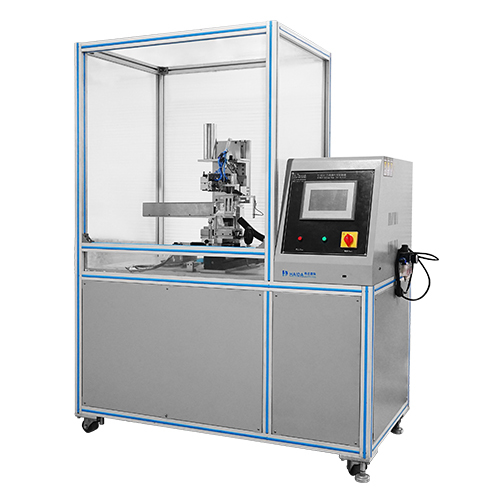
Cookware Bending Strength Tester
MOQ : 1 Set
Cookware Bending Strength Tester Specification
- Interface Type
- USB
- Accuracy
- 1%
- Temperature
- 10C - 40C
- Test Range
- 0 - 200 Nm
- Equipment Type
- Cookware Bending Strength Tester
- Frequency
- 50Hz
- Max Height
- 450 mm
- Resolution
- 0.01 Nm
- Gas Pressure
- 0.5 - 0.8 MPa
- Features
- Overload Protection, Automatic Data Recording
- Humidity
- 85% RH
- Number of Specimens
- 1
- Display Type
- Digital Display
- Measuring Range
- 0 - 200 Nm
- Application
- Cookware Bending Strength Measurement
- Specimen Size
- Diameter 120 - 350 mm
- Operating Voltage
- 220V
- Mounting Type
- Table top
- Automation Grade
- Semi-Automatic
- Response Time
- <1 s
- Port Size
- Standard 8 mm
- Power Supply
- 220V AC, 50Hz
- Usage
- Cookware Quality Inspection
- Capacity
- 200 Nm
- Machine Weight
- 95 kg
- Test Speed
- 0.5 - 5 mm/min adjustable
- Test Width
- Up to 350 mm
- Test Stroke
- Max 120 mm
- Control Mode
- Digital Control
- User Interface
- Keypad/Touchscreen
- Sample Clamp Type
- Adjustable Clamping Jaws
- Data Output
- USB and RS232
- Safety Feature
- Emergency Stop Button
- Material Construction
- Powder Coated Steel and Aluminum
- Software Compatibility
- Windows-based Software Included
- Operation Mode
- Manual/Programmable
- Calibration
- Supplied with Calibration Certificate
- Noise Level
- <60 dB
Cookware Bending Strength Tester Trade Information
- Minimum Order Quantity
- 1 Set
- FOB Port
- Shenzhen China
- Payment Terms
- Cash on Delivery (COD), Paypal, Letter of Credit (L/C), Western Union, Letter of Credit at Sight (Sight L/C), Delivery Point (DP), Cash Against Delivery (CAD), Telegraphic Transfer (T/T), Days after Acceptance (DA), Cash in Advance (CID), Cheque, Cash Advance (CA)
- Supply Ability
- 150 Sets Per Month
- Delivery Time
- 15 days after received the order Days
- Packaging Details
- Each set protected with resin fiber and PP film, then put into Strong wooden case with operation manual and video inside.
Cookware Bending Strength Tester About
Test apparatus for the Bending StrengthSuit for standard :
BS EN 12983-1:2000 + A1 :2004
Specifications:
- A load cell (full range = 300 N) attach and driven by a ball screw
- Lower down gradually without shock apply on to the handle.
- This apparatus also can test to the handle failure or broken force.
- Peak force applied recorded.
-
High Precision Testing for Cookware Quality Assurance
Engineered for accuracy and durability, this tester uses a digital control system and offers real-time results with a response time under 1 second. It comes complete with a calibration certificate, ensuring confidence in every reading. The powder coated steel and aluminum build guarantees longevity, while low noise operation (<60 dB) provides a comfortable working environment. Adjustable test speeds and programmable modes enhance its versatility.
Intuitive Operation with Safety and Reliability
Safety is prioritized with an emergency stop button and overload protection. The combination of keypad and touchscreen interfaces facilitates seamless user interaction, while automatic data recording simplifies reporting. Mountable on a tabletop for stability, the testers digital display offers clear visibility of results, and calibration is straightforward. Connectivity via USB and RS232 ensures effortless data transfer.
FAQs of Cookware Bending Strength Tester:
Q: How does the Cookware Bending Strength Tester ensure accurate measurements?
A: The tester delivers highly accurate results with a 1% accuracy and a fine 0.01 Nm resolution, verified by its supplied calibration certificate. Its adjustable clamping jaws securely hold specimens, and digital control ensures consistent and repeatable testing processes.Q: What types of specimens can be tested with this equipment?
A: This machine accommodates a wide range of cookware specimens, handling diameters between 120 and 350 mm and a maximum bending capacity of 200 Nm. It is ideal for manufacturers and labs assessing product quality.Q: When should calibration be performed on the tester?
A: Calibration is recommended before initial use and periodically in accordance with industry standards or internal quality protocols. The device is supplied with a calibration certificate for ease of compliance.Q: Where can the measuring data be exported or viewed?
A: Test data can be exported via USB or RS232 ports and managed using the included Windows-based software. Additionally, the digital display and automatic recording feature provide instant access to measurement results.Q: What safety features are included in the device?
A: The tester is equipped with an emergency stop button to immediately halt the machine if needed and offers overload protection to safeguard both the specimen and operator during high-stress tests.Q: How is the device operated and controlled?
A: Users can operate the tester in manual or programmable modes using either keypad or touchscreen controls. The digital interface simplifies setting up tests, adjusting speeds (0.55 mm/min), and selecting appropriate test parameters.Q: What benefits does this tester provide to cookware manufacturers and quality inspectors?
A: This equipment streamlines the cookware quality inspection process by offering precise measurements, efficient data management, and enhanced safety features. Its semi-automatic operation increases productivity while minimizing user effort, making it an essential tool for ensuring product reliability and consistency.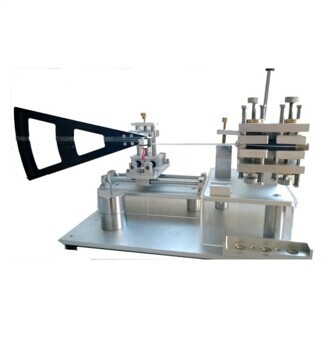
Tell us about your requirement

Price:
Quantity
Select Unit
- 50
- 100
- 200
- 250
- 500
- 1000+
Additional detail
Mobile number
Email

More Products in Cookware Testing Equipment Category
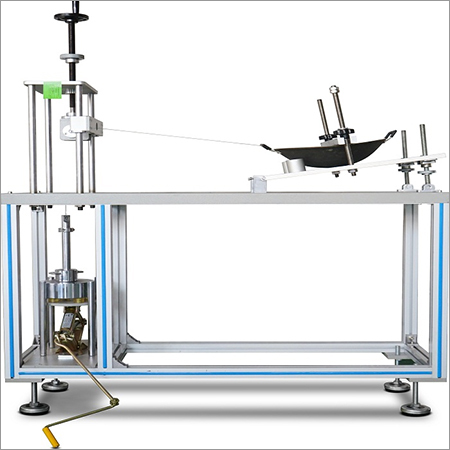
Cookware Handle Pull Resistance Testing Machine
Price Range 8500.00 - 13000.00 USD ($)
Minimum Order Quantity : 1 Set
Power Supply : AC 220V, 50Hz
Machine Weight : Approx. 120 kg
Port Size : Standard 1/4 Gas Port
Control Mode : Digital Control/PLC Touch Screen
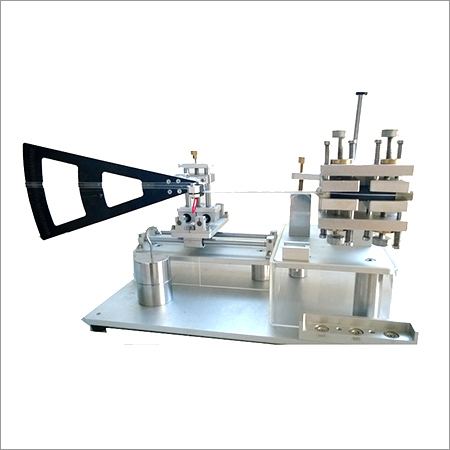
Knives Bending Strength Tester
Price Range 3500.00 - 4000.00
Minimum Order Quantity : 1 Set
Power Supply : AC 220V, 50Hz
Machine Weight : ~50 kg
Port Size : 6 mm pneumatic port
Control Mode : Digital Control with Touch Panel
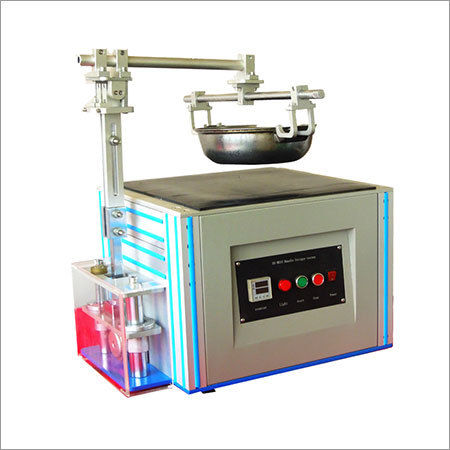
Cooking Pot Handle Fatigue Testing Machine
Price Range 2500.00 - 4500.00
Minimum Order Quantity : 1 Set
Power Supply : AC 220V, 50Hz
Machine Weight : Approx. 60 kg
Port Size : 12 mm pneumatic connection
Control Mode : Programmable touch screen control
Cutlery Cutting Performance Tester
Minimum Order Quantity : 1 Unit
Power Supply : 220V AC, 50Hz
Machine Weight : Approx. 45 kg
Port Size : 1/4 inch
Control Mode : Digital/PLC Control

Contact Details
- FACTORY ADD: No.13 Daxin Street, Daluosha Industrial Zone, Daojiao Town,Dongguan - 523710, Guangdong, China
- Phone :86-1591-7693151
- haidads@qc-test.cn
 Send Inquiry
Email us : haidads@qc-test.cn
- Ms Lisa (Manager)
- Mobile : +8613662707979, +8613829267288, +8615016776323, +8618373745787, +8618236912012, +8613602361535, +8613925747786

|


 |
HAIDA INTERNATIONAL EQUIPMENT CO., LTD.
All Rights Reserved.(Terms of Use) Developed and Managed by Infocom Network Private Limited. |
