

 English
 Spanish
 French
 German
 Italian
 Chinese (Simplified)
 Japanese
 Korean
 Arabic
 Portuguese
 Send Inquiry
Coefficient of friction tester
Price 4000 USD ($)/ Unit
MOQ : 1 Unit
Coefficient of friction tester Specification
- Response Time
- Instantaneous (Within 1 sec)
- Temperature
- 10C to 40C
- Power Supply
- 220V AC, 50 Hz
- Measuring Range
- 0 1.000
- Automation Grade
- Semi-Automatic
- Features
- Microprocessor control, Digital display, Easy specimen clamping, Standard sled
- Number of Specimens
- 1 at a time
- Specimen Size
- 80 mm x 200 mm
- Mounting Type
- Bench-top
- Max Height
- 150 mm (Test Stroke)
- Display Type
- Digital LCD
- Operating Voltage
- 220V AC
- Equipment Type
- Digital Coefficient of Friction Tester
- Resolution
- 0.001
- Test Range
- 0 1.000 COF
- Application
- Packaging films, sheets, laminates, paper, foils, and flexible materials
- Accuracy
- 0.01
- Frequency
- 50 Hz
- Humidity
- Up to 85% RH (non-condensing)
- Interface Type
- RS232
- Port Size
- Standard
- Usage
- Laboratory and Quality Control
- Capacity
- 3 N (Force Range)
- Machine Weight
- Approx. 30 kg
- Test Speed
- 100 mm/min
- Test Width
- 80 mm
- Test Stroke
- 150 mm
- Control Mode
- Microprocessor based
- Motor Type
- Stepper motor driven
- Sled Weight
- 200 g (Standard)
- Dimensions (L x W x H)
- 550 mm x 320 mm x 250 mm
- Body Material
- Powder coated mild steel
- Calibration
- Pre-calibrated with traceable weights
- Data Output
- Direct print-out and/or PC connection
- Safety Features
- Overload protection and emergency stop
- Test Modes
- Static and kinetic COF measurement
Coefficient of friction tester Trade Information
- Minimum Order Quantity
- 1 Unit
- FOB Port
- Shenzhen
- Payment Terms
- Cash on Delivery (COD), Delivery Point (DP), Letter of Credit (L/C), Letter of Credit at Sight (Sight L/C), Telegraphic Transfer (T/T), Western Union, Paypal, Cash Against Delivery (CAD), Days after Acceptance (DA), Cash in Advance (CID), Cheque, Cash Advance (CA)
- Supply Ability
- 30 Units Per Month
- Delivery Time
- 15 Days
- Packaging Details
- Each set protected with resin fiber and PP film, then put into Strong wooden case with operation manual and video inside.
- Main Export Market(s)
- Australia, North America, South America, Eastern Europe, Middle East, Western Europe, Central America, Asia, Africa
- Certifications
- CE,ISO
Coefficient of friction tester About
Coefficient of friction tester HD-R819
THE USAGE:
This tester is mainly used for testing the static friction coefficient and dynamic friction coefficient of plastic film,slice,paper,rubber and such materials. The friction coefficient results can estimate sample smoothness to guide product manufacturing.
Parameter:
- Load range:0~5N
- Measuring accuracy:1
- Sliding stroke:150mm
- Slider weight:200g
- Test speed:100mm/min10mm/min
- Dimension:520*330*230mm(L*W*H)
High Precision and Efficiency
This tester combines advanced microprocessor control with a stepper motor-driven sled to ensure consistent and accurate measurements. Its pre-calibrated system guarantees traceability, while the digital LCD provides real-time results at high resolution, making quality control both fast and reliable in laboratory settings.
Durable and User-Friendly Design
Manufactured from powder coated mild steel, the equipment is built for durability. The bench-top mounting and easy specimen clamping streamline operation. Safety features such as overload protection and emergency stop add an extra layer of operational security, ensuring safe and convenient daily use.
Versatile Application Range
Suitable for a wide spectrum of materialspackaging films, laminates, paper, and foilsthis tester is invaluable for manufacturers, quality controllers, and researchers. Its standard sled weight and controlled test environment foster accurate assessment and comparison across samples.
FAQs of Coefficient of friction tester:
Q: How does the Coefficient of Friction Tester determine the static and kinetic coefficients?
A: The tester uses a pre-calibrated sled, weighing 200 grams, which is driven by a stepper motor across the specimen. The microprocessor-based system measures both static and kinetic friction as the sled moves over the material, outputting results with an accuracy of 0.01 and a resolution of 0.001.Q: What types of materials can be tested with this equipment?
A: The device is designed to measure friction in packaging films, sheets, laminates, paper, foils, and flexible materials, making it ideal for laboratory and quality control processes in packaging and related industries.Q: When is calibration required for the friction tester?
A: The tester arrives pre-calibrated using traceable weights. Calibration is only necessary if regulatory protocols specify periodic checks or if there are noticeable changes in measurement accuracy over time.Q: Where can the Coefficient of Friction Tester be installed?
A: Primarily designed for laboratory environments, this bench-top machine fits on standard surfaces and requires a 220V AC, 50 Hz power supply. It operates efficiently in conditions with humidity up to 85% (non-condensing) and temperatures between 10C and 40C.Q: What is the process for testing a specimen using this equipment?
A: Simply clamp the specimen (up to 80 mm x 200 mm), position the sled, and initiate the test via the microprocessor controls. The system conducts a 150 mm test stroke at 100 mm/min speed, instantly displaying results on the digital LCD and providing data output for further analysis.Q: How is data captured and exported with the friction tester?
A: Measurement data can be output instantly through a direct print-out or downloaded to a PC via the RS232 interface, facilitating seamless integration into laboratory record systems and quality control documentation.Q: What benefits does using this tester provide for manufacturers and researchers?
A: The instrument delivers reliable, repeatable, and highly accurate COF measurement, enabling improved material evaluation, quality assurance, and process control. Its robust design and user-focused features reduce downtime and simplify operation for all users.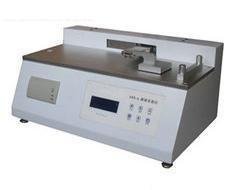
Tell us about your requirement

Price:
Quantity
Select Unit
- 50
- 100
- 200
- 250
- 500
- 1000+
Additional detail
Mobile number
Email

More Products in Baby Stroller / Bicycle / Toys Testing Machine Category
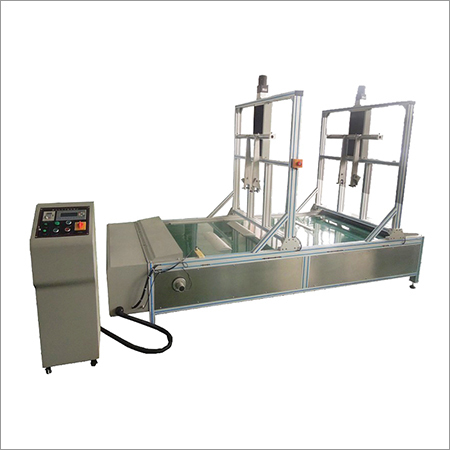
Uneven Road Stroller Test
Price 6800 USD ($) / Unit
Minimum Order Quantity : 1 Unit
Application : Stroller road durability and performance test
Usage : Laboratory/QA test
Mounting Type : Floormounted
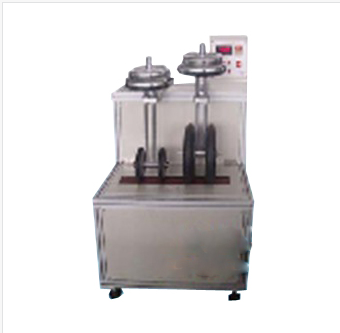
Baby Wheels Wear Testing Equipment
Price Range 2800.00 - 4800.00 USD ($)
Minimum Order Quantity : 1 Set
Application : Wear resistance test of baby stroller wheels
Usage : Laboratory, quality control
Mounting Type : Floor standing
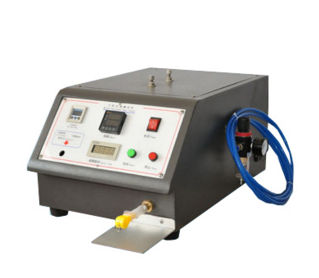
mouth blowntoy testing machine
Price 1 USD ($)
Minimum Order Quantity : 1 Set
Application : Toy breathability and safety compliance testing
Usage : Blow force and airflow resistance testing for toys
Mounting Type : Tabletop
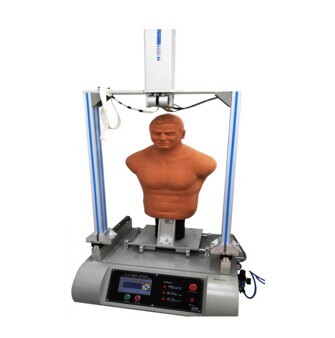
ASTM F2236 Baby Carrier Tester
Price Range 2300.00 - 4800.00 USD ($)
Minimum Order Quantity : 1 Set
Application : Dynamic and static strength testing of baby carriers
Usage : Laboratory Test Equipment
Mounting Type : Floor Standing

Contact Details
- FACTORY ADD: No.13 Daxin Street, Daluosha Industrial Zone, Daojiao Town,Dongguan - 523710, Guangdong, China
- Phone :86-1591-7693151
- haidads@qc-test.cn
 Send Inquiry
Email us : haidads@qc-test.cn
- Ms Lisa (Manager)
- Mobile : +8613662707979, +8613829267288, +8615016776323, +8618373745787, +8618236912012, +8613602361535, +8613925747786

|


 |
HAIDA INTERNATIONAL EQUIPMENT CO., LTD.
All Rights Reserved.(Terms of Use) Developed and Managed by Infocom Network Private Limited. |
