

 English
 Spanish
 French
 German
 Italian
 Chinese (Simplified)
 Japanese
 Korean
 Arabic
 Portuguese
 Send Inquiry
Automatic Computerized IFD Foam Compression Hardness Testing Machine
Price 1800 USD ($)/ Unit
MOQ : 1 Unit
Automatic Computerized IFD Foam Compression Hardness Testing Machine Specification
- Display Type
- Digital (Computer Interface)
- Mounting Type
- Floor mounted
- Humidity
- Up to 85% RH (non-condensing)
- Accuracy
- 0.5% F.S.
- Interface Type
- USB/RS232 (PC Connection)
- Temperature
- 10C 40C operating range
- Max Height
- Up to 300 mm (platen movement)
- Port Size
- Standard
- Power Supply
- 220V AC, 50Hz
- Features
- Automatic measurement, graphical report, test data storage
- Response Time
- <1 second
- Hardness
- IFD based, 25%, 40%, 65% compressions
- Resolution
- 0.1 N
- Application
- Foam Indentation Force Deflection Hardness Testing
- Frequency
- 50Hz
- Gas Pressure
- 0.6 MPa (Air source required)
- Automation Grade
- Fully Automatic
- Test Range
- 0 2000 N
- Operating Voltage
- 220V AC
- Number of Specimens
- 1 per test cycle
- Specimen Size
- 380 x 380 mm or customized
- Equipment Type
- IFD Foam Compression Hardness Testing Machine
- Measuring Range
- 0 2000 N
- Usage
- Foam Compression Hardness Testing
- Capacity
- 2000 N
- Machine Weight
- Approx. 250 kg
- Test Speed
- 100 mm/min (Adjustable)
- Test Width
- 500 mm
- Test Stroke
- Up to 300 mm
- Control Mode
- Automatic Computerized Control
- Colour
- Standard Industrial Grey & Blue
- Platen Diameter
- 200 mm
- Data Output Format
- Excel/PDF export supported
- Safety Features
- Emergency stop, overload protection
- Force Sensor Type
- High-precision load cell
- Software Compatibility
- Windows-based dedicated software
- Calibration
- Factory pre-calibrated and certification included
- Communication
- RS232/USB
Automatic Computerized IFD Foam Compression Hardness Testing Machine Trade Information
- Minimum Order Quantity
- 1 Unit
- FOB Port
- SHENZHEN
- Supply Ability
- 10 Units Per Month
- Delivery Time
- 1 Week
- Packaging Details
- Each set protected with resin fiber and PP film, then put into Strong wooden case with operation manual and video inside. CE,ISO
- Certifications
- CE,ISO
Automatic Computerized IFD Foam Compression Hardness Testing Machine About
Automatic Computerized IFD Foam Compression Hardness Testing Machine
GENERL SPECIFICATIONS
- Packaging Dimensions: (W*D*H) 700*920*1200MM
- Power supply source: single-phase, 220V plus minus 10%, 50/60Hz (can be appointed)
- Gross Weight: 170kg
APPLICATIONS& TEST PURPOSE
Foam compression tester is used to test material compressed indentation hardness, such as sponge, foam and other porous elastic. Put specimen under pressure plate, the plate compress the specimen with a specify speed until the national standard require concavity, the load cell feedback the pressure to computer, it processing and display, then measure the indentation hardness of sponge, foam and other materials.
Design Standard: ASTM D 3574
Standard Features
| Control and display | Computer |
| Sensor | Load cell |
| Capacity | 200KG |
| Unit | Kg, N, LB |
| Up plate | Diameter 200mm, bottom fillet R1mm |
| Low plate | 420 x 420mm, holes diameter 6mm, space 20mm |
| Max stroke | 500mm |
| Test speed | 0500mm/min |
| Motor | Servo motor |
| Driver | Taiwan high precision ball screw |
| Power | Single phase, 220V, 50Hz |
| Weight | 160KG |
| Dimension | 790 x 590 x 1010mm |
| Accessories | One computer with software |
Advanced Performance & Precision
This IFD Foam Compression Hardness Testing Machine is built for high-precision testing, with a sophisticated load cell and rapid response time of less than one second. It reliably measures compression force at various preset levels25%, 40%, and 65%to evaluate foam hardness. The system supports adjustable test speed and can store comprehensive data for thorough analysis.
User-Friendly & Versatile Operation
Equipped with Windows-based dedicated software, the machine offers intuitive control and easy test setup. Its outputs are compatible with Excel and PDF formats for seamless data export. Calibration is factory-completed and certified, minimizing setup. The machine accommodates various specimen sizes and supports customizable testing routines for diverse foam products.
Reliable Safety & Robust Construction
Safety is prioritized through emergency stop functions and overload protection. The floor-mounted design, industrial-grade materials, and stable weight (~250 kg) guarantee durability for intensive laboratory or manufacturing environments. Compatible with standard industrial power and interface connections (USB/RS232), it fits easily into existing quality control workflows.
FAQs of Automatic Computerized IFD Foam Compression Hardness Testing Machine:
Q: How do I operate the IFD Foam Compression Hardness Testing Machine for foam testing?
A: Begin by placing the foam specimen onto the platform, ensuring it meets the 380 x 380 mm (or customized) size requirements. Select desired compression levels via the Windows-based software and initiate the fully automatic test. The machine will compress the specimen at an adjustable speed (default 100 mm/min). Test data and graphical reports are automatically generated and can be exported to Excel or PDF.Q: What benefits does the computerized control system offer?
A: The automatic computerized control streamlines the entire testing process. Operators can conduct tests with minimal manual intervention, benefit from precise digital measurements, store comprehensive test records, and seamlessly export data for quality assessments or compliance documentation.Q: When is the machine recalibration required?
A: The machine is factory pre-calibrated and includes certification at purchase. Recalibration frequency depends on usage volume and internal quality protocols, often annually or as dictated by regulatory guidelines. Contact the manufacturer or authorized service agent for scheduled recalibration.Q: Where can this testing equipment be installed and used?
A: This floor-mounted unit is suited for quality control labs, manufacturing facilities, foam research centers, or any environment requiring reliable IFD hardness measurements. It operates within 10C to 40C and up to 85% RH non-condensing conditions, fitting standard industrial power supplies.Q: What is the process for exporting and analyzing test data?
A: Test data collection and export are managed through the dedicated Windows software. After each cycle, resultsincluding graphs and numerical valuescan be saved in Excel or PDF format via USB or RS232 connectivity, simplifying result analysis and record-keeping.Q: How does the machine ensure operational safety and reliability?
A: Safety is built-in via an emergency stop button and overload protection systems. Calibration certification ensures ongoing accuracy, while the sturdy (~250 kg) construction delivers stability during high-force testing. Automatic measurement protocols also reduce user error and equipment strain.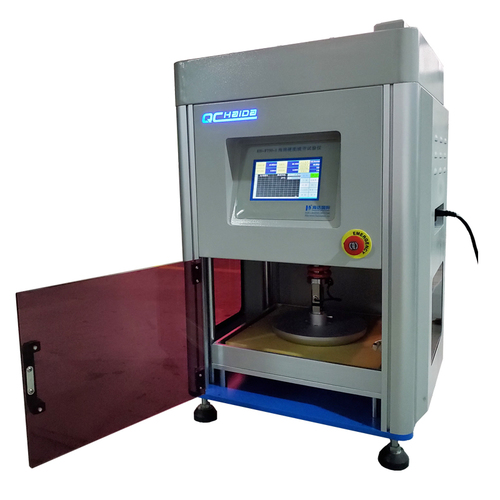
Tell us about your requirement

Price:
Quantity
Select Unit
- 50
- 100
- 200
- 250
- 500
- 1000+
Additional detail
Mobile number
Email

More Products in Furniture Test Equipment Category
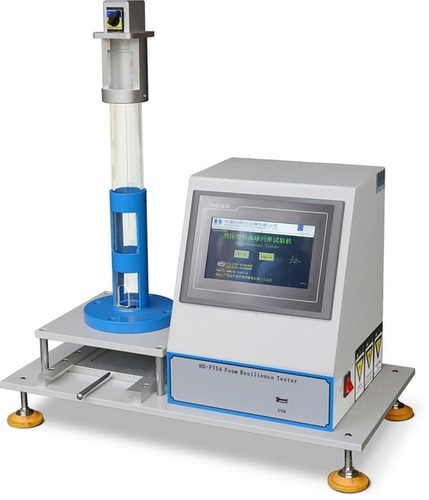
Foam Rebound Test Machine
Price 699 USD ($) / Unit
Minimum Order Quantity : 1 Unit
Response Time : 2 seconds
Features : Automatic calculation, digital display, robust structure
Resolution : 0.1%
Port Size : 1/4 inch
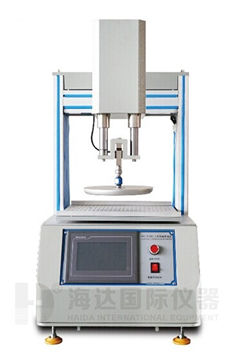
Foam Pounding Fatigue Tester
Price 800 USD ($) / Unit
Minimum Order Quantity : 1 Unit
Response Time : Instantaneous
Features : Programmable cycles, auto stop, emergency stop
Resolution : 0.01 mm
Port Size : Standard
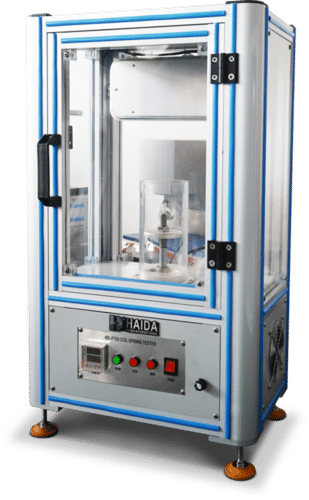
Spring Durability Testing Equipment
Price 5500 USD ($) / Unit
Minimum Order Quantity : 1 Unit
Response Time : <1 s
Features : Realtime data recording, programmable cycles
Resolution : 0.01 N
Port Size : 1/2 inch
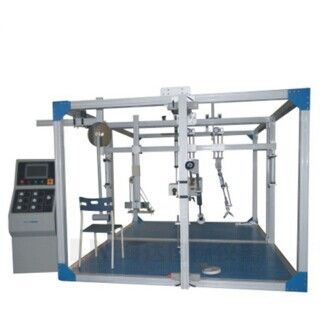
Chair Comprehensive Test Instrument
Price 1 USD ($)
Minimum Order Quantity : 1 Set
Response Time : 1 s
Features : Multifunction testing (static, cyclic, durability), realtime data analysis, modular design
Resolution : 0.1 N
Port Size : Standard test interface

Contact Details
- FACTORY ADD: No.13 Daxin Street, Daluosha Industrial Zone, Daojiao Town,Dongguan - 523710, Guangdong, China
- Phone :86-1591-7693151
- haidads@qc-test.cn
 Send Inquiry
Email us : haidads@qc-test.cn
- Ms Lisa (Manager)
- Mobile : +8613662707979, +8613829267288, +8615016776323, +8618373745787, +8618236912012, +8613602361535, +8613925747786

|


 |
HAIDA INTERNATIONAL EQUIPMENT CO., LTD.
All Rights Reserved.(Terms of Use) Developed and Managed by Infocom Network Private Limited. |
