

 English
 Spanish
 French
 German
 Italian
 Chinese (Simplified)
 Japanese
 Korean
 Arabic
 Portuguese
 Send Inquiry
Zipper Reciprocating Pull Tester
Price 3200 USD ($)/ Set
MOQ : 1 Set
Zipper Reciprocating Pull Tester Specification
- Specimen Size
- Standard zipper length as per test requirement
- Number of Specimens
- 1
- Port Size
- 8 mm
- Mounting Type
- Bench-top
- Measuring Range
- 0-50 kg
- Hardness
- HRC 45-55 for clamps
- Application
- Zipper Endurance & Quality Testing
- Operating Voltage
- 220 V
- Features
- Automatic Cycle Counting, Emergency Stop, Adjustable Fixture
- Max Height
- 520 mm
- Interface Type
- RS232 / USB
- Automation Grade
- Semi-Automatic
- Equipment Type
- Reciprocating Pull Tester
- Frequency
- 50/60 Hz
- Resolution
- 0.01 kg
- Gas Pressure
- 0.5-0.7 MPa
- Display Type
- Digital Display
- Temperature
- 10-35°C
- Response Time
- <1 s
- Accuracy
- ±0.1 kg
- Power Supply
- AC 220V, 50/60Hz
- Humidity
- 40-85% RH
- Test Range
- 0-50 kg
- Usage
- Testing zipper strength and durability
- Capacity
- 50 kg
- Machine Weight
- 32 kg
- Test Speed
- 30 cycles/min
- Test Width
- 25 mm max
- Test Stroke
- 75 mm
- Control Mode
- Digital / Manual
- Timer
- Digital, Programmable
- Dimensions
- 600 430 520 mm (LWH)
- Zipper Type Compatibility
- Nylon, Plastic, Metal zippers
- Fixture Material
- Stainless Steel
- Test Mode
- Reciprocating Pull (Forward and Backward)
- Accessories Included
- Main unit, power cable, standard fixtures, user manual
- Noise Level
- 60 dB
- Safety
- Emergency Stop Switch, Overload Protection
- Cycle Counter
- 0-999,999 cycles (digital presettable)
Zipper Reciprocating Pull Tester Trade Information
- Minimum Order Quantity
- 1 Set
- FOB Port
- Shenzhen
- Supply Ability
- 10 Sets Per Month
- Delivery Time
- 1 Week
- Packaging Details
- Each set protected with resin fiber and PP film, then put into Strong wooden case with operation manual and video inside.
- Certifications
- CE,ISO
Zipper Reciprocating Pull Tester About
Zipper Reciprocating Pull Tester(HD-D126)
The usage:
Zipper Pull Tester applies to test the zipper under the transverse-oriented and long direction stress, test whether the zipper can bear the pulling with given times .During the test, the zipper head will be brought along with the same speed, with 30 times per minute until it pulled with given times..
Main Parameter:
|
Stroke |
75mm |
|
Motor |
1/4HP |
|
Counter |
LCD, 0-999,999 |
|
Machine Size |
280*550*660mm |
|
Weight |
35KG |
|
Power |
1, AC220V, 3A |
|
Transverse clamping device width |
25mm |
|
Total weight of clamping device |
0.28-0.34kg |
|
Distance between two device |
6.35mm |
|
Opening Angle of sample |
60 |
|
Interdigitation angle of sample |
30 |
|
Standards |
CNS-1083 |
Advanced Zipper Durability Assessment
This tester conducts reciprocating pulls to rigorously assess zipper endurance, helping manufacturers uphold strict quality standards. Suited for nylon, plastic, and metal zippers, it ensures consistent performance even under sustained, repetitive use. The digital cycle counter simplifies long-duration tests, automating the process for accurate outcome tracking.
Digital Precision and Control
Equipped with a digital display, programmable timer, and automatic cycle counting, users can effortlessly set test modes and monitor results. The adjustable fixtures accommodate standard zipper sizes, while robust overload protection adds a safety margin during intensive testing cycles. Manual and digital modes expand user flexibility.
Safe and User-Friendly Operation
Designed for bench-top use, the equipment incorporates an emergency stop switch and low operating noise (<60 dB). The sturdy build, including HRC 45-55 hardness clamps, guarantees durability and reliable long-term usage for lab and industrial environments, while its interface supports effortless data retrieval via RS232 or USB.
FAQs of Zipper Reciprocating Pull Tester:
Q: How does the reciprocating pull tester evaluate zipper durability?
A: The tester repeatedly pulls zippers forward and backward in cycles, simulating real-world usage. This process exposes any weaknesses or failures, making it reliable for assessing endurance and strength over up to 999,999 cycles, with accurate force measurement up to 50 kg.Q: What types of zippers can be tested using this equipment?
A: It is compatible with nylon, plastic, and metal zippers, making it versatile for various industries and zipper styles. The adjustable fixture accommodates standard zipper lengths and widths up to 25 mm.Q: When is it necessary to use a digital versus manual control mode?
A: The digital mode is ideal for automated, lengthy, or repetitive tests requiring precise settings, while the manual mode is preferred for short tests or when customizing fixture placement and specific operation details.Q: Where can this zipper pull tester be installed?
A: Thanks to its bench-top design and moderate dimensions (600 430 520 mm), the tester is suitable for laboratories, quality control departments, production floors, and research facilities.Q: What is the process for testing a zipper using this machine?
A: The user secures the zipper specimen in the stainless steel fixture, sets the required test parameters (cycle count, speed, force), and initiates the test. The digital system manages the reciprocating pulls, while real-time data display and cycle counters monitor performance.Q: How is safety ensured during operation?
A: Safety features include overload protection and an emergency stop switch to immediately halt operation if needed. Additionally, the noise level is kept below 60 dB, and the sturdy construction provides robust protection.Q: What are the key benefits of using this zipper strength tester?
A: It offers highly accurate, repeatable testing with minimal manual intervention, enhancing workflow efficiency, ensuring product quality, and reducing failure risk in zippers released to the market.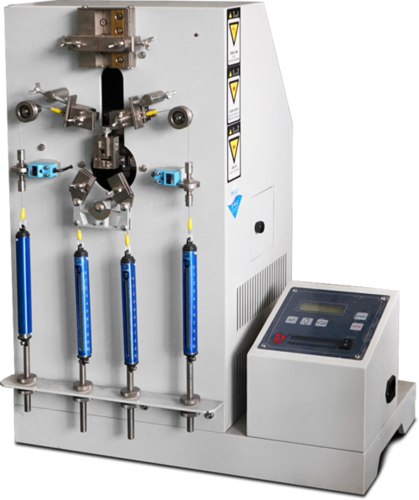
Tell us about your requirement

Price:
Quantity
Select Unit
- 50
- 100
- 200
- 250
- 500
- 1000+
Additional detail
Mobile number
Email

More Products in Paper & Package Test Equipment Category
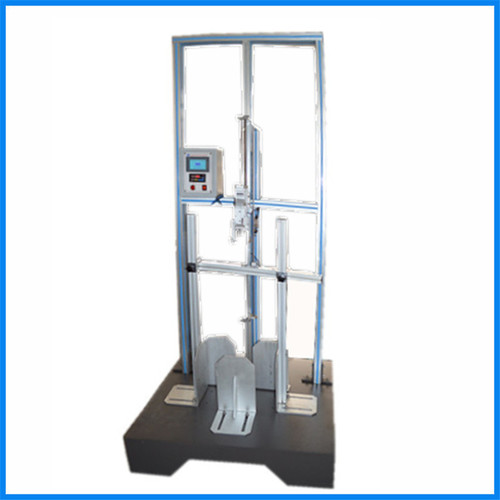
Handle durability test
Price 4000 USD ($) / Set
Minimum Order Quantity : 1 Set
Power Supply : AC220V 10% 50Hz
Usage : Durability and fatigue testing
Application : Handles of suitcases, bags, boxes, etc.

Leather Case Pump Test Equipment
Price Range 2000.00 - 9000.00 INR
Minimum Order Quantity : 1 Set
Power Supply : AC 220V, 50Hz
Usage : Testing leather case durability and mechanical performance
Application : Durability and fatigue test for leather cases and bags

Luggage Drop Impact Testing Equipment
Price Range 1000.00 - 3000.00 INR
Minimum Order Quantity : 1 Set
Power Supply : AC 220V, 50/60 Hz
Usage : Impact resistance testing for baggage/luggage
Application : Luggage Drop Impact Resistance Testing
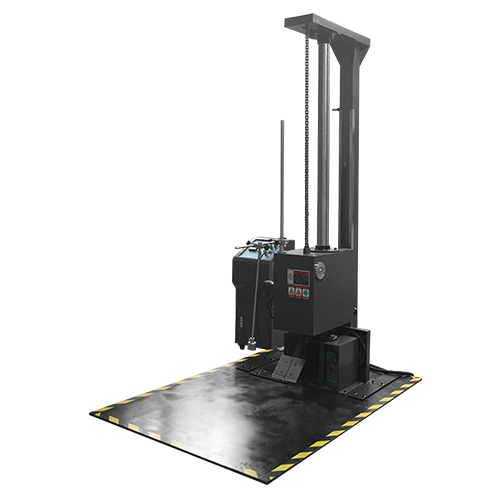
Single wing drop tester
Price 2000 USD ($) / Unit
Minimum Order Quantity : 1 Unit
Power Supply : AC 220V, 50 Hz
Usage : Carton & packaging drop test
Application : Drop resistance testing of packed products/cartons

Contact Details
- FACTORY ADD: No.13 Daxin Street, Daluosha Industrial Zone, Daojiao Town,Dongguan - 523710, Guangdong, China
- Phone :86-1591-7693151
- haidads@qc-test.cn
 Send Inquiry
Email us : haidads@qc-test.cn
- Ms Lisa (Manager)
- Mobile : +8613662707979, +8613829267288, +8615016776323, +8618373745787, +8618236912012, +8613602361535, +8613925747786

|


 |
HAIDA INTERNATIONAL EQUIPMENT CO., LTD.
All Rights Reserved.(Terms of Use) Developed and Managed by Infocom Network Private Limited. |
