

 English
 Spanish
 French
 German
 Italian
 Chinese (Simplified)
 Japanese
 Korean
 Arabic
 Portuguese
 Send Inquiry
Salt Spray Test Chamber
MOQ : 1 Set
Salt Spray Test Chamber Specification
- Port Size
- 1/4 inch BSP
- Interface Type
- Push Button/Touch Control
- Max Height
- 510 mm (chamber height)
- Accuracy
- 1C (temperature), 2% RH (humidity)
- Power Supply
- 230V AC, 50Hz
- Test Range
- Continuous Salt Spray Corrosion
- Mounting Type
- Floor
- Specimen Size
- 75150 mm (customizable)
- Display Type
- Digital Display
- Humidity
- 98% RH
- Automation Grade
- Automatic
- Resolution
- 0.1C
- Hardness
- SS304/SS316 grade construction
- Features
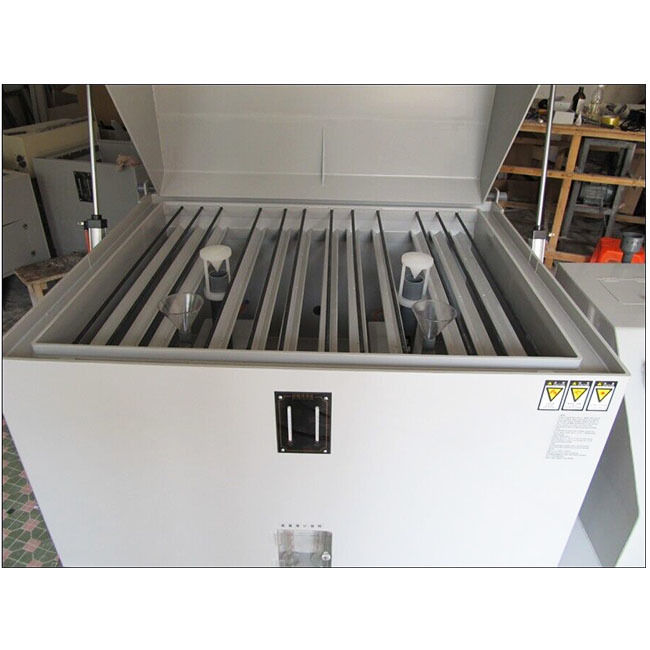
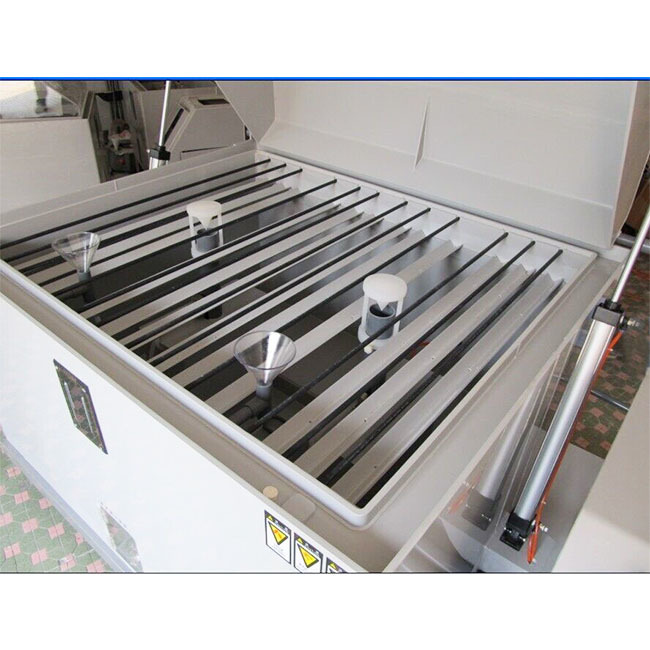
- Double Walled, Insulated, SS 316 Construction, Transparent Hood
- Equipment Type
- Salt Spray Test Chamber
- Frequency
- 50 Hz
- Response Time
- Immediate
- Number of Specimens
- Upto 30 (variable based on size)
- Gas Pressure
- 1.00 0.01 kg/cm
- Application
- Corrosion Testing of Coatings, Metals, Paints, etc.
- Operating Voltage
- 230 V
- Measuring Range
- 1 to 72 hours (or more depending on specimen)
- Temperature
- Ambient to 47C
- Usage
- Laboratory & Industrial Testing
- Capacity
- 108 L
- Machine Weight
- Approx. 65 kg
- Test Width
- 600 mm
- Control Mode
- Digital PID Controller
- Material of Construction
- Stainless Steel 316, FRP, Polycarbonate cover
- Salt Solution Concentration
- 5% NaCl standard (ASTM B117 compliant)
- Fog Collection Rate
- 1~2 ml/hour/80cm
- Water Tank Capacity
- 15 Liters (separate tank for salt solution)
- Drain Type
- Gravity with Sediment Trap
- Ambient Operating Environment
- 15C to 40C
- Spray Method
- Continuous / intermittent
- Nozzle Type
- Corrosion Resistant Atomizer
- Timer
- Programmable upto 999 hours
- Chamber Dimensions (L x W x H)
- 900 x 600 x 750 mm
- Safety Features
- Over temperature protection, Low water warning, Safety interlock
- Window/Cover
- Transparent Polycarbonate
- Compliance
- ASTM B117, ISO 9227, JIS Z 2371
Salt Spray Test Chamber Trade Information
- Minimum Order Quantity
- 1 Set
- FOB Port
- Shenzhen
- Supply Ability
- 1 Set Per Month
- Delivery Time
- 30 Days
- Packaging Details
- Each set protected with resin fiber and PP film, then put into Strong wooden case with operation manual and video inside.
Salt Spray Test Chamber About
A salt spray test chamber, also known as a salt fog chamber or salt corrosion test chamber, is a specialized piece of equipment used in corrosion testing. Its primary purpose is to simulate and accelerate the corrosion process that metals and coatings may undergo when exposed to a saline or salt-laden environment, such as coastal regions or areas subject to road salt usage.
The chamber typically consists of a sealed enclosure where a controlled salt fog or mist is generated and maintained. The test samples, which may include metal specimens, coatings, or finished products, are placed inside the chamber and exposed to the salt fog for a predetermined period of time.
During the test, the samples are periodically inspected to assess their corrosion resistance and durability. This evaluation may include visual examination for signs of corrosion, such as rust or surface pitting, as well as measurements of weight loss or changes in material properties.
Salt spray test chambers are widely used in industries such as automotive, aerospace, marine, and coatings manufacturing to evaluate the performance of materials and coatings under harsh environmental conditions. The results obtained from these tests help manufacturers improve product designs, select appropriate materials, and develop more corrosion-resistant coatings. Additionally, they may be used for quality control purposes to ensure that products meet specified corrosion resistance standards and requirements.
Salt Spray Test ChamberStandard Parameters
| HD-E808 |
|
| Internal Size (LxW x H) | 900x600x500mm |
| External Size (LxWxH) | 1410x880x1280mm |
| Equipment Material | Both inside & outside shell adopt P.V.C rigid plastic board |
| Temperature Range | Room temperature 55 |
| Temperature Fluctuations | 0.5 |
| Temperature Uniformity | 2 |
| Temperature Precision | 1 |
| Spraying method | Continuous and Periodic spray type |
| Test Chamber Temperature | Salt Spray Method (NSS ACSS)35 1 |
| Saturated air Barrel Temperature | Salt Spray Method (NSS ACSS)47 1 |
| Brine Temperature | 35 1 |
| Spray Quantity | 1.0 2.0 ml / 80cm2 / hr |
| PH value | Salt Spray Method (NSS ACSS6.5 7.2) |
| Lab Volume | 270L |
| Brine Tank Capacity | 25L |
| Multiple Safety Protection Devices | Current discharge protection, over pressure protection, over temperature protection, over load fuse protection |
| Accessories | Testing Salt/ Measuring tank/Nozzle Equipment x 1 set |
| Air source | 1HP Air pump (provided by buyer) |
The table parameters is for the company Standard Model parameters, we support customer customization parameters
Product Feature
- Reservoirs with mixing system on stand.
- Separate heating system apart from salt testing chamber to ensure accurate result and protect circuit.
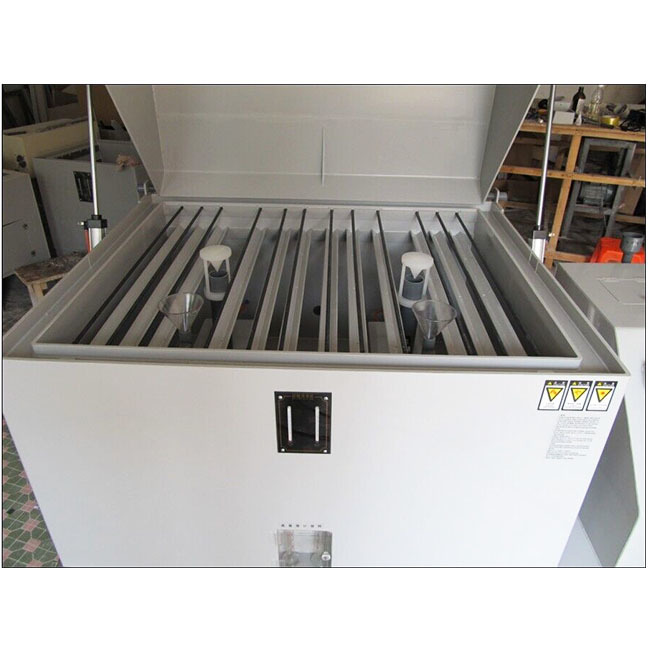
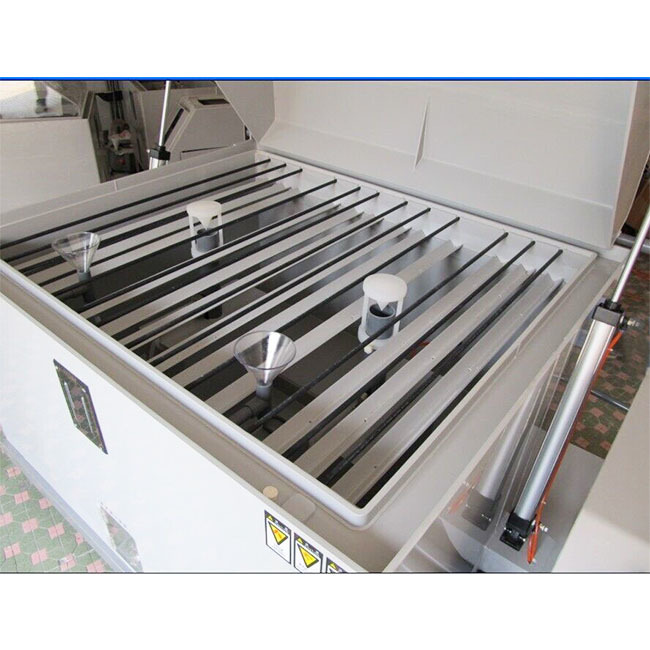
- Exposure zone lined with corrosion-resistant PVC sheets.
- Clear cover allows viewing of test conditions.
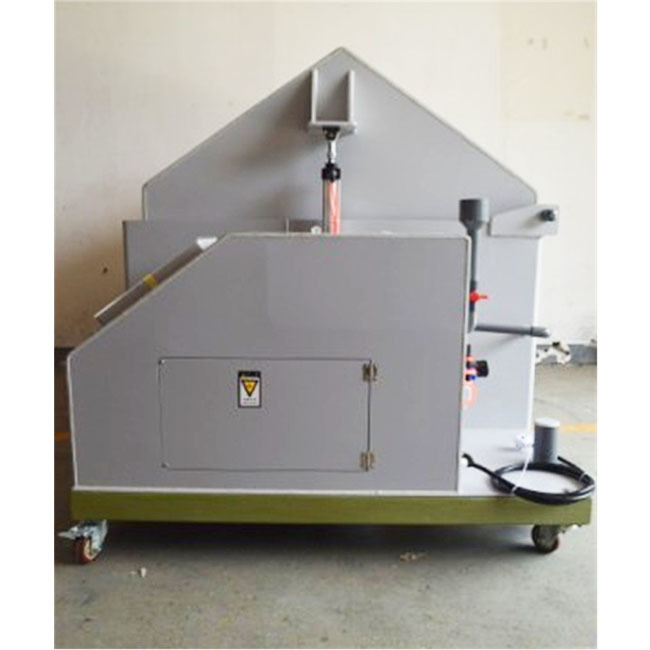
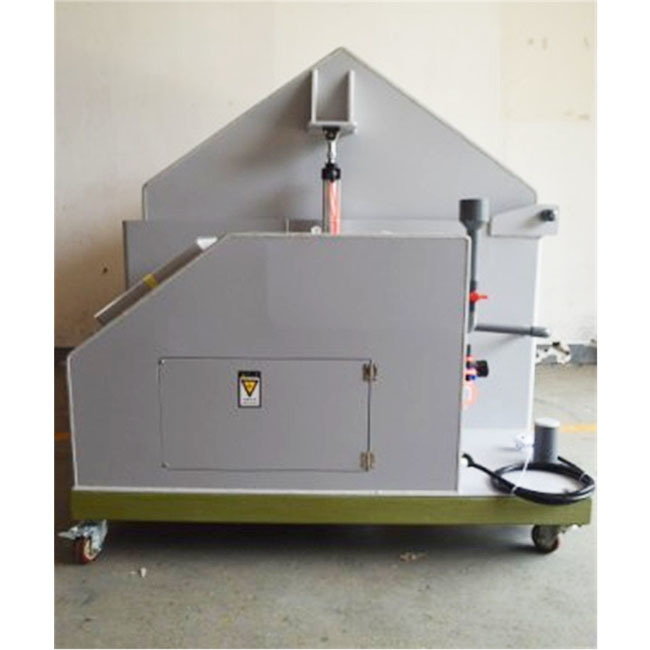
- Peaked cover prevents dripping of condensation onto samples.
- Water seal and water level protection system.
- Heated humidifying tower with air relief valve, adjustable tower tip to orient salt fog.
- Automatic DI water fills to humidifying tower.
- Digital temperature control.
- Integral over-protection on heaters.
- Low water cut-off protection on humidifying tower.
Comprehensive Corrosion Testing
This salt spray test chamber provides reliable, accelerated corrosion testing for a wide spectrum of materials. Its programmable spray function supports both continuous and intermittent operation, ensuring flexible application for diverse testing protocols. With a robust stainless steel body, transparent polycarbonate hood, and a digital PID controller, users can effectively simulate harsh environments to evaluate product durability and quality.
Ease of Operation and Safety
Designed for seamless operation, the chamber utilizes user-friendly touch controls and a clear digital display for easy monitoring. Safety features like over-temperature protection, low water warning, and safety interlock offer peace of mind during extended tests. The programmable timer allows for unattended operation up to 999 hours, making it suitable for rigorous industrial and laboratory requirements.
FAQs of Salt Spray Test Chamber:
Q: How does the Salt Spray Test Chamber operate to assess corrosion resistance?
A: The Salt Spray Test Chamber uses a programmable spray method, enabling both continuous and intermittent salt fog exposure. It introduces a 5% NaCl salt solution through a corrosion-resistant atomizer, simulating aggressive environmental conditions. The chamber maintains precise control over temperature, humidity, and fog collection rates to deliver repeatable and ASTM B117-compliant results.Q: What types of specimens and applications is this chamber suitable for?
A: This chamber is ideal for testing coatings, metals, paints, and similar materials that require corrosion resistance evaluation. It supports up to 30 specimens, with customizable sizes (commonly 75150 mm), and is used by manufacturers, laboratories, and research institutions to adhere to industry standards such as ASTM B117, ISO 9227, and JIS Z 2371.Q: When should I use continuous versus intermittent spray modes?
A: Continuous spray mode is typically used for standard corrosion tests as per ASTM B117, ensuring constant salt exposure. Intermittent spray mode is beneficial for tailored tests where cyclic exposure better simulates real-world environmental conditions, offering flexibility for diverse research and industry requirements.Q: Where should the Salt Spray Test Chamber be installed for optimal performance?
A: Install the chamber in a controlled ambient environment with a temperature between 15C and 40C and relative humidity above 98%. Position it on the floor using the robust mounting base, ensuring accessibility to power supply (230V, 50Hz) and proper drainage for the gravity drain with sediment trap.Q: What is the process for preparing and operating a test cycle?
A: Prepare a 5% NaCl solution in the 15-liter dedicated tank. Place specimens on the holder, set desired temperature, humidity, and timer using the digital PID controller, and select spray mode. The chamber atomizes the solution and maintains preset conditions, while safety systems monitor for over-temperature and low water. Upon completion, results can be analyzed based on corrosion effects.Q: Why is automated operation and precise control beneficial for corrosion testing?
A: Automation ensures consistent testing conditions, reduces manual intervention, and increases repeatability of results. Precise digital control of temperature (1C), humidity (2% RH), and fog rate leads to accurate assessments, supporting reliable quality assurance and research conclusions.Q: What maintenance is required for optimal chamber performance?
A: Routine maintenance involves cleaning the chamber and atomizer, inspecting water and salt solution tanks, and emptying the sediment trap. Regularly check safety features and programmable controls to ensure proper functioning, preserving the longevity and accuracy of the equipment.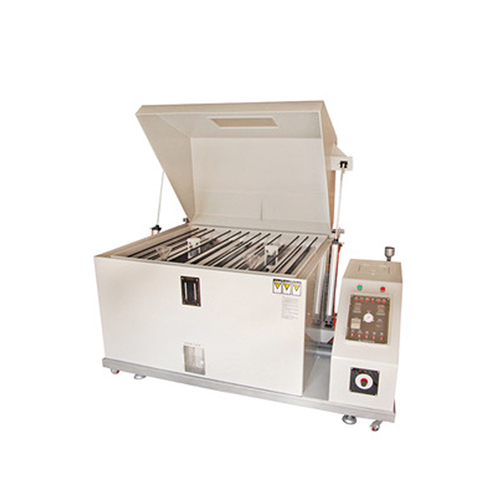
Tell us about your requirement

Price:
Quantity
Select Unit
- 50
- 100
- 200
- 250
- 500
- 1000+
Additional detail
Mobile number
Email

More Products in Environmental Test Chamber Category
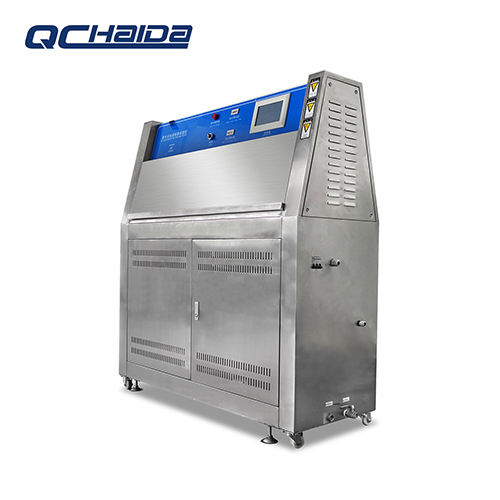
UV Weathering Test Machine
Price Range 4000.00 - 6000.00 USD ($) / Set
Minimum Order Quantity : 1 Set
Capacity : Standard
Temperature : RT+10C to 70C
Control Mode : Microcomputer PID Control
Test Speed : Adjustable
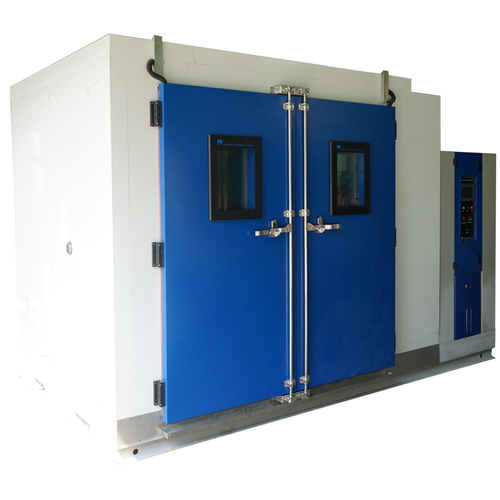
Walk In Environmental Test Chamber
Price Range 3000.00 - 6000.00 USD ($)
Minimum Order Quantity : 1 Set
Capacity : 5000 Liters to 20000 Liters (varies as per model)
Temperature : 40C to +85C
Control Mode : PLC / Programmable Controller
Test Speed : Programmable, up to 5C/min (Heating / Cooling)
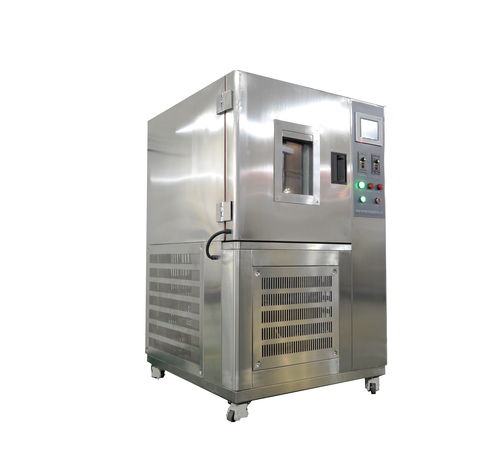
Ozone environmental testing chamber
Price Range 3000.00 - 6000.00 USD ($)
Minimum Order Quantity : 1 Set
Capacity : Chamber Volume: 350 Liters
Temperature : Room Temperature to 60C
Control Mode : MicroprocessorBased Digital Control
Test Speed : Adjustable (Programmable via Control Panel)
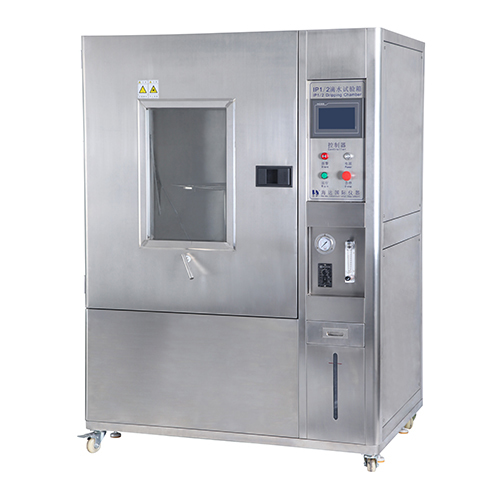
Water drop test chamber(IPX1,IPX2)
Price Range 3000.00 - 6000.00 USD ($)
Minimum Order Quantity : 1 Set
Capacity : Custom / as per chamber size
Temperature : Room temperature (nonheated)
Control Mode : Digital touch panel
Test Speed : Adjustable, standard 1 mm/min (drip rate)

Contact Details
- FACTORY ADD: No.13 Daxin Street, Daluosha Industrial Zone, Daojiao Town,Dongguan - 523710, Guangdong, China
- Phone :86-1591-7693151
- haidads@qc-test.cn
 Send Inquiry
Email us : haidads@qc-test.cn
- Ms Lisa (Manager)
- Mobile : +8613662707979, +8613829267288, +8615016776323, +8618373745787, +8618236912012, +8613602361535, +8613925747786

|


 |
HAIDA INTERNATIONAL EQUIPMENT CO., LTD.
All Rights Reserved.(Terms of Use) Developed and Managed by Infocom Network Private Limited. |
