

 English
 Spanish
 French
 German
 Italian
 Chinese (Simplified)
 Japanese
 Korean
 Arabic
 Portuguese
 Send Inquiry
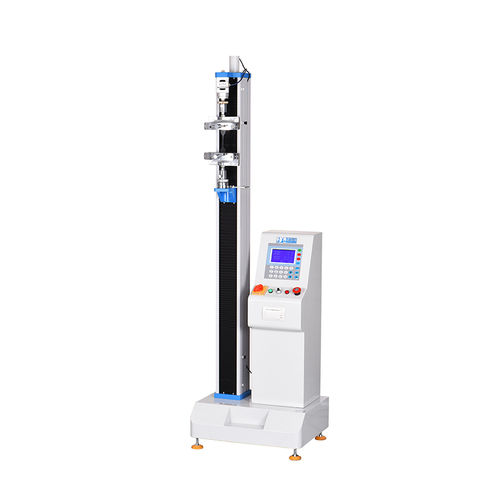
Rebar Tensile Breaking Strength Testing Machine
Price 4800 USD ($)/ Set
MOQ : 1 Set
Rebar Tensile Breaking Strength Testing Machine Specification
- Application
- Rebar Tensile, Breaking Strength Testing
- Accuracy
- 1% of indicated load
- Features
- Digital Display, Microprocessor Controlled, Overload Protection
- Voltage
- 380 V
- Machine Speed
- Adjustable
- Dimension (L*W*H)
- 2200 x 900 x 1800 mm
- Frequency
- 50 Hz
- Power
- 3 kW
- Power Source
- Electric
- Phase
- Three Phase
- Sensor
- High-Precision Load Cell
- Color
- Blue & White
- Capacity
- 100T
- Control System
- Digital, Programmable
- Product Type
- Rebar Tensile Breaking Strength Testing Machine
- Speed Range
- 0.5 to 50 mm/min
- Power Consumption
- 3 kW
- Resolution
- 0.01 kN
- Weight
- 1280 kg
- Stroke Length
- 120 mm
- Operating Temperature
- 10C to 40C
- Load Capacity
- 1000 kN
- Screw Size
- M40
- Automatic Grade
- Semi-Automatic
- Material
- Heavy Duty Steel
- Safety Interlock
- Emergency Stop Button
- Noise Level
- <65 dB(A)
- Crosshead Movement
- Servo Motor Driven
- Calibration
- Factory Calibrated Certificate Provided
- Memory Storage
- Up to 1000 Test Results
- Sample Diameter Range
- 6 mm to 40 mm
- Clamping System
- Hydraulic Grips
- Software
- PC Analysis Software Included
- Protection Class
- IP54
- Test Standards
- Complies with IS, ASTM, and DIN Standards
- Display Type
- LCD Touch Screen
- Data Output Interface
- USB, RS232
Rebar Tensile Breaking Strength Testing Machine Trade Information
- Minimum Order Quantity
- 1 Set
- FOB Port
- SHENZHEN
- Payment Terms
- Letter of Credit (L/C), Cash Against Delivery (CAD), Telegraphic Transfer (T/T), Days after Acceptance (DA), Cheque
- Supply Ability
- 15 Sets Per Week
- Delivery Time
- 5 Days
- Packaging Details
- Each set protected with resin fiber and PP film, then put into Strong wooden case with operation manual and video inside. CE,ISO
- Main Export Market(s)
- Australia, Eastern Europe, Middle East, Western Europe, Africa, Central America, South America, Asia, North America
- Certifications
- Each set protected with resin fiber and PP film, then put into Strong wooden case with operation manual and video inside. CE,ISO
Rebar Tensile Breaking Strength Testing Machine About
Standard rebar tensile strength test
ASTMD903,GB/T16491,GB/T1040,GB/T8808,GB13022,GB/T 2790/2791/2792,CNS-11888,JIS K6854, PSTC-7.
Technical Parameters rebar tensile strength test
Item | Description |
Max. Force | 5000 kg (50KN) |
Load cell | Germany brand load cell for high accuracy |
Control system | PC with windows 7 system |
Motor | Panasonic servo motor w/ DC variable speed drive system, high-precision mechanical ball screw rod |
Force reading | kgf, Ibf, N, KN, T etc |
Stoke | 1100mm including fixture |
Load cell Resolution | 1/250,000 |
Load Precision | within 0.5% |
Test speed | 0.01~300mm/min (adjustable) |
Software | TM 2101 |
Curves display | Load- elongation, Elongation-time, Time-elongation, Stress-strain |
Data display | Max. force, speed, sample information, strength(Kpa, Mpa, N/mm, N/mm2) etc |
Safety features | E-Stop Over-load protection Upper and lower limit switches Load sensor with automatic retreat |
Advanced Testing Capabilities
Engineered for high-precision tensile and breaking strength tests, this machine delivers accurate results courtesy of a high-precision load cell and servo motor driven crosshead. Its adjustable speed and programmable digital controls allow operators to tailor tests to exacting standards, enhancing both consistency and repeatability. Suitable for heavy-duty testing up to 1000 kN, this equipment is trusted by industry professionals worldwide.
Smart User Interface and Data Management
The LCD touch screen and intuitive microprocessor controls make operation straightforward. Test data can be stored for up to 1000 samples, exported via USB or RS232, and analyzed further with included PC software. This digital integration ensures seamless record-keeping and traceability, essential for quality assurance and auditing.
Robust Safety and Durability Features
Constructed from heavy-duty steel and certified to IP54 protection standards, the machine operates safely in various environments. Its hydraulic grips provide secure sample holding, while overload protection and an emergency stop button safeguard users during all test cycles. Routine calibration ensures long-lasting accuracy and reliability, supporting intensive daily operations.
FAQs of Rebar Tensile Breaking Strength Testing Machine:
Q: How does the LCD touch screen interface enhance the testing process?
A: The LCD touch screen interface streamlines operations by offering quick access to programmable settings, real-time monitoring, and easy retrieval of test results. This user-friendly feature reduces errors and simplifies the entire tensile testing workflow.Q: What makes the hydraulic grips essential for rebar tensile testing?
A: Hydraulic grips securely clamp rebar samples, ensuring stable and uniform force application throughout the test. This mechanism helps prevent slippage or uneven stress distribution, enabling highly accurate tensile and breaking strength measurements.Q: When should the machine be recalibrated after receiving the factory calibration certificate?
A: Although the machine arrives with a factory calibration certificate, it is advisable to recalibrate annually or after extensive use, as per your organizational protocols, to maintain consistent and reliable measurement accuracy.Q: Where can the testing data be stored and how can it be exported?
A: The machine can internally store up to 1000 test results. Data can be easily exported via USB or RS232 interfaces for further analysis or record-keeping, and the supplied PC analysis software facilitates detailed examination and reporting.Q: What are the main benefits of using this tensile testing machine in a laboratory or industrial setting?
A: Key benefits include high testing accuracy (within 1% of load), broad compliance with international standards (IS, ASTM, DIN), robust safety mechanisms, substantial storage capacity, and streamlined data management. Its semi-automatic operation and heavy-duty build make it ideal for busy labs and industrial environments.Q: How does the machine handle different rebar diameters?
A: The equipment accommodates sample diameters ranging from 6 mm to 40 mm, covering most commonly used rebar sizes in construction. Users can adjust parameters and grips according to the sample being tested, ensuring versatility and comprehensive test coverage.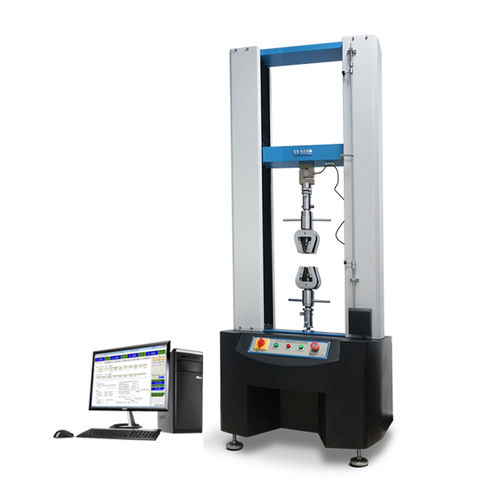
Tell us about your requirement

Price:
Quantity
Select Unit
- 50
- 100
- 200
- 250
- 500
- 1000+
Additional detail
Mobile number
Email

More Products in Tensile Testing Equipment Category
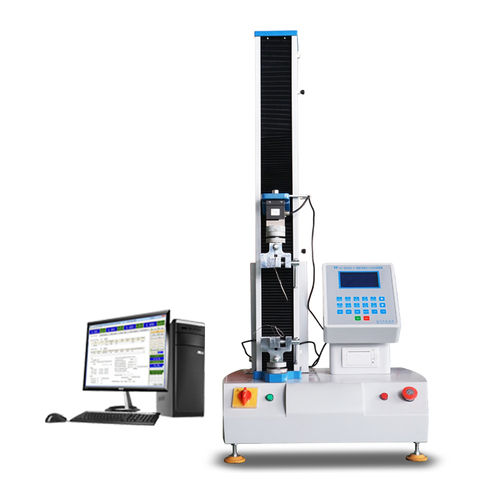
PC & PLC Display Fiber Tensile Strength Testing
Price 1499 USD ($) / Unit
Minimum Order Quantity : 1 Unit
Application : Tensile testing of optical fibers, yarns, and fabrics
Sensor : Load Cell
Color : White & Blue
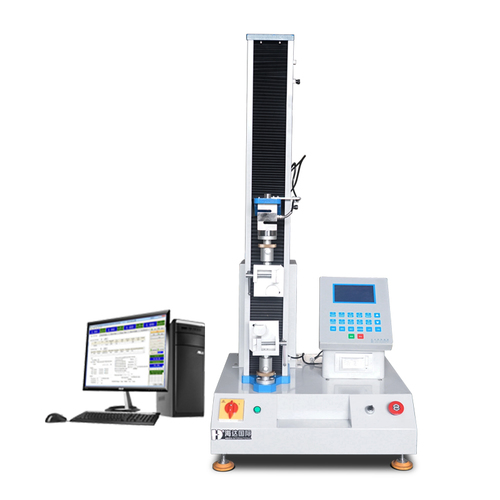
Single-Screen Operation Universal Testing Machine
Price 1200 USD ($) / Unit
Minimum Order Quantity : 1 Unit
Application : Tensile, Compression, Bending, Shear and other mechanical tests
Sensor : Strain gauge type load cell
Color : BlueGrey
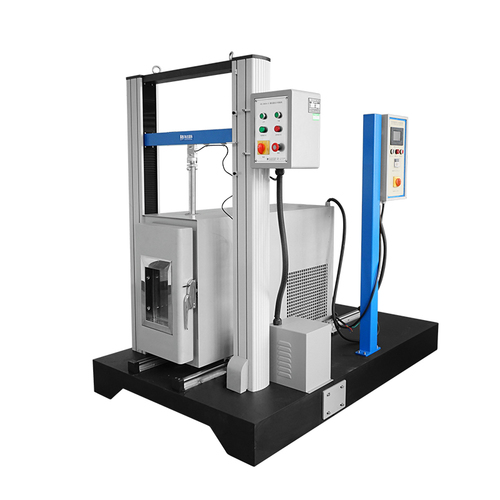
High Low Temperature Tensile Strength Tester
Price 4800 USD ($) / Unit
Minimum Order Quantity : 1 Unit
Application : Industrial
Sensor : Yes
Color : White
Rubber Tensile Test Machine
Price Range 2600.00 - 6800.00 USD ($)
Minimum Order Quantity : 1 Set
Application : Industrial
Sensor : Yes
Color : White

Contact Details
- FACTORY ADD: No.13 Daxin Street, Daluosha Industrial Zone, Daojiao Town,Dongguan - 523710, Guangdong, China
- Phone :86-1591-7693151
- haidads@qc-test.cn
 Send Inquiry
Email us : haidads@qc-test.cn
- Ms Lisa (Manager)
- Mobile : +8613662707979, +8613829267288, +8615016776323, +8618373745787, +8618236912012, +8613602361535, +8613925747786

|


 |
HAIDA INTERNATIONAL EQUIPMENT CO., LTD.
All Rights Reserved.(Terms of Use) Developed and Managed by Infocom Network Private Limited. |
