

 English
 Spanish
 French
 German
 Italian
 Chinese (Simplified)
 Japanese
 Korean
 Arabic
 Portuguese
 Send Inquiry
PP and PE Melt Flow Testing Machine
MOQ : 1 Set
PP and PE Melt Flow Testing Machine Specification
- Usage & Applications
- Measuring melt flow rate of PP (Polypropylene) and PE (Polyethylene) granules and compounds
- Load Power
- Standard 2.16 kg, optional weights available
- Gauge
- Integrated scale gauge
- Features
- Corrosion resistant barrel, precise temperature control, easy cleaning, replaceable die
- Capacity
- 0.01 to 50 g/10min (depending on material)
- Display Type
- Digital LED
- Accuracy
- ± 0.01 g
- Frame Type
- Sturdy mild steel construction
- Frequency
- 50 Hz
- Speed Range
- N/A (manual piston operation)
- Product Type
- PP and PE Melt Flow Testing Machine
- Stroke
- 25 mm
- Voltage
- 220 V AC
- Dimension (L*W*H)
- 450 x 320 x 510 mm
- Phase
- Single Phase
- Color
- White / Grey
- Weight
- Approx. 45 kg
- Power
- 500 W
- Power Supply
- Electric
- Control Mode
- Digital temperature control
- Automation Grade
- Semi-Automatic
- Timer
- Digital programmable
- Die Orifice Diameter
- 2.095 mm (standard)
- Barrel Material
- Stainless Steel
- Piston Material
- Hard chrome-plated steel
- Temperature Resolution
- 0.1C
- Temperature Range
- Room temp to 400C
- Test Standards
- ASTM D1238, ISO 1133
PP and PE Melt Flow Testing Machine Trade Information
- Minimum Order Quantity
- 1 Set
- FOB Port
- Shenzhen China
- Payment Terms
- Cash on Delivery (COD), Letter of Credit (L/C), Paypal, Western Union, Letter of Credit at Sight (Sight L/C), Delivery Point (DP), Cash Against Delivery (CAD), Telegraphic Transfer (T/T), Days after Acceptance (DA), Cash in Advance (CID), Cheque, Cash Advance (CA)
- Supply Ability
- 150 Sets Per Month
- Delivery Time
- 15 days after received the order Days
- Packaging Details
- Each set protected with resin fiber and PP film, then put into Strong wooden case with operation manual and video inside.
- Main Export Market(s)
- Africa, Central America, Eastern Europe, Australia, Middle East, South America, Western Europe, Asia, North America
PP and PE Melt Flow Testing Machine About
We are manufacturing and supplying a wide range of PP and PE Melt Flow Testing Machine that is utilized to decide dissolve mass stream rate (MFR) melt-Volume stream rate (MVR) and liquefy thickness of thermoplastic resin. It is pertinent not exclusively to the higher softening temperature for example, polycarbonate, nylon, Fluoroplastics, poly oxide and other designing plastics. Additionally, it applies to plastic estimation of soften lower temperature such as polyethylene, polystyrene, polypropylene, ABS sap, polyformaldehyde gum. In the meantime, it is broadly utilized as a part of plastics crude materials products,the petrochemical industry and related colleges, logical research foundations, and item assessment offices. PP and PE Melt Flow Testing Machine depends on planned and produced by most recent national and global measures. Also, its preference to joined different machine of household and worldwide models with reduced structure,beautiful appearance based on composed and made by most recent national and universal principles.
Determinations :
PP and PE Melt Flow Testing Machine
- PP and PE Melt Flow Testing Machine is used to decide soften mass stream rate .
- High quality, melt indexer
- Direct processing plant
PP and PE Melt Flow Testing Machine
- Melt record analyzer is utilized to decide dissolve mass stream rate (MFR).
- High quality, melt indexer
Main parameters of machine:
- Testing range: 0.1-800.00g/10min (MFR) & 0.1-800.00 cm3/10min(MVR)
- Temperature range: Room temperature~400oC
- Displacement accuracy: 0.01mm
- Standard loads: 325g, 875g, 960g, 1200g, 1640g, 2500g, 4100, 5000g & 5000g
- Combination load: 325g, 1200g, 2160g, 3800g, 5000g, 7160g, 10000g, 21600g
- Material cutting method: Manual, timing and automatic cutting (optional)
- Time setting: 0.1~999.9min
- Cylinder: Diameter 9.5504+0.0076mm
- CE certificate, Quality certificate are included
Test method:
- Melt Mass-Flow Rate (MFR) & Melt Volume Rate (MVR) For Raw Material
Test Standard:
- ISO 1133 - Determination of the melt mass-flow rate (MFR) and melt volume rate (MVR) of thermoplastics
- ASTM D 1238-Standard Test Method for Melt Flow Rates of thermoplastics by extrusion plastometer
By Industry:
Measurement of Quality; rubber and plastics; universities; research laboratories; commodity inspection arbitration, technical supervision departments; petrochemicals; other industries.
Other Details :
| Minimum | 1 SET |
| Delivery | 15 days after order. |
| Country | China |
| Brand Name | HD |
| Package | Each set protected with resin fiber and PP film, then put into Strong wooden case with operation manual and video inside. |
| Payment | L/C, D/P, T/T |
| Price | FOB, CIF |
Advanced Temperature Precision
Equipped with digital controls, this melt flow testing machine offers an impressive temperature range from room temperature to 400C, with a resolution of 0.1C. The precision ensures consistent testing outcomes regardless of material batch, supporting reliable quality assurance processes for PP and PE granules and compounds.
Robust and Easy-to-Maintain Hardware
Constructed with a corrosion-resistant stainless steel barrel and sturdy mild steel frame, the machine is built for durability. The replaceable die and easy-clean design minimize downtime and simplify maintenance, saving time for busy labs and production facilities.
Standard-Compliant and Versatile Operation
Fully compatible with ASTM D1238 and ISO 1133 testing standards, this device is suitable for various testing scenarios. Its digital programmable timer, integrated scale gauge, and optional load weights accommodate a wide array of PP and PE material properties, making it a versatile choice for different applications.
FAQs of PP and PE Melt Flow Testing Machine:
Q: How does the PP and PE Melt Flow Testing Machine measure melt flow rate?
A: The machine determines melt flow rate by heating PP or PE samples in a stainless steel barrel to a specified temperature, using a digital control system. A hard chrome-plated piston applies a standard load to extrude the material through a die with a 2.095 mm orifice. The quantity of material extruded over a set time is weighed, yielding the melt flow rate in g/10min.Q: What test standards are supported by the machine?
A: This melt flow tester complies with ASTM D1238 and ISO 1133 standards, ensuring accurate and consistent testing of polypropylene and polyethylene granules and compounds for both local and international quality requirements.Q: When is melt flow testing necessary for PP and PE materials?
A: Melt flow testing is essential during raw material selection, process optimization, and quality control for plastic manufacturers and processors. It helps identify the viscosity and processability of PP and PE materials before extrusion or molding operations.Q: Where can this melt flow testing machine be used?
A: This machine is ideal for laboratories, manufacturing plants, research facilities, and testing centers that need to measure the melt flow rate of PP and PE materials. It is well-suited for use by dealers, distributors, exporters, retailers, suppliers, traders, and wholesalers in India.Q: What are the benefits of using this melt flow tester?
A: The tester offers high accuracy (0.01 g), precise temperature control, simple operation, and easy cleaning. These features lead to reliable results, faster turnaround, and hassle-free maintenance, which collectively enhance productivity and quality assurance.Q: How is the temperature maintained during testing?
A: A digital temperature control system maintains precise heating from ambient conditions up to 400C, with a fine temperature resolution of 0.1C. The LED display allows for continuous monitoring, ensuring optimal testing conditions throughout the process.Q: What is the process for cleaning and maintaining the machine?
A: The corrosion-resistant stainless steel barrel and replaceable die design make the machine straightforward to clean. Regular maintenance involves removing residual polymers from the barrel and die, wiping accessible areas, and occasionally inspecting the piston and heating elements for optimal performance.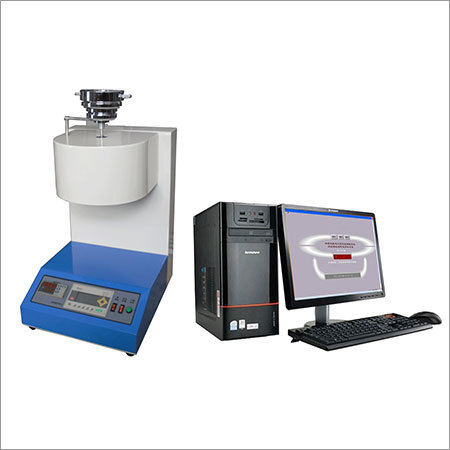
Tell us about your requirement

Price:
Quantity
Select Unit
- 50
- 100
- 200
- 250
- 500
- 1000+
Additional detail
Mobile number
Email

More Products in Rubber and Plastic Test Equipment Category
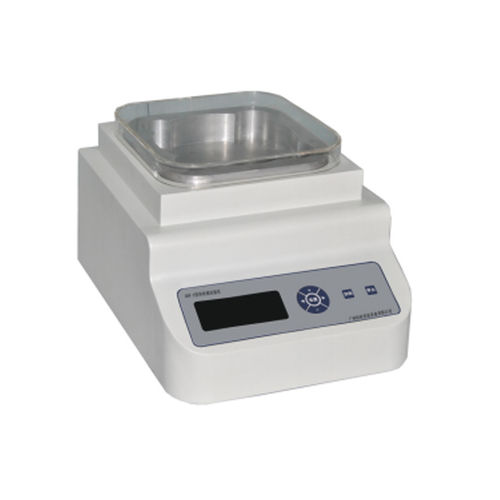
Film Shrinkage Tester
Price 2890 USD ($) / Piece
Minimum Order Quantity : 1 Piece
Dimension (L*W*H) : 750 mm x 320 mm x 320 mm
Load Power : 220 V AC, 50 Hz
Product Type : Film Shrinkage Tester
Accuracy : 0.5C
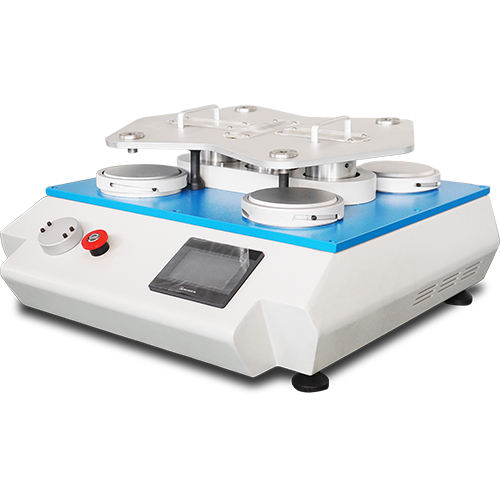
Martindale Abrasion and Pilling Tester
Minimum Order Quantity : 1 set Unit
Dimension (L*W*H) : 885 mm x 600 mm x 480 mm
Load Power : 2.5 kg / 9 kPa, 3.0 kg / 12 kPa
Product Type : Martindale Abrasion and Pilling Tester
Accuracy : 1% (counter)
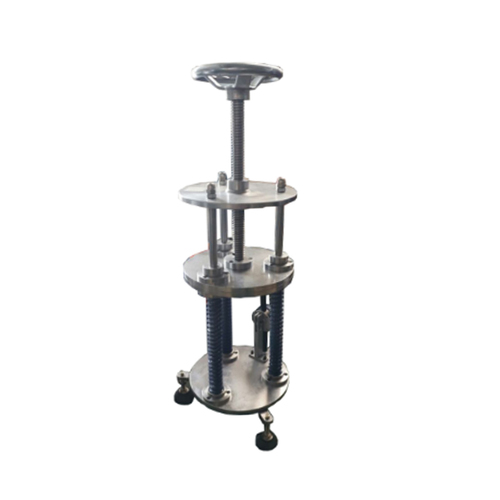
Compression Set Appartus
Price 1500 USD ($) / Unit
Minimum Order Quantity : 1 Unit
Dimension (L*W*H) : 150 mm x 150 mm x 200 mm (approx.)
Load Power : Manual application (no motorized load)
Product Type : Compression Set Apparatus
Accuracy : High precision (with dial gauge reading in 0.01 mm)
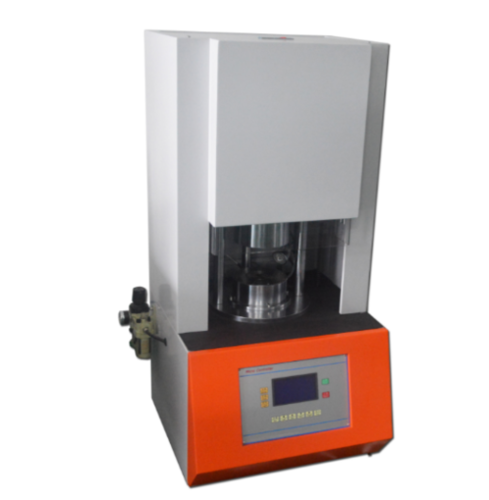
No-Rotor Rheometer
Price 899 USD ($) / Unit
Minimum Order Quantity : 1 Unit
Dimension (L*W*H) : 450 x 300 x 560 mm
Load Power : 220V AC
Product Type : NoRotor Rheometer
Accuracy : 0.5% %

Contact Details
- FACTORY ADD: No.13 Daxin Street, Daluosha Industrial Zone, Daojiao Town,Dongguan - 523710, Guangdong, China
- Phone :86-1591-7693151
- haidads@qc-test.cn
 Send Inquiry
Email us : haidads@qc-test.cn
- Ms Lisa (Manager)
- Mobile : +8613662707979, +8613829267288, +8615016776323, +8618373745787, +8618236912012, +8613602361535, +8613925747786

|


 |
HAIDA INTERNATIONAL EQUIPMENT CO., LTD.
All Rights Reserved.(Terms of Use) Developed and Managed by Infocom Network Private Limited. |
