

 English
 Spanish
 French
 German
 Italian
 Chinese (Simplified)
 Japanese
 Korean
 Arabic
 Portuguese
 Send Inquiry
Melt Flow Index Tester
Price 3500 USD ($)/ Piece
MOQ : 1 Piece
Melt Flow Index Tester Specification
- Phase
- Single Phase
- Voltage
- 230 V
- Frequency
- 50 Hz
- Features
- Microprocessor based, stainless steel cylinder, automatic cut-off device
- Capacity
- 0.1 50 g/10 min
- Usage & Applications
- Testing Melt Flow of Thermoplastics
- Accuracy
- 0.5% of reading
- Speed Range
- Standard
- Control Mode
- Digital Control
- Product Type
- Melt Flow Index Tester
- Color
- Blue/White
- Display Type
- LED Digital Display
- Frame Type
- Heavy Duty Mild Steel
- Gauge
- Digital
- Stroke
- 25 mm
- Weight
- 35 Kg
- Power Supply
- 230 V AC
- Load Power
- 230 V AC
- Dimension (L*W*H)
- 400 x 300 x 540 mm
- Power
- 50 W
- Automation Grade
- Semi-Automatic
- Ambient Operation Condition
- 10C to 40C
- Temperature Range
- Up to 400C
- Timer Function
- Digital Timer
- No. of Weights Included
- Standard Set (Includes 8 weights)
- Piston Material
- Hard Chrome Plated Steel
- Die Material
- Corrosion Resistant Stainless Steel
- Temperature Resolution
- 0.1C
- Cut-off Mechanism
- Motorized Automatic
- Sample Collection System
- Drawer Type
- Safety Features
- Overload Protection, Alarm System
- Storage Humidity
- Max 80% RH
- Heater Type
- Integrated Barrel Heater
- Cooling System
- Passive
- Calibration
- Digital Single-Point
Melt Flow Index Tester Trade Information
- Minimum Order Quantity
- 1 Piece
- FOB Port
- SHENZHEN
- Payment Terms
- Cash Against Delivery (CAD), Cash on Delivery (COD), Cash Advance (CA), Telegraphic Transfer (T/T), Paypal, Letter of Credit (L/C), Western Union, Letter of Credit at Sight (Sight L/C), Delivery Point (DP), Days after Acceptance (DA), Cash in Advance (CID), Cheque
- Supply Ability
- 15 Pieces Per Day
- Delivery Time
- 5 Week
- Packaging Details
- Each set protected with resin fiber and PP film, then put into Strong wooden case with operation manual and video inside. CE,ISO
- Main Export Market(s)
- Australia, North America, Eastern Europe, Middle East, Africa, Central America, South America, Western Europe, Asia
- Certifications
- CE,ISO
Melt Flow Index Tester About
Standard Features
| Testing range | 0.1-800.00g/10min (MFR); 0.1-800.00 cm3/10min(MVR) |
| Temperature range | Room temperature-400C |
| Controlling Accuracy | 0.2C |
| Timing accuracy | 0.1s |
| Displacement accuracy | 0.01mm |
| Standard loads | 325g, 875g, 960g, 1200g, 1640g, 2500g, 4100, 5000g & 5000g |
| Combination load | 325g, 1200g, 2160g, 3800g, 5000g, 7160g, 10000g, 21600g |
| Material cutting method | Manual, timing and automatic cutting |
| Time setting | 0.1~999.9min |
| Cylinder | Diameter 9.55040.0076mm |
| Land of piston | Diameter 9.47420.0076mm, length: 6.350.13mm |
| Thin hole pattern | External diameter: 9.50.02mm; Bore diameter 2.09550.0051mm; length 8.000.025mm |
| Machine Size | (LWH) 405160cm |
| Accessory | One set computer& software, one tool box, one piece operation video CD and one piece English manual |
| Design standard | ASTM-D1238, ISO 1133 |
Applications
Melt Flow Index Tester is used to test the flowability of thermoplastic polymer under high temperature, such as polyethylene, polypropylene, pom, ABS resin, polycarbonate, nylon fluorine and other plastic polymers. The automatic temperature control methods of the machine three kinds of blanking ways, manual, timing and automatic control according to operation method, which can realize melt-mass flow rate (MFR) and melt-volume flow rate (MVR) two test methods.
Advanced Features for Precise Testing
Equipped with a digital control system, microprocessor-based technology, and a LED digital display, the Melt Flow Index Tester ensures pinpoint accuracy with 0.5% reading. Integrated components like a corrosion-resistant stainless steel die and a hard chrome plated piston increase durability, while features such as an automatic cut-off device and overload protection support safe and consistent operation.
Flexible and User-Friendly Operation
Designed for a range of operational conditions (10C to 40C and up to 80% RH), the tester incorporates a passive cooling system and drawer-type sample collection for convenient testing. A standard set of 8 weights and digital single-point calibration allow for flexible and easy adjustments, making it suitable for various thermoplastic materials. The automatic motorized cut-off streamlines workflow, ensuring repeatable results.
FAQs of Melt Flow Index Tester:
Q: How does the Melt Flow Index Tester ensure accurate measurement of thermoplastic materials?
A: The tester utilizes a high-resolution temperature control (up to 400C, 0.1C resolution) and a microprocessor-based system to provide precise and repeatable melt flow readings. The digital single-point calibration and LED digital display further support measurement reliability.Q: What is the process for operating the Melt Flow Index Tester?
A: Operation involves loading the sample into the stainless steel barrel, setting the required test parameters on the digital controller, and initiating the test. The integrated barrel heater and automatic cut-off mechanism simplify and automate most steps. Sample collection is made easy with a drawer-type system.Q: When should I use the Melt Flow Index Tester in plastic processing workflows?
A: This tester is most beneficial during quality control and research phases, whenever you need to measure the melt flow characteristics of thermoplastics to ensure product consistency and performance standards are met.Q: Where is the Melt Flow Index Tester typically used?
A: It is widely employed in laboratories, manufacturing units, research and development facilities, and quality assurance departments within the polymer industry. Its design is also suitable for environments with ambient conditions between 10C and 40C.Q: What advantages does the motorized automatic cut-off mechanism offer?
A: The motorized automatic cut-off ensures that each measurement is stopped precisely according to preset parameters, reducing operator error and ensuring consistent, accurate results for every test.Q: How do the overload protection and alarm system improve usage safety?
A: These features monitor the devices operating status, preventing damage from excessive weight or temperature, and alert the user immediately if unsafe conditions are detected, helping maintain a secure testing environment.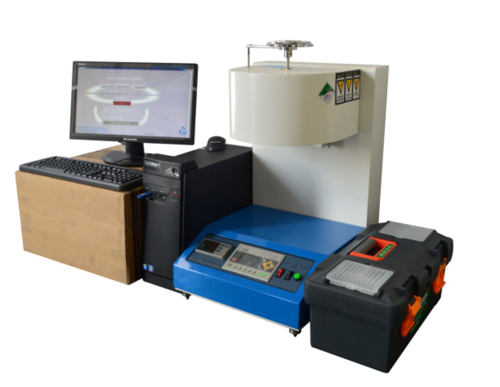
Tell us about your requirement

Price:
Quantity
Select Unit
- 50
- 100
- 200
- 250
- 500
- 1000+
Additional detail
Mobile number
Email

More Products in Rubber and Plastic Test Equipment Category
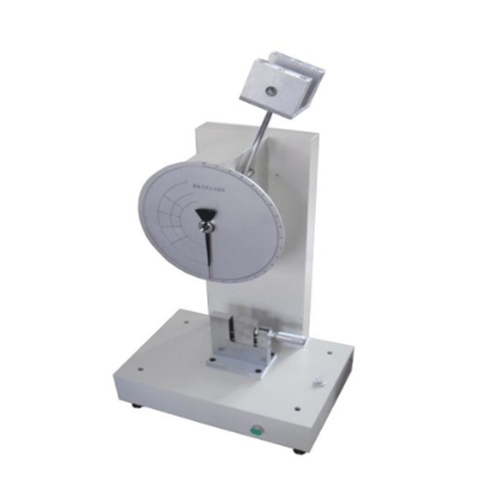
Izod Impact Tester
Price 1000 USD ($) / Piece
Minimum Order Quantity : 1 Piece
Dimension (L*W*H) : 550 mm x 300 mm x 850 mm
Load Power : Not Applicable (Manual)
Speed Range : Variable, as per standard requirements
Accuracy : 1% of full scale
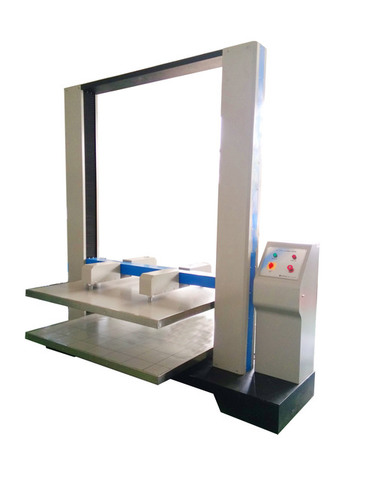
Computer servo carton compression tester
Price 1500 USD ($) / Unit
Minimum Order Quantity : 1 Unit
Dimension (L*W*H) : 1200 x 1200 x 1800 mm
Load Power : 2200 W
Speed Range : 10200 mm/min (adjustable)
Accuracy : 1% F.S.
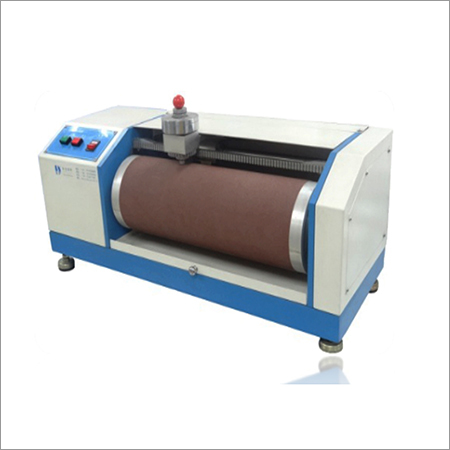
DIN Abrasion Tester
Minimum Order Quantity : 1 set Unit
Dimension (L*W*H) : 700 x 320 x 300 mm
Load Power : 5N (Adjustable)
Speed Range : 40 m/min
Accuracy : 0.01 mm
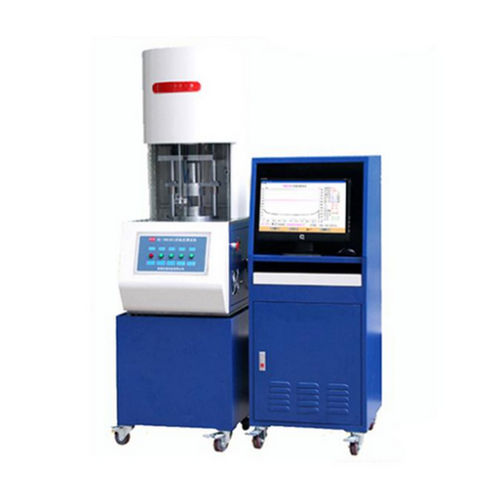
Mooney Viscometer
Price 1450 USD ($) / Unit
Minimum Order Quantity : 1 Unit
Dimension (L*W*H) : 650 mm x 420 mm x 850 mm
Load Power : 600 W
Speed Range : 2 rpm (fixed)
Accuracy : 0.5 Mooney units

Contact Details
- FACTORY ADD: No.13 Daxin Street, Daluosha Industrial Zone, Daojiao Town,Dongguan - 523710, Guangdong, China
- Phone :86-1591-7693151
- haidads@qc-test.cn
 Send Inquiry
Email us : haidads@qc-test.cn
- Ms Lisa (Manager)
- Mobile : +8613662707979, +8613829267288, +8615016776323, +8618373745787, +8618236912012, +8613602361535, +8613925747786

|


 |
HAIDA INTERNATIONAL EQUIPMENT CO., LTD.
All Rights Reserved.(Terms of Use) Developed and Managed by Infocom Network Private Limited. |
