

 English
 Spanish
 French
 German
 Italian
 Chinese (Simplified)
 Japanese
 Korean
 Arabic
 Portuguese
 Send Inquiry
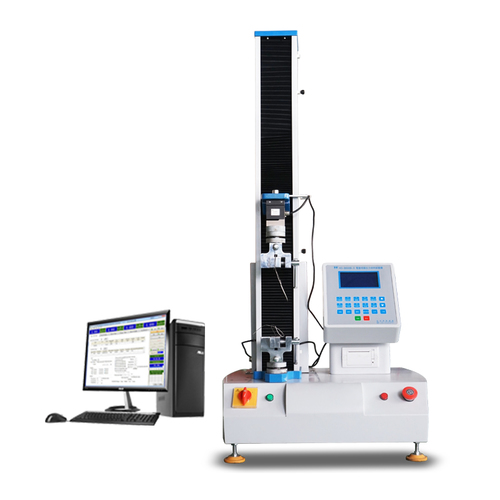
High Tensile Strength Testing Equipment
Price 799 USD ($)/ Unit
MOQ : 1 Unit
High Tensile Strength Testing Equipment Specification
- Product Type
- High Tensile Strength Testing Equipment
- Power Consumption
- 2.5 kW
- Frequency
- 50 Hz
- Stroke Length
- 600 mm
- Phase
- Single & Three Phase
- Application
- Tensile Strength Testing of metals, polymers, cables, textiles, etc.
- Resolution
- 0.01 mm / 0.1 N
- Speed Range
- 10 mm/min to 300 mm/min
- Color
- Blue & Grey
- Power Source
- Electric
- Accuracy
- ±1% of indicated load
- Sensor
- High-precision load cell
- Voltage
- 220 V / 380 V AC
- Control System
- PLC based control with touch panel interface
- Dimension (L*W*H)
- 750 x 600 x 1800 mm
- Machine Speed
- Variable
- Screw Size
- Lead screw: 35 mm
- Power
- 2 kW
- Capacity
- 500 N to 100 kN
- Operating Temperature
- 10°C to 45°C
- Weight
- Approx. 450 kg
- Load Capacity
- up to 5000 kg
- Features
- Digital display, Overload protection, User friendly interface, Robust construction
- Automatic Grade
- Semi-Automatic
- Material
- Mild steel, Powder-coated
- Data Output
- USB & RS232 connectivity
- Crosshead Travel
- Max 800 mm
- Grip Type
- Self-tightening wedge grip
- Maximum Elongation Measurement
- 700 mm
- Sample Clamping Width
- Up to 70 mm
- Display Type
- Digital LCD Display
- Safety Interlocks
- Emergency stop, Overload shut-off
- Software Compatibility
- Compatible with Windows-based analysis software
- Environmental Protection
- IP20
High Tensile Strength Testing Equipment Trade Information
- Minimum Order Quantity
- 1 Unit
- FOB Port
- SHENZHEN
- Payment Terms
- Cash on Delivery (COD), Letter of Credit (L/C), Western Union, Paypal, Letter of Credit at Sight (Sight L/C), Delivery Point (DP), Cash Against Delivery (CAD), Telegraphic Transfer (T/T), Days after Acceptance (DA), Cash in Advance (CID), Cheque, Cash Advance (CA)
- Supply Ability
- 15 Units Per Week
- Delivery Time
- 5 Week
- Packaging Details
- Each set protected with resin fiber and PP film, then put into Strong wooden case with operation manual and video inside.
- Certifications
- CE,ISO
High Tensile Strength Testing Equipment About
Technical Specification
| Weight (exclude the grips) | 85Kg |
| Operation Mode | PC or LCD |
| Motor | Servo Motor |
| Dimension(WDH)-Main Unit | 5705101240mm |
| Driver | High precise ball screw |
| Power | Single phase, 220V/ 10A or designated |
| Accessories | Tensile grips 1 set, one computer |
Advanced Safety Features for Reliable Testing
Equipped with an emergency stop button and overload shut-off mechanism, this tensile testing machine prioritizes operator safety during every test. The self-tightening wedge grip secures samples up to 70 mm wide, preventing slippage and ensuring consistent elongation and load measurements up to 5000 kg. These features make it a trusted solution in demanding industrial environments.
Comprehensive Data Output and Analysis
The system offers USB and RS232 connectivity, allowing seamless data export for further analysis. Users can integrate results with Windows-based analysis software, supporting detailed review and archiving of test outcomes. Digital LCD display and high-precision sensors ensure reliable readings, enhancing your quality control workflows.
User-Friendly Operation and Versatile Capacity
Built with a PLC-based control system and touch panel interface, this equipment is easy to operate and program. With speed ranges of 10 mm/min to 300 mm/min and load capacities from 500 N to 100 kN, it is suitable for a broad spectrum of materials, catering to diverse industry requirements. Its robust mild steel build and powder-coated finish ensure long-term reliability and aesthetics.
FAQs of High Tensile Strength Testing Equipment:
Q: How does the emergency stop and overload shut-off enhance operator safety during testing?
A: The emergency stop allows immediate cessation of machine operation in case of any hazard. Overload shut-off automatically halts the testing if the applied load exceeds safe limits, preventing damage to samples, equipment, and personnel, ensuring a secure testing environment at all times.Q: What types of materials can be tested with this tensile strength equipment?
A: This machine is designed for testing a wide array of materials such as metals, polymers, cables, and textiles. Its adjustable clamping width and high load capacity accommodate various sample sizes and types, making it versatile for manufacturing, research, and quality control applications.Q: When should I use the high tensile strength testing equipment in my production or quality assurance process?
A: Employ this equipment during prototype development, routine quality control, or batch validation processes to verify that materials meet required tensile strength standards. Regular testing helps ensure product reliability and compliance with industry regulations.Q: Where can the data output from the equipment be used for further analysis?
A: Test results are exported via USB or RS232, allowing integration with Windows-based analysis software. This facilitates advanced data analysis, report generation, and electronic archiving for traceability and compliance purposes in laboratories, manufacturing plants, or research facilities.Q: What is the process of clamping and measuring tensile elongation with this machine?
A: Prepare the sample, position it between the self-tightening wedge grips, and select the appropriate settings on the touch panel. The machine initiates the tensile test, recording parameters such as load, elongation (maximum up to 700 mm), and speed, with real-time display and data output for immediate review.Q: How does the PLC-based control system benefit the user during operation?
A: The PLC-based control system features a user-friendly touch panel interface for easy programming and monitoring. It streamlines test setup, ensures accurate control of speed and load, and enhances repeatability for reliable analysis across multiple tests and users.Q: What environmental and operational standards does the equipment meet?
A: With IP20 protection and an operating temperature range of 10C to 45C, the equipment is suitable for most laboratory and industrial settings. Its powder-coated mild steel construction offers durability, while its electrical requirements support both single and three-phase operation for flexible integration.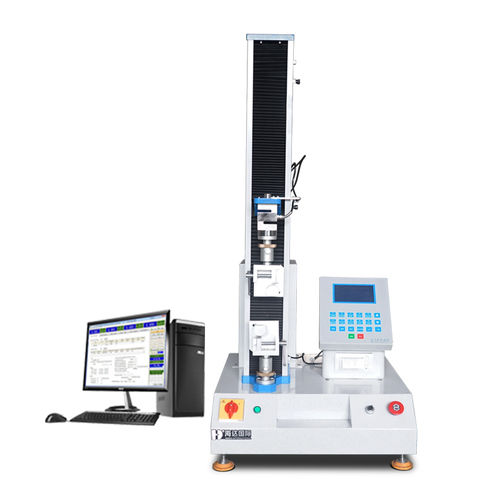
Tell us about your requirement

Price:
Quantity
Select Unit
- 50
- 100
- 200
- 250
- 500
- 1000+
Additional detail
Mobile number
Email

More Products in Tensile Testing Equipment Category
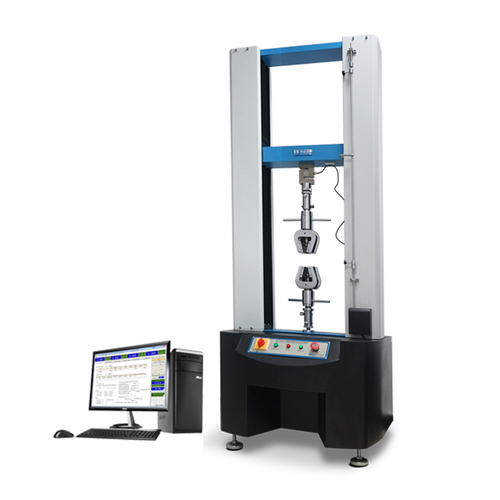
Programmable Universal Test Machine
Price 1599 USD ($) / Set
Minimum Order Quantity : 1 Set
Product Type : Programmable Universal Test Machine
Power Consumption : 2.5 kW (approx.)
Frequency : 50 Hz
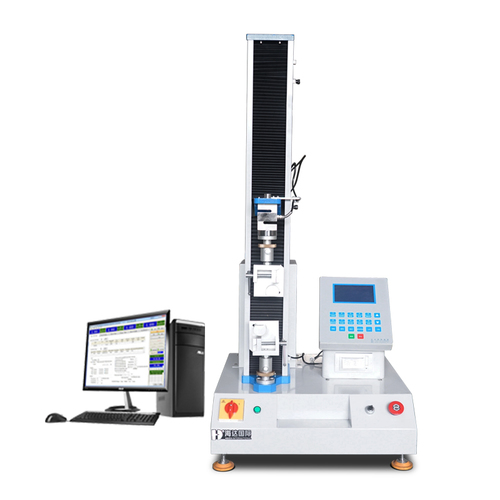
LCD Tensile Test Equipment
Price 1400 USD ($) / Set
Minimum Order Quantity : 1 Set
Product Type : LCD Tensile Test Equipment
Power Consumption : 0.75 KW
Frequency : 50 Hz
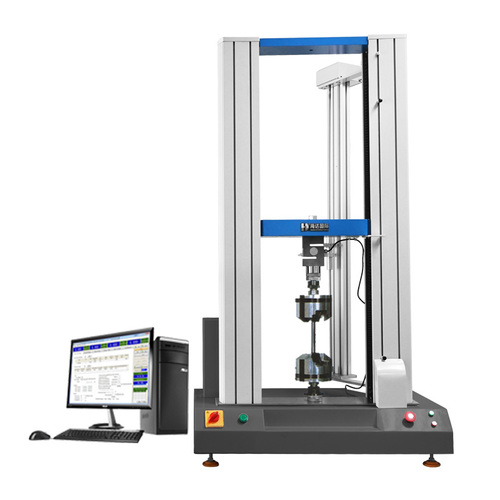
Electronic AC Motor Spring Tension Tester
Price 4600 USD ($) / Unit
Minimum Order Quantity : 1 Unit
Product Type : Spring Tension Tester
Power Consumption : 120 W
Frequency : 50/60 Hz
200KG Capacilty Universal Tensile Testing Machine
Price 2200 USD ($) / Unit
Minimum Order Quantity : 1 Unit
Product Type : Universal Tensile Testing Machine
Power Consumption : 0.5 kW
Frequency : 50 Hz

Contact Details
- FACTORY ADD: No.13 Daxin Street, Daluosha Industrial Zone, Daojiao Town,Dongguan - 523710, Guangdong, China
- Phone :86-1591-7693151
- haidads@qc-test.cn
 Send Inquiry
Email us : haidads@qc-test.cn
- Ms Lisa (Manager)
- Mobile : +8613662707979, +8613829267288, +8615016776323, +8618373745787, +8618236912012, +8613602361535, +8613925747786

|


 |
HAIDA INTERNATIONAL EQUIPMENT CO., LTD.
All Rights Reserved.(Terms of Use) Developed and Managed by Infocom Network Private Limited. |
