

 English
 Spanish
 French
 German
 Italian
 Chinese (Simplified)
 Japanese
 Korean
 Arabic
 Portuguese
 Send Inquiry
Dynamic foam fatigue tester
Price 4000 USD ($)/ Set
MOQ : 1 Set
Dynamic foam fatigue tester Specification
- Frequency
- 50 Hz
- Test Range
- Upto 1,00,000 cycles
- Max Height
- 1200 mm (with arm in top position)
- Power Supply
- 230 V AC, 50 Hz
- Display Type
- Digital LED or LCD
- Interface Type
- Push-button panel with cycle counter
- Resolution
- 1 Cycle
- Operating Voltage
- 230 V AC
- Humidity
- Up to 85% RH
- Equipment Type
- Dynamic Foam Fatigue Tester
- Specimen Size
- 380 x 380 x 50 mm or as per standard
- Gas Pressure
- Not required (applicable for pneumatic models)
- Response Time
- Immediate start/stop with microprocessor control
- Number of Specimens
- Single specimen
- Application
- Testing durability and fatigue resistance of foam
- Features
- Programmable cycles, Rugged structure, Digital display
- Measuring Range
- 0 - 50 kg loading capability
- Hardness
- Suitable for foam densities 16-60 kg/m3
- Temperature
- 10 - 40 b0C operating range
- Accuracy
- b11% on cycle count
- Port Size
- Standard sample platform size: 500 x 500 mm
- Mounting Type
- Floor mounted
- Automation Grade
- Semi-automatic / automatic
- Usage
- Foam quality and endurance testing
- Capacity
- 50 kg max load
- Machine Weight
- Approx. 80 kg
- Test Speed
- 60 cycles/minute
- Test Width
- 500 mm
- Test Stroke
- 75 b1 1 mm
- Control Mode
- Digital control with timer
- Noise Level
- <70 dB in operation
- Service Support
- On-site installation & training available
- Compliance Standards
- ASTM D3574/D3574-05, IS 7888 standards
- Arm Movement
- Reciprocating, motor-driven mechanical mechanism
- Platform Material
- Heavy-duty mild steel with anti-corrosive finish
- Motor Power
- 0.5 HP single phase
- Stroke Adjustment
- Mechanically adjustable up to 75 mm
- Safety Features
- Emergency stop, Overload protection
- Cycle Counter
- Digital pre-settable, up to 1,00,000 cycles
Dynamic foam fatigue tester Trade Information
- Minimum Order Quantity
- 1 Set
- FOB Port
- Shenzhen
- Supply Ability
- 10 Sets Per Month
- Delivery Time
- 1 Week
- Packaging Details
- Each set protected with resin fiber and PP film, then put into Strong wooden case with operation manual and video inside.
- Certifications
- CE,ISO
Dynamic foam fatigue tester About
THE USAGE:
The machine according to GB ISO 3385.1989 standard design and manufacturing. Foam compression fatigue testing machine is mainly used for cellular polymeric materials reciprocating compression test, measuring residual deformation rate. It can understand the dynamic fatigue properties of the material. China's automobile industry to meet the standards QCT56-93 "car seat cushioning material performance test method." Japan's auto industry also meet criteria JASOB408-84 and other foreign standards.
THE MAIN PARAMETERS:
- Capacity:100kg
- Lower platen: Empty diameter 6mm, pitch 20mm5 head: diameter 250 mm 1 mm, the lower edge of the radius of 25 mm 1 mm, to provide 750 N 20 N pressure of 6
- Test speed:(70 5) times / min (adjustable) 7
- Sample size: parallelepiped, length and width: 380 mm 20 mm
- Thickness: 50 mm 2 mm.8. six counters record the number of tests.
- Design standards:. ISO 3385
High-Precision Fatigue Testing
Designed to evaluate the fatigue resistance and durability of a wide range of foam densities, the tester provides consistent results with adjustable settings up to 100,000 cycles. Its mechanical arm simulates real usage conditions to help identify foam performance under long-term stress.
User-Friendly Control & Display
Featuring a digital LED or LCD interface and a push-button panel, users can easily set and monitor cycles, speed, and other variables. The microprocessor-controlled system guarantees immediate response for start/stop functions, enhancing workflow efficiency and testing accuracy.
Safety and Robust Construction
Built from heavy-duty mild steel with an anti-corrosive finish, the tester boasts robust construction and incorporates essential safety mechanisms such as emergency stops and overload protection. This ensures secure operation during intensive testing routines.
FAQs of Dynamic foam fatigue tester:
Q: How does the Dynamic Foam Fatigue Tester evaluate foam durability?
A: It uses a motor-driven, reciprocating arm to apply repeated stress on foam specimens, simulating long-term usage across up to 100,000 cycles. The test identifies changes in foam structure, enabling assessment of endurance and fatigue resistance according to ASTM D3574 and IS 7888 standards.Q: What types of foam densities can be tested with this equipment?
A: The tester is suitable for foam densities ranging from 16 to 60 kg/m. Its mechanical stroke adjustment and variable loading capacity (up to 50 kg) ensure accurate testing for various foam products and grades.Q: When should a foam manufacturer consider using the Dynamic Foam Fatigue Tester?
A: It is essential when verifying the quality, durability, and compliance of foam products. The tester helps determine whether batches meet industry standards before market release, supporting research, quality control, and product development processes.Q: Where can the Dynamic Foam Fatigue Tester be installed for optimal operation?
A: The floor-mounted design is suitable for laboratories or production facilities with a stable power supply (230 V AC, 50 Hz). On-site installation and training are provided to ensure correct setup and efficient operation.Q: What is the process for foam fatigue testing with this machine?
A: Operators place a single foam specimen (typically 380 x 380 x 50 mm) on the platform, preset test cycles and stroke length, then initiate testing. The microprocessor system manages cycle counting and displays real-time progress on a digital LED/LCD panel.Q: How does the equipment enhance safety during testing?
A: Integrated safety features such as emergency stop buttons and overload protection ensure secure testing. The anti-corrosive platform and enclosed mechanism further minimize hazards during operation.Q: What are the main benefits of using this fatigue tester for foam products?
A: It provides reliable, repeatable results for foam endurance, helping manufacturers optimize product quality and comply with global standards. The testers programmable cycles, digital control, and rugged build add value by streamlining the assessment process and minimizing downtime.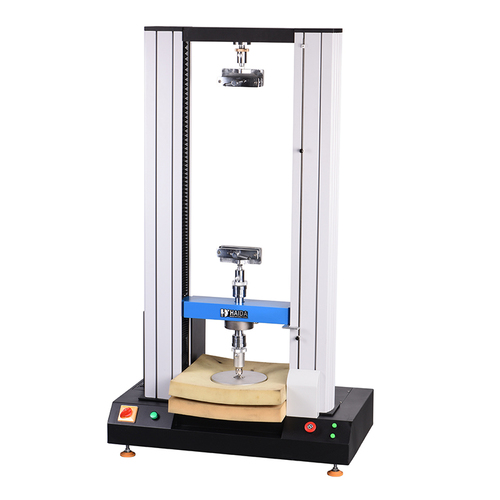
Tell us about your requirement

Price:
Quantity
Select Unit
- 50
- 100
- 200
- 250
- 500
- 1000+
Additional detail
Mobile number
Email

More Products in Furniture Test Equipment Category
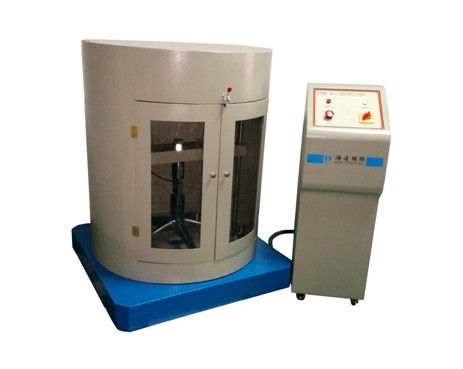
Automatic Chair Base Compression Testing Machine
Price 1600 USD ($) / Set
Minimum Order Quantity : 1 Set
Power Supply : AC 220V, 50Hz
Application : Furniture strength and durability testing
Usage : Chair base compression performance test
Operating Voltage : 220V AC
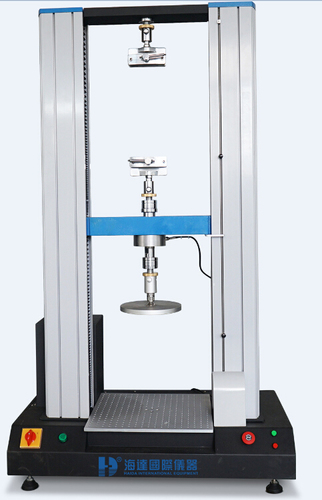
Foam Strength Testing Equipment
Price 2999 USD ($) / Unit
Minimum Order Quantity : 1 Unit
Power Supply : 220V / 50Hz AC
Application : Testing the compression and strength of foam materials
Usage : Cushion, mattress, foam products, research labs
Operating Voltage : 220V AC
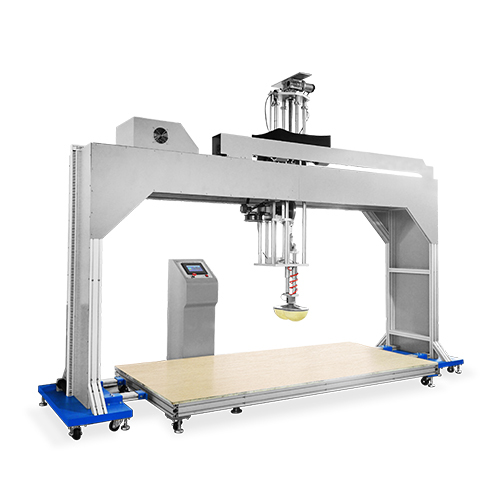
Matterss cornell tester
Price 12000 USD ($) / Unit
Minimum Order Quantity : 1 Unit
Power Supply : AC 220V, 50/60 Hz
Application : Mattress Spring Fatigue and Durability Testing
Usage : Mattress mechanical performance and durability test
Operating Voltage : 220V
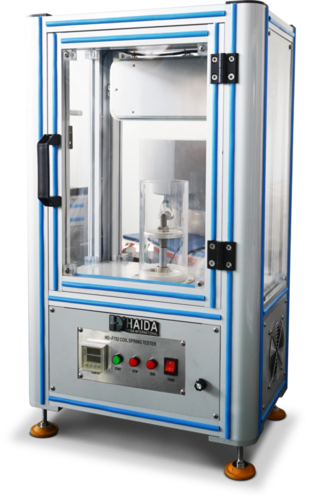
Spring Testing Machine
Price 5500 USD ($) / Unit
Minimum Order Quantity : 1 Unit
Power Supply : 220V AC 50Hz
Application : Compression and Tensile Testing of Springs
Usage : Spring Strength/Compression Testing
Operating Voltage : 220V

Contact Details
- FACTORY ADD: No.13 Daxin Street, Daluosha Industrial Zone, Daojiao Town,Dongguan - 523710, Guangdong, China
- Phone :86-1591-7693151
- haidads@qc-test.cn
 Send Inquiry
Email us : haidads@qc-test.cn
- Ms Lisa (Manager)
- Mobile : +8613662707979, +8613829267288, +8615016776323, +8618373745787, +8618236912012, +8613602361535, +8613925747786

|


 |
HAIDA INTERNATIONAL EQUIPMENT CO., LTD.
All Rights Reserved.(Terms of Use) Developed and Managed by Infocom Network Private Limited. |
