

 English
 Spanish
 French
 German
 Italian
 Chinese (Simplified)
 Japanese
 Korean
 Arabic
 Portuguese
 Send Inquiry
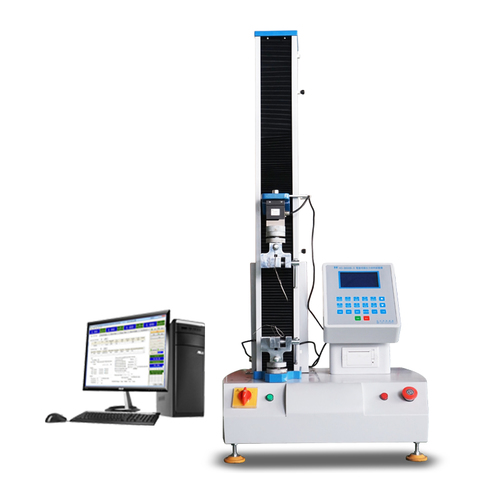
Computerized Universal Tensile Testing Machine
Price 1399 USD ($)/ Unit
MOQ : 1 Unit
Computerized Universal Tensile Testing Machine Specification
- Speed Range
- 0.5 to 500 mm/min
- Stroke Length
- 600 mm (customizable)
- Operating Temperature
- 10°C to 45°C
- Weight
- Approx. 300 kg (varies with model)
- Sensor
- High precision load cell
- Dimension (L*W*H)
- 700 mm x 500 mm x 1600 mm (approx.)
- Phase
- Single or Three phase
- Application
- Metals, Plastics, Rubber, Wires, Cables, Fabrics, and more
- Accuracy
- ±1% as per IS 1828/BS 1610 standards
- Machine Speed
- Variable, programmable
- Frequency
- 50/60 Hz
- Capacity
- Up to 100 kN
- Voltage
- 220-440 V AC
- Control System
- PC based with dedicated software
- Power Source
- Electric
- Power
- 220V / 440V AC (as per model)
- Screw Size
- Ball screw, 25 mm pitch
- Resolution
- 0.01 mm (crosshead movement)
- Color
- Blue & Gray
- Features
- Automatic data acquisition, digital display, computer interface
- Product Type
- Computerized Universal Tensile Testing Machine
- Load Capacity
- 10 kN / 20 kN / 50 kN / 100 kN (customizable)
- Power Consumption
- 1.5 kW
- Automatic Grade
- Automatic
- Material
- Mild Steel/Alloy Steel
- Test Types
- Tensile, compression, bending, shear
- Compatible Standards
- ASTM, ISO, DIN, JIS
- Environmental Protection
- Powder coated, corrosion resistant body
- Operating System Compatibility
- Windows 7/8/10 and above
- Crosshead Travel
- Adjustable, Up to 1000 mm depending on model
- Display Type
- Touchscreen/PC Display
- Frame Construction
- Heavy duty rigid frame for high accuracy
- Software Functions
- Real-time graph plotting, test report generation, statistical analysis
- Noise Level
- < 70 dB
- Extensometer
- Optional attachment for high accuracy
- Data Output
- USB, RS232, real-time PC interface
- Grip Type
- Wedge, Screw, Pneumatic (optional)
- Safety Features
- Overload and over-travel protection
- Memory Storage
- Yes, multi-test storage
- Emergency Stop
- Push button emergency stop provided
Computerized Universal Tensile Testing Machine Trade Information
- Minimum Order Quantity
- 1 Unit
- FOB Port
- SHENZHEN
- Supply Ability
- 15 Units Per Week
- Delivery Time
- 5 Days
- Packaging Details
- Each set protected with resin fiber and PP film, then put into Strong wooden case with operation manual and video inside.
- Main Export Market(s)
- Australia, North America, Eastern Europe, Middle East, Western Europe, Africa, Central America, South America, Asia
- Certifications
- CE,ISO
Computerized Universal Tensile Testing Machine About
Application
High quality computerized universal tensile testing machine for ppt is used to test tension, compression, shearing force, adhesion, peeling force, tear strength,ect of specimen, semi product and finished product in the field of rubber, plastic, metal, nylon,fabric,paper, aviation, packing, architecture, petro chemistry, electric appliance, auto mobile,...etc. which are the basic facilities for input quality control (I.Q.C), Quality Control (Q.C.), Physical Inspection,Mechanics Research and Material Development.
Software
The TM2101 measurement and control system is designed purposely for microcomputer controlled electronic universal testing machine, microcomputer controlled universal hydraulic testing machine and microcomputer controlled compress testing machine, used for tension, compress, bend, shear, tearing and peel test. With the personal computer and interface plate, it could collect, save, process and print test result. Further it can calculate multiple parameters, i.e. maximum force.
Features
- Adopting windows platform, and all the parameter settings can be processed in the dialog box, and it operates easily.
- Using a single-screen operation; do not need to switch the screen;
- With three languages in Simplified Chinese, Traditional Chinese and English, the software interface can be switched easily;
- The pattern of Test reports can be self designated; test data can be displayed directly in the main screen;
- Choosing translational, comparative mode at the same time to make a number of curve data comparison
- With a variety of measurement units, Measure In Imperial & Metric are switch able;
- With self-return & auto-correction function;
- With automatic magnification function, in order to achieve the most appropriate size of the graphics;
- With the user-defined Test methods; with experimental data analysis function;
- High quality, accurate and reliable models with reasonable price.
Standard
- Lab Rubber Sheet Plastic Universal Tensile Tester
- ASTMD903,GB/T16491,GB/T1040,GB/T8808,
- GB13022,GB/T 2790/2791/2792,
- CNS- 11888,JIS K6854, PSTC-7
Technical Parameters
| Items | Specification |
| Sensor | Celtron load cell |
| Capacity | 10,20,50,100,200kg |
| Unit Switchover | G, KG, N, LB |
| Display Device | PC and LCD |
| Resolution | 1/250,000 |
| Accuracy | 0.5% |
| Max. Stroke | 1000mm (including fixture) |
| Test Speed | 0.1-500mm/min (adjustable ) |
| Motor | Panasonic Servo Motor |
| Screw | High Precise Ball Screw |
| Elongation Accuracy | 0.001mm |
| Power | 1 AC220V, 50HZ |
| Weight | Approx.75kg |
| Accessories | One set tensile clamp, one set Lenovo computer, one piece English software CD, one piece operation video CD, one piece English user manual |
Customizable High-Precision Testing
Designed for versatility, this tensile testing machine accommodates a broad range of materials. Users can select from wedge, screw, or optional pneumatic grips to suit specific sample types. The robust frame construction and high precision load cell enable reliable results, meeting international standards for accuracy and repeatability across numerous industry applications.
Advanced Data Management and Compatibility
Integrated software allows for real-time data visualization, comprehensive reporting, and multi-test memory storage. Connection options such as USB, RS232, and PC interfacing facilitate efficient data transfer and management. Compatible with Windows 7/8/10 and above, the system supports lab workflows and regulatory compliance for global users.
Safety and Durable Construction
Manufactured using corrosion-resistant, powder-coated mild or alloy steel, the machine is engineered for longevity and operational safety. Overload protection, over-travel safeguards, and push-button emergency stop features make it suitable for heavy-duty testing environments. Its operational noise level is maintained below 70 dB, promoting a safe and comfortable workspace.
FAQs of Computerized Universal Tensile Testing Machine:
Q: How does the crosshead travel adjustment work on this testing machine?
A: The crosshead travel can be adjusted up to 1000 mm depending on the selected model. This enables users to accommodate different specimen sizes for various test types, offering greater flexibility for tensile, compression, bending, and shear testing.Q: What types of grips are available and how do I choose the right one for my samples?
A: The machine supports wedge, screw, and optional pneumatic grips. Selection depends on your sample material and testing needs; for metals, wedge grips are ideal, while softer materials might benefit from screw or pneumatic grips for improved clamping and reduced sample damage.Q: When is the use of an extensometer recommended, and what is its benefit?
A: An extensometer is recommended for applications requiring high-accuracy elongation measurements. This optional attachment enhances precision and is especially beneficial when testing materials with low elongation or for compliance with strict standards.Q: Where can I access my test data and how is it stored?
A: Test data can be accessed and exported via USB, RS232, or real-time PC interface. The systems memory storage feature allows you to save multiple test results, making data management efficient for researchers, manufacturers, and quality control labs.Q: What process does the machine follow for material testing and reporting?
A: The testing process involves sample installation, grip selection, and program setup using the touchscreen or PC interface. During testing, real-time graph plotting and data acquisition occur automatically, with software generating comprehensive reports and statistical analysis plus multi-test storage for later review.Q: How does the machine ensure operator safety during operation?
A: Safety is maintained through overload and over-travel protection mechanisms, a push-button emergency stop, and low operational noise levels. These features help protect both the operator and machine, creating a secure and comfortable work environment.Q: What are the main benefits of using this computerized tensile testing machine?
A: Key benefits include highly accurate results (1%), versatile testing options, robust and durable construction, multi-standard compatibility, advanced data management, and streamlined operation. These features collectively improve efficiency, reliability, and compliance in materials testing workflows.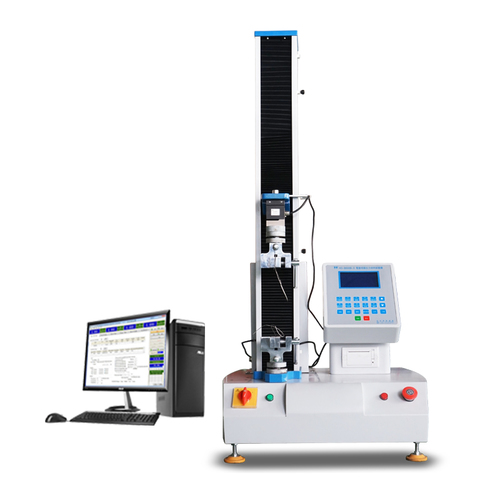
Tell us about your requirement

Price:
Quantity
Select Unit
- 50
- 100
- 200
- 250
- 500
- 1000+
Additional detail
Mobile number
Email

More Products in Tensile Testing Equipment Category
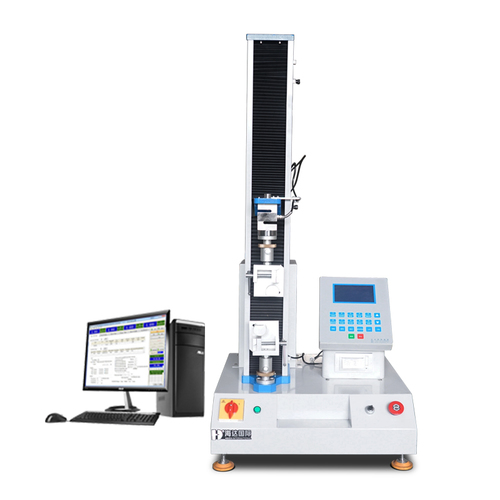
LCD Tensile Test Equipment
Price 1400 USD ($) / Set
Minimum Order Quantity : 1 Set
Stroke Length : 600 mm
Maximum Test Force : 50 kN
Speed Range : 10 to 500 mm/min
Weight : Approx. 120 kg
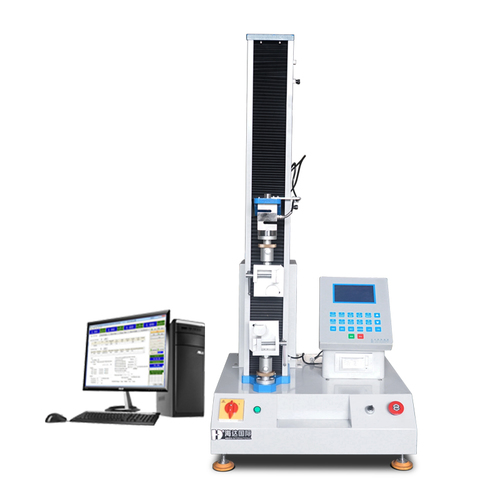
Electronic Fabric Universal Tensile Tester
Price 1200 USD ($) / Set
Minimum Order Quantity : 1 Set
Stroke Length : 800 mm
Maximum Test Force : 5000 N
Speed Range : 10 mm/min to 500 mm/min
Weight : 180 kg approx.
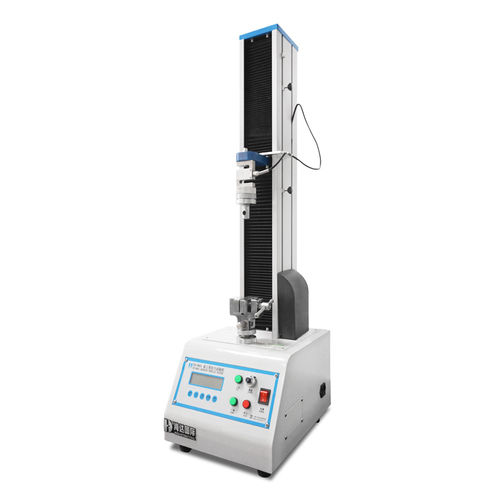
Tensile Strength Tester For Copper Wire
Price 800 USD ($) / Unit
Minimum Order Quantity : 1 Unit
Stroke Length : 600 mm
Maximum Test Force : 5000 N
Speed Range : 10 mm/min to 500 mm/min
Weight : Approx. 150 kg
Computer Fabric Tensile Strength Test Machine
Price 1899 USD ($) / Set
Minimum Order Quantity : 1 Set
Stroke Length : 800 mm
Maximum Test Force : 5000N
Speed Range : 10 500 mm/min adjustable
Weight : Approx. 120 kg

Contact Details
- FACTORY ADD: No.13 Daxin Street, Daluosha Industrial Zone, Daojiao Town,Dongguan - 523710, Guangdong, China
- Phone :86-1591-7693151
- haidads@qc-test.cn
 Send Inquiry
Email us : haidads@qc-test.cn
- Ms Lisa (Manager)
- Mobile : +8613662707979, +8613829267288, +8615016776323, +8618373745787, +8618236912012, +8613602361535, +8613925747786

|


 |
HAIDA INTERNATIONAL EQUIPMENT CO., LTD.
All Rights Reserved.(Terms of Use) Developed and Managed by Infocom Network Private Limited. |
