

 English
 Spanish
 French
 German
 Italian
 Chinese (Simplified)
 Japanese
 Korean
 Arabic
 Portuguese
 Send Inquiry
Computer HDT Vicat Test Machine
Price 3500 USD ($)/ Piece
MOQ : 1 Piece
Computer HDT Vicat Test Machine Specification
- Load Power
- 50 N / 1000 g
- Features
- PC interface, temperature programmer, automatic temperature control, data storage, test report printout
- Power Supply
- 230V, 50Hz AC mains
- Frame Type
- Sturdy powder coated
- Dimension (L*W*H)
- 960 x 580 x 850 mm
- Product Type
- Computer HDT Vicat Test Machine
- Capacity
- 3 Stations
- Accuracy
- ±0.5°C
- Frequency
- 50 Hz
- Control Mode
- Computer Controlled
- Stroke
- 10 mm
- Phase
- Single Phase
- Voltage
- 230 V AC
- Gauge
- Digital
- Power
- 1200 Watt
- Color
- Grey/Blue
- Weight
- 85 kg (Approx.)
- Display Type
- Digital LCD Display
- Usage & Applications
- To determine heat deflection temperature (HDT) and Vicat softening point of plastics, polymers and allied materials.
- Speed Range
- 50°C/h to 120°C/h
- Automation Grade
- Automatic
- Heating Medium
- Silicon oil bath
- Sensor Type
- PT-100 RTD
- Test Method
- Complies with IS 2530, ASTM D648, D1525, ISO 75, ISO 306
- Software Compatibility
- Windows OS
- Sample Size
- Standard and customized
- Relative Humidity
- <85%, non-condensing
- Calibration
- Provided with certified calibration weights and report
- Test Result Output
- Print and digital export
- Temperature Range
- Ambient to 300C
- Heating Rate
- 50C/hour 2C/hour
- Ambient Operating Temperature
- 5C to 40C
- Safety Interlocks
- Overheat & low oil protection
- Cooling Method
- Water circulation
- Resolution
- 0.1C
- Data Storage
- Yes, via PC software
Computer HDT Vicat Test Machine Trade Information
- Minimum Order Quantity
- 1 Piece
- FOB Port
- SHENZHEN
- Payment Terms
- Cash on Delivery (COD), Letter of Credit (L/C), Paypal, Western Union, Letter of Credit at Sight (Sight L/C), Delivery Point (DP), Cash Against Delivery (CAD), Telegraphic Transfer (T/T), Days after Acceptance (DA), Cash in Advance (CID), Cheque, Cash Advance (CA)
- Supply Ability
- 15 Pieces Per Week
- Delivery Time
- 5 Week
- Packaging Details
- Each set protected with resin fiber and PP film, then put into Strong wooden case with operation manual and video inside. CE,ISO
- Main Export Market(s)
- Australia, North America, Eastern Europe, Middle East, Africa, South America, Western Europe, Asia, Central America
- Certifications
- CE,ISO
Computer HDT Vicat Test Machine About
Standard Features
| Temperature range | Room temperature - 300C |
| Heating rate | (12010)C/h (121C/6min); (505)C/h(50.5C/6min) |
| Temperature display | 0.1C |
| Display & Control | PC which can issue report with word /excel |
| Temperature fluctuation | 0.5C |
| Max. deflection error | 0.001mm |
| Deflection measuring range | 0-10mm |
| Sample holder | 3 pieces |
| Load pole and pallet weight | 68g |
| Heating power | 4kw |
| Cooling method | 150C, natural cooling; 150C water cooling or natural cooling |
| Dimension | 528mm*545mm*370mm |
Applications
It is used to determine heating deflection and Vicat softening temperature of the plastic, rubber etc. It is essential instrument for R&D institution, college, and QA department of enterprises. Moreover, the sample holders have function of up and down. But this machine cannot connect with computer.
Advanced Control and Data Management
Benefit from user-friendly computer control and digital LCD display. The integrated PC interface and compatible Windows software streamline data storage, test programming, and result exports. Automatic temperature control and programmable rates offer flexibility and precision. Instant printouts and digital exports facilitate fast reporting and easy traceability, enhancing laboratory productivity and documentation.
Reliable and Safe Testing Environment
The apparatus is designed with user safety in mind, featuring overheat and low oil level protection. Its sturdy powder-coated frame, along with water circulation cooling, ensures stable and lasting performance even during extended operation. Certified calibration weights and documentation are provided, guaranteeing sustained measurement accuracy and compliance with key international standards.
Versatile Applications and Compliance
Engineered to conduct HDT and Vicat tests for plastics, polymers, and allied materials, this machine complies with global test methods including IS 2530, ASTM D648/D1525, and ISO 75/306. Its three-station capacity and customizable sample sizes serve laboratories handling varied or high-throughput analysis requirements, making it popular among dealers, manufacturers, and research facilities.
FAQs of Computer HDT Vicat Test Machine:
Q: How does the Computer HDT Vicat Test Machine ensure accurate temperature control during tests?
A: The machine uses a silicon oil bath with programmable automatic temperature control, combined with a high-precision PT-100 RTD sensor and a fine 0.1C resolution. Temperatures can be programmed with a stable heating rate of 50C/hour (2C/hour), ensuring accuracy within 0.5C throughout the test cycle.Q: What is the typical process for conducting a test on this machine?
A: To perform a test, prepare standard or customized samples and place them in the machines stations. Select the required test method via the software, input heating parameters, and start the test. The system automatically controls heating, records temperature data, and provides real-time digital/LCD display. After completion, results can be exported digitally and printed for reporting.Q: When and why should the machine be recalibrated?
A: The system includes certified calibration weights and an official calibration report. It is advisable to recalibrate annually or after major maintenance to sustain measurement precision, especially when accuracy is critical for compliance with standards such as ASTM and ISO.Q: Where can this test machine be used effectively?
A: The Computer HDT Vicat Test Machine is ideal for plastics and polymer testing laboratories, manufacturing quality control departments, academic research facilities, and any application requiring strict compliance to IS, ASTM, or ISO HDT/Vicat test methods. Its robust construction suits regular industrial use.Q: What are the benefits of using a computer-controlled testing system?
A: Computer control offers enhanced data accuracy, programmable testing routines, easy result storage, and seamless digital export for documentation and analysis. It minimizes manual intervention, reduces errors, and speeds up report generation, making workflows more efficient.Q: How does the safety interlock system protect the machine and samples?
A: Safety interlocks monitor for overheating and low oil levels, automatically shutting down the heating mechanism if thresholds are crossed. This safeguards both the machine and the samples, prevents potential hazards, and assures compliance with laboratory safety protocols.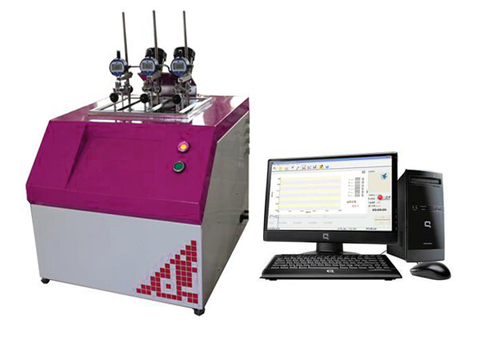
Tell us about your requirement

Price:
Quantity
Select Unit
- 50
- 100
- 200
- 250
- 500
- 1000+
Additional detail
Mobile number
Email

More Products in Rubber and Plastic Test Equipment Category
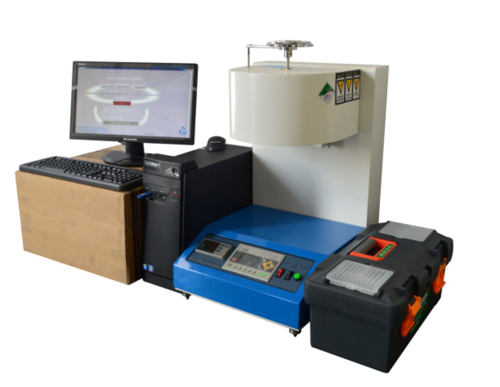
Melt Flow Index Tester
Price 3500 USD ($) / Piece
Minimum Order Quantity : 1 Piece
Power : 50 W
Product Type : Melt Flow Index Tester
Color : Blue/White
Accuracy : 0.5% of reading
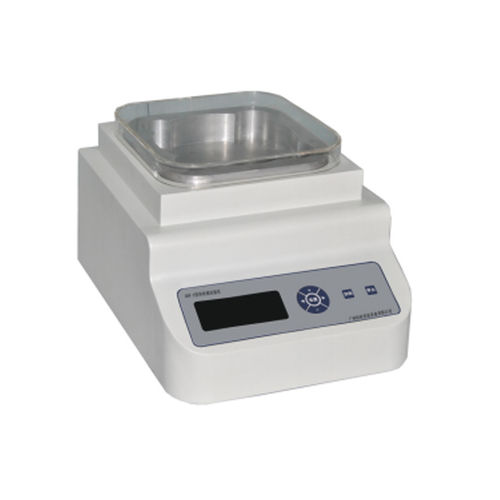
Film Shrinkage Tester
Price 2890 USD ($) / Piece
Minimum Order Quantity : 1 Piece
Power : 220 W
Product Type : Film Shrinkage Tester
Color : White
Accuracy : 0.5C
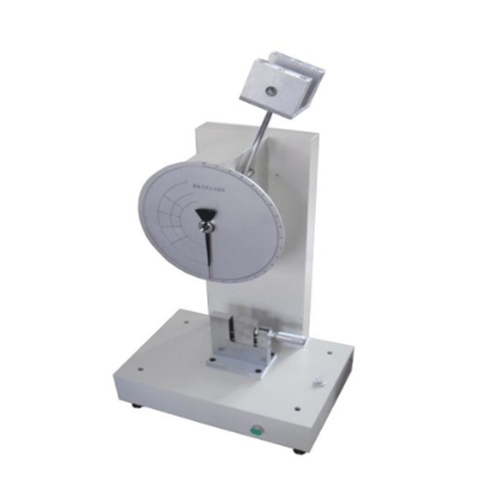
Izod Impact Tester
Price 1000 USD ($) / Piece
Minimum Order Quantity : 1 Piece
Power : Manual (Optional Electric Models available)
Product Type : Izod Impact Tester
Color : Blue/Grey
Accuracy : 1% of full scale
Paper Board Bending Stiffness Tester
Price 2000 INR
Minimum Order Quantity : 1 Millimeter
Power : AC 220V 50Hz
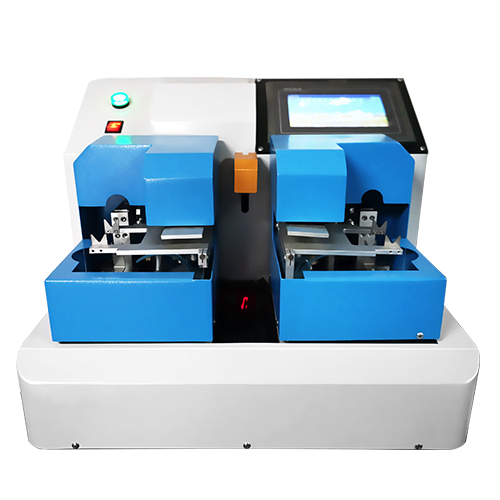
Product Type : Paper Board Bending Stiffness Tester
Color : Blue & White
Accuracy : 0.5% of full scale

Contact Details
- FACTORY ADD: No.13 Daxin Street, Daluosha Industrial Zone, Daojiao Town,Dongguan - 523710, Guangdong, China
- Phone :86-1591-7693151
- haidads@qc-test.cn
 Send Inquiry
Email us : haidads@qc-test.cn
- Ms Lisa (Manager)
- Mobile : +8613662707979, +8613829267288, +8615016776323, +8618373745787, +8618236912012, +8613602361535, +8613925747786

|


 |
HAIDA INTERNATIONAL EQUIPMENT CO., LTD.
All Rights Reserved.(Terms of Use) Developed and Managed by Infocom Network Private Limited. |
