

 English
 Spanish
 French
 German
 Italian
 Chinese (Simplified)
 Japanese
 Korean
 Arabic
 Portuguese
 Send Inquiry
Chary & Izod Impact Tester
Price 1300 USD ($)/ Unit
MOQ : 1 Unit
Chary & Izod Impact Tester Specification
- Capacity
- Up to 300 Joule (Charpy), Up to 170 Joule (Izod)
- Product Type
- Charpy & Izod Impact Tester
- Phase
- Single phase (for motorized version)
- Power
- Manual, Can be optional with Electric motor attachment
- Gauge
- Supplied with standard specimen gauge
- Voltage
- 230V AC (for optional electric motor)
- Weight
- Approximately 120 kg
- Frame Type
- Rigid, heavy-duty steel frame
- Accuracy
- ±1 Joule or better
- Display Type
- Analog scale
- Features
- Interchangeable strikers and supports, Safety guard, Easy reading analog scale
- Usage & Applications
- Used for determining impact strength of materials by Charpy and Izod methods
- Stroke
- Not Applicable (pendulum type)
- Load Power
- Mechanical, not electrical
- Power Supply
- Manual/Mains (for motorized option)
- Speed Range
- Pendulum Speed approx. 5.2 m/s (Charpy), 3.5 m/s (Izod)
- Control Mode
- Manual release; pendulum type operation
- Color
- Blue/Grey
- Frequency
- 50 Hz (for electric motor)
- Dimension (L*W*H)
- 1120 mm x 400 mm x 870 mm
- Automation Grade
- Semi-Automatic
- Pendulum Release
- Manual and electromagnetic release mechanism
- Specimen Size (Charpy)
- 55 mm x 10 mm x 10 mm (Standard)
- Scale Graduation
- 1 Joule division
- Ambient Operating Temperature
- 10C to 50C
- Calibration
- Supplied with calibration certificate
- Specimen Size (Izod)
- 75 mm x 10 mm x 10 mm (Standard)
- Angle of Pendulum Drop
- 150
- Compliance Standards
- ASTM E23, IS 3766, BS 131 Part I
- Safety Features
- Fully enclosed guard for operator safety
- Striker Types
- Charpy and Izod interchangeable
Chary & Izod Impact Tester Trade Information
- Minimum Order Quantity
- 1 Unit
- FOB Port
- SHENZHEN
- Payment Terms
- Cash on Delivery (COD), Letter of Credit (L/C), Letter of Credit at Sight (Sight L/C), Western Union, Paypal, Delivery Point (DP), Cash Against Delivery (CAD), Telegraphic Transfer (T/T), Days after Acceptance (DA), Cash in Advance (CID), Cheque, Cash Advance (CA)
- Supply Ability
- 15 Units Per Week
- Delivery Time
- 5 Days
- Packaging Details
- Each set protected with resin fiber and PP film, then put into Strong wooden case with operation manual and video inside. CE,ISO
- Main Export Market(s)
- Australia, North America, Eastern Europe, Middle East, Africa, South America, Western Europe, Asia, Central America
- Certifications
- CE,ISO
Chary & Izod Impact Tester About
Standard Features
| Capacity | 7.5, 15, 25, 50J | 1, 2.75, 5.5, 11, 22J |
| Impact velocity | 3.8 m/s | 3.5 m/s |
| Test angle | 160 | 160 |
| Impact blade angle | 30l | 75l |
| Distance between jaw and support line | 40 mm,62mm, 70 mm,95mm | Wedge jaw, general type |
| Blade filleted radius | R=20.5mm | R=0.8mm0.2mm |
| Jaw radius | R=10.1mm | R=10.1mm |
| Design standard | ISO 179 | ISO 180 |
| Display | LCD Touch Screen | |
| Weight | 120KG | |
| Dimension | 550mm350mm850mm | |
| Power | AC220V10%, 50/60Hz, single phase | |
Applications
It is used for impact toughness determination of rigid plastics, enhanced nylon, glass fiber, reinforced plastics, ceramics, cast stone, insulation material and other nonmetal materials. It is the ideal test equipment of chemical industrial, R&D institution, universities and colleges, quality testing department and professional manufacturer laboratory.
Versatile Impact Testing Capabilities
Engineered to conduct both Charpy and Izod impact tests, the tester can easily switch between striker types to accommodate diverse material testing requirements. Standard specimen sizes are supported for both methods, ensuring compliance with international testing standards.
Enhanced Operator Safety
A fully enclosed guard ensures the highest level of operator safety during impact testing procedures. This protective feature minimizes the risk of accidental contact, making the device suitable for high-traffic laboratory and industrial settings.
Reliable and Accurate Results
The analog scale displays results in 1 Joule increments, delivering consistent accuracy (1 Joule or better). Calibration certificates accompany each unit, guaranteeing precise measurements for critical testing applications.
FAQs of Chary & Izod Impact Tester:
Q: How do I operate the Chary & Izod Impact Tester?
A: Operation involves securing the specimen, selecting the appropriate striker (Charpy or Izod), and releasing the pendulum using either the manual or the optional electromagnetic mechanism. The analog scale will display the impact energy absorbed by the specimen.Q: What types of specimens can be tested with this device?
A: The tester is designed for standardized specimens: Charpy specimens are 55 mm x 10 mm x 10 mm; Izod specimens are 75 mm x 10 mm x 10 mm. This ensures compatibility with widely recognized testing procedures and standards.Q: When should calibration of the tester be conducted?
A: The tester is supplied with a calibration certificate. Calibration should be verified annually or as required by your quality system to ensure ongoing accuracy and compliance with ASTM E23, IS 3766, and BS 131 Part I standards.Q: Where can this impact tester be used?
A: Due to its semi-automatic operation and safety features, the tester is suitable for research laboratories, quality control departments, educational institutions, and manufacturing facilities involved in material strength testing.Q: What benefits does the fully enclosed guard provide?
A: The fully enclosed guard protects the operator from potential hazards by containing debris and preventing accidental contact with moving components, thereby ensuring a safe working environment.Q: Can the pendulum release be automated?
A: Yes, the tester features manual release by default but can be optionally fitted with an electric motor for electromagnetic release, offering added convenience and repeatability.Q: How is the impact energy displayed and interpreted?
A: The result is shown on an easy-to-read analog scale with 1 Joule divisions, allowing operators to quickly and accurately interpret the energy absorbed during the test.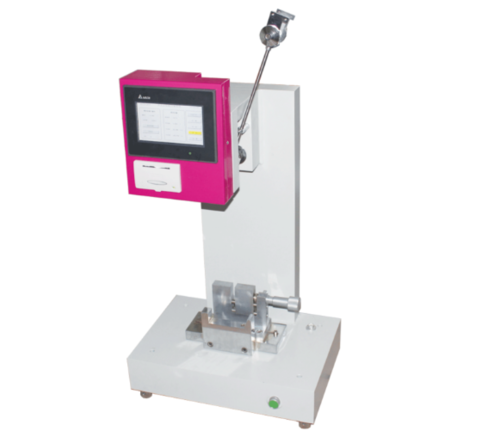
Tell us about your requirement

Price:
Quantity
Select Unit
- 50
- 100
- 200
- 250
- 500
- 1000+
Additional detail
Mobile number
Email

More Products in Rubber and Plastic Test Equipment Category
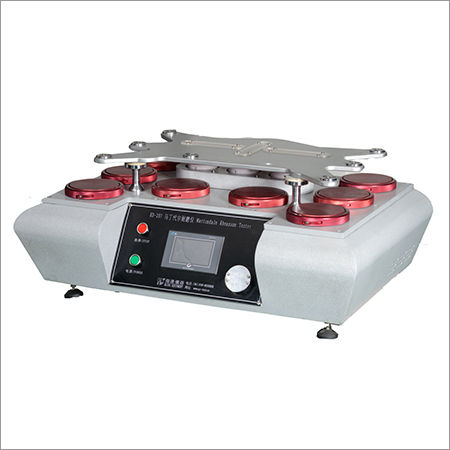
Martindale Tester
Price 3500 USD ($) / Unit
Minimum Order Quantity : 1 Unit
Product Type : Martindale Abrasion Tester
Weight : Approx. 130 kg
Accuracy : 1% or better
Load Power : 2.5 kPa, 9 kPa (standard weights supplied)
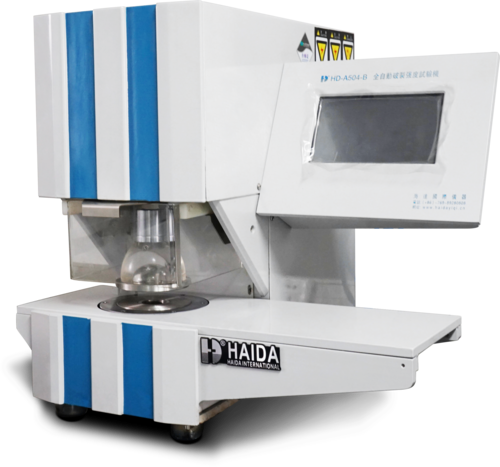
Automatic Brust Strength Tester Series
Price 2500 USD ($) / Unit
Minimum Order Quantity : 1 Unit
Product Type : Automatic Brust Strength Tester Series
Weight : 85 kg
Accuracy : 1% F.S
Load Power : 200 W
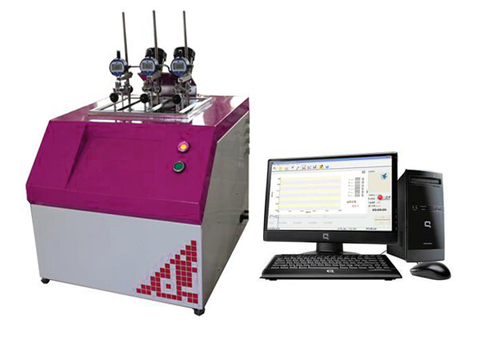
Computer HDT Vicat Test Machine
Price 3500 USD ($) / Piece
Minimum Order Quantity : 1 Piece
Product Type : Computer HDT Vicat Test Machine
Weight : 85 kg (Approx.)
Accuracy : 0.5C
Load Power : 50 N / 1000 g
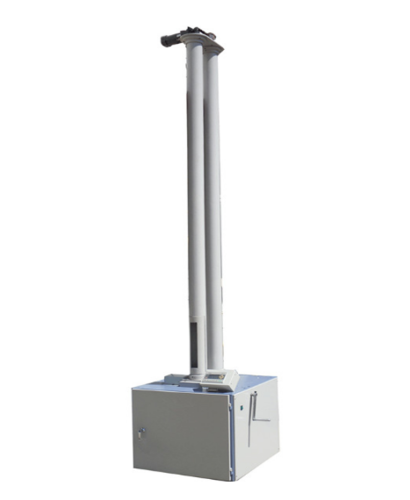
Plastic Pipe Impact Tester
Price 1500 USD ($) / Piece
Minimum Order Quantity : 1 Piece
Product Type : Plastic Pipe Impact Tester
Weight : Approx. 70 kg
Accuracy : 1% F.S.
Load Power : Not Applicable (Manual)

Contact Details
- FACTORY ADD: No.13 Daxin Street, Daluosha Industrial Zone, Daojiao Town,Dongguan - 523710, Guangdong, China
- Phone :86-1591-7693151
- haidads@qc-test.cn
 Send Inquiry
Email us : haidads@qc-test.cn
- Ms Lisa (Manager)
- Mobile : +8613662707979, +8613829267288, +8615016776323, +8618373745787, +8618236912012, +8613602361535, +8613925747786

|


 |
HAIDA INTERNATIONAL EQUIPMENT CO., LTD.
All Rights Reserved.(Terms of Use) Developed and Managed by Infocom Network Private Limited. |
